Mold Abatement Spray: What It Can and Cannot Do
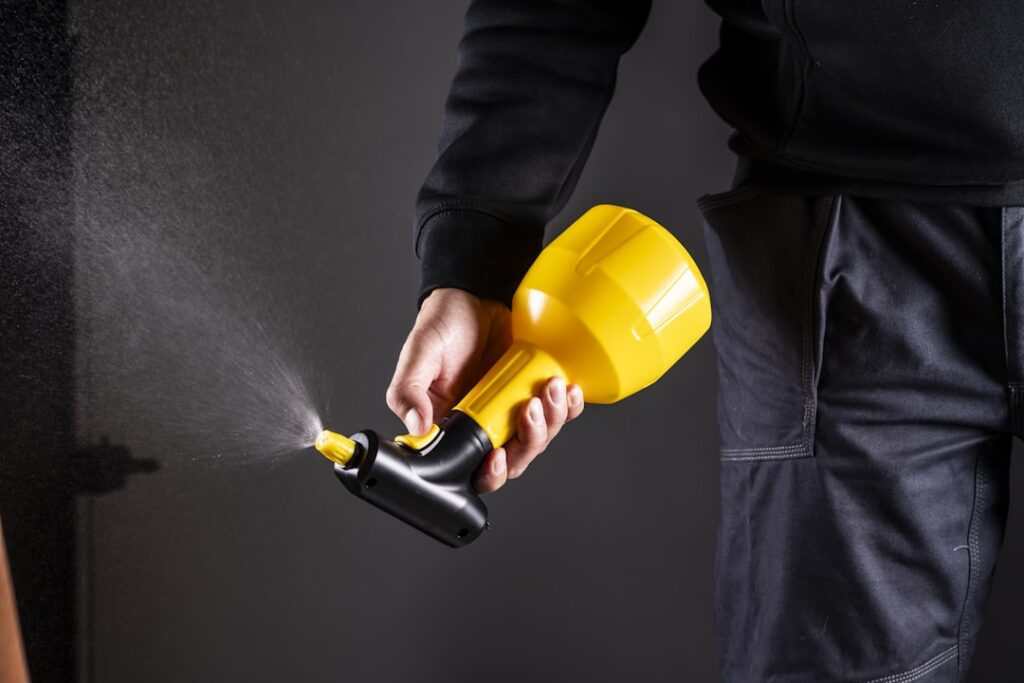
Walk down the cleaning aisle and you will find bottles promising to wipe out household mold in a single pass. A mold abatement spray is one of the most searched solutions for homeowners who spot dark spotting on a bathroom ceiling or basement wall. These products do have a legitimate role, but they are frequently misunderstood, and using one without addressing the underlying cause often leaves the problem worse than before. This guide summarizes EPA and CDC guidance current as of 2026; consult your physician for any health symptoms and a certified professional for testing or remediation decisions on larger contamination.
Is this mold, asbestos, or water damage? Get a free instant screen
Upload a clear photo of the suspect area. You'll get an instant AI screening opinion and what to do next. This is screening guidance, not a professional determination.
Screening guidance only. AI can be wrong. Confirm asbestos, mold type, or lead with lab testing or a licensed professional before acting.
What does a mold abatement spray actually do?
A mold abatement spray is a liquid biocide or detergent formulated to kill, inhibit, or wash mold growth from a surface. Most consumer products fall into a few chemistry families: sodium hypochlorite (household bleach), quaternary ammonium compounds, hydrogen peroxide, or botanical and acid-based blends marketed as natural alternatives. When applied to a hard, non-porous surface like glazed tile, sealed countertop, or finished metal, these sprays can reduce surface contamination and visibly lift staining.
The key word is surface. A spray contacts only the material it sits on. Mold that has rooted into the structure of a porous material is largely out of reach. The U.S. Environmental Protection Agency is direct on this point: killing mold is not the goal in itself, because dead mold spores can still trigger allergic and irritant reactions. Removal of the material or thorough cleaning, paired with drying, is what protects indoor air.
That distinction reframes the whole purchase. A homeowner buying a spray to “kill” mold is often solving the wrong problem. The visible colony is a symptom. The cause is moisture.
Marketing language tends to blur this. A label that reads “kills mold on contact” is technically accurate and practically misleading, because contact only happens at the surface. The active ingredient cannot migrate through paint, soak into framing lumber, or reach the back side of a wall cavity. So a homeowner who applies a spray, sees the stain lighten, and assumes the job is finished has treated the visible 10 percent of a problem and left the other 90 percent untouched. This gap between perceived and actual results is the single most common reason mold cleanup fails at the consumer level.
The chemistry families and what each does
Knowing what is in the bottle helps set realistic expectations. Most mold abatement sprays fall into one of these groups, and each behaves differently.
- Sodium hypochlorite (chlorine bleach). Kills surface mold cells and bleaches out staining on hard, non-porous materials. It is mostly water, so on porous surfaces the moisture content can outlast the active chlorine and feed regrowth.
- Hydrogen peroxide. A milder oxidizer that kills mold on contact and lifts pigment without chlorine fumes. It works well on tile, grout, and sealed surfaces and leaves no chlorine residue.
- Quaternary ammonium compounds. Biocides found in many commercial “mold and mildew” sprays, designed to kill a broad range of microorganisms on hard surfaces.
- Botanical and acid blends. Vinegar, citric acid, and plant-derived products marketed as natural. Suited to light surface growth where harsh chemistry is unwanted.
None of these chemistry families changes the fundamental limitation. They differ in fumes, residue, and gentleness, not in their ability to reach below a surface. The choice among them is mostly about the material you are cleaning and your tolerance for fumes, not about effectiveness against the root cause.
Why biocides are not a substitute for moisture control
Mold spores are present in essentially every indoor and outdoor environment. They are inert until they land on a damp surface with a food source, which in a home means drywall paper, wood, dust, or fabric. The single variable a homeowner controls is water. The EPA’s core remediation message is that fixing the water problem comes first, and physical removal of contaminated material comes second. A biocide does neither.
Spray a damp wall, and the mold may darken, fade, or disappear from view. The water source is still there. Within days or weeks, new growth returns, often in the same footprint. Homeowners interpret this as a weak product and buy something stronger, repeating the cycle while the leak, condensation, or humidity problem continues unchecked.
The CDC echoes the same hierarchy: control humidity, repair leaks promptly, and clean up contamination thoroughly. None of those steps is accomplished by chemistry alone. Our broader homeowner mold inspection hub walks through how moisture and growth are linked, and why testing without source correction rarely ends the problem.
Bleach myths worth retiring
Chlorine bleach is the most common DIY mold spray, and it carries persistent myths. Bleach is mostly water, and on porous surfaces the water content can feed the very mold the chlorine is meant to kill. The active chlorine evaporates quickly while moisture penetrates. EPA guidance no longer recommends routine bleach use for mold cleanup in most residential settings, favoring detergent and water with proper drying instead. Bleach also produces fumes that are hazardous in poorly ventilated spaces, and it must never be mixed with ammonia or acidic cleaners.
Where a mold abatement spray genuinely helps
None of this means sprays are useless. On the right surface, for the right scope, they are a reasonable tool. A few scenarios where they earn their place:
- Small, non-porous contamination. A few square feet of mold on tile grout, a shower door, or a sink basin can be cleaned effectively with a detergent or biocide spray and a scrub.
- Routine maintenance cleaning. Bathrooms and kitchens with high humidity benefit from periodic surface cleaning to remove the dust and soap film that mold feeds on.
- Final wipe-down after source repair. Once a leak is fixed and materials are dried, a surface clean of remaining hard surfaces is appropriate.
The EPA offers a practical rule of thumb for DIY scope: an area of mold smaller than roughly 10 square feet can usually be handled by a homeowner with proper precautions. Anything larger, anything tied to sewage or heavily contaminated water, or anything where occupants have health concerns warrants a professional assessment. For guidance on getting growth off interior walls specifically, see our notes on removing mold from walls.
The common thread in these scenarios is that the surface is hard, the area is small, and the moisture problem is either already controlled or easily controlled. A shower door collects condensation that wipes away; a grout line dries between uses; a sink basin is cleaned and stays dry. In each case the spray supports good maintenance rather than substituting for repair. That is the honest role of the product: a tool for upkeep and small cleanups, not a remedy for a building-moisture problem.
What a spray cannot fix
It helps to be specific about the situations a spray will never resolve, because these are exactly the ones homeowners most often try to spray away. A persistent leak inside a wall keeps the cavity damp regardless of how much you treat the visible surface. Chronic high humidity in a basement or bathroom recreates the conditions for growth faster than cleaning removes it. Condensation on cold surfaces, common where insulation is poor, returns every time the temperature differential does. Rising damp from a foundation issue feeds growth from inside the structure. Poor drainage that channels water toward the house keeps soil and lower walls saturated.
In all of these, the spray addresses the symptom while the cause continues uninterrupted. The frustrating cycle of spray, disappear, return, spray again is the predictable result. Each round costs money and time and exposes the occupant to spores during cleaning, all without moving the actual problem. Recognizing that the issue is moisture, not the mold itself, is the mental shift that breaks the cycle.
The porous-material problem
Porous and semi-porous materials are where sprays fail most dramatically. Drywall, ceiling tile, insulation, carpet, upholstered furniture, and bare wood absorb both moisture and mold filaments below their surface. A spray cannot reach the hyphae growing inside the material, so wiping the face clean removes the visible color while leaving the colony alive underneath.
For these materials, the accepted approach in the remediation industry is removal, not treatment. Contaminated drywall is cut out and discarded. Saturated insulation is bagged and removed. Soft goods that cannot be laundered or dried quickly are often disposed of. This is why a low-cost spray bottle cannot substitute for remediation when the contamination has reached porous building materials.
There is a structural reason behind this. A mold colony grows as a network of microscopic filaments called hyphae, some of which extend into the material to absorb nutrients while others rise to the surface and produce the visible, colored growth. Wiping the face of a porous material removes the surface portion and leaves the embedded filaments alive within the material. Days later, the colony pushes new growth back through the surface. The spray never failed at what it can do; it was simply asked to do something physically impossible. That is the case for removing porous materials rather than repeatedly treating them, and it is consistent across every product chemistry on the shelf.
Using a mold abatement spray safely
If the job is genuinely small and on a hard surface, safety still matters. Even consumer biocides release fumes and can irritate skin, eyes, and the respiratory tract. The Occupational Safety and Health Administration’s cleanup guidance for mold emphasizes ventilation and personal protective equipment, and those principles scale down to home use.
- Ventilate. Open windows and run an exhaust fan. Never spray biocides in a sealed room.
- Protect yourself. Wear nitrile or rubber gloves, eye protection, and an N95 respirator when disturbing mold.
- Never mix products. Combining bleach with ammonia or acids creates toxic gases.
- Contain the area. Avoid spreading spores to clean rooms by closing doors and minimizing air movement during scrubbing.
- Dry completely. After cleaning, dry the surface fully. Residual moisture invites regrowth regardless of what you sprayed.
Pairing a spray with moisture control
When a spray does have a role, it works best as one step in a sequence rather than a standalone fix. The order matters. First, identify and correct the moisture source, whether that means repairing a leak, improving ventilation, or running a dehumidifier to bring indoor humidity below roughly 50 percent. Second, physically remove the growth, which on a hard surface means scrubbing with detergent or a chosen product and wiping it away. Third, dry the area completely so no residual moisture remains. Only within that sequence does a spray contribute meaningfully.
Used this way, the spray supports a cleanup that actually lasts. Used the other way, as a first and only response to visible mold, it almost always disappoints. The product is not the problem; the expectation is. Front Range homeowners managing seasonal basement humidity often find that a dehumidifier and better drainage do more to keep surfaces clear than any number of spray applications, with the spray reserved for the occasional small touch-up on hard surfaces.
Think of the spray as the last few percent of a job that is mostly about water and physical removal. When the moisture is controlled and the growth is scrubbed away, a final wipe of the hard surfaces with a chosen product is a reasonable finishing touch. When the moisture is ignored, the same product becomes an expensive way to postpone the real work. The difference lies entirely in what surrounds the spray, not in the spray itself.
When to skip the spray and call a professional
Some situations call for assessment before any product touches the wall. Persistent musty odor with no visible source, growth that returns repeatedly after cleaning, contamination behind walls or under flooring, mold following a flood or sewage backup, and growth larger than about 10 square feet all point toward professional evaluation. Front Range homeowners dealing with basement humidity or post-storm water intrusion in counties like Douglas, Arapahoe, or Jefferson often find that what looks like a surface problem traces back to a foundation or drainage issue a spray will never resolve. A qualified inspector identifies the moisture source so the cleanup actually holds.
References
- Mold Cleanup in Your Home — U.S. Environmental Protection Agency
- About Mold and Your Health — Centers for Disease Control and Prevention
- Mold Hazards and Cleanup Guidance — Occupational Safety and Health Administration
If you are on the Front Range and want a vetted inspector to pinpoint the moisture source behind recurring mold before you spend on another spray, connect with a local professional through our contact page.