Toxic Mold Testing Kit: What Homeowners Need to Know
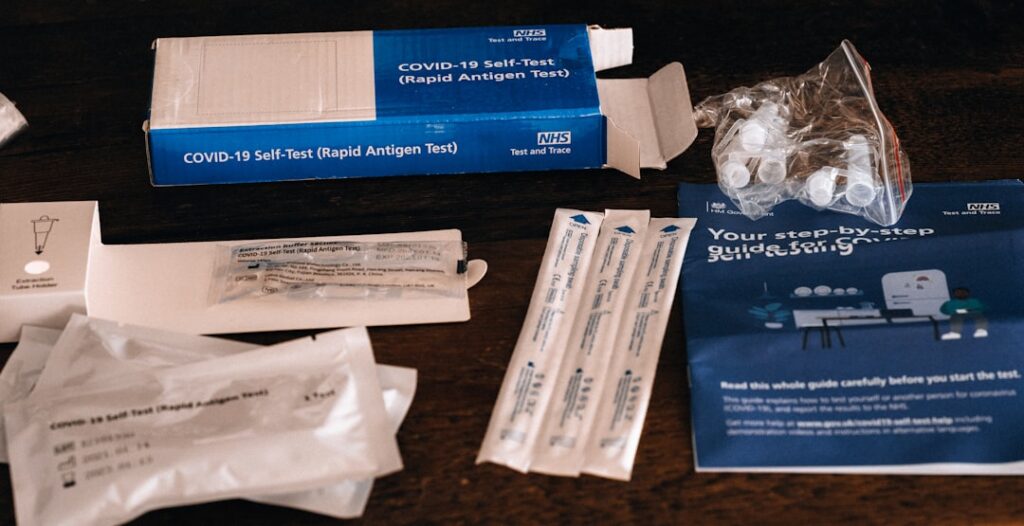
A toxic mold testing kit faces a definitional problem the moment a homeowner buys one. The kit might identify mycotoxin-producing species (the most common consumer product), or it might measure mycotoxins themselves (a separate analytical category most consumer kits do not include), or it might do neither and just identify whatever fungal genus grew on the sample. Knowing which is which determines whether the result actually answers the homeowner’s question about toxic exposure. This guide summarizes EPA, CDC, and NIEHS guidance current as of 2026 and treats kit sampling as informational rather than diagnostic; homeowners with documented health symptoms should consult a physician and a certified indoor air professional. The framework below separates mold identification from mycotoxin detection.
Is this mold, asbestos, or water damage? Get a free instant screen
Upload a clear photo of the suspect area. You'll get an instant AI screening opinion and what to do next. This is screening guidance, not a professional determination.
Screening guidance only. AI can be wrong. Confirm asbestos, mold type, or lead with lab testing or a licensed professional before acting.
The species-versus-metabolite distinction
Toxigenic fungi produce mycotoxins under specific growth conditions. Stachybotrys chartarum produces macrocyclic trichothecenes. Certain Aspergillus species (Aspergillus flavus, Aspergillus parasiticus) produce aflatoxin. Certain Penicillium species produce ochratoxin or citrinin. Aspergillus fumigatus produces gliotoxin. A mold test kit that identifies these species tells the homeowner that toxigenic organisms are present; it does not tell the homeowner whether those organisms are actively producing toxins or how much toxin is present in the environment. A mycotoxin test kit, by contrast, measures the actual toxic compounds in dust, urine, or bulk material samples regardless of whether the source organism is currently identifiable.
This distinction matters for two reasons. First, a house can have low fungal counts but high mycotoxin loads if the organism produced toxins during past growth and the toxins persist in dust. Second, a house can have high fungal counts but low mycotoxin loads if the organisms are present but not in toxin-producing conditions (insufficient substrate, wrong humidity, wrong temperature). NIEHS notes in its mold topic overview that the relationship between fungal presence and toxic exposure is more complex than popular reporting often suggests.
What most consumer “toxic mold” kits actually do
The vast majority of consumer kits sold under “toxic mold” branding identify mold species, not mycotoxins. The kit ships with a tape lift, swab, or settle plate; the homeowner collects a sample; the lab uses microscopy or PCR to identify the dominant fungal genera and flags any toxigenic species on the report. The PDF report lists the genera (Stachybotrys, certain Aspergillus, certain Penicillium) and gives relative concentrations on a four- or five-point scale. The report does not measure trichothecenes, aflatoxin, ochratoxin, or other specific toxic metabolites.
This is not a deceptive product category. The information is genuinely useful: identifying that toxigenic species are present in the indoor environment is the first analytical step before considering whether mycotoxin testing is warranted. The misunderstanding usually comes from the marketing language. “Toxic mold test” sounds like a test for the toxins; the box actually contains a test for the molds that can produce the toxins. Reading the kit’s lab analysis description before purchase clarifies which type of test is included.
ERMI panels and the species-identification toxic mold case
The ERMI (Environmental Relative Moldiness Index) panel sits at the analytical frontier of consumer-accessible mold species identification. The lab uses PCR on a vacuumed dust sample to quantify 36 indoor fungal species, including the 26 “Group 1” water-damage indicators (which include all the major toxigenic species: Stachybotrys, Aspergillus flavus, Aspergillus fumigatus, certain Penicillium species). The ERMI report does not measure mycotoxins, but it does produce the most rigorous consumer-available species panel, which is the closest most homeowners get to systematically characterizing the toxigenic-organism load in their home.
ERMI fits scenarios where a homeowner suspects significant water damage history, occupies a building with a known moisture problem, or has health symptoms that may relate to indoor air quality. The panel costs $250 to $350. Turnaround runs 10 to 21 business days due to PCR processing. The report is sophisticated enough to support pre-purchase real estate discussions, post-water-damage verification, and conversations with indoor environmental professionals.
Mycotoxin testing kits as a separate category
Mycotoxin testing measures the actual toxic compounds. Most consumer mycotoxin kits use vacuumed dust samples sent to a specialty lab that uses LC-MS or ELISA methods to quantify specific toxin classes: trichothecenes, ochratoxin, aflatoxin, gliotoxin, zearalenone, and others. Pricing runs $300 to $600 per sample depending on the toxin panel. Some lab providers also offer urine-based mycotoxin testing for medical workups, though those tests require physician coordination and are not strictly consumer products.
Mycotoxin testing fits specific scenarios. A homeowner with persistent symptoms in a house where conventional mold testing came back clean might benefit from dust mycotoxin analysis to check whether past toxins persist in the indoor environment. A homeowner with confirmed Stachybotrys growth and a sensitized household member might benefit from quantifying the trichothecene load in living-area dust. A homeowner whose physician has ordered urine mycotoxin testing might pair it with dust testing to compare body burden against environmental exposure. For more on the relationship between mold and mycotoxins, the is there a test for black mold guide covers the analytical categories.
How to pick the right kit for a toxic-mold concern
Four scenarios narrow the choice. First, suspected toxigenic growth with visible patches: tier 2 tape lift or swab from the kits-for-mold catalog identifies the genus and flags toxigenic species. This is sufficient for most cleanup decisions. Second, suspected water damage with no visible growth or whole-house concern: ERMI dust panel quantifies 36 species against a national baseline. Third, persistent symptoms in a house with clean conventional testing: dust mycotoxin panel measures the actual toxic metabolites. Fourth, medical workup ordered by a physician: urine mycotoxin testing paired with dust mycotoxin testing characterizes both body burden and environmental exposure.
EPA’s mold cleanup guidance emphasizes that the cleanup decision is largely independent of species identification: visible mold gets cleaned regardless of whether it is toxigenic. The CDC Stachybotrys page notes that the link between specific fungal exposure and specific health outcomes is less direct than popular reporting often suggests. These positions do not mean toxic mold concerns are unfounded; they mean the analytical approach should match the specific question rather than assume the most expensive kit is automatically the right one.
What a toxic mold kit cannot do
Three things sit beyond any consumer kit’s capability. First, no consumer kit can diagnose mold-related illness. The lab identifies organisms or toxins; the clinical interpretation belongs to a physician with appropriate specialty training. Second, no consumer kit can certify a building as mold-free. The kit produces a snapshot from a specific sampling event; absence of detection at one site does not characterize the whole structure. Third, no consumer kit can scope a remediation project. The kit identifies what is present; the remediation contractor scopes containment, removal, and moisture-source correction.
A related limitation: consumer kits do not establish causation between any specific organism or toxin and any specific health outcome. The kit identifies presence and concentration. Health attribution requires medical workup, exposure history, and clinical judgment that no laboratory analytical method can substitute for.
Front Range moisture context for toxic mold
Colorado’s semi-arid climate slows the typical Stachybotrys growth curve but does not prevent toxigenic species from establishing in chronic-moisture locations. Spring snowmelt loading basement footings produces the most common Front Range Stachybotrys exposure scenario. Undersized bathroom exhaust ventilation grows Aspergillus and Penicillium against shower-area surfaces over heating seasons. Swamp coolers in summer second-story rooms produce conditions that favor Aspergillus growth. Each scenario has a different toxic-mold sampling priority, which the parent mold inspection and testing hub covers in regional context.
For homeowners specifically targeting Stachybotrys, the black mold test kits catalog guide covers the Stachybotrys-specific product category. For broader toxigenic-organism screening, ERMI panels and the at-home mold test kits comparison guide walk through cost-tier decisions.
How toxic mold kit results inform downstream decisions
Four typical outcomes follow a toxic mold kit. First, a clean species-identification report with no visible growth: routine indoor air quality, no specific toxic-mold action needed. Second, a positive species-identification report (Stachybotrys or other toxigenic genus): cleanup of the visible patch with proper PPE, moisture-source correction, and possibly a follow-up ERMI to verify whole-house remediation. Third, an ERMI panel showing elevated Group 1 species against the national baseline: professional inspection to locate the source, comprehensive remediation, and verification ERMI 60 to 90 days after cleanup. Fourth, a positive mycotoxin panel: medical workup coordination, source identification, and comprehensive remediation often involving licensed mycotoxin-aware contractors.
Each outcome interacts with the household’s specific situation. A young, healthy household with a positive species result on a small patch usually responds with routine cleanup. A household with documented respiratory illness and the same positive result usually responds with professional inspection, comprehensive remediation, and possibly temporary relocation during cleanup. The kit identifies the analytical input; the household context drives the response intensity.
Common confusions in the toxic mold conversation
Three confusions appear repeatedly in homeowner discussions. The first is treating “toxic mold” and “black mold” as identical. Stachybotrys is one toxigenic species; Aspergillus flavus, Aspergillus fumigatus, and certain Penicillium species are also toxigenic. Black-pigmented growth might be Stachybotrys, but it might be other dark-pigmented species (some Cladosporium, some Alternaria) that are not significant toxin producers. The second confusion is treating any positive mold result as a toxic-mold result. Most indoor mold genera are not toxigenic; identifying Cladosporium or non-toxigenic Aspergillus does not constitute toxic-mold exposure. The third confusion is treating a kit result as a clinical diagnosis. The kit identifies organisms or toxins; clinical interpretation belongs to physicians with appropriate specialty training.
When to skip kits and call a professional
Skip the consumer kit when the visible toxigenic patch exceeds ten square feet, when growth is suspected behind finished walls, when an occupant has been diagnosed with a mold-related condition, or when the test result will support a real estate transaction, insurance claim, or litigation. Those scenarios call for an InterNACHI or IAC2 inspector with chain-of-custody sampling and an AIHA-accredited lab. The consumer kit, even at the $600 mycotoxin tier, cannot deliver the legally defensible documentation those situations require.
For legal escalations specifically (personal injury suits, lease disputes, post-divorce property assessments), the professional sampling protocol usually includes pre-sampling visual inspection documented with photos, multi-point sampling across the property, chain-of-custody documentation tracking the sample from collection through laboratory analysis, AIHA-accredited lab work, and a written report formatted for legal use. The cost of this protocol typically runs $800 to $2,000 depending on property size and sampling scope. The investment buys evidence that holds up in court rather than screening data that does not.
References
- Mold cleanup in your home — U.S. Environmental Protection Agency
- Stachybotrys chartarum facts — Centers for Disease Control and Prevention
- Mold topic overview — National Institute of Environmental Health Sciences
- Mold and moisture for Colorado homeowners — Colorado Department of Public Health and Environment
Front Range homeowners with confirmed toxigenic growth or persistent symptoms can reach out through our contact page for a referral to a local indoor environmental professional or remediation contractor familiar with mycotoxin-related cases.