Seattle Mold Inspection: Reading a House That Won’t Dry
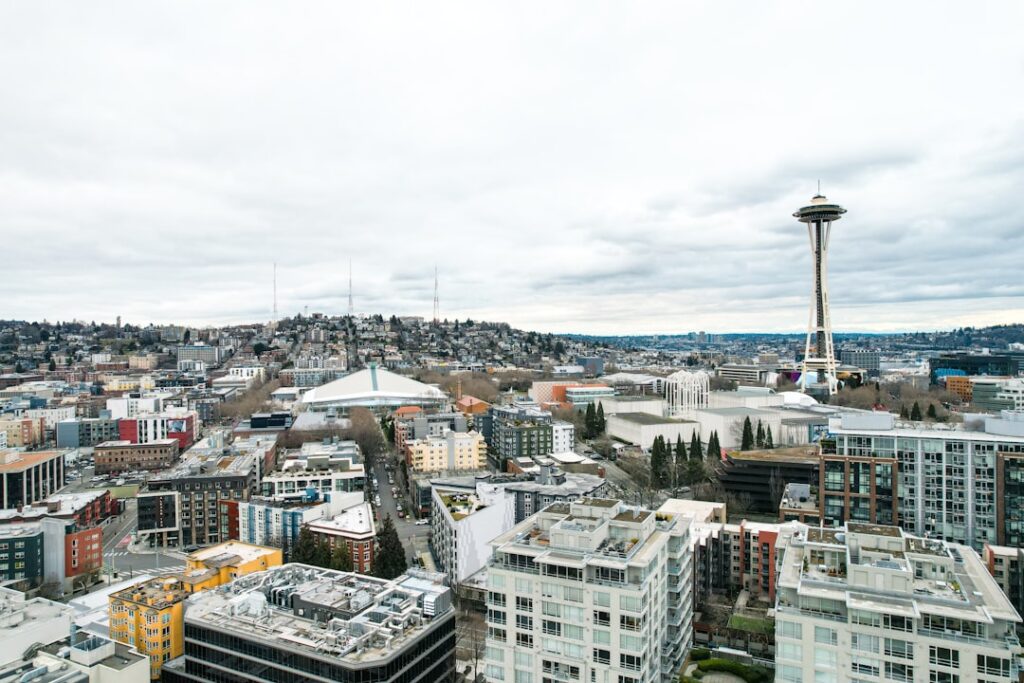
A mold inspection in Seattle is not a flood investigation. It is a slow-drying investigation. The Puget Sound marine climate delivers roughly 38 inches of rain spread across more than 150 wet days a year, and the cool overcast stretches from October through April keep outdoor humidity high enough that building assemblies never fully dry between storms. That single fact reshapes what a good inspector looks for here versus in a hot, sunny market: not one dramatic leak, but chronic dampness that lets colonies establish quietly behind siding, under floors, and along the cold edges of the roof deck.
Is this mold, asbestos, or water damage? Get a free instant screen
Upload a clear photo of the suspect area. You'll get an instant AI screening opinion and what to do next. This is screening guidance, not a professional determination.
Screening guidance only. AI can be wrong. Confirm asbestos, mold type, or lead with lab testing or a licensed professional before acting.
The one number that governs everything
Mold needs moisture, and the practical trigger is well documented. The EPA notes that mold can begin growing on a damp surface within 24 to 48 hours, and its guidance is to keep indoor relative humidity below 60 percent (ideally between 30 and 50 percent) to suppress growth (EPA, A Brief Guide to Mold, Moisture and Your Home). In most of the country a home swings above and below that line every day. In Seattle’s cool season it can sit above it for weeks. The CDC frames the health concern the same way: it is sustained dampness, not a species name, that drives the respiratory irritation, wheezing, and allergy symptoms linked to indoor mold (CDC, About Mold). A Seattle inspection is largely an exercise in finding where a house stays wet long enough for that clock to run.
Where Seattle houses actually grow mold
Three zones dominate local findings, and they trace directly to the region’s older housing stock and its foundations.
The crawlspace and the floor above it
A large share of Ballard, Wallingford, West Seattle, and Beacon Hill homes sit over vented crawlspaces with bare-dirt or thin-plastic floors. When perimeter drainage fails, or the vapor barrier is torn or missing, ground moisture evaporates upward into the joists and subfloor and pushes indoor humidity up year-round. An inspector who only looks through the access hatch misses the most diagnostic evidence: darkened band joists, efflorescence on the stem wall, and standing water at the low corner. A crawlspace this wet is the most common reason a cleaned-up mold problem comes back, and it usually needs source correction, not just wiping. Our guide to crawlspace mold removal walks through what that correction involves.
The attic and roof deck
The classic Seattle attic finding is dark staining along the underside of the roof sheathing near the eaves, where cool decking meets moist air. It is almost always caused by bathroom or dryer exhaust ducts that terminate inside the attic instead of through the roof, or by blocked soffit venting. Because the marine air dries so slowly, that condensation lingers and stains the plywood in a recognizable band. See our attic mold inspection guide for what the pattern looks like and why the fix is a duct route, not a coat of primer.
Wind-driven rain in the walls
Pre-war and mid-century houses often have wood siding laid over building paper with no modern rain-screen gap and no drainage plane. Wind-driven rain from the prevailing southwest wets the wall, and slow drying lets mold form on the back of the sheathing where no one sees it until a remodel opens the cavity. Inspectors probe these walls with pin and pinless moisture meters and infrared thermal imaging to flag cold, wet spots the eye cannot catch.
What the visit looks like
A single-family mold inspection typically runs two to four hours. A competent inspector walks the exterior envelope, then every interior room, then the attic and crawlspace, documenting moisture readings and photographing findings as they go. The tools are moisture meters, a thermal camera, and sometimes a borescope to see inside a suspect cavity without cutting it open. Seattle-experienced inspectors pay extra attention to envelope details that were once rare nationally: rain-screen or its absence, the drainage plane behind cladding, and the condition of any older vapor barriers.
Sampling is a targeted tool, not a default. The EPA is explicit that visible mold should simply be removed regardless of type, and that it does not recommend routine air sampling because there are no federal or EPA-enforceable numeric limits for indoor mold (EPA, Mold Remediation in Schools and Commercial Buildings). Air samples earn their cost mainly to check whether a damp crawlspace is contaminating the living space above; surface or bulk samples make sense when identifying the substrate will change the remediation scope. If you are weighing whether to pay for testing at all, our explainer on mold inspection versus testing lays out when a lab result actually changes a decision.
Credentials in Washington
Washington does not license mold inspectors. The state regulates asbestos and lead abatement through Labor & Industries, but mold inspection and remediation are left to private certification. That makes vetting the inspector your job. Look for an InterNACHI or IAC2 mold designation, ASHI membership, or an American Council for Accredited Certification credential such as Certified Indoor Environmental Consultant (CIEC), and verify it in the issuing body’s public directory rather than taking a logo at face value (InterNACHI mold inspection standards). One rule matters more than any letter combination: hire an inspector who does not also sell the remediation. The hiring process guide covers the independence and reference questions that apply in any market.
What it costs, and what changes the number
| Scope | Typical Seattle range |
|---|---|
| Visual-only inspection, single-family home | $400 – $600 |
| Visual plus crawlspace and 2–3 air samples with report | $700 – $1,050 |
| Full envelope investigation, thermal imaging, multiple bulk samples | $1,300+ |
Greater Seattle runs a little above national averages because complex older homes take longer to evaluate and the labor market is expensive. For how these figures compare elsewhere, see our national breakdown of mold inspection cost.
Timing the inspection to the season
Season matters more here than in most markets. Moisture-driven findings surface most readily during the October-to-April wet season, when assemblies are actually damp. A dry-summer inspection can miss an intermittent wet-season leak unless the inspector reads the historical evidence, staining, tide lines, and water marks, carefully. If the inspection is discretionary rather than tied to a sale, scheduling during or just after a sustained wet stretch gives the most diagnostic result. Before the visit, clear access to the crawlspace hatch, attic scuttle, under-sink cabinets, and any closet that shares a wall with a bathroom, and gather records of past leaks or remediation.
Fixing the source, not the symptom
If the report finds significant growth, use it to solicit at least three written remediation bids. Each should spell out containment, the materials to be removed and replaced, the moisture-source correction, and a post-remediation clearance check by an independent assessor. In Seattle that source correction usually means crawlspace encapsulation, perimeter drainage repair, attic-venting fixes, or exhaust-fan upgrades. The cheapest high-value fix is often ventilation: replacing an undersized or attic-dumping bathroom fan with a humidity-sensing model rated around 80 to 110 CFM, ducted in insulated rigid metal to an exterior termination, typically runs $400 to $900 installed. Without correcting the water source, cleanup fails, because the conditions that fed the original colony are still there. The National Institute of Environmental Health Sciences makes the same point: controlling moisture is the only durable mold control (NIEHS, Mold).
Frequently asked questions
InspectandTest serves the Colorado Front Range; the guidance above applies nationally, and Seattle readers should hire a certified local inspector with marine-climate experience. This summary reflects EPA and CDC guidance current as of 2026 and is not medical advice.