Mold Destroyer: What Homeowners Need to Know
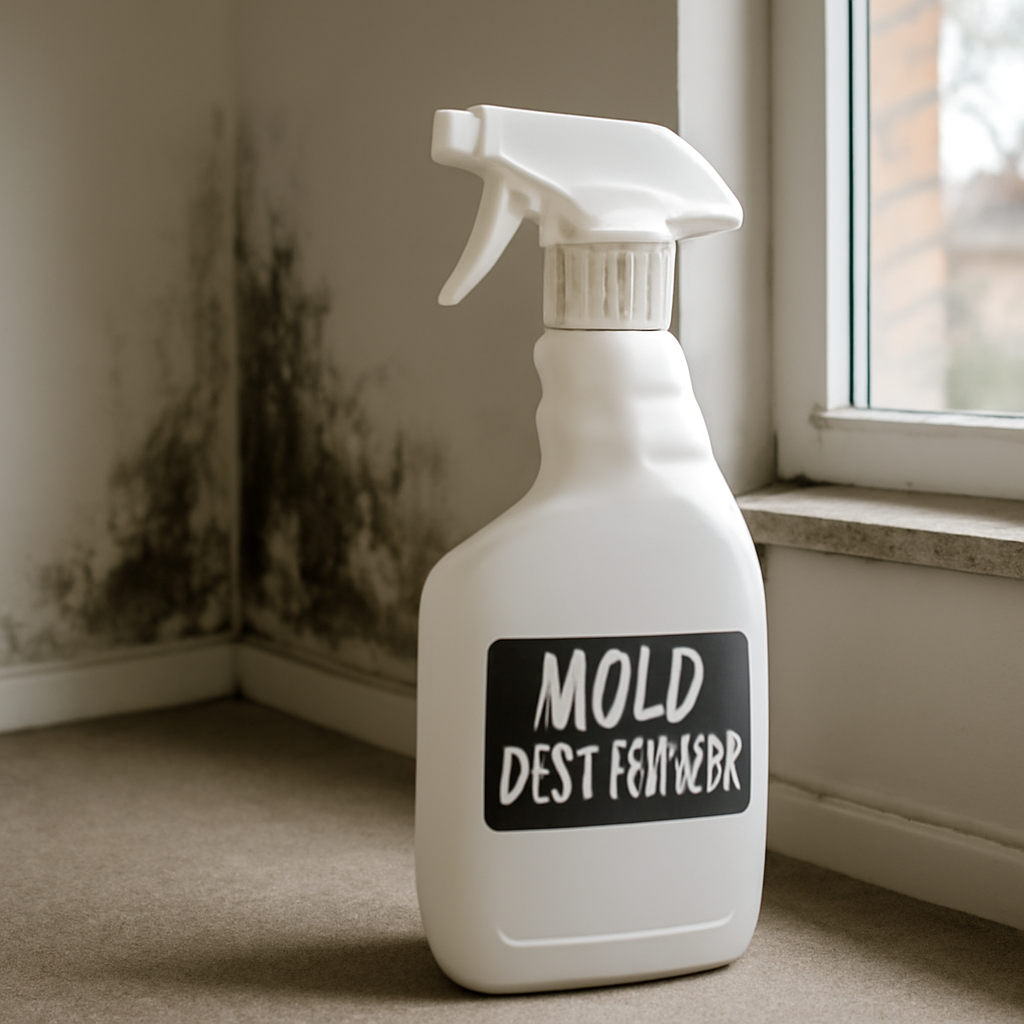
“Mold destroyer” is a marketing label rather than a regulatory category. Walk through a hardware store or scan an online retailer and the phrase shows up on sprays, fogger concentrates, paint additives, and even ultraviolet lamps. None of these products share a single mechanism or test standard. Some are EPA-registered antimicrobials, others are encapsulants, and a few are devices that claim to address airborne spores. This guide summarizes EPA and CDC guidance current as of 2026 — consult a certified remediator for visible mold larger than ten square feet, and your physician if anyone in the household has respiratory symptoms.
Is this mold, asbestos, or water damage? Get a free instant screen
Upload a clear photo of the suspect area. You'll get an instant AI screening opinion and what to do next. This is screening guidance, not a professional determination.
Screening guidance only. AI can be wrong. Confirm asbestos, mold type, or lead with lab testing or a licensed professional before acting.
What a Mold Destroyer Claims to Do
Most products marketed under this name promise three outcomes: kill living mold colonies, prevent regrowth, and remove the staining or odor associated with active growth. In practice, no single product reliably delivers all three. Bleach-based sprays excel at staining and surface kill but fail on porous substrates. Encapsulants suppress regrowth but do not penetrate established colonies. UV-C devices may neutralize spores in air passing through a chamber but cannot reach mold hidden behind drywall.
The EPA’s plain-language position is consistent across decades of guidance: removing the moisture source matters more than choosing a specific killer. A product that destroys the visible colony but leaves the leak, condensation, or humidity problem in place is a stopgap, not a solution.
The EPA-Registered Antimicrobials
Products that legitimately claim to kill mold must carry an EPA registration number on the label. The active ingredient is typically sodium hypochlorite (bleach), quaternary ammonium compound (quat), hydrogen peroxide, or a phenolic. Each chemistry has trade-offs. Bleach is fast and cheap but corrodes metals and bleaches fabrics. Quats stay active longer on surfaces but trigger asthma reactions in sensitive occupants. Hydrogen peroxide formulations break down to water and oxygen but cost more per ounce.
Reading the EPA registration on the label tells a homeowner what the product was actually tested against. A registration for “mildew on hard, non-porous surfaces” does not authorize the manufacturer to claim efficacy on drywall or wood. Marketing copy frequently outpaces the underlying registration scope.
Encapsulants and Mechanical Products
A second category — products like Concrobium Mold Control — works by drying into a thin film that physically crushes spores. These products do not carry EPA pesticide registrations because they contain no biocide. They are safer in occupied homes, kid bedrooms, and pet-occupied basements. The trade-off is slower visible results: encapsulants do not bleach the staining, so previously moldy surfaces may still look discolored after treatment even when the colony is dead.
This is the kind of product that pairs well with our cluster on what prevents mold from growing — encapsulation is a prevention tool, not a remediation tool.
Mold-Resistant Paint Additives
Several brands sell powdered or liquid additives that mix into latex paint to suppress mold growth on the painted surface. The active ingredients are typically zinc pyrithione or similar long-acting fungistats. These products do not destroy existing colonies — applying them over visible mold simply paints over the problem, which is why every reputable additive label instructs the user to remove growth and address moisture first.
Used correctly, paint additives extend the time before a freshly painted basement, bathroom, or laundry room shows new growth. They are not a substitute for ventilation, dehumidification, or vapor barriers. For a deeper look at what causes mold to return after cleaning, our piece on what causes mold to grow on walls covers the moisture pathways at play.
Fogging and Atomization Systems
Professional remediators sometimes use thermal foggers or cold-fogging machines to disperse antimicrobials as a fine mist throughout an enclosed space. Consumer versions of these foggers — often sold under “mold destroyer” branding — are available for under $200 and typically use a botanical or hydrogen-peroxide solution. The technique distributes the active ingredient to surfaces a sprayer cannot reach, including the upper portions of walls, ceiling corners, and the back of furniture.
Fogging is not a remediation. The CDC and EPA both caution that fogging without prior cleanup leaves dead spores and biological debris that can still trigger allergic and inflammatory responses. The Institute of Inspection, Cleaning, and Restoration Certification (IICRC) S520 standard treats fogging as a secondary step performed after physical removal of contaminated materials.
UV-C Light Devices
UV-C wavelength light damages microbial DNA on direct exposure. A handful of consumer devices market themselves as mold destroyers by mounting UV-C lamps inside HVAC ductwork or air handlers. The efficacy depends on exposure time — air moving through the unit may not contact the lamp long enough for spore inactivation. Manufacturer testing typically reports log-reduction numbers under laboratory airflow that may not match real residential conditions.
UV-C devices do not reach mold hidden behind drywall, under flooring, or inside wall cavities. They are an air-treatment supplement at best, not a remediation tool. Direct UV-C exposure also damages skin and eyes, which is why properly installed units are concealed inside the duct or air handler housing.
What the EPA Says About the Larger Picture
The EPA’s published mold guidance is consistent: there is no practical way to eliminate all mold and mold spores in the indoor environment because they are everywhere outdoors and constantly enter through doors, windows, ventilation, and on clothing. The goal is moisture control. Mold cannot grow without moisture, period. Any product marketed as a destroyer that does not also address the moisture source is selling a partial solution.
That framing changes how a homeowner should evaluate the shelf. The product is one component of a plan that also includes a humidity meter, a dehumidifier appropriate for the space, leak repair, ventilation upgrades, and in some cases professional source removal.
How to Vet a Mold Destroyer Product
Five questions help separate marketing from substance:
- Does the label show an EPA registration number, or does it work mechanically (encapsulation) without one?
- Does the label specify which surfaces it is tested on — hard non-porous only, or porous substrates as well?
- What dwell time does the manufacturer require for the kill claim to apply?
- Does the product address staining, the colony, both, or neither?
- What does the manufacturer say about porous materials, fabric, and natural stone?
If a product cannot answer those questions clearly on the label or in its safety data sheet, the marketing is running ahead of the chemistry. The InterNACHI guidance to consumers and inspectors alike is to treat unverifiable claims with skepticism.
When Professional Remediation Is the Right Path
No consumer “mold destroyer” — spray, fogger, paint additive, or UV device — substitutes for professional remediation when growth exceeds the EPA’s ten-square-foot threshold, when it is suspected inside wall cavities, when occupants have asthma or immune compromise, or when sprays applied at the right concentration with the right dwell time still produce recurrence within 30 days.
A certified remediator brings containment barriers, negative-pressure HEPA filtration, source removal capability, and post-remediation verification testing that no consumer product provides. The cost difference is real — Front Range remediation typically runs $1,500 to $6,000 — but so is the difference in outcome.
Comparing Categories Head to Head
The five product categories — EPA-registered antimicrobials, mechanical encapsulants, paint additives, foggers, and UV-C devices — solve different parts of the problem rather than competing as alternatives to each other. EPA-registered sprays handle visible surface colonies on hard, non-porous substrates. Encapsulants prevent regrowth in damp areas where moisture cannot be fully eliminated. Paint additives extend the useful life of finished surfaces in bathrooms and laundry rooms. Foggers reach surfaces a sprayer cannot in attics, crawlspaces, and rim joists. UV-C devices supplement HVAC air quality but cannot reach hidden growth.
The methodical approach is to identify the specific moisture and growth scenario, select the appropriate category, and accept that no single product handles everything. Homeowners who expect a single bottle to function as a complete remediation typically cycle through three or four brands before realizing the issue is product-category mismatch rather than brand quality.
The Moisture Audit Step
Before purchasing any “mold destroyer,” a moisture audit is the more valuable spend. A $15 hygrometer placed in each suspect room reveals whether humidity is above the 50% threshold mold requires. A $30 to $80 moisture meter pressed against suspect walls identifies whether substrate moisture is elevated. Both tools combined cost less than two bottles of premium spray and produce data the spray cannot.
Audit findings drive product selection. Humidity consistently above 60% with elevated wall moisture indicates a moisture-management problem that no spray fixes — the solution is dehumidification, ventilation, or leak repair. Humidity at normal levels with localized elevated readings near a known plumbing chase indicates a leak that needs plumbing repair before any cleaning. Spray product purchase makes sense after the audit, not before.
Front Range homeowners with finished basements particularly benefit from this audit approach. Colorado basements experience summer humidity spikes during monsoon weeks and winter condensation on cold exterior walls. Both patterns can be quantified with $50 in instruments and addressed structurally for less than the multi-year cost of repeated spray-and-clean cycles.
How to Use Any of These Products Safely
Ventilate the area before, during, and after application. Wear nitrile gloves, eye protection, and an N95 respirator at minimum. Test on a hidden patch first. Follow label dwell times precisely. Dispose of contaminated materials in sealed bags. Document the affected area with photos before, immediately after, and 30 days later — recurrence within that window means the moisture problem is still active, regardless of what the spray bottle said.
Tracking Whether Products Actually Worked
The single best way to evaluate any mold destroyer product is documented before-and-after observation over a 30 to 60 day window. The active ingredient claims on the label matter less than the actual outcome in your specific moisture conditions. Photograph the affected area before treatment with a wide shot and a close-up. Photograph immediately after treatment. Photograph again at 7 days, 30 days, and 60 days.
Products that prevented recurrence for 60+ days proved their value. Products where growth reappeared within 14 days demonstrated that they masked the symptom without addressing the cause. The 30-day mark is roughly where most moisture-source-driven recurrence appears, which is why the EPA’s guidance uses that window for evaluating remediation success.
Front Range homeowners particularly benefit from this multi-month tracking because of seasonal moisture variation. A treatment applied in October may appear successful through dry winter weeks and then fail during March snowmelt. Without the 60-day documentation window, that pattern is invisible and the homeowner concludes the product worked when it merely received favorable seasonal timing.
References
- EPA Brief Guide to Mold, Moisture, and Your Home — U.S. Environmental Protection Agency
- CDC Dampness and Mold Fact Sheet — Centers for Disease Control and Prevention
- InterNACHI Mold Inspection Resources — International Association of Certified Home Inspectors
- EPA Mold Remediation Guide — U.S. Environmental Protection Agency
If recurring mold in a Front Range bathroom, basement, or crawlspace has resisted three rounds of consumer sprays, that pattern usually points to a moisture issue a bottle cannot fix. Reach out through our contact page to talk to a vetted local inspector before spending more on the wrong product.