Mold and Asbestos Inspection: Combined Pre-1981 Housing Guide
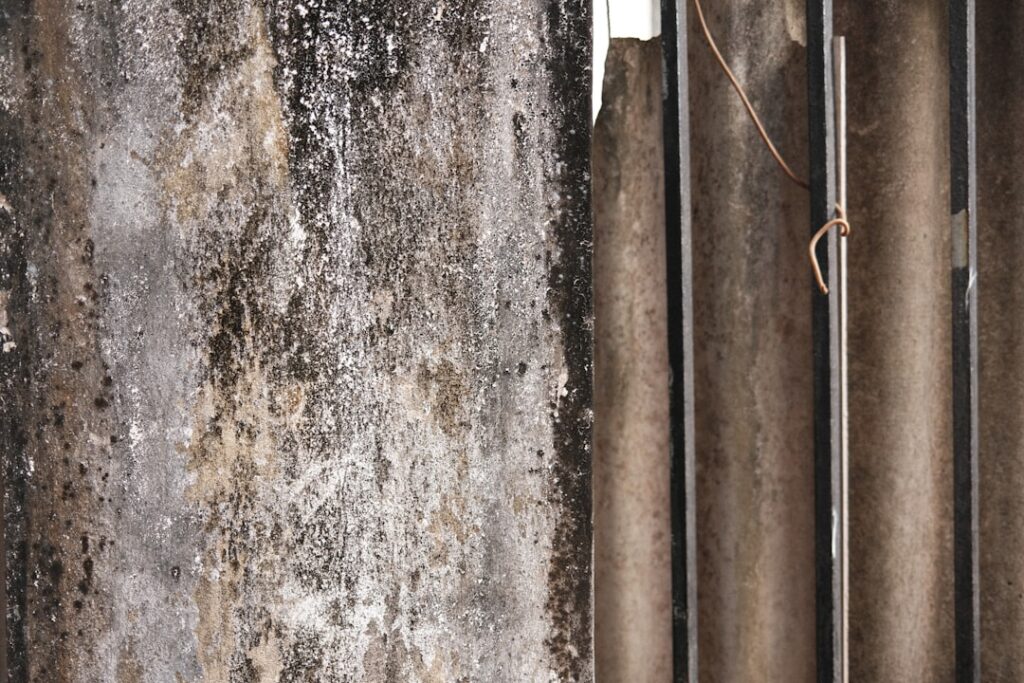
Pre-1981 housing carries two distinct indoor-environmental risks that often need to be evaluated together. Mold grows wherever building materials stay wet long enough — fifty-year-old basements and crawlspaces qualify routinely. Asbestos is present in nearly every pre-1981 home in some form: floor tiles, pipe-wrap insulation, popcorn ceilings, joint compound, vermiculite insulation. A combined mold and asbestos inspection identifies both classes of hazard in a single scoping visit and is the right approach for buyers, sellers, and renovators of older homes. This guide summarizes EPA, CDC, and OSHA guidance current as of 2026; consult your physician for symptoms and a certified professional for testing decisions on specific properties.
Is this mold, asbestos, or water damage? Get a free instant screen
Upload a clear photo of the suspect area. You'll get an instant AI screening opinion and what to do next. This is screening guidance, not a professional determination.
Screening guidance only. AI can be wrong. Confirm asbestos, mold type, or lead with lab testing or a licensed professional before acting.
What a combined mold and asbestos inspection covers
A combined inspection brings two distinct sampling protocols into one visit. The mold portion is a visual walk-through with moisture-meter readings and optional air sampling (one outdoor control plus one to three indoor spore-trap samples). The asbestos portion is a visual material survey identifying suspect asbestos-containing materials, with bulk sampling of three to ten suspect materials sent to an accredited lab for polarized-light-microscopy analysis. Some inspections add air sampling for asbestos, particularly when there is recent damage to suspect materials.
The combined visit takes longer than either individual inspection — typically three to five hours for a two-thousand-square-foot home. Buyers gain efficiency: one inspector visit, one mobilization fee, and a single written report covering both hazards. The drawback is that not every inspector is credentialed for both. A mold-only inspector cannot legally collect asbestos samples for compensation in most states, and vice versa. Ask up front whether the firm holds both an asbestos building-inspector license and a mold-assessor credential.
Why pre-1981 housing needs both
The EPA banned most uses of asbestos in residential construction over multiple rulemakings between 1973 and the late 1980s, but asbestos-containing inventory continued to be installed through the early 1980s as manufacturers used up existing stock. A reasonable rule of thumb is that any home built before 1981 is likely to contain asbestos somewhere unless prior renovation explicitly removed it. The most common locations are pipe-wrap insulation on basement plumbing, nine-inch vinyl floor tiles, popcorn ceiling texture in living areas, joint compound on drywall seams, and HVAC duct insulation.
Mold is a moisture problem rather than an age problem, but older homes are more likely to have moisture problems. Original foundations rarely have continuous waterproofing membranes, basements are often finished without proper vapor management, and decades-old plumbing has accumulated small failures. The combination — older moisture-prone structures with extensive asbestos-containing materials — creates a specific renovation hazard. Disturbing wet building materials during mold remediation can liberate asbestos fibers if those materials contain asbestos. Readers can review the broader pre-1978 context in our asbestos and lead pre-1978 housing guide.
The visual asbestos survey
The asbestos portion starts with a material-by-material visual inventory. The inspector documents every suspect material — pipe insulation, floor tiles, ceiling textures, joint compound, vermiculite in the attic, transite siding panels, mastic adhesives. Each material gets a location notation, an estimated quantity, and a condition rating (intact, damaged, or significantly deteriorated). The inspector then samples a representative subset of suspect materials, typically three to ten samples depending on home size, and ships those to an accredited lab for polarized-light microscopy.
Sample collection requires specific technique to avoid liberating fibers during the sample-taking process. Properly trained inspectors wet the sampling location with amended water, take a small piece into a sealed bag, and label chain-of-custody documentation. OSHA’s asbestos standard for general industry (29 CFR 1910.1001) sets the procedural baseline for sampling, though residential inspectors typically follow state-specific licensing requirements.
The mold portion alongside
The mold portion of the combined inspection follows the same scope as a standalone mold inspection. The inspector walks the property, photographs visible mold and water staining, takes moisture-meter readings on suspect surfaces, and notes humidity throughout the building. Sampling is optional and depends on what the visual portion finds. The combination of mold and asbestos sampling is logistically efficient — the same lab often handles both — but the sampling itself stays distinct.
How the report should distinguish findings
A combined report should clearly separate mold findings from asbestos findings, with distinct sections, separate executive summaries, and separate recommendations. The two hazards have different remediation contractors, different cost ranges, and different urgency levels. A confirmed asbestos finding in intact undisturbed material may need only labeling and a management plan; a positive mold finding in a damp basement needs both remediation and moisture-source correction. Mixing the recommendations into one section confuses the homeowner about what to do first.
For sequencing, asbestos sampling results should drive any subsequent mold remediation plan. If a pre-1981 home has confirmed asbestos in materials adjacent to mold-affected areas, the mold remediation contractor needs to coordinate with an asbestos abatement contractor to avoid disturbing asbestos-containing materials during demolition. Front Range readers can read the related mold inspection hub for additional remediation context.
Front Range relevance and service-area framing
InspectandTest covers nine Colorado Front Range counties — Denver, Douglas, Elbert, Arapahoe, Jefferson, El Paso, Adams, Boulder, and Broomfield. Most pre-1981 housing in these counties is concentrated in older Denver and Boulder neighborhoods, parts of Colorado Springs, and the older sections of Arapahoe and Jefferson Counties. Buyers and renovators in those areas have the highest probability of needing a combined inspection.
Colorado licenses asbestos building inspectors under CDPHE’s Air Pollution Control Division. Mold assessors are not separately licensed in Colorado, but reputable assessors typically hold InterNACHI or IAQA credentials. A combined inspection in Colorado requires the inspector to hold the CDPHE asbestos building-inspector certification and an independent mold credential.
What a combined inspection costs
Pricing depends on home size, number of bulk asbestos samples, and number of mold air samples. A typical combined inspection on a two-thousand-square-foot Denver bungalow runs from about eight hundred to fifteen hundred dollars, with the asbestos portion adding three to seven hundred dollars over the mold-only baseline. Lab fees are usually itemized separately from the inspection labor. Get the scope and pricing in writing before scheduling. The CDC’s mold remediation guidance and EPA’s residential asbestos materials both emphasize that the assessment is a separate scope from any subsequent remediation work.
When to call a professional
Combined mold and asbestos inspections are warranted on any pre-1981 home with visible water damage or musty odor, on any pre-1981 home prior to renovation that will disturb floor tiles, ceiling textures, pipe insulation, or wall finishes, and as part of pre-purchase due diligence on older Front Range housing. Front Range buyers researching a specific older neighborhood can read related context in our crawlspace mold inspection guide, which covers a frequent mold pathway in older Colorado housing stock.
Sampling differences, sequencing, and combined-versus-separate cost
The two hazards demand different sampling methodologies, and conflating them is how an otherwise careful inspection ends up missing a problem. Mold sampling on the air side relies on a calibrated pump drawing a measured volume of air through a spore-trap cassette, with an outdoor control taken on the same day for comparison; surface sampling uses tape lifts or swab kits on visible growth. Asbestos sampling is fundamentally a bulk-material process — the assessor cuts or breaks off a small representative sample of suspect material (acoustic ceiling texture, vinyl floor backing, pipe insulation, mastic, plaster) and sends it to a laboratory for polarized-light microscopy under EPA’s bulk-sample method, or transmission electron microscopy for air-side clearance testing after abatement. The two analyses are not interchangeable, and a single lab rarely handles both with equal credibility.
Sequence and safety matter at least as much as the sample count. Asbestos sampling should be performed first, before any opening or disturbance of suspect materials, because friable asbestos releases respirable fibers the moment a surface is broken. A competent combined-inspection workflow contains the work area, samples suspect asbestos under wetted-down conditions or with HEPA-shrouded tools, gets the lab results back, and then proceeds with any invasive moisture probing or wall-cavity inspection for mold. Reversing the order — opening walls for moisture investigation before knowing whether the wall finish contains asbestos — exposes the assessor and occupants to fibers that would have stayed bound up otherwise.
Cost ranges depend on whether the work is bundled or split. A combined mold and asbestos inspection on a typical pre-1981 single-family home tends to run roughly $500 to $1,000 depending on the number of samples and the home’s size, with the combined visit saving travel time and a separate report-writing pass. Booking the work separately runs roughly $400 to $600 for the mold side and $300 to $800 for the asbestos side depending on bulk-sample count. Combined inspections make sense when a rehab or renovation is planned and the homeowner needs both data sets to budget the project. Separate inspections make sense when only one of the two hazards is suspected and there is no demolition planned, because the sampling expense is hard to justify without an actionable next step.
References
- Learn about asbestos — EPA
- Mold and moisture overview — EPA
- Asbestos standards — OSHA
- Colorado asbestos regulation — CDPHE
- Basic facts about mold and dampness — CDC
Front Range homeowners weighing a combined mold and asbestos inspection on a pre-1981 home can reach out through our contact page for a connection to a vetted local inspector credentialed in both disciplines.