How to Rid the Body of Mold Toxicity: A Plain Guide
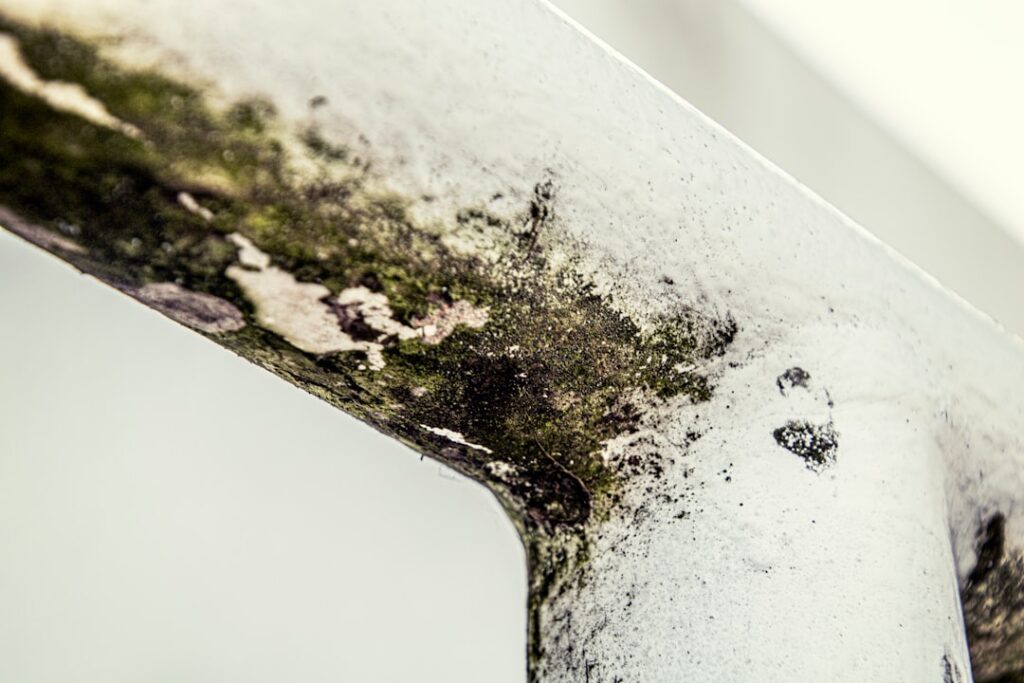
How to rid the body of mold toxicity is a medical question that belongs with a physician — primary-care doctor, allergist, or pulmonologist. No website can or should advise on detoxification protocols, supplement regimens, or any treatment for suspected mold-related illness. This guide redirects the medical question to the appropriate professional and focuses on the home side: eliminating the source so that any clinical treatment is not undermined by ongoing exposure. It summarizes EPA, CDC, and NIEHS guidance for homeowners and is not medical advice. Anyone with health concerns believed to be related to mold should consult a physician immediately.
Is this mold, asbestos, or water damage? Get a free instant screen
Upload a clear photo of the suspect area. You'll get an instant AI screening opinion and what to do next. This is screening guidance, not a professional determination.
Screening guidance only. AI can be wrong. Confirm asbestos, mold type, or lead with lab testing or a licensed professional before acting.
How to Rid the Body of Mold Toxicity: The Medical Question
The clinical landscape around “mold toxicity” is contested in mainstream medicine. Some clinicians use frameworks like CIRS (chronic inflammatory response syndrome) or biotoxin illness models that include specific testing and treatment protocols. Other clinicians do not recognize these frameworks and approach symptoms through allergy, immunology, pulmonology, or infectious disease workups. Direct-to-consumer testing services and supplement-driven protocols populate the same conversation. Sorting through this — choosing tests, choosing treatments, choosing providers — is a medical decision, not a homeowner decision.
What the published literature does support consistently: source remediation is essential. Whatever clinical protocol a physician selects, it cannot succeed while the patient continues to be exposed to the contributing environment. The home-side action — finding and eliminating the indoor mold source — is the part homeowners can and should act on directly.
Why Source Remediation Is the Home-Side Answer
The CDC, EPA, and NIH-indexed literature align on the home-side response: identify and stop the moisture source, remove contaminated porous materials, clean non-porous surfaces, dry the assembly fully, and verify. This response is the same whether occupants are experiencing symptoms or not, because the building action that benefits everyone is the same: reduce indoor mold burden.
Whatever the medical workup reveals, an ongoing indoor mold source undermines treatment. A patient receiving allergy treatment with environmental allergen exposure continuing at home will not see full symptom resolution. The same logic applies across other potential clinical pathways: treat the underlying clinical condition while reducing or eliminating the contributing environmental exposure.
The Home-Side Source-Elimination Playbook
The playbook is the same playbook EPA recommends for any residential mold problem. The framing changes only in the urgency — when occupant health is implicated, the threshold for action drops sharply.
Step 1: Identify the Moisture Source
Mold cannot grow indoors without sustained moisture. Find the source. Common sources include plumbing leaks (often slow and hidden), roof leaks, basement seepage, condensation on cold surfaces, inadequate exhaust ventilation, humidifier overuse, post-flood drying failures, and HVAC condensation issues. Moisture meters and infrared cameras help inspectors find sources that visual inspection misses.
Step 2: Assess Scope
How much contamination is visible? Are hidden areas suspected? Is HVAC involved? Is the moisture source ongoing or has it been stopped? These questions drive whether DIY cleanup is appropriate or whether a credentialed remediation contractor should handle the work.
Step 3: Contain Before Cleaning
For larger contamination, physical containment (typically 6-mil polyethylene barriers) and negative air pressure inside the containment zone prevent disturbance-aerosolized spores from reaching unaffected areas. This is professional remediation territory.
Step 4: Remove Contaminated Porous Materials
Drywall paper, carpet, padding, ceiling tile, particleboard, insulation, and unsealed wood that grew mold typically get removed and replaced rather than surface-cleaned. EPA does not recommend bleach for porous surfaces because it does not penetrate to embedded roots.
Step 5: Clean Non-Porous Surfaces
Detergent and water on tile, sealed concrete, finished metal, and glass. Mechanical scrubbing removes the colony. PPE includes N95 respirator, gloves, and eye protection.
Step 6: Dry the Assembly
Moisture meters confirm framing and substrate moisture content drop into the safe range before reconstruction. Wood typically should read below 16 percent. Dehumidifiers and high-volume drying fans speed the process.
Step 7: Verify
Post-remediation verification — visual inspection paired with air sampling and outdoor controls — confirms the cleanup worked. Persistent indoor amplification of water-damage indicator species signals incomplete remediation. The mold inspection hub covers verification protocols in detail.
Vulnerable Occupants and Source Remediation Urgency
Households with immunocompromised members, infants, elderly residents, severe asthmatics, or people with chronic respiratory disease should treat source remediation as a high priority. The threshold for visible-mold removal drops, and the case for professional remediation with containment rises. Temporary relocation during remediation work is often appropriate for vulnerable household members — that call belongs with their physician and the remediator working in coordination.
Coordinate With the Physician
For homes where a household member is in active clinical evaluation or treatment for suspected mold-related illness, looping the physician into the remediation timeline matters. Some clinicians want patients out of the affected space during remediation; some want documentation of the scope and post-remediation verification for their records. The physician’s preferences should shape the homeowner’s schedule.
Use Credentialed Inspectors and Remediators
Vulnerable households should default to credentialed professionals rather than DIY work, even for relatively small contamination. The cost differential between DIY and professional remediation for a 30-square-foot patch is meaningful but secondary to the documentation, containment, and verification that professionals provide. IICRC certification is the industry baseline credential to verify.
Common Mistakes Homeowners Make
Three mistakes recur in homeowner attempts to address indoor mold.
Cleaning Without Source Fix
Surface-cleaning visible mold without fixing the moisture source guarantees regrowth. Within weeks to months, the same patch reappears, often larger than before. Identify and eliminate the moisture pathway first.
Painting Over Mold
Paint does not kill mold roots. Mold-resistant paint suppresses surface growth on dry assemblies; it does nothing on actively wet substrates with established colonies. Painting over visible mold leaves the colony growing under a cosmetic cover. Remove the contaminated material and address the source.
Treating Symptoms Without Environmental Action
If a household member is being treated for symptoms while indoor mold continues, treatment outcomes suffer. The home-side action runs in parallel with whatever clinical workup is happening. Neither track alone is sufficient when both home and health are implicated.
Front Range Context: Local Moisture Sources to Investigate
Colorado homes face predictable moisture cycles. Spring snowmelt drives basement wall seepage. Summer monsoon storms test roof flashings. Winter brings indoor humidity from heating-season showering and cooking, with condensation forming on cold surfaces in poorly insulated assemblies. Tight production homes built since the 1990s often have insufficient exhaust ventilation, allowing indoor RH to drift above the EPA-recommended 30 to 50 percent range during winter.
CDPHE indoor-air resources align with EPA: control moisture, clean visible mold, hire professionals for large or hidden contamination, prioritize fast action for vulnerable occupants. The local certified-inspector landscape includes practitioners who do not also offer remediation services — that separation is worth seeking to avoid the conflict of interest where the inspector benefits from finding contamination. The plain-language toxic-mold terminology guide covers the distinction between allergenicity and mycotoxin production.
Verification That Source Remediation Worked
Post-remediation verification matters for both home and health context.
Visual
No visible mold remains. Reconstructed assemblies are clean. Any persistent staining gets investigated.
Moisture
Moisture meters confirm framing and substrate are in the safe range across the remediated zone.
Air
Post-remediation air sampling, compared to a simultaneous outdoor control, should show indoor spore counts at or below outdoor levels for marker species. Persistent indoor amplification suggests something was missed.
Smell
The musty odor that often accompanies mold colonies should be gone after successful remediation. Persistent musty smell signals possible hidden growth.
Symptoms Track Over Time
Symptoms in occupants, if mold-related, typically begin to improve after successful source remediation — but timing varies by individual and condition. This is a physician’s call to monitor, not a homeowner’s.
What to Expect From a Credentialed Inspector
A typical inspection for a homeowner concerned about indoor mold begins with a homeowner interview covering symptom timing, building history, known water events, and prior remediation. The inspector then walks the home visually, noting any visible mold, water staining, peeling paint, or musty smells. Moisture meter readings characterize substrate moisture content at suspect locations and at locations across normal envelope surfaces for baseline comparison. Infrared imaging may identify cold or wet zones not visible to the eye. Selective sampling — air samples paired with simultaneous outdoor controls, surface samples on visible suspect locations — produces lab data on species and concentrations. The deliverable is a written report with observations, lab data, interpretations, and recommendations.
Expect $300 to $800 for a typical Front Range residential inspection with limited sampling, with more extensive sampling protocols pushing costs higher. The report has value beyond immediate remediation decisions: insurance documentation, real-estate-transaction support, clinical records for treating physicians, and baseline comparison for any future re-inspection all benefit from formal documentation.
Coordination Through the Treatment Period
For households where a member is in active clinical evaluation or treatment, ongoing coordination between home and clinical tracks matters. Share inspection findings, remediation scope, and post-remediation verification with the treating physician. Some clinicians want the patient temporarily relocated during the remediation work; some want air-quality documentation for clinical records; some want specific post-remediation re-testing protocols. The physician’s preferences should shape the homeowner’s plan and schedule.
When to Call a Professional
For medical questions: a physician, always. Symptom evaluation, testing, and treatment all belong with a clinician — not a website, not a remediator, not a direct-to-consumer testing service. For home-side questions: a credentialed mold inspector or remediation contractor when contamination exceeds 10 square feet, when hidden growth is suspected, when HVAC components are involved, when occupants include vulnerable household members, when DIY cleanup keeps recurring, or when the moisture source cannot be identified. The home plus doctor testing pathway covers the two-track approach.
Why Source Remediation Outperforms Symptom-Focused Approaches Alone
For households dealing with both home findings and occupant symptoms, source remediation produces measurable benefits that symptom-focused approaches alone cannot: lower indoor spore loads, reduced ongoing exposure, reduced building damage progression, and documented environmental context for the treating physician’s clinical reasoning. Symptom-focused approaches without environmental action address only one side of the equation. The combination of medical evaluation plus environmental remediation provides the most complete response when both home and health are implicated.
Costs balance accordingly. A typical Front Range moderate-scope professional remediation runs $1,500 to $4,500; the corresponding inspection runs $300 to $800. These costs sit alongside any clinical evaluation costs in the same household. Insurance treatment varies: homeowner policies often exclude mold remediation unless triggered by a covered sudden water-loss event; health insurance covers clinical evaluation under standard billing. Plan accordingly across the two insurance tracks.
References
- About Mold — Centers for Disease Control and Prevention
- Brief Guide to Mold, Moisture, and Your Home — U.S. Environmental Protection Agency
- Mold Health Topics — National Institute of Environmental Health Sciences
- Mold and Dampness — American Lung Association
Front Range homeowners wanting an environmental scope while a physician evaluates symptoms can reach out through our contact page for a connection to a vetted local inspector. Medical questions go to your physician first.