Difference Between Black Mold and Regular Mold Explained
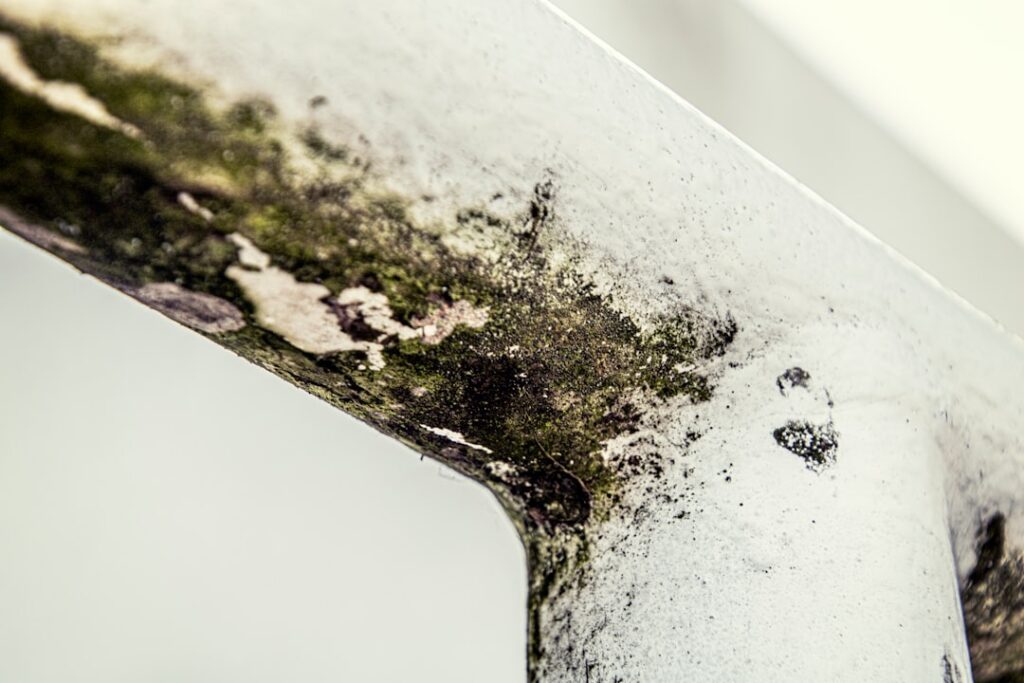
The most common reason homeowners ask “what is the difference between black mold and regular mold” is health. Specifically, the question behind the question is whether the dark patch on the wall is going to harm anyone in the household. The honest answer requires separating what is well-established about mold health effects from what gets repeated in media coverage that runs ahead of the evidence. This guide focuses on the health-risk-profile differences between Stachybotrys (commonly called black mold) and the regular indoor molds — Cladosporium, Penicillium, Aspergillus — with attention to when species identification actually matters for the household and when it does not. This guide summarizes EPA and CDC guidance current as of 2026 — consult a certified mold inspector for testing decisions and your physician for symptom evaluation.
Is this mold, asbestos, or water damage? Get a free instant screen
Upload a clear photo of the suspect area. You'll get an instant AI screening opinion and what to do next. This is screening guidance, not a professional determination.
Screening guidance only. AI can be wrong. Confirm asbestos, mold type, or lead with lab testing or a licensed professional before acting.
What Is the Difference Between Black Mold and Regular Mold for Health
The health-risk profile splits roughly into three categories. Allergic responses — the most common health effect across all common indoor molds. Respiratory irritation — produced by spore exposure at higher concentrations regardless of species. Specific clinical effects from mycotoxins or invasive growth — relevant for narrow subsets of species under specific exposure conditions. Stachybotrys produces concern in the third category because of its mycotoxin profile under sustained-wet conditions; regular molds produce concern in the first two categories primarily, with some Aspergillus species crossing into invasive infections for severely immunocompromised individuals.
For the typical household with healthy occupants and a small to moderate visible colony, the practical health concern is allergic and irritation exposure rather than toxic exposure. Sensitized individuals may experience nasal congestion, sneezing, eye irritation, throat discomfort, and in asthmatic individuals, exacerbations of underlying respiratory disease. These responses are common to most indoor mold exposures and resolve when the colony is cleaned up and the moisture source is addressed. The CDC’s framing emphasizes cleanup as the right action regardless of species rather than risk stratification by species name.
Mycotoxins and Stachybotrys
Stachybotrys chartarum has been studied more intensively than most indoor mold species because of media attention to its association with specific health events. The species produces mycotoxins called macrocyclic trichothecenes under specific growth conditions on cellulose substrates that have been wet for an extended period. Whether mycotoxin exposure from typical residential Stachybotrys colonies produces specific clinical outcomes in healthy adults remains an active research question; the available evidence supports cleanup of visible growth as the right action without supporting specific clinical predictions for individual exposed occupants.
The NIH and CDC have both noted that early case reports linking infant pulmonary hemorrhage to Stachybotrys exposure were not subsequently confirmed by later epidemiological work, and the public health framing shifted to general mold cleanup guidance rather than Stachybotrys-specific warnings. The current consensus is that Stachybotrys cleanup is warranted because the species indicates substantial water damage and because allergic exposure to any extensive mold colony is undesirable, rather than because of confirmed individual mycotoxin effects. The position is reflected in the EPA and CDC guidance documents cited in this guide. The broader risk discussion lives at a 2026 plain-language guide to which black mold is dangerous.
Allergic Effects: Common to All Indoor Molds
Allergic responses to indoor mold exposure are well-documented across the common species. Cladosporium is one of the most clinically significant allergens identified by allergy testing globally, often included in standard indoor allergen panels. Penicillium and Aspergillus species are also frequent allergens. Alternaria is associated with particularly strong allergic responses, including some research linking exposure to asthma severity in sensitized children.
For sensitized individuals, the allergic response does not depend strongly on whether the responsible species is Stachybotrys or Cladosporium — both can trigger reactions, and many sensitized people react to multiple genera. The practical implication for households with allergic occupants is that any visible mold colony should be cleaned up regardless of species, that ongoing exposure should be minimized while cleanup proceeds, and that allergic symptoms that persist after visible cleanup may indicate hidden growth or other allergen sources that warrant further investigation.
Respiratory Irritation From Spore Exposure
Even non-allergic individuals can experience respiratory irritation from elevated indoor spore concentrations. This is one reason cleanup work itself releases dust and requires PPE — the scrubbing process produces spore-laden dust at concentrations many times higher than the static colony, and the released spores can irritate the airways of anyone present. This effect is not species-specific and applies to large or active mold colonies of any genus.
The implication for homeowners is that cleanup of larger colonies should not be attempted without containment, PPE, and HVAC isolation, regardless of whether the species is “black mold” or “regular mold.” The dust load from a large Cladosporium colony on extensively damp drywall can be comparable to or greater than the dust load from a smaller Stachybotrys colony, and the appropriate cleanup precautions reflect the size of the work rather than the species name. The detailed PPE and containment framework is laid out in the broader mold inspection and remediation hub.
Invasive Infections: A Narrow Concern
Aspergillus fumigatus is the indoor mold species most associated with invasive infections in immunocompromised individuals. Patients undergoing chemotherapy, organ transplant recipients, individuals with advanced HIV/AIDS, and those with severe chronic respiratory disease are at elevated risk of invasive aspergillosis from environmental exposure. This is a genuine but narrow concern that applies to a specific population rather than to typical households.
For households with severely immunocompromised members, indoor mold of any species is a more serious issue than for healthy households, and professional cleanup with verification is generally warranted even for smaller colonies. Stachybotrys is not specifically more concerning than Aspergillus in this population; Aspergillus is actually the more clinically relevant invasive-infection species. The risk framing for severely immunocompromised individuals favors aggressive cleanup of any visible colony rather than species-specific risk stratification.
Children, Pregnant Occupants, and Asthmatics
Three groups warrant particular attention beyond the general healthy-adult risk profile. Children, particularly young children with developing respiratory systems, are more susceptible to allergic responses and asthma exacerbations from mold exposure. Pregnant occupants are recommended by some health agencies to avoid direct exposure to mold cleanup activities, with cleanup performed by others or by professionals while the pregnant occupant is elsewhere. Asthmatics can experience clinically significant exacerbations from mold exposure regardless of species.
For households with members in these three groups, the cleanup protocol typically escalates earlier than it would for a household of healthy adults. Smaller colonies that healthy adults could clean DIY may warrant professional cleanup when sensitized members are present. Containment during cleanup should be more careful, and members of these groups should not be in the affected room during active work. Verification after cleanup matters more because residual exposure can prolong symptoms.
When Species Identification Matters for Health Decisions
For most households, the species identification does not change the cleanup decision because the action — clean up the visible colony, address the moisture source, verify the result — is the same regardless. Species identification can matter in narrow scenarios. Households with members experiencing severe or unusual symptoms may benefit from sampling that confirms whether specific species (Aspergillus fumigatus for invasive concerns, Stachybotrys for mycotoxin documentation) are present. Real-estate transactions where defensible health documentation supports either party. Insurance claims where the species affects coverage decisions. Litigation contexts where species identification is part of the evidentiary record.
Outside those scenarios, the CDC’s framing applies: visible mold means cleanup, not testing. Sampling adds cost and turnaround time without changing the protocol for routine homeowner-scale work. Homeowners weighing whether to test can consider whether the result would change the action they take; if yes, testing is justified, and if no, the money is usually better spent on cleanup supplies or professional remediation as appropriate.
When Species Identification Does Not Matter
For the broad middle of the household mold spectrum — small to moderate visible colonies on salvageable substrates with healthy occupants and identifiable moisture sources — the species name does not change what the homeowner should do. Cleaning a Cladosporium bathroom corner and cleaning a Penicillium basement-wall patch use the same supplies, the same PPE, and the same verification steps. The substrate, the size, and the moisture history drive the protocol; the species name is a label that follows from the cleanup rather than driving it.
This framing is also reflected in the EPA’s residential mold cleanup guidance, which does not provide species-specific protocols for typical homeowner cleanup. The professional remediation standards (IICRC S520) provide some species-specific guidance in the context of clearance criteria and disposal protocols, but even those standards focus more on substrate condition and water-loss category than on species identification. For homeowners, the substrate-and-size framework remains the more useful decision driver.
Allergic Versus Toxic in Practical Terms
For homeowners trying to understand the practical health difference between black mold and regular mold, the cleanest framing is allergic exposure versus toxic exposure. Allergic exposure produces responses in sensitized individuals — nasal congestion, sneezing, eye irritation, asthma exacerbation — that resolve when the exposure ends. The response depends on the individual’s sensitization rather than on the absolute spore concentration; a non-sensitized person in the same room may have no symptoms at all. Allergic exposure to indoor mold is the more common health effect by a wide margin and applies across the routine indoor mold species.
Toxic exposure, in the mycotoxin sense, is the concern most associated with Stachybotrys and a few other species under specific growth conditions. Mycotoxins are stable chemical compounds that persist on contaminated substrate even after the producing organism dies. Whether residential mycotoxin exposure produces specific clinical outcomes in healthy adults remains an active research question; the available evidence supports cleanup of visible growth as the right action without supporting specific clinical predictions for individual exposed occupants. The CDC framing emphasizes cleanup-as-action rather than risk-stratification-by-species, and that framing aligns with current evidence.
What the Research Actually Says
The published research on indoor mold and health has evolved substantially over the past two decades. Early case reports linking specific species (particularly Stachybotrys) to specific clinical outcomes were not subsequently confirmed by larger epidemiological studies, and the public health framing shifted from species-specific warnings to general mold cleanup guidance. Current peer-reviewed work on mold exposure generally supports two propositions: indoor mold exposure is associated with respiratory effects (asthma exacerbation, allergic responses, bronchitis-like symptoms) at population-level analysis; the species-specific clinical effects beyond allergic responses remain difficult to characterize for individual residential exposures.
This research framing supports the substrate-and-size-driven cleanup protocol rather than a species-driven one. The action is the same — clean up visible mold, address the moisture source, verify the result — regardless of whether the colony is Stachybotrys or one of the routine indoor genera. Households with sensitized members benefit from more thorough cleanup and professional involvement even for smaller colonies, but the threshold is occupant health rather than species identification.
When to Call a Professional
The clearest triggers are independent of species identification. Size over ten square feet of visible growth. HVAC system contamination. Wall cavity wet for more than 48 hours. Sewage or flood contamination from a Category 3 water loss. Sensitized household members including immunocompromised individuals, infants, pregnant occupants, asthmatics, or those with chronic respiratory conditions. Any of those scenarios calls for a licensed remediator with containment, negative-air machines, full-face PPE, and post-remediation verification by an independent third party.
The professional remediation process includes sampling where appropriate, both for project scoping and for post-remediation clearance. The species identification produced during professional work supports documentation and clearance criteria rather than driving the protocol decisions, which is the same logic that applies at the homeowner scale. Front Range homeowners considering professional involvement can review the broader inspection-and-cleanup framework for the criteria that distinguish DIY-appropriate work from professional remediation.
References
- Mold and Health Information — Centers for Disease Control and Prevention
- Mold Health Effects Overview — National Institute of Environmental Health Sciences
- Mold Cleanup in Your Home — U.S. Environmental Protection Agency
- Mold and Dampness in the Home — American Lung Association
Front Range homeowners with health concerns related to a suspected mold colony can connect with a vetted local inspector through our contact page for a scoping visit and, where appropriate, sampling.