What a Mold Inspection Actually Covers, Start to Finish
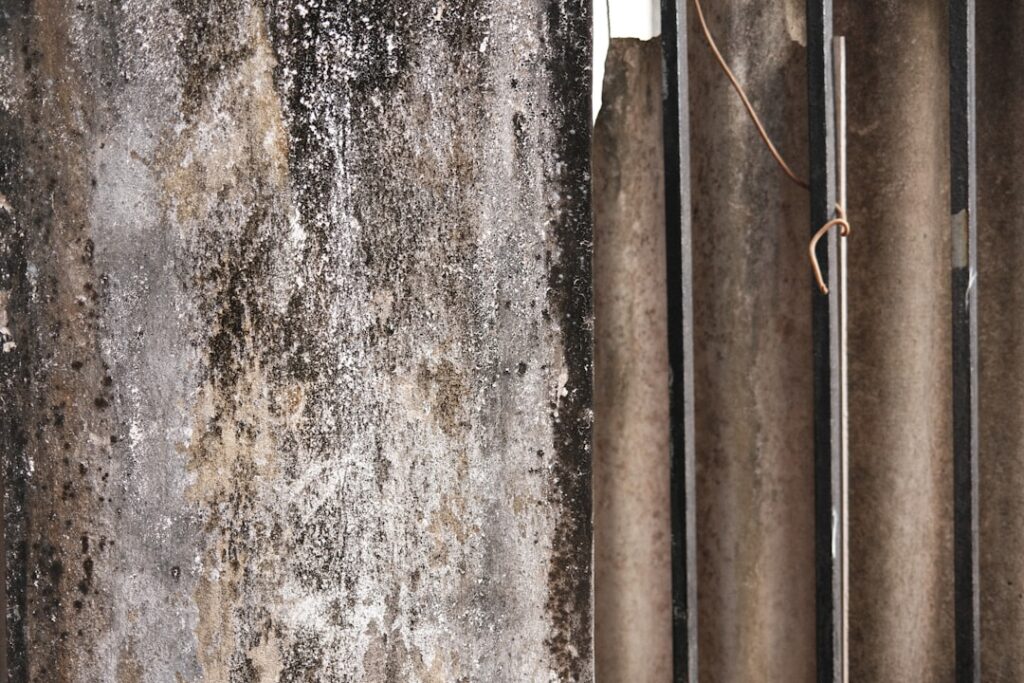
“Mold inspection” describes at least three different services, and the gap between them is where homeowners overpay or get a report that answers the wrong question. A pest-control tech running a quick visual glance, a certified inspector pulling calibrated air samples for an insurance claim, and a DIY petri dish from the hardware store all get called a “mold inspection.” This page explains what a real one includes, what happens during the visit, how to read the lab numbers, and the honest limits of what any inspection can tell you.
Is this mold, asbestos, or water damage? Get a free instant screen
Upload a clear photo of the suspect area. You'll get an instant AI screening opinion and what to do next. This is screening guidance, not a professional determination.
Screening guidance only. AI can be wrong. Confirm asbestos, mold type, or lead with lab testing or a licensed professional before acting.
What a mold inspection is
A mold inspection is a structured investigation of a building to find visible mold, locate the moisture that feeds it, and usually collect air or surface samples that an accredited lab analyzes for spore type and concentration. It ends in a written report comparing indoor sample data against outdoor air at the same address on the same day. That outdoor comparison is the whole point: mold spores are everywhere in normal outdoor air, so an indoor count only means something relative to what’s drifting in from outside.
A test is one piece of that process, not a synonym for it. You can get an inspection without lab sampling (visual and moisture-meter only) or lab sampling without a real inspection (a mail-in kit). The difference matters enough that we cover it separately in mold inspection versus mold testing, but the short version is that a defensible report for real estate, insurance, or remediation contracting needs both.
What happens during the visit
Expect two to four hours on site for a typical single-family home. Mold investigation is hypothesis-driven, not a checklist, so the visit runs in a deliberate order.
The interview. The inspector asks what prompted the call, where the suspect area is, what water history the house has (leaks, flooding, appliance failures), and whether anyone reports symptoms. This shapes everything that follows, because the inspector is testing specific theories about where moisture is hiding.
The visual assessment. A systematic walk-through of every accessible surface: under sinks, behind toilets, around HVAC equipment and condensate lines, at window sills, in basement corners, and anywhere plumbing penetrates a wall. Visible growth is photographed with a scale reference so the report can show extent, not just existence.
Moisture mapping. The moisture meter is the inspector’s most important instrument. Pin-type meters press two electrodes into a surface; pinless meters read moisture through the surface using capacitance, without marking the paint. Elevated readings in a wall or ceiling with no visible growth are a flag for hidden moisture and possible cavity sampling. Readings get logged so a later inspection has a baseline to compare against. If you want the mechanics, see how a moisture meter works.
Thermal imaging. An infrared camera doesn’t see mold. It sees temperature differences: a cool patch on drywall can flag evaporative cooling from moisture behind the surface, pointing the moisture meter where to check next. It narrows the search; it doesn’t confirm anything on its own.
Sampling. Air samples are most common. A calibrated pump draws a known volume of air through a cassette with a sticky collection surface, which is sealed, labeled with chain-of-custody information, and shipped to the lab. The inspector typically pulls three: the suspect area, a control room indoors, and one outdoors. Surface samples (tape-lift or swab) confirm species on visible growth. Cavity samples, taken by drilling a small hole to sample air inside a wall, are used selectively when hidden growth is strongly suspected.
What the lab results actually mean
Air results come back as spore counts per cubic meter, broken out by genus: the Aspergillus/Penicillium group, Cladosporium, Stachybotrys, Chaetomium, and others. The comparison that carries the weight is indoor versus outdoor. Indoor counts at or below the outdoor baseline generally point to no significant indoor source. Indoor counts that run well above outdoor, especially for species not usually abundant outside, suggest an indoor “amplifier”: a hidden growth site somewhere in the house.
What the lab cannot do is tell you whether the mold is making a specific person sick. There are no federal or EPA-set limits for indoor mold spore concentrations, and no spore count that defines “safe” versus “dangerous.” The CDC is explicit that sampling is generally unnecessary for deciding on cleanup, because any mold indoors with the moisture to sustain it should be removed regardless of type. Individual sensitivity varies enormously. A report that promises a health verdict from a spore count is overreaching.
The lab identifies species, not the mycotoxins some species can produce. Those are a separate, more expensive workflow with its own limits, which we get into in mold toxicity testing.
The limits worth knowing before you pay
Three honest constraints appear in every credible report. First, the snapshot problem: spore counts swing by hour, day, and season, and one sampling event captures a single moment. Second, the visibility problem: finishes hide most of a structure, and neither thermal imaging nor moisture meters see through every surface, so some hidden mold stays hidden after a thorough visit. Third, the species-versus-toxin gap above. A good inspector states these plainly. A weak one implies certainty the data doesn’t support.
When you actually need one, and when you don’t
The EPA’s threshold is a useful anchor. For a contained area under about 10 square feet where you already know the moisture source, EPA guidance says most homeowners can handle cleanup themselves. Above roughly 10 square feet, after significant water damage, or when the source is unknown, professional assessment is warranted. Beyond that, the common triggers are a musty smell with no visible source, unexplained respiratory or allergy complaints among occupants, and real-estate transactions where mold history is disclosed or suspected. Cost varies with scope and sample count, which we break down in how much a mold inspection costs.
Choosing an inspector without a conflict of interest
Two credentials signal real mold training rather than a general home-inspection add-on: IICRC AMRT (Applied Microbial Remediation Technician) and IAC2 (mold certification through InterNACHI). The bigger issue is independence. The EPA and most state guidance recommend that whoever scopes the mold problem should not be the same party bidding the cleanup, because that conflict skews the findings toward a larger, more profitable job. Ask directly whether the inspector or any affiliated company performs remediation. “No” is the answer you want. Our guide on how to find a mold inspector covers vetting in more depth.
References
- EPA: Mold Cleanup in Your Home
- EPA: Mold Remediation Guidance (10 sq ft threshold)
- CDC: About Mold
- InterNACHI Mold Inspection Standards of Practice
This page summarizes current EPA, CDC, and InterNACHI guidance and is educational, not medical or diagnostic advice. On the Colorado Front Range and want a straight answer for your own situation? Reach out through our contact page for a vetted referral.