What Does Black Mold Do: To Homes and Occupants
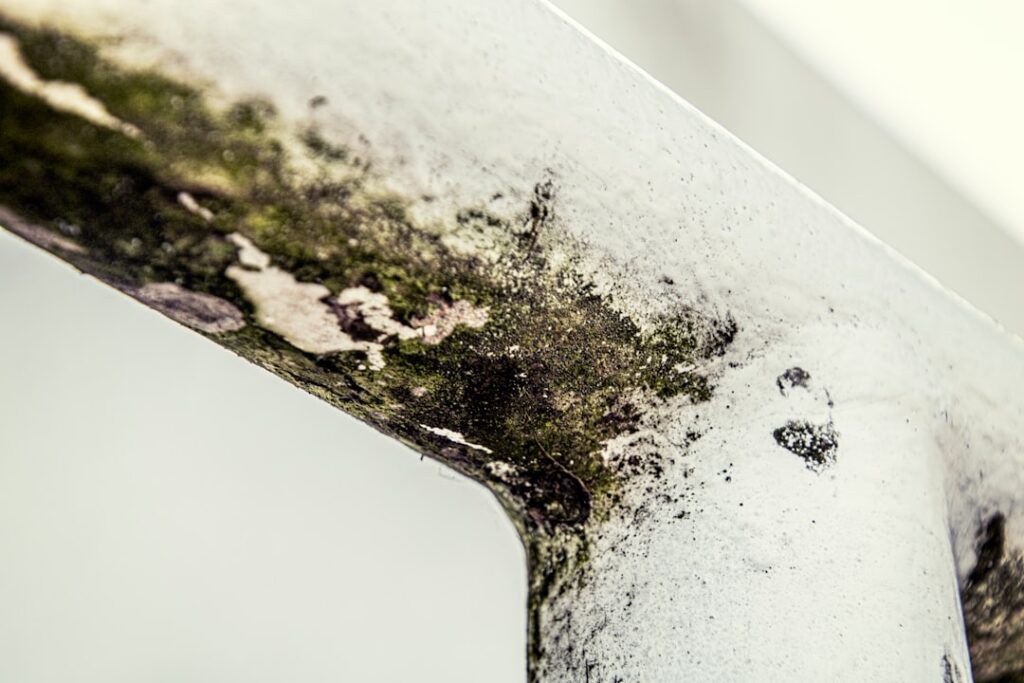
The question “what does black mold do” splits naturally into two answers. Mold does specific, measurable things to a home — structural damage, finish degradation, contents loss, HVAC contamination. It can also produce health effects in occupants, but those effects vary widely by individual susceptibility and require a physician to evaluate. This guide summarizes EPA, CDC, and NIEHS guidance on residential mold for homeowners. It is not medical advice. If you are experiencing symptoms you believe may be related to mold exposure, consult a physician. The article addresses both halves of the question in turn.
Is this mold, asbestos, or water damage? Get a free instant screen
Upload a clear photo of the suspect area. You'll get an instant AI screening opinion and what to do next. This is screening guidance, not a professional determination.
Screening guidance only. AI can be wrong. Confirm asbestos, mold type, or lead with lab testing or a licensed professional before acting.
What Black Mold Does to Homes
Mold is a decomposer. Its biological purpose is to break down organic matter, and when the substrate is part of a building, the building suffers progressive damage. The EPA’s residential mold guidance frames building damage as the inevitable consequence of unaddressed moisture and biological activity.
Drywall Degradation
The paper facing on standard drywall is cellulose — a primary food source for many indoor mold species. A colony growing on the paper face progressively weakens the bond between the paper and the gypsum core. The wall surface softens, paint adheres poorly, and screws or fasteners lose grip. Severe colonies eventually collapse the affected drywall under its own weight.
Subfloor and Framing Damage
Long-running moisture pathways that feed mold also feed wood-decay fungi. The same conditions that allow Stachybotrys to colonize a subfloor allow rot fungi to consume the structural integrity of the wood. Cupped flooring, soft spots, and bowing joists often appear alongside mold staining.
Insulation Loss
Fiberglass batt insulation that becomes wet collapses under the weight of absorbed water, loses its R-value, and provides a substrate for mold growth on its kraft paper backing. Cellulose insulation is even more susceptible. Once wet, both materials are removed and replaced as part of standard remediation.
Finish and Contents Damage
Mold staining on walls, ceiling tiles, baseboards, trim, cabinetry, books, papers, fabrics, and stored items represents direct contents loss. The EPA notes that highly porous contents (papers, fabrics, upholstered furniture, mattresses) heavily contaminated by mold typically cannot be reliably cleaned and are discarded during professional remediation.
HVAC Contamination
A colony in or near a return-air pathway seeds spores throughout the duct system, the evaporator coil, and the air handler. EPA guidance on residential air duct cleaning treats HVAC contamination as a major remediation trigger, because the system distributes spores to every room served by the supply registers.
Odor Persistence
Microbial volatile organic compounds (mVOCs) absorb into porous finishes — wallboard, carpet, upholstery, drapery — and can persist after the colony itself is removed. Severe cases require replacement of porous finishes to eliminate the residual smell. The mold inspection hub walks through the home-side damage assessment workflow.
What Black Mold Does to Occupants — The Physician’s Domain
What black mold does inside the body is the domain of physicians, not home inspectors. The CDC summarizes commonly reported effects below, but emphasizes that symptoms vary widely and any individual case requires medical evaluation.
Allergic Reactions
The most common reported effects are allergic — nasal stuffiness, runny nose, post-nasal drip, sneezing, itchy eyes, throat irritation, and cough. The CDC notes these are IgE-mediated responses in sensitized individuals and that severity varies by sensitization status and exposure level.
Asthma Exacerbation
Patients with allergic asthma may experience worsened wheezing, chest tightness, and shortness of breath in mold-contaminated environments. The CDC and American Lung Association both flag mold as a recognized indoor asthma trigger.
Irritant Effects
Some occupants who are not allergic to mold per se still report irritant responses — burning eyes, throat scratchiness, headache, fatigue — in heavily contaminated environments. These responses are typically related to the mVOCs and particulate burden rather than to immunologic sensitization.
Hypersensitivity Pneumonitis
This is an inflammation of the lung tissue caused by repeated inhalation of organic antigens. The CDC lists certain mold species as recognized causative agents. Diagnosis is clinical and may include imaging, pulmonary function testing, and sometimes bronchoscopy.
Severe Outcomes in Vulnerable Populations
Immunocompromised patients face elevated risk of invasive fungal infection, though this is uncommon and usually involves Aspergillus rather than Stachybotrys. The CDC’s elevated-risk groups include transplant recipients, chemotherapy patients, infants, the elderly with severe respiratory disease, and those with severe mold allergy or chronic hypersensitivity pneumonitis.
A physician is the right person to evaluate any of these — not a home inspection, not a settle-plate kit, not an online symptom questionnaire. The sibling article on symptoms of toxic black mold develops the symptom-side framing in more detail.
How the Home-Side and Body-Side Connect
The two answers are linked but separable. Confirming mold growth in a home is necessary to act on the building damage. Confirming the cause of an occupant’s symptoms is necessary to treat the person. Each workup runs in parallel and informs the other. Source remediation matters for both — without removing the exposure, treatment outcomes regress, and without remediating the building, damage progresses regardless of who is or is not symptomatic.
What Black Mold Does Over Time
Time is the variable that turns a small problem into a large one. A colony left in place for six months damages more building material, distributes more spores, and produces more mVOCs than the same colony at one month. The EPA’s residential guidance is consistent that early remediation is cheaper, lower-disruption, and lower-risk than delayed remediation. The same logic applies to the medical side — earlier intervention typically produces better outcomes.
What Mold Does Not Do
A few claims appear regularly in homeowner research that are not consistent with the public-health evidence base:
It Does Not Reliably Cause Specific Systemic Diseases in Healthy Adults
Some marketing material attributes wide-ranging systemic symptoms (chronic fatigue, brain fog, neurologic decline) directly to household black mold exposure in immunocompetent adults. The CDC’s official position is that evidence for these specific causal claims is limited. Patients reporting these symptoms deserve thorough medical workup that does not assume mold as the cause.
It Does Not Disappear on Its Own Once the Surface Looks Dry
Dry surface appearance does not equal remediated colony. Spores and fragments remain allergenic, and many colonies dry on the surface while remaining active behind the substrate. The guide on dry black mold develops this point.
It Does Not Become Safe When Painted Over
Encapsulation without physical removal is not a remediation method endorsed by EPA. The substrate continues to host mold and the paint film does not stop allergen release if the surface is damaged.
The Homeowner’s Action Plan
A balanced response to “what does black mold do” addresses both halves of the question without conflating them. The home gets inspected; the source moisture is identified and stopped; porous materials within at least a foot of visible damage are removed; hard surfaces are cleaned; substrates are verified dry before reconstruction. The occupants — if symptomatic — see a physician. The two tracks support each other but neither replaces the other.
How Damage Costs Scale With Time
Building damage from mold follows a non-linear cost curve. A small colony caught within weeks of formation, with the moisture source obvious and easily corrected, typically requires under $1,000 to remediate when the homeowner can do the work themselves. The same colony left for six months may grow into the adjacent wall cavity, contaminate insulation, distribute spores through HVAC, and produce structural damage that requires $5,000-$15,000 of professional remediation. A colony left for several years may exceed $20,000 once demolition, remediation, structural repair, and refinishing are accounted for. The EPA’s emphasis on early intervention reflects this cost-time curve directly.
Insurance recovery on mold damage is constrained by policy language. Many policies cover mold remediation only when it results from a covered water-damage event, and the discovery window matters. Early detection often falls within coverage; chronic, hidden growth may not.
What a Professional Inspection Adds Beyond Visual Walk-Through
Credentialed inspectors bring instruments that homeowners typically do not carry: thermal imaging cameras that reveal moisture pathways behind finished surfaces, more accurate moisture meters calibrated against laboratory references, hygrometers logged across multiple zones and times of day, borescope cameras for non-destructive cavity inspection, and standardized sampling protocols that hold up in transactions or insurance contexts. The inspector also brings pattern recognition from hundreds of similar inspections that lets them anticipate where moisture pathways travel.
Coordinating Findings With Building Trades
Mold remediation often touches multiple trades: plumbing (for the source leak), roofing (for an envelope failure), HVAC (for ductwork or coil contamination), drywall and finish carpentry (for reconstruction), and sometimes structural (for rotted framing). A credentialed inspector’s scope helps the homeowner understand which trades the project needs and in what sequence. Without this coordination, projects tend to extend in time and cost as each trade discovers issues the previous trade exposed.
Specific Building Components Most Affected
Mold damage maps to specific building components in predictable ways. Drywall paper, ceiling tile, baseboards, and casework are most-affected because they combine cellulose substrate with the moisture pathways that produce condensation or absorb leaks. OSB and plywood subfloor degrade when sustained moisture reaches them. Fiberglass insulation collapses and loses R-value. HVAC components (filter, evaporator coil, air-handler insulation, duct interiors) accumulate spore loads. Stored contents — books, papers, photographs, fabrics, upholstered furniture — are highly porous and often beyond reliable cleaning. Knowing which components are most affected helps homeowners prioritize the remediation scope.
Damage Patterns That Indicate Hidden Growth
Even when the visible patch is small, several patterns indicate larger hidden growth. Paint blistering or bubbling on a wall surface suggests substrate moisture even without visible mold. Soft or crumbly drywall when probed with a fingernail indicates degradation behind the paint. Warped baseboards or cupped flooring near a wall point to long-running moisture. Persistent musty odor that cannot be sourced to a visible patch implies hidden growth. A wall section that feels cool to the touch on a warm day may indicate evaporative cooling from active moisture behind the surface. Cataloging these clues during a walk-through often identifies the scope of an issue more accurately than the visible patch alone.
Why Insurance Treatment of Mold Damage Is Complicated
Mold damage occupies an awkward space in residential insurance. Many policies cover mold remediation when it results from a sudden, covered water-damage event (a burst pipe, a roof failure during a storm) but exclude mold that results from chronic moisture issues, lack of maintenance, or unidentified slow leaks. Policy language varies; “ensuing loss” provisions, mold-specific endorsements, and limit caps all affect coverage. Homeowners discovering mold during a routine inspection often find that the discovery itself does not establish coverage — what matters is whether the underlying cause qualifies. Documentation from a credentialed inspector helps establish the chain of causation when coverage is plausible.
When to Call a Credentialed Professional
A certified inspector is appropriate when visible mold exceeds about 10 square feet, when HVAC contamination is suspected, when documentation will support a transaction or insurance claim, when occupants are immunocompromised, or when the moisture source is not obvious. The ASHI and InterNACHI directories are the standard starting points for credentialed referrals.
References
- EPA: Mold and Health — U.S. Environmental Protection Agency
- CDC: Basic Facts about Mold and Dampness — Centers for Disease Control and Prevention
- NIEHS Mold Topic Page — National Institute of Environmental Health Sciences
- American Lung Association: Mold and Dampness — American Lung Association
If you are in the Front Range and want a vetted inspector to scope the building damage before remediation contractors quote, reach out through our contact page.