How to Get Rid of Mildew: Cleaner Choice by Surface
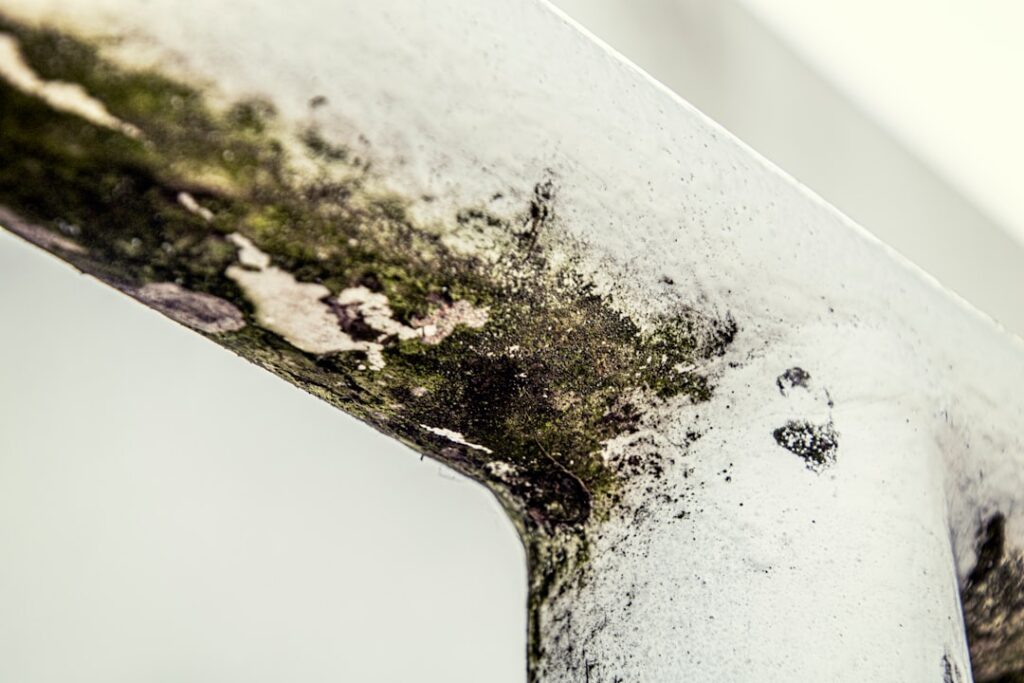
Getting rid of mildew is a sequence, not a single spray: kill the visible growth with the right chemistry for that surface, dry the area completely, and remove the moisture that fed it. The cleaner that works on glazed shower tile is the wrong one for painted drywall or a fabric awning. So the useful question is not “what is the best mildew remover” but “what is on the surface, and how deep has it gone.”
Is this mold, asbestos, or water damage? Get a free instant screen
Upload a clear photo of the suspect area. You'll get an instant AI screening opinion and what to do next. This is screening guidance, not a professional determination.
Screening guidance only. AI can be wrong. Confirm asbestos, mold type, or lead with lab testing or a licensed professional before acting.
Is it actually mildew, or is it mold?
In consumer use, “mildew” means surface-growing fungi — usually the powdery olive-to-black film of Cladosporium on shower caulk, window sills, and the back of basement furniture. Product labels use “mildew remover” and “mold remover” loosely; they are frequently the same chemistry in different bottles.
The distinction that matters is depth. Mildew sits on top of a surface and has not penetrated. Once growth migrates into drywall paper, carpet pad, or framing lumber, you have moved from a cleaning chore to remediation. If you cannot tell surface staining from a colony that has gone into the material, the difference is walked through in our guide on the difference between mildew, mold, and black mold.
Which cleaner for which surface
Four chemistries cover almost every household case. Each has a clear best fit and a clear failure mode.
| Cleaner | Best on | Avoid on |
|---|---|---|
| Chlorine bleach (1 cup per gallon) | Glazed tile, sealed grout, glass, vinyl, painted metal | Drywall paper, bare wood, fabric |
| White vinegar (5% acetic acid) | Semi-porous surfaces, food-adjacent areas, chlorine-sensitive homes | Unsealed marble or stone (acid etches) |
| Hydrogen peroxide (3%) | Painted drywall, fabric, finished wood, paper goods | Heavy colonization (it breaks down first) |
| EPA-registered antimicrobial | Confirmed colonization, masonry, insurance-documented jobs | Routine bathroom upkeep (cost not justified) |
A few notes that the label won’t tell you. The EPA does not recommend bleach as a routine mold treatment: it cannot reach into porous material, it off-gasses chlorine in an unventilated bathroom, and it degrades silicone caulk over time. Bleach earns its place on hard, non-porous surfaces where its stain-lifting is genuinely better than the alternatives. Vinegar’s mild acid reaches slightly into porous surfaces that bleach cannot, but it does not lighten the dark pigment Cladosporium leaves behind, so a “clean” surface can still show shadow staining. Hydrogen peroxide is the middle ground — it kills surface growth and lifts pigment without bleach’s material damage, which is why it is the first choice on painted walls and fabric.
The top tier is any product carrying an EPA registration number and a kill-claim list naming the species it was tested against. That list, not the price, is what you read before buying — a $12 registered antimicrobial and a $30 one may test against very different organisms.
The cleanup sequence that works on any surface
Order of operations matters more than which bottle you picked. The same steps apply across all four cleaners:
- Wear an N95 respirator, nitrile gloves, and eye protection.
- Ventilate to the outdoors and turn the HVAC off so you don’t pull spores into the ducts.
- HEPA-vacuum the visible growth plus a two-foot perimeter before you wet anything.
- Apply the cleaner to a damp cloth — do not spray directly onto a porous surface, which drives spores deeper.
- Wipe from the outside edge inward, so you don’t smear growth into clean material.
- Dry hard with airflow and a dehumidifier, targeting 40 to 50 percent relative humidity.
Skipping the HEPA pre-vacuum aerosolizes the exact spores you’re trying to contain; skipping the drying step guarantees a return visit. Dead mold still triggers allergic reactions, so the goal is removal and drying, not just killing.
Surface-by-surface picks
Bathroom tile, grout, and shower
Bleach solution wins on glazed ceramic and sealed grout; vinegar is the fallback when someone in the home reacts to chlorine. Once a silicone caulk bead has absorbed pigment and turned permanently grey or black, no cleaner restores it — cut it out and re-bead. For a shower that keeps regrowing black film in the corners, the fuller routine is in our guide on getting rid of black mold in a shower.
Painted drywall and ceilings
Use hydrogen peroxide on a damp cloth. Bleach can lift paint and leave a mark worse than the mildew. If the drywall feels soft or the patch returns within days, growth has penetrated the paper and that section needs to come out — a decision covered in our guide on cleaning mold on porous surfaces.
Basement walls and concrete
EPA-registered antimicrobials labeled for masonry outperform vinegar here, because poured concrete and cinder block are alkaline enough to blunt an acid cleaner. Watch for efflorescence — white mineral salt pushed out by moisture — which is routinely mistaken for mildew. A quick water spray tells them apart: efflorescence dissolves, mildew does not. Below-grade dampness that keeps coming back is a moisture problem more than a cleaning one; see getting rid of mold in a basement.
Wood and outdoor items
Finished hardwood takes hydrogen peroxide or dilute vinegar well; raw wood with deep staining usually needs sanding plus an antimicrobial wipe. Framing lumber inside a wall cavity is remediation, not cleaning. Outdoors, resin furniture and vinyl clean up with a dilute detergent and a rinse; fabric cushions and awnings do best with a soft brush, hydrogen peroxide, and a full day of direct sun — UV does real work on residual spores.
Stop the mildew from coming back
Cleanup is temporary if the conditions stay. Mildew needs three things: a surface, food (dust or soap film), and moisture above roughly 60 percent relative humidity at the surface. Remove any one and growth stops.
The most-overlooked control is bathroom ventilation. Run a fan that vents to the exterior during a shower and for about 20 minutes after. In many homes the exhaust duct simply dumps into the attic, which moves the moisture problem upstairs instead of solving it — verify the duct exits through a roof cap or soffit, and that the fan moves at least 50 CFM. For whole-home control, keep indoor humidity between 30 and 50 percent; a $200 dehumidifier and a $20 hygrometer hit that target. On the Colorado Front Range, the July–August monsoon stretch is when basement humidity climbs into the 60s and 70s, and a dehumidifier running through those months prevents most of the seasonal return.
When to stop cleaning and call someone
If the same patch returns within two weeks of a thorough cleanup with the moisture source fixed, the diagnosis is wrong — you are likely seeing the visible edge of a colony inside the wall, behind tile, or under flooring. Other flags: a musty smell that lingers after the visible growth is gone, a soft or discolored substrate under the cleaned area, or occupant respiratory symptoms that ease away from home. Any of those, or growth larger than about 10 square feet on a porous surface, is the point to move from cleaning to assessment. Our mold inspection and testing overview covers what that assessment involves.
Frequently asked questions
Front Range homeowners fighting mildew that keeps returning after cleanup can reach us through our contact page to connect with a vetted local inspector. This guide reflects EPA, CDC, and American Lung Association guidance current as of 2026.
References
- A Brief Guide to Mold, Moisture and Your Home — U.S. EPA
- Mold Cleanup in Your Home — U.S. EPA
- Mold: Basic Facts and Cleanup — Centers for Disease Control and Prevention
- Mold and Dampness — American Lung Association