Mold and Dust: What Homeowners Need to Know
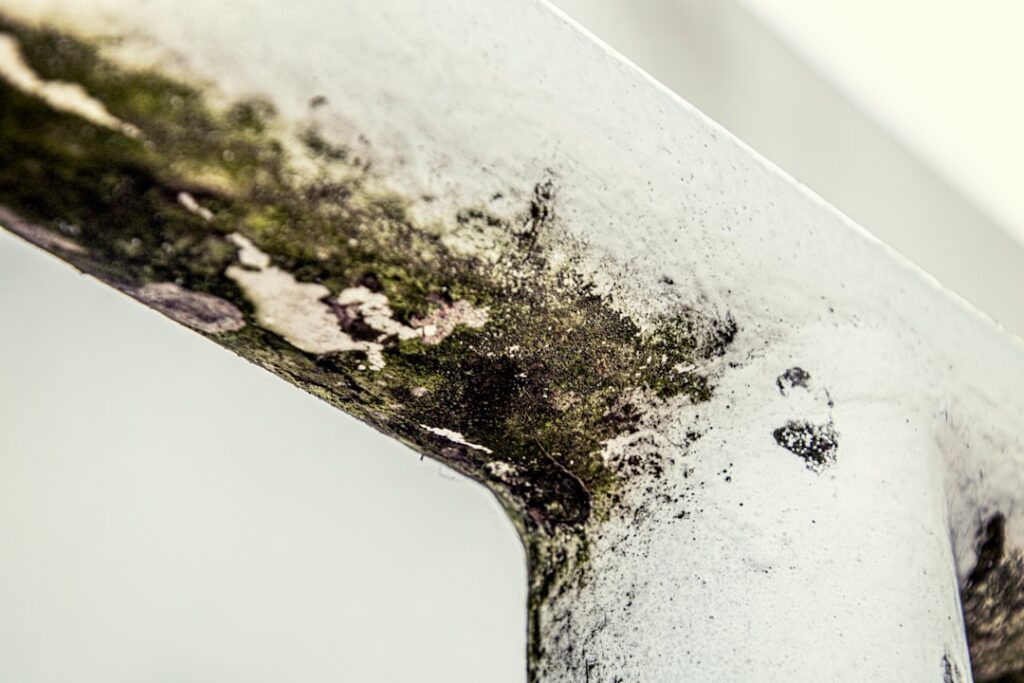
Mold and dust travel together in indoor air, settle on the same surfaces, and trigger overlapping symptoms, which is why homeowners so often mix them up. They are not the same thing, though, and the difference changes how you respond. Dust is a mixed accumulation of particles; mold is a living organism that grows where moisture allows. Settled house dust can even carry mold spores within it. This guide summarizes EPA and CDC guidance current as of 2026 to help you tell them apart and manage both. For allergy or respiratory symptoms, consult your physician rather than self-diagnosing from a surface.
Is this mold, asbestos, or water damage? Get a free instant screen
Upload a clear photo of the suspect area. You'll get an instant AI screening opinion and what to do next. This is screening guidance, not a professional determination.
Screening guidance only. AI can be wrong. Confirm asbestos, mold type, or lead with lab testing or a licensed professional before acting.
Mold and Dust Are Not the Same Thing
Dust is an everyday mixture: dead skin cells, fabric fibers, soil tracked indoors, pollen, pet dander, and yes, mold spores. It accumulates on flat surfaces by gravity and is essentially inert. You wipe it away and it slowly returns. Mold, by contrast, is a fungus that grows as a colony when spores land on a damp surface with something to feed on, such as the paper facing of drywall.
The practical line is moisture and growth. Dust does not grow; it just collects. Mold colonizes and spreads, and it releases new spores as it does. A dusty shelf is a cleaning chore. A spreading dark patch on a damp wall is a moisture problem. Telling which you have determines whether you reach for a duster or start hunting for a leak.
How to Tell Mold From Dust
A few clues separate them. Dust sits loosely on horizontal surfaces and wipes away cleanly, leaving the surface unchanged underneath. Mold tends to stain, often appears on vertical or damp surfaces, and may feel slightly fuzzy or slimy. Color helps a little but not much: mold ranges from black and green to white and orange, while dust is usually gray or tan.
Smell is a strong tell. A musty, earthy odor points to mold even when you cannot see it, because active growth releases distinct compounds. Location matters too; growth clusters where water has been, like under windows, behind toilets, or along basement walls. If you are unsure whether a stain is growth, our guide on home mold testing explains how surface sampling can confirm it.
When Dust Contains Mold Spores
The two intertwine because settled house dust commonly contains mold spores along with everything else. That is normal; spores are present in virtually all indoor environments. The concern is not the spores resting in dust, which are dormant, but whether active growth somewhere is continually adding to that spore load. High spore counts in dust can be a sign worth investigating, though dust analysis is not the standard way to assess a mold problem.
Why Both Affect Indoor Air
Dust and mold both contribute to the particles you breathe indoors. Dust carries allergens like dust-mite droppings, pet dander, and pollen. The CDC notes that mold exposure can cause stuffy nose, wheezing, and irritated eyes or skin, with stronger reactions in people who have allergies or asthma. Because the symptoms overlap, people often blame one when the other, or both, is at work.
The amount of each in the air rises and falls with your habits and your home’s moisture. Disturbing settled dust by sweeping or dry-dusting throws particles back into the air. Active mold growth steadily seeds the air with fresh spores. Reducing both means handling dust gently and denying mold the moisture it needs.
How to Reduce Dust at Home
Cut dust with capture rather than dispersal. Damp-wipe hard surfaces so particles stick to the cloth instead of relaunching into the air. Vacuum with a HEPA-filtered machine, which traps fine particles a standard vacuum recirculates. Wash bedding regularly in hot water to control dust-mite allergens, and use doormats to cut tracked-in soil.
Filtration helps the air you cannot wipe. A HEPA air purifier captures fine dust and many spores in the same particle range. Changing HVAC filters on schedule keeps the system from blowing accumulated dust back through the house. These steps also reduce settled spores, so dust control and mold control reinforce each other.
How to Reduce Mold at Home
Mold control is moisture control. Keep indoor relative humidity below 60 percent, ideally 30 to 50 percent, the range the EPA identifies as discouraging growth. Fix leaks promptly and dry wet materials within 24 to 48 hours. Run bathroom and kitchen exhaust fans, and vent the dryer outdoors.
When you find active growth, clean hard surfaces with detergent and water and discard porous materials that have absorbed it. The full sequence appears in our mold inspection and testing hub. Unlike dust, mold will keep returning until the underlying water problem is solved, so the leak comes first and the cleaning second.
How HVAC Systems Move Both
The heating and cooling system is the highway that carries dust and spores around a house. Every time the blower runs, it pulls air through return vents, past the filter, and back out through supply registers, circulating whatever particles are in the air. A dirty filter lets dust and spores recirculate; a clean one captures a meaningful share of them on each pass.
Ductwork can also become a reservoir. Dust settles inside ducts over time, and if condensation forms on cooling coils or in poorly insulated runs, that dust can support mold growth, which then sheds spores into the airstream. Keeping the system’s filter fresh, ensuring the coil and drain pan drain properly, and addressing any duct condensation all reduce how much the HVAC system contributes to your indoor particle load.
Upgrading to a higher-efficiency filter rated for fine particles captures more dust and more spores, though the system must be compatible with the added airflow resistance. For homes where dust and mold are persistent, that filter upgrade is one of the highest-value changes available.
Health Effects and When to Worry
Because dust and mold both irritate the airways, telling which is driving symptoms can be hard without paying attention to patterns. Dust-related reactions often track with activities that stir particles, like vacuuming or making a bed. Mold-related reactions may worsen in damp rooms or seasons and ease when a person leaves the house. The CDC notes that mold can cause nasal congestion, wheezing, and eye or skin irritation, with stronger effects in people who have allergies, asthma, or weakened immune systems.
Neither dust nor mold should be diagnosed from a surface alone. Persistent or worsening symptoms warrant a physician’s evaluation, since many other indoor and outdoor allergens produce similar complaints. What homeowners can control is the environment: reducing both dust and the moisture that feeds mold lowers the total irritant load regardless of which one a given person reacts to most.
When to Call a Professional
Routine dust never needs a pro. Mold sometimes does. Call a professional when growth covers a large area, keeps returning after cleanup, hides behind finished walls, or follows contaminated water. The EPA suggests professional remediation once affected material exceeds roughly ten square feet. A pro is also worth it when a household member has asthma or a weakened immune system and you need to be sure the air is genuinely improved, not just visibly cleaner.
If a musty smell persists despite regular dusting and cleaning, that points toward hidden mold rather than ordinary dust, and a professional with moisture meters can find what cleaning cannot reach. Confirm credentials and ask how any work will be contained before material is disturbed.
Why Air Purifiers Help With Both
A HEPA air purifier is one of the few single tools that addresses dust and mold spores together, because both fall in the particle-size range these filters capture well. Running one in a frequently used room steadily pulls fine dust and airborne spores out of circulation, lowering the load you would otherwise breathe or have to wipe up later.
Placement and maintenance shape how much it helps. Position the unit where people spend the most time and where airflow can reach it, not tucked behind furniture. Size it to the room, since an undersized purifier in a large space accomplishes little. Replace the filter on schedule, because a clogged HEPA element loses efficiency. A purifier does not substitute for moisture control or regular cleaning, but as a continuous capture step it meaningfully reduces both dust and spores, which is why it earns a place in homes troubled by either.
A Cleaning Routine That Handles Both
A single routine can keep dust and mold-related spores in check because the methods overlap. Damp-wipe hard surfaces weekly rather than dry-dusting, which lifts particles into the air. Vacuum carpets and upholstery with a HEPA-filtered machine, and do it regularly, since settled dust holds both allergens and dormant spores. Wash bedding in hot water to control dust-mite allergens that accumulate there.
Build moisture control into the same routine. Run exhaust fans, keep humidity in check with a hygrometer and dehumidifier where needed, and address spills and leaks within a day or two. Change HVAC filters on schedule so the system captures particles instead of recirculating them. Because dust control captures settled spores and moisture control prevents new growth, one consistent routine addresses both problems at once, which is more practical than treating them as separate chores.
When Dust Is Hiding a Mold Problem
Sometimes a persistent dust complaint masks an underlying mold issue. If a room seems perpetually dusty despite regular cleaning, or if the dust carries a musty edge, mold growth somewhere may be continually adding spores to the settled mix. A spike in respiratory symptoms that tracks with a particular room, rather than with cleaning activity, points the same direction.
The tell is moisture. Dust alone needs no water, but mold does, so look for the dampness that would explain ongoing spore production: condensation, a slow leak, or a humid basement feeding the rest of the house through the HVAC system. Where the signs point to hidden growth rather than ordinary settling, the response moves from dusting to moisture investigation, and possibly to the detection methods used for concealed mold. Treating a mold problem as a dust problem leaves the source in place, so distinguishing the two is worth the attention.
Allergies, Sensitivity, and Indoor Air
People differ widely in how they react to dust and mold, which is why the same home can bother one occupant and not another. Those with allergies or asthma tend to respond more strongly to both, and the CDC notes that sensitivity to mold varies from person to person. A household member who reacts to ordinary dust-mite allergens may also be more sensitive to airborne spores, so reducing one often eases the other.
For sensitive occupants, controlling the total particle load matters more than identifying a single culprit. Lowering humidity, filtering the air, and cleaning gently all reduce dust and spores together, easing the overall burden on the airways. Where symptoms persist despite a clean, dry, well-ventilated home, a physician can help distinguish among the many possible triggers. The home-side response, though, stays the same: cut moisture and capture particles, since that lowers exposure to whichever irritant a given person reacts to most.
References
- A Brief Guide to Mold, Moisture and Your Home — U.S. Environmental Protection Agency
- About Mold and Your Health — Centers for Disease Control and Prevention
- Improving Indoor Air Quality — U.S. Environmental Protection Agency
If a musty smell suggests the problem is more than ordinary dust, Front Range homeowners can reach a qualified local inspector through our contact page for a closer look.