M12 Borescope: What Homeowners Need to Know
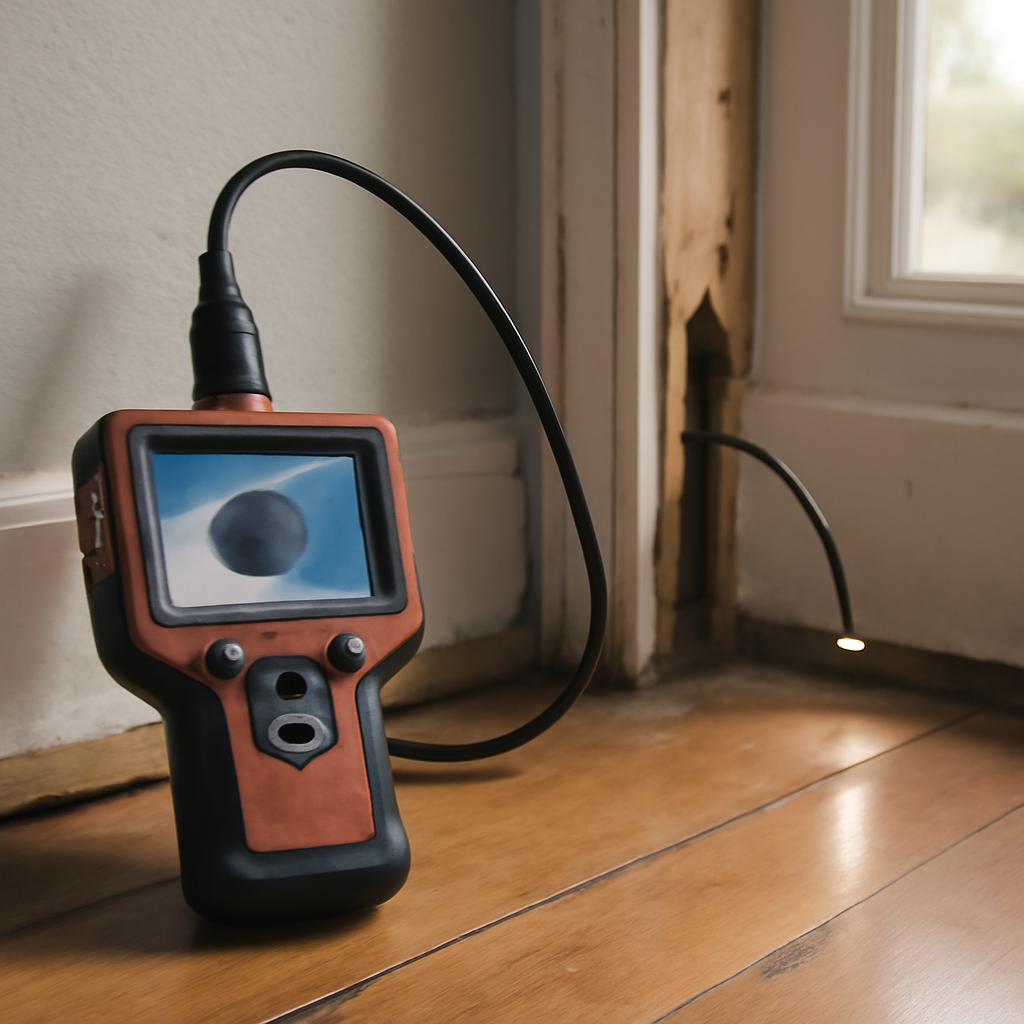
Milwaukee’s M12 platform powers a long list of compact cordless tools, and the M12 borescope—the brand’s cordless inspection camera line—has become a common pick for tradespeople and homeowners who already own M12 batteries. The appeal is straightforward: a rugged, battery-powered camera that shares a charger with the rest of the M12 kit. Knowing the line’s specs, probe options, and real-world limits helps a buyer decide whether it fits their inspection needs or whether a cheaper phone-tethered scope would do.
What the M12 Borescope Is
The M12 borescope is a handheld, cordless inspection camera built around Milwaukee’s 12-volt battery system. Models pair a pistol-grip or inline body with a flexible camera cable that feeds a built-in display or, on newer units, a phone or tablet over a wireless link. The camera tip carries LED lights and a lens, and the system is designed for one-handed use in tight mechanical, plumbing, and electrical spaces. Because it runs on the same M12 REDLITHIUM batteries as Milwaukee’s drills and lights, owners of the platform avoid buying a separate charger or proprietary cell.
Key Specs to Know
Specifications vary across the line, but several figures matter most when choosing a model.
Camera Resolution and Display
M12 inspection cameras typically capture imagery suitable for spotting leaks, blockages, and damage rather than fine forensic detail; resolutions commonly land in the VGA-to-HD range depending on the model and tip. Some versions include an onboard color display, while the M12 wireless models stream to the Milwaukee app on a phone.
Probe Diameter and Length
Probe heads are commonly around 9 mm to 17 mm depending on the camera tip selected, with cable lengths of roughly 3 to 9 feet on standard units. Larger heads carry brighter lights and better optics; smaller interchangeable tips fit tighter access holes.
Lighting and Waterproofing
Adjustable LED lighting at the tip handles dark cavities, and the camera cable on most models is rated for wet environments such as drains, though the base unit is not meant for submersion.
Field of View and Focus
Wide fixed-focus optics keep nearby objects sharp, which suits cavity and duct work where the lens sits inches from the target.
Interchangeable Tips and Accessories
A practical strength of the M12 line is its modular camera heads. Milwaukee offers different tip diameters and a longer cable option, plus accessory attachments like a magnet, hook, and mirror that snap onto the camera head to retrieve dropped objects or see around corners. This modularity lets one base unit cover a small-diameter spark-plug bore one day and a wider drain line the next, an advantage over fixed-probe budget scopes. For choosing among tip sizes, our overview of the small-diameter borescope explains how probe diameter trades light and image quality against access.
Real Home-Inspection Uses
The M12 borescope handles the same screening tasks any quality inspection camera does. Homeowners and inspectors use it to look inside wall cavities for plumbing leaks, mold, or pest evidence before opening drywall; to inspect HVAC ducts and dryer vents for lint and obstructions; to check drains and traps for clogs; to examine engine cylinders, intake ports, and other automotive cavities; and to verify connections behind appliances and in crawl spaces. The cordless, one-handed design is especially handy in awkward positions where a phone-tethered scope would be clumsy. The broader context for where these cameras fit a home assessment is laid out in the home inspection tools buyer’s guide.
Price and Value
M12 inspection cameras generally sell in the rough range of $150 to $400 for the base tool, with kits that include a battery and charger costing more, and premium camera-head or longer-cable accessories adding to the total. That places the line above bare-bones phone-attachment scopes (which start around $25 to $60) but below high-end industrial videoscopes that run into the thousands. The value proposition is strongest for someone already invested in the M12 battery ecosystem, since the shared power source and rugged build justify the premium over a disposable USB camera.
How It Compares to Named Alternatives
Two comparisons help frame the decision. Against a phone-attachment scope such as a DEPSTECH or Teslong USB/Wi-Fi camera, the M12 wins on durability, integrated power, and one-handed field use, while the phone scope wins on price and pocket portability. Against a dedicated professional videoscope like a RIDGID micro CA-series inspection camera, the M12 is more affordable and shares batteries with other tools, but the RIDGID and similar pro units often offer higher resolution, longer or stiffer cables for sewer work, and ruggedized standalone displays. Buyers who want articulation to steer the tip around bends should compare the articulating inspection camera category, since standard M12 heads are non-articulating.
Limitations to Keep in Mind
Like any borescope, the M12 only shows what the lens reaches and lights. It can’t measure moisture, see behind an intact surface without an access point, or diagnose structural issues on its own. Resolution is fine for spotting a leak or blockage but not for fine detail, and the non-articulating standard probe can’t always negotiate tight bends. For drain and sewer work needing long reach and a locator, a dedicated sewer camera is the better tool. Treated as a screening instrument rather than a diagnostic authority, the M12 borescope is a capable addition to a homeowner’s kit—particularly one already built around the M12 platform.
Setting Up and Capturing Findings
Getting useful results from the M12 borescope starts with a little setup. On wireless models, install the Milwaukee app and confirm it pairs before you’re committed to a job; on display models, charge the battery and check the screen. Plan your access point — an existing opening, a drain cleanout, or a small drilled hole — so you’re not improvising mid-inspection. Feed the cable slowly, keeping track of how far in the head has traveled, because it’s easy to lose orientation inside a wall or pipe. Capture photos or short video of anything notable, since a saved image lets you show a plumber, electrician, or contractor what you found without them re-running the scope. Adjust the LED brightness for the space: dial it down in tight, reflective cavities to avoid glare and up in open, dark runs. These habits turn a quick peek into documented evidence you can act on.
Typical Home and Trade Applications
The M12 borescope earns its place across a range of recurring tasks. Plumbers and homeowners use it to inspect inside walls before cutting, to look into drain lines and traps for clogs, and to verify connections behind fixtures. HVAC technicians run it into ductwork to check for obstructions, debris, or microbial growth, and into dryer vents to gauge lint buildup that poses a fire risk. Electricians peer into junction boxes and wall cavities to trace wiring without opening finished surfaces. Mechanics drop the small-diameter head into spark-plug bores to inspect cylinder walls, valves, and piston tops for carbon or damage. Around the house, the magnet and hook tips retrieve dropped screws, rings, and tools from drains and tight gaps. The cordless, one-handed design shines in awkward positions — overhead, under cabinets, or in a crawl space — where managing a tethered phone scope would be clumsy and slow.
Resolution and Image Quality in Context
It’s worth being realistic about what an inspection-camera image shows. The M12 line, like most borescopes in its class, produces imagery good enough to identify a leak, a blockage, pest evidence, carbon buildup, or a loose connection, but not the fine forensic detail of a high-end industrial videoscope. Lighting is a big factor: the LED tip brightness must be balanced so it illuminates a dark cavity without washing out nearby surfaces with glare. Wide fixed-focus optics keep objects sharp when the lens sits a few inches from the target, which suits cavity and duct work, but distant objects in a large open space look soft. For the screening purpose most owners need — confirming whether a problem exists and roughly where — this level of image quality is sufficient, and chasing higher resolution usually means stepping up to a much more expensive professional instrument.
The M12 Battery Platform Advantage
Much of the M12 borescope’s appeal comes from the platform rather than the camera itself. Milwaukee’s M12 line spans drills, drivers, lights, sealants, and dozens of other compact 12-volt tools, all sharing the same REDLITHIUM batteries and chargers. For someone already invested in that ecosystem, the borescope adds a capable inspection camera without a new charger, a proprietary cell, or another wall wart to manage — the battery off a drill powers the camera, and a single charger keeps everything running. This shared-power logic is why tradespeople and committed DIYers often standardize on one platform. For a homeowner who owns no M12 tools, the calculation changes: the cost of the battery and charger has to be added, which narrows the advantage over a self-contained phone-attachment scope that needs no separate power at all.
Wired Display vs. Wireless App Models
Milwaukee has offered M12 inspection cameras in two broad styles, and the difference shapes how they’re used. Models with an integrated color display are fully self-contained: pull the tool out, power it on, and read the screen, with no phone required and nothing to pair. That ruggedness and simplicity suit dirty jobsite conditions and one-handed use in awkward positions. Wireless models stream the camera feed to the Milwaukee app on a phone or tablet, trading the built-in screen for a larger display and easy photo and video capture to share or save. The wireless approach depends on a charged, paired device and a stable connection, while the integrated-display approach never leaves you stranded by a dead phone. Neither is strictly better; the choice hinges on whether you value a standalone screen or app-based capture and sharing.
Comparing Probe Configurations
The M12 line’s interchangeable heads and cable options let one base unit cover several jobs, but it helps to think through the configurations. A smaller-diameter head, around 9 mm, fits tighter access holes and engine bores at the cost of some light and image quality. A larger head carries brighter LEDs and sharper optics for open cavities and drains. Longer cables extend reach into deeper runs, though a longer flexible cable is harder to push around bends without articulation. Accessory tips — magnet, hook, and mirror — snap onto the head to retrieve dropped objects or see around corners. Choosing the right head and cable for the task at hand matters more than buying the most expensive option, and the trade-offs between probe diameters are spelled out in our guide to the small-diameter borescope.
Maintenance and Care
An inspection camera lasts longer with simple care. Wipe the camera head clean after use, especially after drain or engine work, since residue on the lens degrades the image and grime can work into the head. Avoid forcing the cable around sharp bends, which kinks and eventually cracks the flexible shaft — the most common failure point on any borescope. Keep the base unit dry even when the camera cable is rated for wet use, because the body and battery contacts usually are not submersible. Store the cable loosely coiled rather than tightly wound, and charge the M12 battery per Milwaukee’s guidance to preserve its life. Treating the cable gently and the lens cleanly addresses the two issues that most often end a borescope’s service life.
Is the M12 Borescope Right for You?
The M12 borescope makes the most sense for three groups: owners already on the M12 platform, tradespeople who value rugged one-handed field use, and DIYers who expect to inspect walls, drains, ducts, and engines more than once. For them, the durability, shared battery, and modular heads justify the price over a disposable USB camera. It makes less sense for someone who needs an inspection camera exactly once, who would do better renting a scope or buying a cheap phone-attachment module, and for anyone needing long sewer reach or a self-locating head, where a dedicated sewer camera is the right tool. Framed as a screening instrument within a broader kit, as described in the home inspection tools buyer’s guide, the M12 borescope is a solid choice for the right owner rather than a universal answer.
References
- Standards of Practice for Home Inspections — International Association of Certified Home Inspectors
- Standard of Practice — American Society of Home Inspectors
- International Codes Overview — International Code Council
Borescopes & inspection cameras
A borescope lets you see inside walls, ducts, drains, and crawlspaces without opening anything up.
| Product | Why | Buy |
|---|---|---|
 DEPSTECH Wireless Borescope DEPSTECH Wireless Borescope | Wi-Fi to your phone; semi-rigid cable. | Amazon — $39.99 |
 Teslong Dual-Lens Borescope Teslong Dual-Lens Borescope | Side + front view; good for ducts. | Amazon — $159.99 |
 Ridgid micro CA-150 Ridgid micro CA-150 | Rugged handheld with screen. | Amazon — $330.67 |