Lead Testing in Greeley, Colorado | InspectandTest
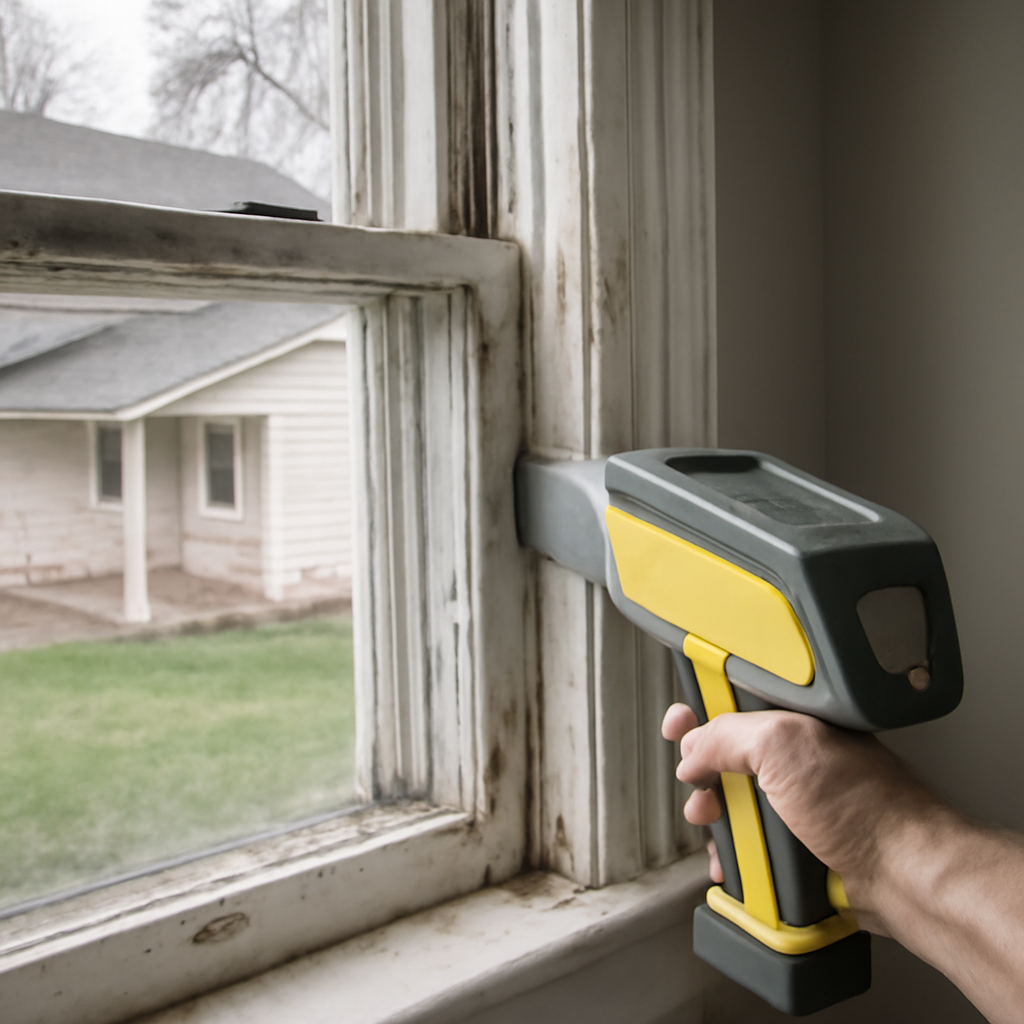
Lead paint was banned for residential use in 1978, but it never left the homes built before then, and Greeley has plenty of those. The historic downtown and the original Union Colony grid hold pre-1978 brick and frame houses where lead-based paint can still lurk under newer coats, on window sashes, and in the soil along old foundations. Lead is most dangerous to young children, whose developing bodies absorb it readily, and the exposure is often invisible until a blood test reveals it. Lead testing identifies where the hazard is so families can manage it. This page explains what lead testing greeley owners should expect, why the local housing stock matters, and what it costs. This summary reflects EPA, HUD, and CDC guidance current as of 2026; consult a certified professional for lead hazard decisions.
Asbestos or biohazard concern? Speak with a certified contractor.
📞 Call (877) 742-8496Lead testing in Greeley: what to know
Lead testing identifies lead-based paint and lead hazards in and around a home through one or more recognized methods: an XRF analyzer that reads paint in place without damaging it, laboratory analysis of paint chips, dust-wipe sampling of floors and windowsills, and soil sampling near the foundation. Each method answers a different question, and a thorough assessment often combines them to map where lead is and whether it is currently a hazard.
Testing matters most where children live or visit. The CDC has stated there is no known safe blood lead level in children, so for families in pre-1978 Greeley homes, knowing whether deteriorating paint or contaminated dust is present is a direct child-safety step. For the broader context on the 1978 cutoff and how lead pairs with asbestos in older housing, our pre-1978 housing hazard guide covers the fundamentals, and our companion asbestos testing in Greeley page addresses the paired hazard.
Intact paint is not the main concern; deteriorating paint and the dust it creates are. Lead-based paint that is sound and undisturbed poses little immediate risk, but chipping, peeling, or chalking paint, and the friction surfaces of windows and doors, generate lead dust that settles where children play. That is why a lead assessment looks not just for the presence of lead but for its condition and the dust and soil pathways that actually deliver exposure.
The type of assessment should match the need. A buyer or landlord may want a full inspection-plus-risk-assessment of a pre-1978 Greeley home, while a parent worried about a specific peeling windowsill may need only targeted dust-wipe and paint testing of that area. A good assessor scopes the work to the actual question rather than defaulting to the most extensive, and most expensive, survey in every case.
Why Greeley homes need lead testing
Age is the driver. Greeley’s founding as the Union Colony in 1870 left it with a historic core of homes built long before the 1978 paint ban, and those are precisely the dwellings most likely to carry lead-based paint. The EPA notes that the older a home, the more likely it contains lead paint and the higher the lead content tends to be, so a 1910s Union Colony house carries more risk than a 1960s ranch, which in turn carries more than a 1990s subdivision home.
The exposure pathways are local and ordinary. In an older Greeley home, lead dust comes from painted windows that grind every time they open, from doors and trim, and from renovation that sands or scrapes old paint. Outdoors, soil along the drip line of a pre-1978 house can hold lead from decades of exterior paint weathering off, and children playing in that yard track it inside. The city’s sealed winters concentrate indoor dust, since homes stay closed for months while families, including small children, spend the season indoors.
Renovation raises the stakes. As Greeley’s older neighborhoods see reinvestment, dry sanding or demolition of lead paint during a remodel can spread fine lead dust through a home far faster than ordinary wear. The EPA’s Renovation, Repair and Painting (RRP) Rule requires lead-safe work practices in pre-1978 housing for exactly this reason. Testing before a remodel of a downtown Greeley home tells the homeowner and contractor whether RRP precautions apply, which protects the children who will live there afterward.
What a Greeley lead test covers
A lead assessment is scoped to the home and the concern, then carried out with the appropriate combination of methods. An assessor documents the location and condition of suspect painted surfaces, takes the relevant samples, and reports where lead is present and, importantly, where it currently poses a hazard versus where it is intact and stable.
XRF, paint-chip, dust, and soil testing
An XRF analyzer reads lead content in painted surfaces instantly and without damage, ideal for surveying many surfaces in an older Greeley home. Paint-chip lab analysis confirms specific surfaces. Dust-wipe sampling of floors, windowsills, and window troughs measures the settled lead dust that children actually contact, and soil sampling near the foundation and play areas checks the exterior pathway. Together they map both presence and exposure.
Inspection versus risk assessment
A lead inspection identifies where lead-based paint exists; a risk assessment goes further to determine where lead hazards, deteriorated paint, lead dust, and contaminated soil, are present and what to do about them. For a family with young children in a pre-1978 Greeley home, the risk assessment is usually the more useful product because it focuses on actual exposure and prioritizes interim controls or abatement.
Lead testing cost in Greeley
Lead testing in the Greeley market varies by method. A targeted set of dust-wipe samples or a few paint-chip lab analyses may run roughly $200 to $400, while a comprehensive XRF inspection or a full risk assessment of a pre-1978 home typically totals about $400 to $700 or more depending on home size and the number of samples. Soil sampling adds a modest per-sample lab fee. A quick check of one suspect surface costs far less than a whole-home assessment.
Weigh that against the stakes. The cost of lead testing is small next to the lifelong consequences of childhood lead exposure, which can affect learning and behavior in ways no later remediation undoes. For a family buying or renovating an older Greeley home, a few hundred dollars to know whether the windowsills and soil are safe is inexpensive certainty, and it can guide a renovation toward lead-safe practices before any dust is created.
The right scope controls the cost. A parent worried about one peeling area does not need a whole-house survey; a buyer of a 1915 Union Colony home planning a gut renovation reasonably does. A straight provider matches the testing to the actual question, recommending targeted sampling when that answers it and a full assessment only when the scope, or a child with an elevated blood lead level, warrants the broader look.
Greeley regulations and disclosure
Federal law requires sellers and landlords of pre-1978 housing to disclose known lead-based paint and hazards and to provide the EPA’s lead pamphlet, and the EPA’s RRP Rule requires certified, lead-safe work practices for renovations that disturb paint in pre-1978 homes. Colorado’s Seller’s Property Disclosure reinforces the obligation to report known lead. These rules apply directly to Greeley’s older housing, where pre-1978 homes are common in the historic core.
Disclosure shapes both sides of a transaction. A Greeley seller who has tested and addressed lead hazards can document the work as reassurance, while a buyer of a pre-1978 home has a federally protected period to test for lead before becoming obligated. Families renting older Greeley homes are also covered by the federal disclosure rule, so a documented assessment benefits owners and tenants alike by making the hazard known and manageable.
Neighborhoods and areas served
Lead risk tracks the oldest housing: the historic downtown, the original Union Colony grid, and the brick and frame homes near the city center, along with mid-century houses around Hillside. The newer subdivisions of west Greeley, Promontory, and Kelly Farm, built after the 1978 ban, carry little lead-paint risk, so testing concentrates where the pre-1978 stock sits.
Service typically extends to the adjacent Weld County communities of Evans, Garden City, Eaton, and Windsor, plus nearby Loveland, each with its own older neighborhoods. Because lead risk follows building age rather than city limits, the assessment approach is consistent across the area. For the county-wide view of where pre-1978 housing concentrates, see our lead testing in Weld County overview.
The University of Northern Colorado area gives lead testing a rental dimension worth noting. The older homes and converted houses around the campus often serve as student rentals, and federal disclosure rules apply to pre-1978 rental housing just as they do to sales. A landlord renting an older Greeley home near the university must disclose known lead-based paint and provide the EPA pamphlet, and a documented assessment protects both the owner and any tenant who later has young children visiting or living in the unit. Because rentals turn over frequently and maintenance can lag, the deteriorating-paint and window-dust pathways that matter most for lead are exactly the ones an older student rental is prone to, making a risk assessment a sensible step for conscientious owners.
How to choose a Greeley lead testing provider
Use a certified lead inspector or risk assessor who uses an accredited lab for chip, dust, and soil samples and, where appropriate, a calibrated XRF analyzer. A good provider scopes the work to your concern, documents both the presence and the condition of lead, and explains the difference between a surface that simply contains lead and one that poses an active hazard. That distinction determines whether you need interim controls, lead-safe renovation, or full abatement.
Confirm the provider holds the relevant Colorado or federal lead certification and, for a renovation, understands the RRP Rule’s requirements. Ask whether they will test the specific exposure pathways that matter for children, window dust and yard soil, not just intact wall paint. A straight assessor will sometimes reassure you that sound paint is best left undisturbed and managed rather than recommending costly removal that creates more dust than it prevents.
For a home purchase, coordinating lead testing with a full home inspection in Greeley gives one connected picture of the home’s age-related hazards. If a result shows a hazard, a competent assessor prioritizes the highest-exposure items for children and explains interim controls versus abatement rather than pushing the most expensive fix. That measured, child-focused guidance is what to look for in a provider serving Greeley’s historic housing.
References
- Protect your family from lead in your home — U.S. Environmental Protection Agency
- Lead-based paint disclosure and HUD guidance — U.S. Department of Housing and Urban Development
- Childhood lead poisoning prevention — Centers for Disease Control and Prevention
Greeley’s pre-1978 Union Colony housing carries real lead-paint risk for families with young children, and testing turns an invisible hazard into a manageable one. To connect with a vetted local lead assessor before you buy or renovate, get in touch through our contact page.