Is There a Way to Test for Mold: What Homeowners Need to Know
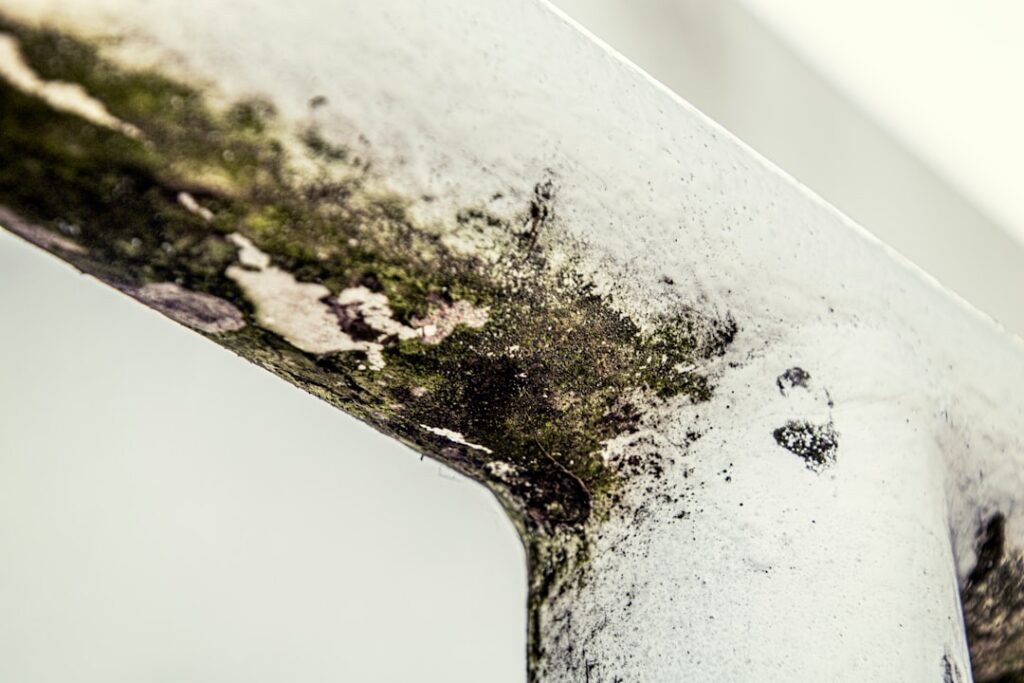
Yes, there are several ways to test for mold, and the homeowner question is usually less “is there a way” and more “which way fits my situation.” Different methods answer different questions, produce different data, and cost different amounts. This guide walks through the comprehensive method catalog for is there a way to test for mold, with use cases and decision criteria for each option. It summarizes EPA and CDC guidance current as of 2026 — consult a certified mold inspector for testing decisions and your physician for symptom evaluation.
Is this mold, asbestos, or water damage? Get a free instant screen
Upload a clear photo of the suspect area. You'll get an instant AI screening opinion and what to do next. This is screening guidance, not a professional determination.
Screening guidance only. AI can be wrong. Confirm asbestos, mold type, or lead with lab testing or a licensed professional before acting.
The short answer: yes, with several methods to choose from
The major mold-detection methods used by homeowners and professionals fall into six categories: visual inspection, smell investigation, moisture meter readings, surface sampling (tape lifts, swabs, bulk samples), ERMI dust analysis, and air spore-trap sampling. A seventh option — continuous indoor air-quality monitoring — measures conditions rather than mold directly but plays a useful role in ongoing prevention.
Each method has a specific use case. Match the method to the question and the result is actionable. Use the wrong method for the question and the result is uninterpretable. The most common homeowner mistake is buying a Petri-dish kit when the real question is whether airborne spore concentrations are elevated — different question, different tool.
Method one: visual inspection
Most active mold problems are visible to a careful observer. Walk every room looking at ceiling corners, the top of window frames, baseboards, the underside of sinks, the wall behind the toilet tank, and around tubs and showers. Look at exterior walls, especially in closets where reduced air circulation traps moisture. Use a bright flashlight angled across surfaces to reveal texture changes invisible in flat light.
Visual inspection costs nothing and identifies the majority of residential mold problems. The limitations are obvious — it cannot detect growth hidden inside wall cavities, under flooring, or within HVAC ductwork. But it is the right first step in any investigation.
Method two: smell investigation
Active mold produces volatile organic compounds (mVOCs) that create the characteristic musty odor. A persistent musty smell in any room, closet, or HVAC component signals active growth somewhere — often hidden when visual inspection finds nothing. Smell is one of the most reliable early indicators of hidden growth.
Smell intensity changes with humidity, temperature, and HVAC operation. A musty room that smells worst when the blower runs points toward HVAC-resident growth. A musty closet that improves with the door open and worsens when closed suggests internal-source growth, often on stored items pressed against an exterior wall.
Method three: moisture meter readings
Mold needs moisture. Finding wet materials is often a faster route to a mold source than searching for the mold itself. Pinless moisture meters slide across walls and floors looking for elevated moisture content without leaving holes. Readings above the manufacturer’s threshold for the material type suggest recent or current moisture exposure that supports growth.
Our drywall moisture meter guide covers specific products and protocols for residential use. A meter costs $30 to $150 depending on capability — well within homeowner reach.
Method four: surface sampling (tape lifts, swabs, bulk samples)
When visual inspection finds a patch and the homeowner wants confirmation, surface sampling identifies the genus with high confidence. Tape lifts work well on smooth flat surfaces; press the tape, peel it off, ship to a lab for microscopy. Swabs handle textured surfaces and grout lines. Bulk samples — a small piece of the substrate itself — are used when the material may need removal regardless of the test result.
Cost: $60 to $125 per sample including lab analysis. Turnaround: 5 to 10 business days. Useful when there is a visible target. Not useful for detecting hidden growth or measuring airborne concentrations.
Method five: ERMI dust analysis
The Environmental Relative Moldiness Index uses a vacuum dust sample analyzed by quantitative PCR for 36 mold species. The result is a single index score reflecting overall mold-impact level across the home. Higher scores correlate with more mold-impacted homes. The integrated nature of the dust sample (reflecting deposition over weeks) makes ERMI useful for detecting historical or intermittent growth.
Cost: $200 to $400. Turnaround: 10 to 21 days. Useful for whole-house screening when no visible patch exists. Not useful for localizing a specific source — the lab report cannot point to a specific wall or room.
For broader context on testing methodology, see our mold inspection and testing hub.
Method six: air spore-trap sampling
Air sampling measures the spores currently airborne in indoor spaces. A calibrated pump draws air across a spore-trap cassette for 5 to 10 minutes. The lab counts spores under a microscope and reports concentrations in spores per cubic meter. Indoor samples are compared against same-day outdoor controls to determine whether elevation exists.
Air sampling is the gold standard when the question is whether current airborne spore concentrations are elevated. Professional protocol — calibrated equipment, multiple sample locations, same-day outdoor controls, AIHA-accredited lab analysis — costs $400 to $900 in the Front Range market.
Method seven: indoor air-quality monitoring
Continuous IAQ monitors measure temperature, humidity, and often VOCs, particulate matter, or carbon dioxide. They do not directly detect mold spores. They measure the environmental conditions that support growth and the indirect markers that sometimes correlate with active growth.
Sustained humidity above 60 percent indicates conditions favorable to mold. Cost: $80 to $300 one-time. Useful for ongoing prevention monitoring rather than diagnostic testing.
How professional sampling differs from DIY
Professional sampling differs from DIY in three specific ways: equipment grade, protocol adherence, and interpretation depth. Inspectors use calibrated pumps, professional-grade moisture meters, and infrared cameras that consumer products do not match. They follow AIHA and ASTM sampling protocols that homeowners rarely reproduce accurately. They interpret lab data against the building context they observed during the site walk.
The site walk itself is a significant value add. An experienced inspector reading a basement’s framing, foundation, and HVAC components in 60 minutes catches patterns a homeowner walking the same path would miss. The lab samples then anchor that observational data into quantitative results.
Method limitations to know
No method covers every scenario. Visual inspection cannot find hidden growth. Smell investigation cannot quantify the problem. Moisture meters find conditions but not the mold itself. Surface samples cannot detect hidden growth. ERMI cannot localize a source. Air sampling measures current conditions but not historical patterns. IAQ monitors track conditions but not mold directly.
Understanding what each method cannot do is as important as understanding what it can. The combination of methods produces a more complete picture because each fills gaps the others leave.
Matching the method to your question
The right method depends on the question. Visible patch, want to identify it — surface sampling. Persistent musty smell with no visible source — ERMI dust kit or professional air sampling. Past water event, want to confirm nothing is growing — combination of ERMI and professional follow-up if results warrant. Real-estate transaction documentation — professional assessment with written report. Ongoing prevention — IAQ monitor plus seasonal visual inspection.
Combining methods produces better information than any single tool. A visual walkthrough plus moisture meter readings catches most active problems. Adding surface sampling on visible patches and ERMI screening on hidden suspicions extends the diagnostic reach. The professional assessment essentially runs the full combination on the homeowner’s behalf.
Timing the test for accurate results
Mold spore counts and impact levels vary by season, weather, and recent events. A test run immediately after a snowmelt event captures different conditions than the same test six months later. The timing that produces the most useful data depends on what you are trying to detect.
For active hidden growth following a recent water event, test two to four weeks after the event while conditions are still favorable to growth but before the structure dries fully. For ongoing concerns about historical impact, ERMI dust sampling produces an integrated reading regardless of current weather. For HVAC-related concerns, test while the system is running and during the season the symptoms are most pronounced.
Cost summary across methods
Visual inspection: free. Smell investigation: free. Moisture meter: $30 to $150 one-time. Tape-lift surface sampling: $60 to $125 per sample. ERMI dust kit: $200 to $400. Mail-in air-cassette kit with pump and outdoor control: $300 to $500 minimum. Indoor air-quality monitor: $80 to $300 one-time. Professional residential assessment with multiple samples and written report: $400 to $900 in the Front Range market.
Common testing mistakes
Cleaning before sampling destroys the target. Sampling only the suspect spot without a neutral comparison eliminates the ability to distinguish indoor sources from outdoor air. Skipping the outdoor control on air-cassette sampling makes the indoor numbers uninterpretable. Treating Petri-dish colony counts as diagnostic ignores the EPA’s explicit guidance against the practice.
Interpretive overconfidence is a common error. A tape lift returning “Cladosporium present” on bathroom grout is normal. A Petri-dish kit growing colonies is expected in every home. The lab data matters only when interpreted in context.
When testing is worth the money
Testing is worth the money when the result will change the homeowner’s action. Identification of a visible patch as Stachybotrys triggers a different response than identification as common Cladosporium. ERMI screening producing an elevated score with water-indicator species drives professional follow-up that the homeowner would otherwise skip. Air sampling confirming or ruling out elevated airborne counts informs decisions about HVAC inspection or hidden-mold investigation.
Testing is not worth the money when visible mold already exists and the cleanup response is the same regardless of species identification. The EPA’s official position is that homeowners can skip the test in those cases and proceed directly to moisture repair and cleanup.
The role of medical context
Mold testing intersects with medical questions in ways that pure environmental testing cannot fully address. If household members have respiratory symptoms that improve when away from home, environmental testing can confirm or rule out elevated exposures but cannot establish causation by itself. A physician familiar with environmental exposures helps interpret test results in the context of the patient’s history.
Conversely, an elevated environmental result without symptoms in residents does not always require remediation. The CDC and EPA both note that exposure response varies dramatically by individual sensitivity. The decision to remediate considers both the environmental finding and the health context.
When to call a professional
Call a certified mold inspector when DIY methods produce ambiguous results, when respiratory symptoms persist, when growth covers more than 10 square feet, when hidden mold is suspected, or when a real-estate transaction requires documented testing. The inspector should hold InterNACHI or ACAC credentials, use an AIHA-accredited lab, and combine multiple detection methods rather than relying on a single sample type.
References
- Mold Testing or Sampling — U.S. Environmental Protection Agency
- About Mold — Centers for Disease Control and Prevention
- Brief Guide to Mold, Moisture, and Your Home — U.S. Environmental Protection Agency
- Mold Inspection Standards — International Association of Certified Home Inspectors
Front Range homeowners who want a vetted professional to combine multiple detection methods in one visit can reach our team via the contact page for a qualified referral.