Identify Black Mold: A Plain-Language Homeowner Guide
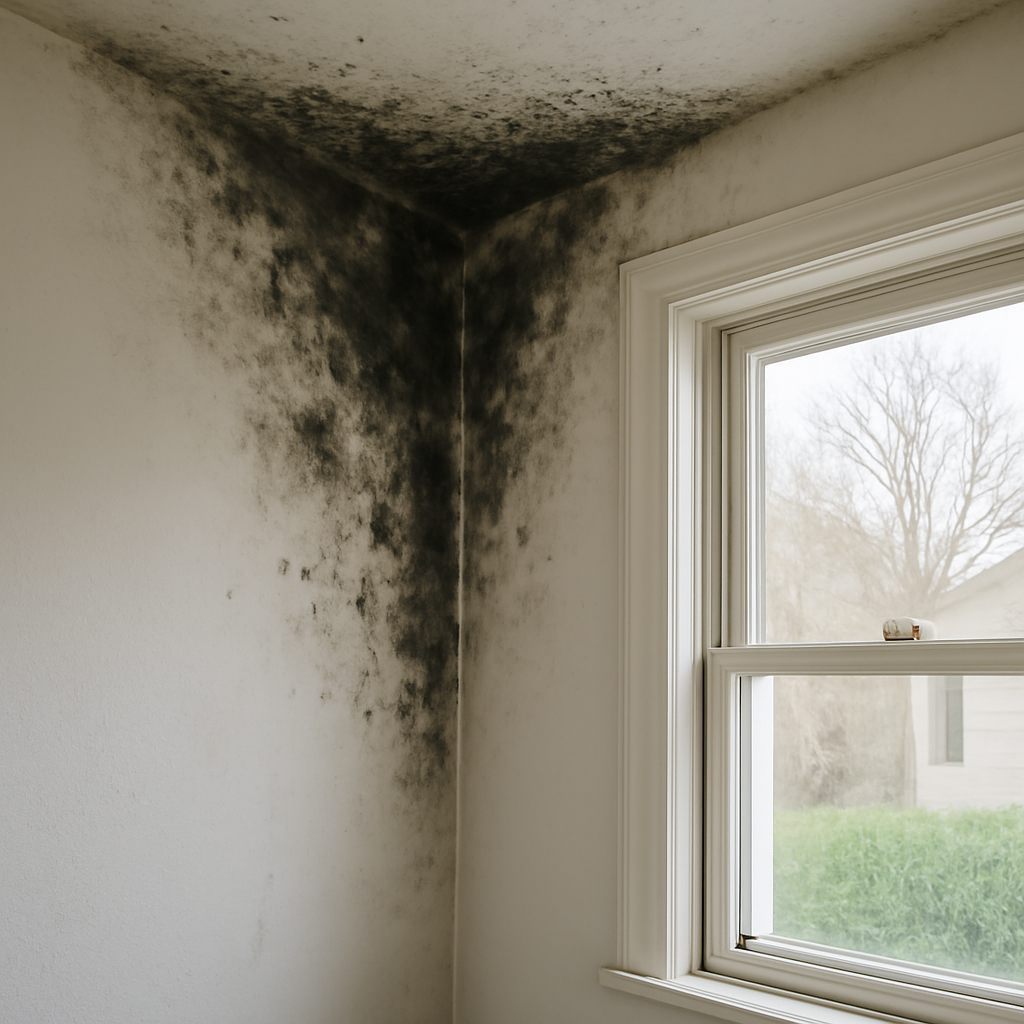
Homeowners search identify black mold after spotting a dark patch and wanting a method that works without guesswork. Reliable identification combines visual reading, texture testing, moisture history review, and lab sampling when documentation matters. No single step delivers certainty, but the combination usually gets a homeowner to a defensible response decision. This guide summarizes EPA and CDC guidance current as of 2026 and walks through the steps in order. Consult your physician for symptoms and a certified professional for testing decisions.
Is this mold, asbestos, or water damage? Get a free instant screen
Upload a clear photo of the suspect area. You'll get an instant AI screening opinion and what to do next. This is screening guidance, not a professional determination.
Screening guidance only. AI can be wrong. Confirm asbestos, mold type, or lead with lab testing or a licensed professional before acting.
How can homeowners identify black mold?
The Environmental Protection Agency is clear that visual identification alone cannot confirm a mold species. Identification is a multi-step process. Start with visual inspection — color, texture, growth pattern. Add moisture context — what surface, how long wet, what known leaks. Test surface response with a damp-cloth wipe. Note odor presence. Use a moisture meter on adjacent surfaces. Use a borescope for cavity inspection if needed. Sample for lab confirmation when documentation or special concerns apply.
Most homeowner identifications stop at the visual-plus-context level. The EPA and CDC recommend visible cleanup for typical patches regardless of species, so a homeowner who sees mold can usually respond without species-level confirmation. The exception is when documentation matters — real estate transactions, occupant health concerns, or post-remediation clearance.
What visual features identify black mold?
Stachybotrys chartarum colonies tend to be greenish-black to deep black, with a slimy or wet sheen when active and a powdery look when dry. Patches are commonly irregular and may show a slightly raised, almost rubbery texture compared to flat surface mildew. The growth pattern usually follows a water-staining line — the bottom edge of a damp drywall sheet, a circular bloom below a ceiling leak, a streak behind a baseboard fed by foundation seepage.
Other dark molds overlap heavily. Cladosporium can be olive-green to dark brown to black, often flat or velvety in texture. Aspergillus colonies often look powdery and may darken with age. Alternaria is usually grey-brown with a velvety surface. None of these descriptions are diagnostic — they cluster the probability without confirming it.
The damp-cloth test
One of the simplest field tests. Surface mildew and tannin staining typically wipe off cleanly with a damp cloth. Active mold leaves a stain, smears when wiped, and often regrows within days if the underlying moisture is not corrected. The damp-cloth response distinguishes cosmetic staining from active fungal growth more reliably than color inspection.
What moisture context identifies black mold likelihood?
Stachybotrys needs sustained moisture on cellulose for at least a week before colonization. The EPA lists the most common residential moisture sources as plumbing leaks, condensation on cold surfaces, roof leaks, ground water intrusion through foundation walls, HVAC condensate pan overflows, and chronically high indoor humidity above about 60 percent.
If a homeowner knows of a leak that ran more than a week, a chronic condensation problem, or a foundation seam that has wept water through multiple snowmelt cycles, the materials in that area are at higher risk for Stachybotrys colonization. Front Range homeowners often discover Stachybotrys along rim joists where swamp coolers have run uncontrolled into unconditioned basements. Our overview of the difference between mold and black mold details the moisture history cues.
What tools help identify mold beyond visual inspection?
A pin or pinless moisture meter on the outer wall surface can reveal moisture levels above about 16 percent that suggest hidden water. A thermal imager can show cool spots from evaporative cooling that indicate active moisture inside walls. A borescope inserted through a small drilled hole can image the inside of a wall cavity. None of these tools confirm species — they flag areas where mold is likely.
For species confirmation, sampling is the only definitive method. Tape lifts on visible growth, swabs in suspect cavities, and air samples paired with outdoor reference samples taken the same day. The outdoor baseline is what makes an indoor air sample interpretable. Stachybotrys spores are heavy and rarely airborne in detectable amounts, so a clean air sample does not always rule out hidden colonies.
How does odor factor into mold identification?
Active mold colonies of many species produce microbial volatile organic compounds, creating a musty, earthy odor. The smell can be strongest in poorly ventilated spaces and may fluctuate with humidity. A persistent musty smell in a basement, closet, or behind cabinets is a reasonable trigger to investigate hidden moisture sources. Smell does not identify a species — it identifies the presence of active fungal metabolism.
Smell strength does not match colony size linearly. A small but actively growing cavity colony can produce more detectable mVOCs than a larger surface patch that has dried. The Centers for Disease Control and Prevention notes that smell is a useful trigger for investigation but does not size or species the problem on its own.
What does lab analysis actually identify?
Accredited microbiology labs identify mold at the genus level from surface samples and at the genus level — sometimes with species detail — from air samples. A useful lab report lists dominant genera, spore counts in spores per cubic meter, and a comparison between indoor and outdoor concentrations. The outdoor baseline is what makes the indoor result interpretable.
What labs cannot do from a single sample is quantify mycotoxin levels in indoor air. Specialized mycotoxin testing exists but is expensive and difficult to interpret in a residential context. The EPA and CDC do not recommend routine mycotoxin testing for typical residential mold complaints. For most identification purposes, genus-level confirmation is sufficient.
Where to send samples
Accredited environmental microbiology labs serve the Front Range market. A trained mold assessor will know which labs produce reliable, defensible reports. Homeowners who collect their own samples may struggle to find a lab that accepts non-professional submissions, and the results without context may be difficult to interpret. Our mold inspection hub covers the assessor-plus-lab workflow.
What should homeowners do after identifying suspected black mold?
Stop. Take photographs. Note the location, size, surface type, and any visible water-source clues. Identify and correct the moisture source first — without that fix, cleanup is temporary. Decide whether the patch is in DIY territory or warrants professional assessment. EPA guidance permits homeowner cleanup for patches under about 10 square feet on hard or semi-porous surfaces, using detergent, water, N95 mask, gloves, and goggles.
Bleach is the wrong tool on porous surfaces — it bleaches color without killing embedded hyphae, and the chlorine evaporates before reaching deeper layers. Detergent and mechanical scrubbing remove biomass more effectively. After cleaning, the surface should dry below about 16 percent moisture content on a meter before painting or sealing.
How does identification differ between surface growth and cavity growth?
Surface growth on a visible wall, ceiling, or floor is the simpler identification case. Visual inspection, moisture metering on the substrate, damp-cloth testing, and tape-lift sampling can usually narrow the species enough to plan a response. Cavity growth — inside a wall, under a floor, above a ceiling — requires more indirect identification. A borescope, thermal imaging, moisture meter readings on adjacent surfaces, and partial demolition for direct sampling all play a role.
The Environmental Protection Agency notes that cavity sampling without containment can spread spores. Professional assessors typically set up plastic-sheeted containment before drilling access holes for borescope inspection or swab sampling. That containment limits cross-contamination during the diagnostic phase, before any remediation work begins.
What does a complete identification report include?
A useful identification report from a certified assessor includes site information, visible findings with photographs, moisture mapping results across walls and ceilings, sample collection methodology, lab analysis showing dominant genera and spore counts, indoor versus outdoor reference comparison, and recommended next steps. The document becomes the basis for remediation decisions, insurance claims, real estate negotiations, or post-remediation clearance comparisons.
Reports that lack outdoor reference data, sampling methodology, or explicit indoor-versus-outdoor comparison are less useful than complete reports. The InterNACHI mold standard of practice provides a baseline for what professional documentation should include. Asking for a sample report before engaging an assessor is a reasonable vetting step.
When to call a professional
Engage a certified mold assessor when the visible patch exceeds 10 square feet, when occupants have asthma or immune compromise, when growth recurs after cleaning, when a real estate transaction needs documentation, or when there is suspected cavity growth behind walls or under flooring. Use the InterNACHI mold standard of practice as a vetting baseline. Prefer assessors who do not also sell remediation services for the same job.
The Colorado Department of Public Health and Environment publishes general guidance on indoor air quality and on choosing qualified contractors. Combined with the EPA and CDC residential mold guidance, that gives Front Range homeowners a defensible framework for identifying suspect mold and deciding what response level is warranted.
References
- Mold cleanup in your home — U.S. Environmental Protection Agency
- Basic facts about mold and dampness — Centers for Disease Control and Prevention
- Mold inspection standards of practice — InterNACHI
- Indoor air quality and mold — Colorado Department of Public Health and Environment
Front Range homeowners trying to identify a suspect mold patch with confidence can connect with a vetted local inspector through our contact page for an independent assessor visit and sampling discussion.