How to Clean Mold Off: A Plain-Language Guide
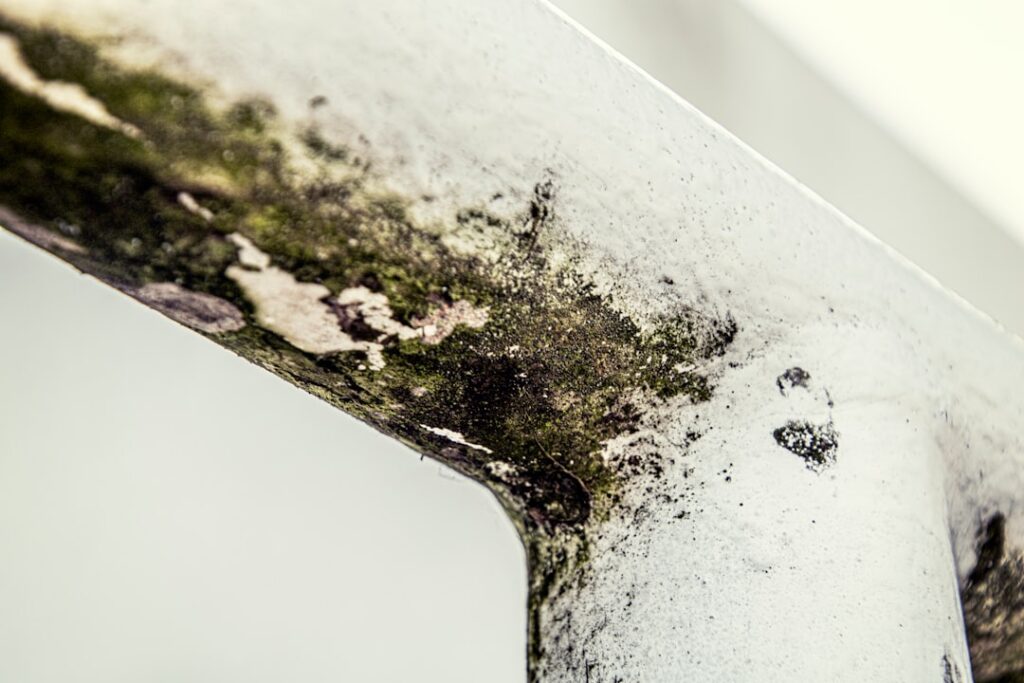
“How to clean mold off” depends entirely on the surface. The cleaning method that works on a glazed bathroom tile will damage hardwood. The procedure that removes surface mildew from drywall paint will not address growth that has already soaked through the gypsum. This guide summarizes EPA and CDC guidance current as of 2026 and walks through surface-by-surface cleaning methods within EPA’s ten-square-foot DIY threshold, plus the triggers that move a job into professional remediation territory.
Is this mold, asbestos, or water damage? Get a free instant screen
Upload a clear photo of the suspect area. You'll get an instant AI screening opinion and what to do next. This is screening guidance, not a professional determination.
Screening guidance only. AI can be wrong. Confirm asbestos, mold type, or lead with lab testing or a licensed professional before acting.
Read the surface before you choose a method
Mold cleanup decisions hinge on whether the substrate is porous, semi-porous, or non-porous. Porous materials (drywall paper, raw wood, fabric, ceiling tile, carpet pad, paper-faced insulation) absorb water and growth media into their structure; visible growth on the surface usually indicates colonization deeper in. Semi-porous materials (sealed wood, painted drywall, sealed concrete) resist water absorption but can still hold growth in surface pores. Non-porous materials (glazed tile, glass, sealed countertops, fiberglass, plastic) hold growth only on the surface and clean easily.
The general rule: clean non-porous surfaces in place, clean semi-porous surfaces with care, and replace porous materials that have visible growth soaked through. The InspectandTest mold inspection hub covers the underlying logic, and the mold cleanup service guide covers when DIY is no longer appropriate.
The universal pre-cleanup steps
Three steps come before any cleaning regardless of surface. Identify and stop the moisture source — cleaning surface growth while the leak continues produces a colony that returns within weeks. Confirm the affected area is under EPA’s ten-square-foot threshold and not HVAC-adjacent (above that area, professional remediation is the right call). Put on PPE — N95 disposable respirator, nitrile gloves rated for chemical contact, snug goggles (not safety glasses), long sleeves and pants.
Ventilation matters as much as cleaning agent
Open a window in the work room. Place a box fan in the window blowing outward so air moves from clean areas of the house, through the work room, and outside. This prevents spores released during cleaning from migrating to other rooms. Close interior doors between the work room and unaffected spaces. Do not run HVAC during cleanup — it will distribute spores throughout the system.
Cleaning mold off glazed tile, glass, and sealed counters
Non-porous surfaces are the easiest. Mix detergent and warm water in a bucket (dish soap or general-purpose cleaner). Scrub the visible growth with a stiff bristle brush or scrub pad, rinsing the brush in fresh water frequently. Wipe with clean damp cloths. After detergent cleaning, a diluted bleach solution (about one cup household bleach per gallon of water) is acceptable as a sanitizer on these surfaces — apply, let dwell five to ten minutes, then wipe clean. Allow the surface to dry completely under good ventilation.
Cleaning mold off painted drywall
Painted drywall is semi-porous. If the growth is on the paint surface only (light surface mildew that wipes away cleanly), detergent and water cleaning is appropriate. Scrub gently with a soft brush — too aggressive a scrub will damage the paint. Wipe with damp cloths. Let dry. If the growth shows through the paint or extends to the drywall paper underneath, the drywall is colonized and needs to come out rather than be cleaned. Cut out the affected portion plus a 12-inch margin, bag the waste, and plan to rebuild after the moisture source is confirmed stopped.
Why bleach on drywall fails
EPA guidance recommends against bleach as a primary cleaner on porous and semi-porous materials. On painted drywall, the chlorine evaporates from the surface while the water carrier soaks into the gypsum core, potentially extending the growth substrate rather than killing the colony. Detergent and water on the surface, followed by complete drying, is the appropriate semi-porous protocol.
Cleaning mold off wood
Wood depends on the finish. Sealed or painted wood with light surface growth can be cleaned like painted drywall — detergent and water with a soft brush, careful drying. Raw or unfinished wood (framing lumber, unfinished hardwood, antique furniture) absorbs water deeply and is harder to remediate. For surface growth on raw wood, light sanding after cleaning to remove discolored fibers helps if the substrate is structurally sound. Wood with growth extending below the surface — soft to the touch, decayed, or structurally compromised — needs replacement, not cleaning.
Hardwood flooring with surface staining from minor topical mold can sometimes be cleaned and refinished. Hardwood with deep water damage and active growth below the surface usually needs sanding, refinishing, and possibly board replacement — work that is generally outside DIY scope.
Cleaning mold off fabric and upholstery
Fabric is porous and absorbs growth into its structure. Light surface mildew on clothing, curtains, or washable fabric can be handled by laundering with detergent and the hottest water the fabric tolerates, sometimes with added oxygen-based bleach (color-safe) or borax. Air-dry in direct sunlight if possible — UV exposure helps. Heavily affected upholstered furniture (cushions, mattresses, fabric headboards) where mold has soaked through usually needs replacement; cleaning the surface does not address growth in the foam or batting underneath.
Cleaning mold off concrete, brick, and masonry
Concrete, brick, and concrete-block surfaces are semi-porous. Surface staining and efflorescence (white mineral deposits often confused with mold) clean readily with detergent and water and a stiff brush. Actual mold growth on concrete walls or basement floors after a moisture event can be cleaned with detergent and water, with a follow-up sanitizing pass using diluted bleach acceptable since concrete is closer to non-porous than to porous. The critical step is drying — concrete holds moisture and will support recurrence if humidity stays elevated.
What not to clean — when to replace instead
Five materials with visible growth that has soaked through should be removed rather than cleaned. Drywall with growth extending through the paper face into the gypsum core. Ceiling tile with visible growth (acoustic tile is highly absorbent). Carpet pad — never reusable after mold contamination. Paper-faced insulation. Upholstered furniture with deep growth into foam or batting. In each case, cleaning the surface leaves embedded growth that will recolonize as soon as humidity rises again.
When DIY cleanup is the wrong choice
Five conditions push a job out of DIY territory: visible growth over ten square feet (EPA threshold), HVAC ductwork involvement, suspected hidden growth behind drywall in finished spaces, Category 3 water loss (sewage or prolonged groundwater), and occupants with asthma, COPD, immunocompromise, or pregnancy. A professional remediator following IICRC S520 sets up containment with HEPA-filtered negative air, uses appropriate PPE, removes porous materials, and coordinates independent clearance testing. Costs typically run $1,500 to $6,000 for contained jobs under 100 square feet.
After cleanup — confirming the job worked
For DIY cleanup under the EPA threshold, success looks like a surface that stays visually clean and dry over the following weeks, with no return of the staining or musty odor. Monitor the area with a moisture meter for at least a month — readings should stay below 16% moisture content. If staining or odor returns, the moisture source has not been fully resolved or the substrate is colonized below the cleaning depth, and the project moves to professional remediation. For larger jobs handled by a contractor, an independent ACAC CIE-credentialed indoor environmentalist collects post-remediation air samples and issues a clearance letter documenting the result.
Health framing for cleaning work
CDC and NIH documentation lists upper respiratory irritation, allergic rhinitis-like symptoms, and asthma exacerbation in sensitized individuals as the documented health effects of indoor mold exposure. Heavy occupational exposure can cause hypersensitivity pneumonitis. PPE during cleanup reduces inhalation exposure to released spores; ventilation reduces airborne concentration in the work room. Homeowners with respiratory conditions should consult their physician before doing cleanup work and default to professional remediation when in doubt.
Cleaning specific problem areas
Common homeowner cleanup zones each have their own quirks. Bathroom shower grout often develops surface mildew (Cladosporium and similar) within months of installation in homes with poor ventilation. Cleaning with detergent and a stiff brush works on the surface, but recurrence is the rule unless the underlying ventilation problem is addressed — typically by running the exhaust fan during and twenty minutes after every shower. Bathroom caulk lines that have developed staining usually need replacement rather than cleaning; mold has grown into the caulk substrate where surface cleaning cannot reach.
Window frames and sills
Wood window frames with condensation-driven mold staining can be cleaned with detergent and water, then dried thoroughly. The underlying problem — cold-surface condensation during winter — usually points to single-pane windows, failed seals on double-pane units, or excess indoor humidity. Cleaning the surface treats the symptom; addressing humidity and window thermal performance treats the cause.
Refrigerator and washing machine seals
Black mildew on refrigerator door gaskets and front-load washing machine rubber boots is common and addressable. Detergent and water with a soft brush cleans the surface effectively. For washing machines, leaving the door slightly ajar between loads and running a monthly hot-water cycle with vinegar prevents recurrence. For refrigerators, drying the gasket after any visible spillage and replacing failed gaskets when they no longer seal cleanly addresses the underlying moisture pathway.
What homeowners commonly miss
Five areas often go un-cleaned during a DIY mold project. The HVAC return air grille — often visibly dusty and sometimes harboring growth in the filter cavity. Bathroom exhaust fan housings — typically caked with dust mixed with shower humidity. Crawl space access hatches — which seal the crawl space air from the living space and often have growth on the underside. Behind washer hookups — where slow supply line drips create sustained dampness. And inside HVAC condensate pans — which collect water by design and need annual cleaning. Adding these areas to a maintenance routine after a mold cleanup project reduces the chance of recurrence at the locations homeowners cannot easily see.
The drying step matters as much as the cleaning step
A cleaned surface that stays damp will re-grow mold within weeks. After scrubbing and rinsing, give the surface 24 to 72 hours of dry-out time under good airflow before considering the project complete. A box fan blowing across the cleaned area, the room dehumidified to under 50% RH, and the area sealed from the rest of the house (to prevent moisture migration into adjacent cool surfaces) all support faster drying. For wood and porous surfaces, a moisture meter reading below 16% moisture content is the practical confirmation of dry-out. Without that drying step, even excellent cleaning produces a temporary cosmetic improvement rather than a durable result.
Final inspection before declaring cleanup complete
A short final inspection prevents most cleanup-failure recurrences. Look at the cleaned surface under direct light from multiple angles — staining and residual growth often appear differently in raking light than in flat ambient lighting. Run a moisture meter across the surface and surrounding assembly to confirm readings below 16% moisture content. Sniff the area for any residual musty odor; persistent odor often indicates incomplete removal or growth in adjacent areas the cleanup did not address. Photograph the result for documentation. Schedule a follow-up check in 30 days to confirm no recurrence has begun. This 10-minute final inspection routine catches the early signs of incomplete cleanup before the problem requires a second round of work.
What to do if the problem returns
If mold returns to a previously cleaned area within weeks, the underlying moisture source is not actually fixed. Re-cleaning is not the answer. Diagnose the moisture source more carefully before any further cleanup work — a credentialed inspector with thermal imaging and moisture meter ($300 to $600 for a residential visit) often identifies the source within an hour. Common missed sources include slow plumbing leaks behind walls, condensation on cold surfaces during temperature swings, sustained high indoor humidity from inadequate ventilation, and water entry through exterior gaps that only manifest during specific weather events.
When the project crosses into hazardous waste territory
Most residential mold cleanup waste is treated as standard household trash, but some scenarios warrant additional care. Sewage-contaminated materials (Category 3 water loss) may require disposal at a transfer station that accepts contaminated debris. Asbestos-containing materials in pre-1978 homes (vinyl floor tile, popcorn ceilings, pipe insulation) that test positive for asbestos require licensed abatement contractor handling per state and federal rules, even when the immediate problem is mold rather than asbestos. Lead paint dust on pre-1978 painted surfaces being scraped or sanded triggers EPA RRP rules. Homeowners working in older homes should screen for asbestos and lead before disturbing any suspect materials.
References
- Mold Cleanup in Your Home — EPA
- About Mold and Health — CDC
- Mold Inspection Guidance — InterNACHI
- A Brief Guide to Mold, Moisture, and Your Home — EPA
Front Range homeowners weighing whether their cleanup project belongs in DIY scope can reach out through our contact page for a connection to a vetted Colorado inspector.