ERMI Mold Test Kit: What Homeowners Need to Know
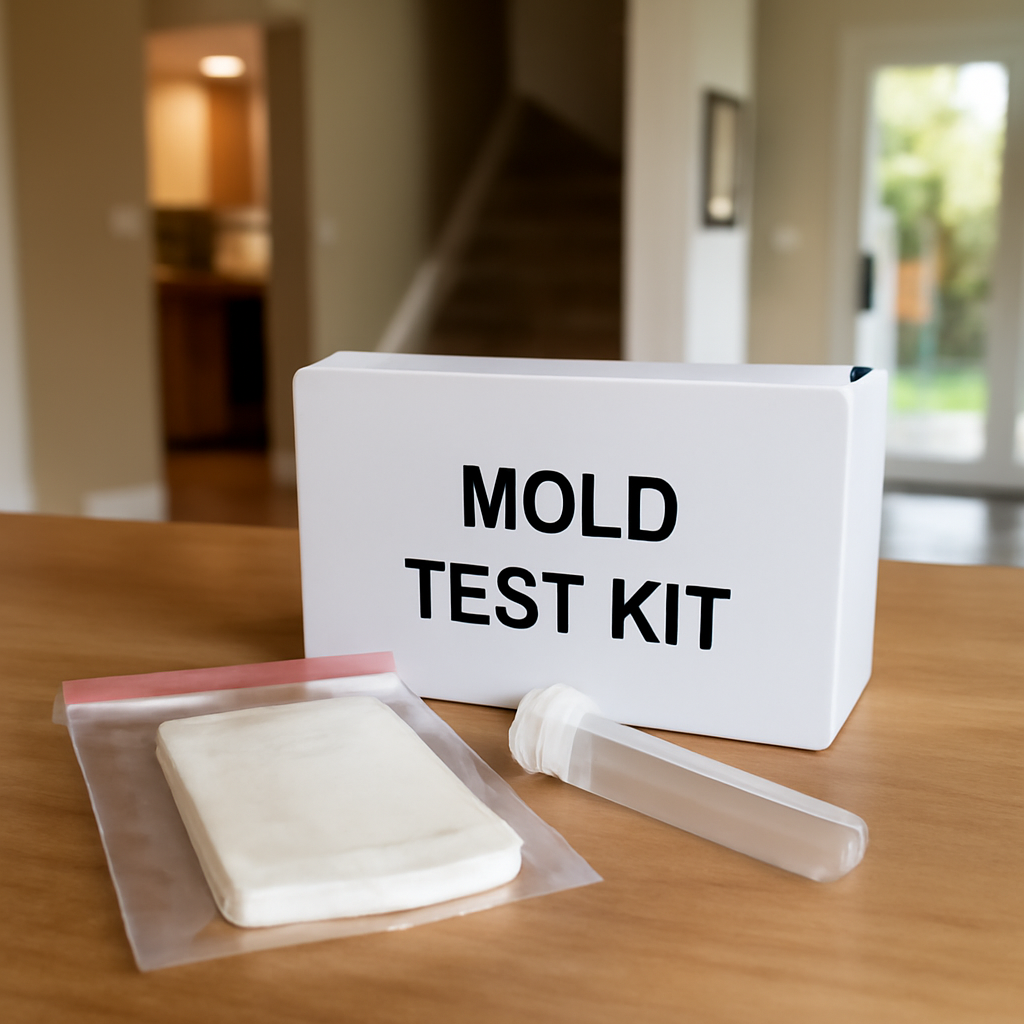
The ERMI mold test kit has developed a strong following among homeowners who want a number to attach to a vague suspicion that something in the house is making them feel unwell. Marketed as a DNA-based snapshot of a home’s mold burden, an ERMI kit promises precision that a visual inspection cannot. The reality is more complicated, and understanding what ERMI does and does not measure is essential before spending money on one. This guide summarizes EPA, CDC, and NIH guidance current as of 2026; it is educational only, and testing or remediation decisions belong with a certified professional, while health symptoms belong with your physician.
Is this mold, asbestos, or water damage? Get a free instant screen
Upload a clear photo of the suspect area. You'll get an instant AI screening opinion and what to do next. This is screening guidance, not a professional determination.
Screening guidance only. AI can be wrong. Confirm asbestos, mold type, or lead with lab testing or a licensed professional before acting.
What Is an ERMI Mold Test Kit?
ERMI stands for the Environmental Relative Moldiness Index, a research tool the EPA developed to study mold in homes. An ERMI test analyzes a settled-dust sample using a DNA method called MSQPCR, which counts the genetic signatures of 36 mold species. The results are combined into a single index score meant to indicate how a home’s mold profile compares with a reference set of houses.
A home ERMI kit typically asks the user to collect dust from carpets or other surfaces with a special cloth or vacuum cartridge, then mail it to a laboratory. The lab returns an index value and a breakdown of the species detected. The appeal is obvious: a quantitative score feels more authoritative than “yes, there is mold.” But the EPA itself has been explicit that ERMI was created as a research instrument, not a diagnostic standard for individual homes.
How the ERMI Score Is Calculated
The index divides the 36 species into two groups. Group one contains molds associated with water-damaged buildings, and group two contains molds common in normal outdoor and indoor environments. The calculation essentially subtracts the group-two log values from the group-one log values, producing a single number that can be negative or positive.
A higher score suggests a relatively larger proportion of water-damage-associated molds compared with the reference homes the index was built around. The score is then often ranked against percentiles. While the math is consistent, the interpretation is where caution is needed, because the reference database reflects a particular national sample and may not represent any specific home or region accurately.
What an ERMI Kit Can and Cannot Tell You
An ERMI result can flag that a home contains DNA from molds linked to past or present water damage, which may prompt a closer look. It can sometimes reveal that a problem exists even when growth is not visible, since dust integrates contributions from across a space.
What it cannot do is locate the moisture source, confirm active growth versus dead spores (DNA persists whether the mold is alive or not), or diagnose a health condition. The EPA and CDC both emphasize that no test result, ERMI included, establishes a “safe” or “unsafe” threshold for human health. The practical guidance remains unchanged: if mold is present, find the moisture and remove the growth, regardless of any index number. Homeowners comparing options can review our overview of the best at-home mold test kits to see how ERMI stacks up against simpler approaches.
ERMI vs. Air and Surface Sampling
Traditional mold testing relies on air samples or surface swabs analyzed by spore count or culture. These methods capture a moment in time and are useful for comparing indoor conditions with outdoor baselines or for confirming growth on a specific surface. ERMI, by contrast, analyzes accumulated dust, giving a longer-term, integrated picture.
Neither approach is inherently superior; they answer different questions. Air sampling helps assess what occupants might currently be breathing, while ERMI hints at historical moisture burden. For most homeowners, the question is not which test to run but whether testing is needed at all. Our broader mold inspection and testing hub explains when sampling genuinely adds value versus when a visual and moisture inspection answers the question more cheaply.
The Limitations and Controversy Around ERMI
The EPA has stated plainly that ERMI is not validated or recommended as a tool for routine public use in individual homes. The reference database was assembled for research, and applying its percentiles to a single house can mislead. Two labs can also produce different numbers from similar dust because collection methods and analysis vary.
Marketing that ties a specific ERMI score to specific health outcomes runs ahead of the science. Because dust DNA reflects both living and dead mold and accumulates over time, a high score does not necessarily mean a current, active problem, and a low score does not guarantee a home is mold-free. Homeowners should treat an ERMI number as one data point that may justify a closer professional look, not as a verdict. Understanding what a positive mold test result actually means helps keep any single test in perspective.
Interpreting an ERMI Report Without Overreacting
An ERMI report arrives as a score paired with a percentile ranking and a breakdown of detected species, and the presentation can make a moderate number feel alarming. The first step in reading it sensibly is to remember what the EPA has stated plainly: the index was built as a research tool, and applying its percentiles to a single home can mislead. A high percentile does not translate into a defined health risk.
Look at the report as a prompt rather than a diagnosis. Note which species drove the score and whether they are the water-damage-associated group or common background molds. Consider the home’s history; a property with past water damage may carry elevated DNA from molds long since removed. Most importantly, pair the number with what the home itself shows, including any visible growth, odors, or moisture. A homeowner who lets the score start an investigation rather than dictate a costly response stays grounded. The same caution applies to any single test result, as our discussion of a positive black mold test reinforces, because no lab number alone defines whether a home is safe.
When an ERMI Test Might Make Sense
Despite the caveats, an ERMI test can occasionally serve a purpose. A homeowner with persistent unexplained symptoms, a history of water damage, and no visible growth might use ERMI as a screening step to decide whether deeper investigation is warranted. Some occupational and environmental physicians request it as part of a larger workup.
Even then, the result should be paired with a physical inspection. A meter reading behind a suspicious wall or a borescope look into a wall cavity often reveals more actionable information than a dust score. ERMI works best as a prompt for further inquiry, never as a standalone basis for a costly remediation decision.
What to Do With an ERMI Result
If an ERMI score comes back elevated, the next step is not to panic or to demand demolition. It is to investigate moisture. Look for past leaks, check humidity levels, inspect basements and crawl spaces, and consider a professional moisture assessment. The number itself does not tell you where to dig; the building does.
If visible mold is found during that investigation, the EPA’s standard response applies: remove growth under about ten square feet carefully yourself with proper gear, or hire a professional for larger areas. The ERMI score becomes irrelevant once you are addressing an actual, located problem. Documentation of the moisture fix matters far more than the index value.
How ERMI Differs From a Visual Inspection
It helps to compare what an ERMI dust score offers against what a straightforward visual and moisture inspection provides, because the two answer different questions. ERMI quantifies the genetic signatures of molds in accumulated dust, producing a single index that hints at a home’s historical mold burden. It is a number, removed from any specific location.
A visual inspection, by contrast, examines the actual home: where staining appears, where surfaces are damp, and where conditions favor growth. For most homeowners, the visual approach is more actionable, because it points to the spot that needs attention rather than to an abstract score. ERMI cannot tell you that the moisture is coming from a failed bathroom seal or a cracked foundation wall; only an on-site look can. The EPA’s consistent message is that finding and fixing moisture matters more than quantifying spores in dust, which is why a visual and moisture inspection often serves a homeowner better than mailing dust to a lab. ERMI may complement an inspection in unusual cases, but it rarely replaces one.
The Difference Between ERMI and HERTSMI-2
Homeowners researching ERMI often encounter HERTSMI-2, a related score derived from a subset of the same molds. HERTSMI-2 focuses on a smaller group of species and is sometimes used as a screening shorthand, particularly in discussions of water-damaged buildings. It shares ERMI’s underlying DNA methodology and therefore inherits the same limitations.
Neither score carries EPA endorsement for routine individual-home use, and neither establishes a health threshold. The narrower HERTSMI-2 can be cheaper or faster but loses the broader picture ERMI’s 36-species panel provides. For practical purposes, both are best understood as research-derived indices that may prompt further investigation, not as verdicts on a home’s safety. A homeowner should not let either acronym substitute for the fundamental step of finding and fixing moisture.
How to Collect an ERMI Sample Correctly
If a homeowner does proceed with an ERMI kit, collection technique heavily influences the result. Most kits ask for settled dust gathered from areas that accumulate it over time, often the top of door frames, window sills, or carpeting, using a supplied cloth or a special vacuum cartridge. Following the instructions precisely matters, because inconsistent collection is a major source of variability between tests.
Common errors include sampling a freshly cleaned surface, which lacks the accumulated dust the method relies on, or contaminating the sample by handling the collection medium with bare hands. The location chosen also shapes the result; dust from a rarely cleaned spot integrates a longer history than dust from a frequently wiped surface. Because the index compares your sample against a reference database built on particular collection methods, deviating from the protocol can skew the number in either direction. This sensitivity to technique is one reason the EPA treats ERMI as a research tool rather than a consumer diagnostic.
Cost and Whether It Is Worth It
An ERMI kit typically costs more than a simple at-home spore-count kit because of the DNA laboratory analysis involved. For many homeowners, that premium buys a number that does not change the right course of action, since the EPA’s guidance is to remove visible mold and fix moisture regardless of any index value. Spending on a sophisticated test that will not alter your decisions is rarely money well used.
The cost can be justified in narrow circumstances, such as an occupant with unexplained symptoms, a documented history of water damage, and no visible growth, where a physician or environmental specialist requests it as part of a broader workup. Even then, pairing the result with a physical inspection is essential. Homeowners weighing test options can compare ERMI against simpler choices in our roundup of the best at-home mold test kits, which lays out where each kind of kit genuinely adds value and where it simply adds expense.
When to Call a Professional
Professional involvement makes sense when an ERMI result is elevated and the source is unclear, when visible mold exceeds a small patch, when growth appears in HVAC systems, or when occupants have respiratory or immune conditions. A qualified inspector can interpret a dust score in context and guide whether further sampling, a moisture investigation, or remediation is the right path.
Independent assessment, kept separate from any company selling remediation, protects the homeowner from being sold a cleanup based on a number that the EPA never intended to drive individual home decisions. An ERMI kit can start a conversation, but a thorough on-site inspection finishes it.
References
- A Brief Guide to Mold, Moisture and Your Home — U.S. Environmental Protection Agency
- About Mold and Health — Centers for Disease Control and Prevention
- Mold Health Information — National Institute of Environmental Health Sciences
- Mold Cleanup in Your Home — U.S. Environmental Protection Agency
If an ERMI result has you wondering what is really going on in your home, Front Range homeowners can get in touch through our contact page to connect with a vetted inspector for a grounded assessment.
DIY mold test kits
A test kit can confirm whether a suspect patch is mold and (with lab analysis) what type — though visible mold over ~10 sq ft generally warrants a professional.
| Product | Why | Buy |
|---|---|---|
 DIY Mold Test (lab included) DIY Mold Test (lab included) | Surface + air-sampling options. | Amazon — $22.00 |
 Healthful Home 5-Minute Mold Test Healthful Home 5-Minute Mold Test | Rapid screening strips. | Amazon — $34.97 |
 Mold Test Plates (DIY petri dishes) Mold Test Plates (DIY petri dishes) | Settle-plate style sampling you culture at home. | Amazon — $22.99 |