Black Mold Appearance: What Homeowners Need to Know
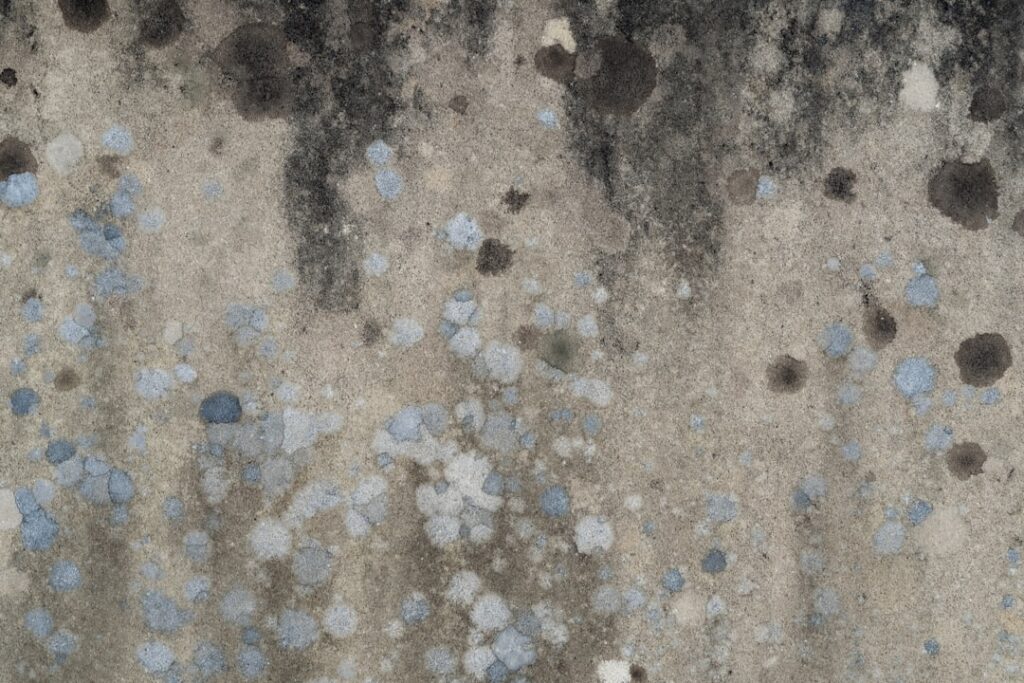
Black mold appearance is a phrase that captures a real homeowner concern: a dark patch has shown up somewhere in the house, and a clear visual reference would help decide what to do next. This guide summarizes EPA and CDC guidance current as of 2026, walks through the colors, textures, growth patterns, and locations where dark indoor molds actually appear, and explains where the eye stops being reliable. Consult your physician for symptoms and a certified professional for testing decisions. Visual cues are useful for triage, but laboratory confirmation is the only way to identify a species in a specific home.
Is this mold, asbestos, or water damage? Get a free instant screen
Upload a clear photo of the suspect area. You'll get an instant AI screening opinion and what to do next. This is screening guidance, not a professional determination.
Screening guidance only. AI can be wrong. Confirm asbestos, mold type, or lead with lab testing or a licensed professional before acting.
The general shape of black mold appearance
Dark indoor mold, in the form that most homeowners label “black mold,” presents as an irregular patch of dark growth on a porous surface that has been damp for weeks or longer. Color ranges from deep olive-green through dark charcoal to near-black, and the surface often looks slightly raised under angled light. Active colonies can appear slimy or shiny when the substrate is still wet, while dried colonies look more like sooty smudges or faded water stains. Stachybotrys chartarum, the species commonly meant by “black mold,” tends to follow this presentation, although several other dark molds resemble it closely enough to mislead a casual viewer.
The EPA explicitly notes that color does not identify a species. That is worth repeating because so much of the panicked online discussion treats color as a diagnostic feature, when in practice the substrate, moisture history, and growth pattern carry more information.
Color ranges in real homes
Dark indoor molds appear across a wider spectrum than the word “black” suggests. Stachybotrys commonly looks deep olive-green to charcoal, sometimes with a wet sheen when active and a sooty residue when dried. Cladosporium produces peppery olive-to-black dotting on cool surfaces. Aspergillus niger forms dusty black patches on stored paper, cardboard, and wallpaper backing. Alternaria appears as grey-green to dark brown colonies in humid bathrooms and near windows. Ulocladium can show brownish-black growth on damp drywall. Each of these can be labeled black mold by a homeowner using everyday language, and each requires laboratory confirmation for species identification.
Substrate also affects perceived color. The same Stachybotrys strain looks slightly different on drywall paper than on framing lumber or on the back of vinyl wallpaper. Lighting conditions, especially color temperature, change how the same colony appears under flash versus daylight. That is why inspectors documenting mold for insurance or remediation use standardized lighting conditions when possible.
Texture cues that matter more than color
Texture often gives better information than color alone. Active dark mold tends to look slightly raised, with a fuzzy or velvety appearance under angled light. Stachybotrys can present a slimy or wet-looking surface when the substrate moisture remains high. As the colony dries, the texture shifts to powdery, and dried spores can dislodge with light disturbance. Cladosporium typically retains a peppery, dot-by-dot texture across larger surface areas. Aspergillus niger forms a flatter, dusty layer that brushes off in clumps.
Common lookalikes have different textures. Soot has a fine, uniform appearance that smears easily with a microfiber wipe. Hard-water mineral residue dries to a crusty deposit that feels gritty under a fingernail. Dust accumulates in directional streaks that radiate from HVAC registers. Mold tends to leave a stain when wiped, returns in days or weeks if the source moisture persists, and feels softer or slimier than the common lookalikes.
Growth patterns and edges
Indoor mold colonies tend to follow moisture rather than form geometric shapes. Common patterns include irregular blotches expanding outward from a leak point, dark concentric rings on a popcorn ceiling near a former roof penetration, dotting along the silicone bead in a bath surround, and creeping linear growth along framing members behind drywall. Where a colony shows a clear boundary, the line usually traces a moisture gradient: the dry edge of a leak footprint, the seam where a vapor barrier ends, or the perimeter of a former wet area that has since dried.
Hard edges are uncommon and usually indicate a fast-developing event rather than a chronic problem. Stachybotrys, with its slow growth rate and need for sustained moisture, typically produces a softer-edged footprint than fast-growing Penicillium or Aspergillus colonies that established after a single wetting.
Where dark mold typically appears
Stachybotrys and related dark molds need cellulose-rich, chronically damp substrates. That points the search to predictable locations: behind drywall under kitchen and bathroom plumbing, on the paper face of fiberglass insulation in damp crawl spaces, on the cardboard backing of vinyl wallpaper, on ceiling tile after a slow roof leak, around the perimeter of basement framing where exterior drainage falls short, and inside walls behind tile in tubs and showers where waterproofing failed. The cluster article on water damage mold removal covers the post-event scoping in detail.
HVAC plenums and air handlers produce dark growth around cooling coils where condensation pools on dirty surfaces. ASHRAE guidance recommends inspecting any visible accumulation inside HVAC equipment because growth in the air pathway distributes spores throughout the home. The parent mold inspection guide covers HVAC scoping in more depth.
Front Range patterns to know about
Colorado Front Range homes show a recurring pattern. Finished basements with marginal exterior drainage frequently produce dark mold complaints after wet spring snowmelt, often around the bottom plate of partition walls or behind drywall installed directly against foundation insulation. Bathrooms in 1970s and 1980s tract homes with original vent fans or no fans at all develop persistent mildew on tub-surround grout lines. Attics with blocked soffit vents accumulate condensation on cold roof sheathing during winter and produce dark growth visible from the attic side. Each of those patterns tells an inspector where to start without ever taking a sample.
Reading those patterns saves time. A homeowner who notices growth in any of these typical locations can reasonably suspect that the moisture source is consistent with the local pattern, even before a professional visit.
Common lookalikes
A short list of materials regularly mistaken for black mold helps homeowners save time. Soot from candles, gas appliances, or a misadjusted furnace. Hard-water mineral residue on shower walls. Dust on supply registers. Old water stains without active growth. Insect waste from spiders or cluster flies on attic framing. Black paint touch-ups that have weathered to look biological. A clean microfiber wipe usually separates non-biological residues from mold, though the result is suggestive rather than definitive.
Recurrence is the strongest at-home cue. Non-biological lookalikes do not regrow in the same shape after thorough cleaning. Mold tends to return because the source moisture is still present. That recurrence pattern justifies a closer professional look more than any single visual feature.
How professionals identify mold appearance
A trained inspector combines visual scanning, calibrated moisture meter readings, infrared thermography, and selective sampling. Moisture mapping precedes any sampling because elevated moisture at a surface confirms that the substrate can support continued growth. Tape-lift sampling preserves spore morphology for genus-level identification at accredited environmental labs. Bulk samples of suspect materials yield species-level results for dense colonies. Air sampling captures the airborne spore count at the moment of collection. Lab turnaround at most major U.S. environmental labs runs three to seven business days.
The cluster article on is black mold dusty covers the dry, powdery presentation, and the article on black mold texture goes deeper on texture cues that guide sampling decisions.
Documentation that supports an accurate diagnosis
Documentation matters before any sample reaches a lab. Photograph the area from multiple angles in natural light, ideally with a small ruler in the frame for scale. Note the date the patch first appeared, any leaks or plumbing events that preceded it, and the room conditions at the time. An inexpensive hygrometer logging indoor relative humidity over several days adds useful context, especially for finished basements that drift toward 60 percent humidity during wet seasons. Keep insurance, repair, and roofing invoices in one folder for the duration of any remediation.
That paper trail helps an inspector or remediator reconstruct the moisture story and supports insurance or real-estate documentation later. EPA mold publications treat source identification as the first step of remediation, so the homeowner’s records often shape the work plan that follows.
When to call a professional
Several signals push the decision toward a calibrated professional visit. Growth larger than about ten square feet on porous material. Recurrence within weeks of cleaning. Any growth inside HVAC equipment. Homes occupied by infants, pregnant individuals, older adults, or anyone with significant respiratory or immune conditions. Visible damage to structural materials, including soft drywall or sagging ceiling tile. A professional brings moisture mapping, calibrated humidity readings, and sampling protocols that hardware-store kits cannot replicate.
Front Range homeowners can connect with a vetted local inspector through the InspectandTest network for a moisture-mapped scope before any demolition.
References
- EPA — Basic Facts About Mold and Dampness — U.S. Environmental Protection Agency
- CDC — About Mold — Centers for Disease Control and Prevention
- NIEHS — Mold Health Topic — National Institute of Environmental Health Sciences
- EPA — Mold Cleanup in Your Home — U.S. Environmental Protection Agency
If a Front Range home has a dark patch with the appearance described above, a calibrated inspection narrows the diagnosis quickly. Reach out for a vetted local inspector.