Black Furry Mold: What Homeowners Need to Know
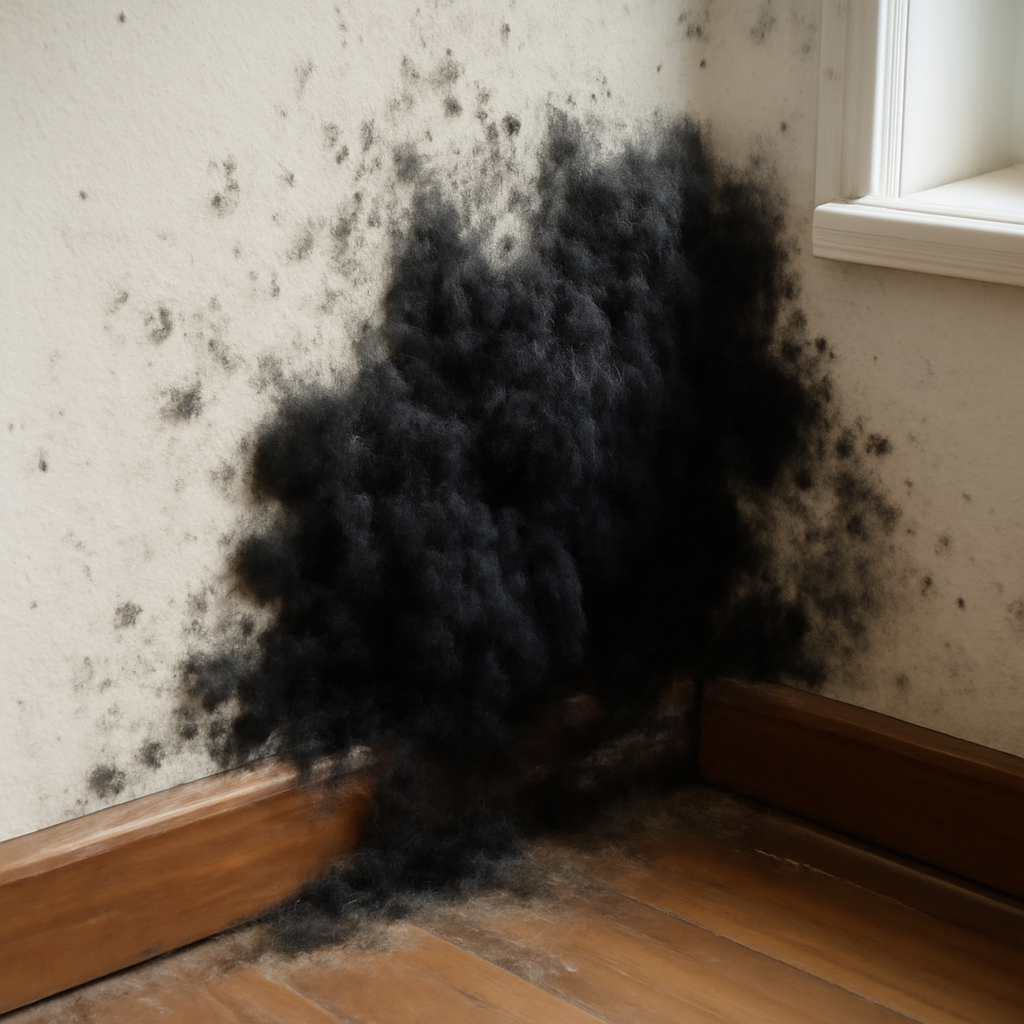
“Black furry mold” is the phrase homeowners type into a search bar when they see something dark and three-dimensional growing on a wall, ceiling, or surface in their home. That search phrase usually means one of three things has happened: the homeowner spotted a colony with visible aerial fibers, the homeowner found an unfamiliar dark texture and described it the most descriptive way they could, or the homeowner is trying to confirm whether what they found is the dangerous kind of mold. This guide answers each of those underlying questions. This guide summarizes EPA and CDC guidance current as of 2026 — consult a certified mold inspector for testing decisions and your physician for symptom evaluation.
Is this mold, asbestos, or water damage? Get a free instant screen
Upload a clear photo of the suspect area. You'll get an instant AI screening opinion and what to do next. This is screening guidance, not a professional determination.
Screening guidance only. AI can be wrong. Confirm asbestos, mold type, or lead with lab testing or a licensed professional before acting.
What the search phrase actually points to
Most people searching for “black furry mold” have encountered a patch of dark-pigmented mold with visible vertical structure — fibers, hairs, fuzz, or a velvety surface that catches the light in a distinct way. The “furry” descriptor reflects what the homeowner sees in person rather than a scientific category. Several common indoor mold species produce furry-looking colonies during active sporulation, and the visible fur represents aerial hyphae and conidiophores extending above the substrate surface.
The search phrase also captures a worried homeowner trying to figure out whether they have toxic black mold (Stachybotrys chartarum) or something else. The honest answer is that visual identification is unreliable regardless of texture descriptor. Stachybotrys can appear furry under certain conditions. Aspergillus species commonly appear furry. Cladosporium, Alternaria, and other allergenic species can also appear furry at certain lifecycle stages. The fur is a stage indicator more than a species indicator.
First-question homeowner scenarios
Bathroom finding
A homeowner notices a dark fibrous patch on a bathroom ceiling, in a corner of the shower stall, or behind the toilet. The most likely species is Cladosporium or Alternaria — common allergenic species that grow in humid bathrooms with limited ventilation. Cleanup with detergent solution and N95 protection typically resolves the visible patch. Adding or upgrading exhaust ventilation prevents recurrence.
Basement finding
A homeowner finds a dark furry patch on a basement wall, near a corner, or on stored cardboard boxes against a concrete wall. The species mix depends on substrate and moisture history. Aspergillus species are common on damp masonry; Stachybotrys becomes a real possibility on cellulose substrates with chronic moisture. Cleanup approach depends on size, substrate, and moisture duration following the standard four-question framework.
Attic finding
A homeowner notices dark furry growth on attic sheathing during a routine check or when accessing storage. Common species in this location include Cladosporium and Aspergillus from chronic condensation or roof leakage. The discovery often warrants professional inspection because attic mold typically indicates either failed bath-fan venting or roof and flashing issues.
HVAC finding
A homeowner spots dark furry material on a supply register, return grille, or visible portion of duct interior. HVAC mold warrants professional response regardless of visible size because the system distributes spores throughout the conditioned space. The species mix in HVAC components often includes Cladosporium, Aspergillus, and biofilm-forming organisms feeding on dust accumulations.
Identifying what you actually have
The four-question check applies regardless of how the homeowner described what they found. Size: is the visible patch under or over 10 square feet? Substrate: hard non-porous (tile, glass, sealed metal) or porous (drywall, ceiling tile, paper-faced insulation, untreated wood)? Duration: how long has the substrate been wet? Symptoms: are occupants reporting respiratory issues that correlate with building exposure?
The answers route the response. Small patches on hard non-porous substrate with known short-term moisture sources fit homeowner cleanup. Larger patches, porous substrates with chronic moisture, HVAC involvement, or symptom correlation fit professional remediation following IICRC S520. The texture descriptor (furry, slimy, powdery, fuzzy) informs the disturbance precautions but does not change the threshold. The mold inspection and testing hub covers the response framework.
Cleanup precautions specific to furry colonies
Furry colonies during disturbance release more spores per unit area than smooth or wet colonies of the same size. The aerial hyphae and conidiophores act like a brush dispensing spores into the surrounding air when air movement or mechanical disturbance occurs. Pre-cleanup precautions are therefore more important for furry findings than for some other textures.
Mist the area lightly with water from a spray bottle before any wiping or vacuuming begins. The water droplets settle loose spores onto the surface. Use N95 respirator protection at minimum (P100 for larger areas), nitrile gloves, eye protection, and disposable coveralls for jobs taking more than an hour. Bag waste immediately into sealed plastic bags rather than collecting in a bucket for later disposal. Shut off the HVAC and seal nearby supply registers and return grilles with painter’s tape and plastic to prevent spore migration into the duct system.
When professional help becomes the right call
Any furry colony exceeding 10 square feet warrants professional remediation. Furry colonies inside wall cavities, in HVAC ducts, in attics, or in crawlspaces warrant professional inspection because access and safety considerations exceed typical homeowner capabilities. Furry colonies accompanied by occupant respiratory symptoms warrant both physician evaluation and certified inspection. Real estate transactions and insurance claims involving furry mold findings warrant certified inspector documentation regardless of size.
Below those thresholds, homeowner cleanup with the precautions above is generally appropriate. The line between DIY and professional comes down to size, substrate, access, and symptom correlation — not texture description. A small furry patch on bathroom tile is a cleaning task. A large furry patch on saturated drywall is a professional remediation project. The texture descriptor stays the same; the threshold drives the response.
Species background for context
Cladosporium is the most common indoor mold globally and one of the most common producers of furry-looking dark colonies. Velvety olive to black-green texture; major allergen worldwide; grows on damp surfaces broadly. Cleanup follows standard mold protocol with attention to humidity control as the prevention measure.
Aspergillus species produce a range of colors and textures including powdery and fuzzy variants. A. niger is the classic powdery black species; A. fumigatus is velvety dark green that can read as black; several other Aspergillus species occupy positions between these. The genus is opportunistic and grows on a wide range of substrates with adequate moisture.
Stachybotrys chartarum can present as furry when the wet slime layer recedes and aerial hyphae emerge. Cellulose substrate plus sustained moisture is the precondition. Stachybotrys is one specific species among the dark furry candidates; species confirmation requires laboratory analysis if the answer would change the response.
Alternaria produces velvety dark gray-brown to black patches commonly on window frames, sinks, and showers. The species is a major asthma trigger but does not produce significant mycotoxins. Standard cleanup applies.
Common search-related confusions
Homeowners often arrive at “black furry mold” search results expecting a single species answer. The honest answer is that the search term covers multiple species under multiple growth conditions. Lab testing is the only path to species-level identification, and species testing is often not actionable for the homeowner’s actual decision. The substrate-and-conditions framework produces better cleanup outcomes than chasing species identity through internet search.
Another common confusion involves furry mold versus other dark surface conditions. Soot deposits from poor combustion appliances can mimic dark furry patches. Mineral efflorescence on masonry produces white-to-dark crystalline deposits that homeowners sometimes call furry mold. Cobwebs in unfinished areas can appear furry and dark when coated with dust. Each of these has distinct biology or chemistry that distinguishes it from actual mold; gentle inspection in person with good light typically clarifies the question.
Front Range patterns for black furry mold findings
Colorado homes have specific recurrence patterns for furry dark mold findings. Bathroom ceiling Cladosporium develops during winter when sealed-up houses combine elevated humidity with limited exhaust ventilation. Basement corner Aspergillus develops during spring snowmelt season as foundation moisture intrudes. Attic sheathing furry mold develops under failed bath-fan terminations year-round, with peak visibility during late winter when sustained cold drives condensation onto the cold sheathing surface.
Recognizing the seasonal recurrence pattern helps identify the underlying moisture source. A patch that appears every March points to snowmelt; one that appears each summer points to monsoon-driven roof or window-frame leaks; one that runs year-round points to chronic interior sources such as plumbing leaks or sustained high humidity. Matching the calendar to weather and household patterns often reveals the upstream issue without expensive diagnostic equipment. For homeowners building inspection routines, the black fuzzy mold guide walks through the texture-as-stage-indicator framework in more depth.
Documenting findings for the long term
Photographic documentation of furry mold findings supports decision-making across multiple contexts. Date-stamped photos taken before any disturbance show the original condition. Photos taken during cleanup document the response. Photos taken at one-month, three-month, and one-year follow-up intervals confirm whether the cleanup was durable. The record supports insurance claims, real estate disclosure, remediation contractor scoping, and personal home maintenance tracking.
Store documentation in cloud backup with date stamps intact rather than only on a phone that might be lost or replaced. Include written notes about the moisture source identified, the cleanup approach used, and any related events such as recent leaks or storms. The combination of photos and notes builds a useful home maintenance record that pays off years later when questions arise during a sale, insurance claim, or recurrence event.
Prevention measures after cleanup
After cleanup of a furry mold finding, prevention measures depend on the moisture source identified. Bathroom and kitchen humidity calls for improved exhaust ventilation, longer exhaust fan run times after showers and cooking, and dehumidification if the space stays above 60 percent relative humidity routinely. Basement and crawlspace moisture calls for ground vapor barriers, perimeter dehumidification, and grading and downspout review.
Attic moisture calls for verification that bath fans terminate to outside, that attic ventilation is adequate, and that insulation does not block soffit airflow. HVAC system moisture calls for regular condensate drain service and annual coil inspection. Each prevention measure targets the underlying condition that produced the original colony, which is the only durable way to keep furry mold from returning at the same location.
Indoor humidity monitoring with a digital hygrometer in each main living level provides continuous feedback on whether the prevention measures are working. Maintaining indoor relative humidity between 30 and 50 percent year-round prevents most surface mold problems regardless of substrate or building age. Hygrometers cost under twenty dollars; smart-home humidity monitoring with alerts is modest cost and catches developing problems faster than periodic manual readings.
Pairing humidity monitoring with simple seasonal habit changes makes a measurable difference. Run bathroom exhaust fans for fifteen minutes after every shower rather than turning them off immediately. Run kitchen range hoods during cooking and for ten minutes afterward. Vent clothes dryers to outside and verify the duct stays clear. These low-cost habits keep humidity excursions short and prevent the sustained-moisture conditions that mold needs to establish.
References
- A Brief Guide to Mold, Moisture, and Your Home — U.S. Environmental Protection Agency
- About Mold — Centers for Disease Control and Prevention
- Mold Health Effects — National Institute of Environmental Health Sciences
- Mold and Dampness — American Lung Association
If a black furry mold finding has grown past comfortable homeowner cleanup, Front Range homeowners can connect with a vetted local inspector through our contact page.