Asbestos Removal and Testing: What Homeowners Need to Know
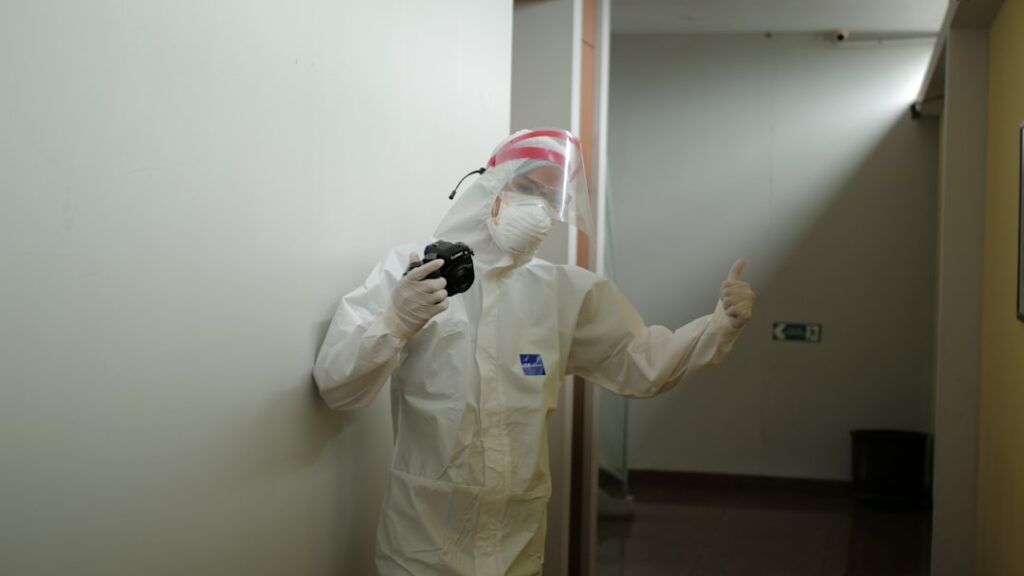
Asbestos removal and testing form a single regulated workflow under federal and state law, not a casual home-improvement project. Testing comes first to identify what is present and at what concentration. Licensed abatement comes second because federal rules under EPA NESHAP and OSHA’s asbestos construction standard prohibit unprotected DIY removal for any project disturbing more than minimal quantities of asbestos-containing material. Post-clearance air sampling closes the loop by verifying the work area is safe to reoccupy. This guide outlines the sequence and the regulatory thresholds homeowners need to know. The content summarizes EPA, OSHA, and CDC guidance current as of 2026 — engage a state-licensed abatement contractor for any project disturbing asbestos.
Is this mold, asbestos, or water damage? Get a free instant screen
Upload a clear photo of the suspect area. You'll get an instant AI screening opinion and what to do next. This is screening guidance, not a professional determination.
Screening guidance only. AI can be wrong. Confirm asbestos, mold type, or lead with lab testing or a licensed professional before acting.
Asbestos Removal and Testing: The Three-Phase Workflow
Phase one is identification testing: bulk samples collected from suspect materials, then sent to an NVLAP-accredited laboratory for analysis by polarized light microscopy (PLM). Phase two is licensed abatement: a state-certified contractor removes or encapsulates the material under controlled conditions, with negative-pressure containment, HEPA filtration, wet methods, and waste manifested to a permitted disposal site. Phase three is clearance testing: post-abatement air samples confirm fiber concentrations meet federal clearance criteria before the containment comes down.
Skipping any phase creates legal and health exposure. Removing without testing means you do not know what was in the material or how to handle it. Removing without licensure violates EPA and state rules. Removing without clearance testing leaves you without proof that the area is safe.
When Federal Rules Require Testing
The EPA’s National Emission Standards for Hazardous Air Pollutants (NESHAP) requires inspection for asbestos before any renovation or demolition of regulated facilities. For residential properties of four units or fewer, NESHAP technically does not apply, but state and local jurisdictions across Colorado and most other states impose parallel rules that do. The Colorado Department of Public Health and Environment (CDPHE) requires inspection of any building before demolition or renovation that may disturb more than the trigger thresholds — typically 50 linear feet of pipe insulation, 32 square feet of surface area, or one cubic yard of bulk material.
OSHA’s asbestos construction standard (29 CFR 1926.1101) applies whenever workers are paid to disturb suspect materials. The standard sets exposure limits, training requirements, and respiratory protection rules that effectively prohibit unprotected handling. Even owner-occupant DIY work falls under the spirit of these rules because disturbed asbestos releases the same fibers regardless of who is holding the tool.
Materials Most Likely to Contain Asbestos
Pre-1980 homes contain dozens of asbestos-prone materials. The high-probability list includes: vermiculite attic insulation, popcorn ceilings (texture coatings applied 1945–1980), 9-by-9-inch vinyl floor tiles plus their mastic, sheet vinyl flooring backing, transite siding and pipes, joint compound on drywall taped before 1980, pipe insulation wrap (often called magnesia or air-cell), boiler insulation, HVAC duct insulation, roofing felt, and acoustic spray coatings.
None of these can be ruled in or out by visual inspection alone. The EPA and CDC guidance pages on asbestos in the home are explicit that lab testing is the only reliable identification method. Color, age, texture, and labeling are screening signals, not diagnostic ones.
Sample Collection: Hire the Inspector
Bulk sampling sounds simple — a small piece of the suspect material in a zip-bag, mailed to a lab. In practice the act of cutting the sample releases fibers, and amateur sampling has caused documented contamination of homes during the testing phase itself. The right path is to hire a state-licensed asbestos inspector to collect samples using wet methods, proper containment, and chain-of-custody documentation.
The inspector typically collects three samples per homogeneous material area following EPA AHERA protocols, even though AHERA’s mandatory scope is schools. Three-point sampling reduces the risk of a single false-negative result. Lab analysis runs $25 to $40 per sample. Total inspection cost for a typical pre-1980 home runs $300 to $600 depending on test-point count.
What “Licensed Abatement Only” Means
Once a positive result returns from the lab, the next step is engaging a licensed asbestos abatement contractor — not a general contractor, not a handyman, and not the homeowner. Colorado licenses abatement contractors through CDPHE’s Air Pollution Control Division. Other states have parallel programs administered by their environmental or health agencies. The license confirms the company holds appropriate insurance, employs trained workers, and has the equipment to set up containment.
A typical abatement project involves four steps. First, isolate the work area with poly sheeting and negative-air machines exhausting through HEPA filtration. Second, prewet materials with amended water to suppress fiber release. Third, remove materials in a controlled manner — hand methods, low-speed tools, never sanders or saws on dry asbestos. Fourth, decontaminate workers and equipment through a three-stage shower setup before exiting containment.
Cost Range for Residential Abatement
Costs vary enormously by material type and quantity. Popcorn ceiling abatement in a typical room runs $1,500 to $3,500. Vermiculite attic removal can hit $10,000 to $25,000 because of the volume and the bulk-bag waste manifesting. Vinyl floor tile removal in a kitchen typically runs $1,200 to $2,500. Boiler insulation removal in a basement starts at $800. The price differences track the labor and waste volume, not the testing fee.
Compare those numbers against the cost of doing it wrong: cleanup of a contaminated home that had asbestos disturbed during unprotected DIY can exceed $50,000, plus potential legal exposure if children or other occupants were present. The legal abatement cost is almost always cheaper than the consequences of the alternative. Read more in the domestic asbestos removal guide for the homeowner-facing decision tree.
Encapsulation as an Alternative
Not every asbestos material requires removal. Encapsulation — sealing the material in place with a bonding agent — is a legitimate option for materials that are intact, non-friable, and unlikely to be disturbed. Floor tiles in good condition can be left and tiled over. Pipe insulation in stable condition can be wrapped in mastic. Encapsulation is cheaper than removal and avoids creating a disposal-stream problem.
The decision between removal and encapsulation depends on the material’s friability, its location in the home, planned renovations, and the homeowner’s risk tolerance. A licensed inspector or industrial hygienist can recommend the appropriate approach based on the testing results and the home’s use pattern.
Post-Clearance Testing: The Often-Skipped Step
After abatement and before reoccupancy, an independent industrial hygienist should collect aggressive air samples inside the containment. The samples are analyzed by phase-contrast microscopy (PCM) or transmission electron microscopy (TEM). EPA clearance criteria for PCM is 0.01 fibers per cubic centimeter; for TEM it is 70 structures per square millimeter of filter area.
The clearance test costs $200 to $500 and takes two to four hours of sample collection plus lab analysis turnaround. Some homeowners skip it because the abatement contractor said the work was done. The Asbestos.com health-information library explains why third-party clearance is the only credible verification. The abatement contractor has a financial interest in declaring the job done; the independent hygienist does not. For broader context, see the asbestos and lead in pre-1978 housing guide.
Disposal Rules
Asbestos waste is regulated through the Resource Conservation and Recovery Act and state hazardous-waste programs. The waste must be double-bagged in 6-mil polyethylene, labeled with the OSHA asbestos warning, manifested with a waste shipment record, and transported to a permitted asbestos disposal facility. Front Range homeowners typically send waste to one of two Denver-area disposal sites; the abatement contractor handles the logistics and provides copies of the manifests as part of the closeout package.
The manifest documentation is important. It is the legal proof that the asbestos went to a regulated facility rather than a regular landfill, and it becomes part of the property’s disclosure record when the home is sold.
Health Surveillance for Workers and Occupants
Workers performing asbestos abatement undergo OSHA-mandated medical surveillance with periodic chest X-rays and pulmonary function tests. Occupants who were exposed to disturbed asbestos before learning about its presence should discuss the exposure with their physician. The CDC, NIH, and lung-health authorities note that occasional, short-duration exposure carries lower long-term risk than chronic occupational exposure, but no level of asbestos exposure is considered safe. Symptoms of asbestos-related disease may not appear for 20 to 40 years after exposure.
Real-Estate Transaction Implications
Asbestos discoveries during real-estate transactions affect both negotiation and disclosure. Buyers who add an asbestos inspection contingency to their purchase contracts can use positive results to negotiate price reductions, seller-paid abatement, or contract cancellation. Sellers in Colorado must complete the Seller’s Property Disclosure form truthfully, including any known asbestos materials and any prior abatement work. Failure to disclose known conditions creates post-closing legal exposure that often exceeds the cost of disclosure plus mitigation. The right approach for sellers is to test pre-listing for known asbestos-prone materials, address any findings before going to market, and document the abatement and clearance results as part of the listing materials.
Timeline Expectations for a Typical Project
Plan two to four weeks from initial concern through final clearance. Initial inspection and lab analysis takes one to two weeks because labs run on business days and PLM analysis turnaround is typically five business days. Contractor bidding adds one to two weeks because licensed abatement contractors are usually scheduled three to six weeks out for new projects. Mobilization and containment setup is one to two days. Removal work is one to five days depending on material quantity and access. Clearance air sampling is one day in the field plus one to three days lab turnaround. Reoccupancy follows clearance approval.
Buyers in active real-estate transactions sometimes face deadline pressure that conflicts with this timeline. The right response is to extend the inspection objection period, negotiate a credit for post-closing abatement, or include a holdback provision in the closing documents to ensure the abatement happens after closing under buyer control. The testing for asbestos in home guide covers the timeline framework for transaction scenarios.
What the Final Closeout Package Should Include
At the end of an abatement project, the homeowner should receive a comprehensive closeout package from the abatement contractor. The package documents the work for property records, future buyers, and any future renovations. Key elements include copies of the original inspection report identifying the materials abated, the abatement contractor’s project specifications and work plan, daily work logs maintained during the project, photographs of containment setup and removal progress, waste shipment records (WSRs) showing the chain-of-custody to the permitted disposal facility, the independent clearance air-sampling report from the industrial hygienist, and the contractor’s certificate of completion.
The closeout package becomes part of the property’s permanent record. Future buyers will ask for it during their due diligence. State and local enforcement agencies can request it during compliance audits. Homeowners who lose or never receive the closeout package may have to commission new testing later to prove the home is asbestos-clear, at additional expense. Verify the package is complete before final payment to the contractor — this is the leverage point for getting any missing documentation produced.
References
- EPA learn about asbestos resources — U.S. Environmental Protection Agency
- OSHA asbestos construction standard guidance — Occupational Safety and Health Administration
- CDC NIOSH asbestos topic page — Centers for Disease Control and Prevention
- Asbestos.com health information library — Mesothelioma Center
- CDPHE asbestos compliance program — Colorado Department of Public Health and Environment
Front Range homeowners planning a renovation in a pre-1980 home can connect through our contact page for a referral to a licensed asbestos inspector.
Asbestos test kits
Asbestos can only be confirmed by a lab. A mail-in kit gets you a sealed sample container and accredited analysis — never sand or disturb suspect material first.
| Product | Why | Buy |
|---|---|---|
 Asbestos Test Kit (mail-in lab) Asbestos Test Kit (mail-in lab) | Includes PPE + sealed mailer. | Amazon — $34.99 |
| Pro-Lab Asbestos Test Kit | Widely available; lab fee separate. | Amazon — $34.99 |