Abatement of Asbestos: Inspection-to-Clearance Process
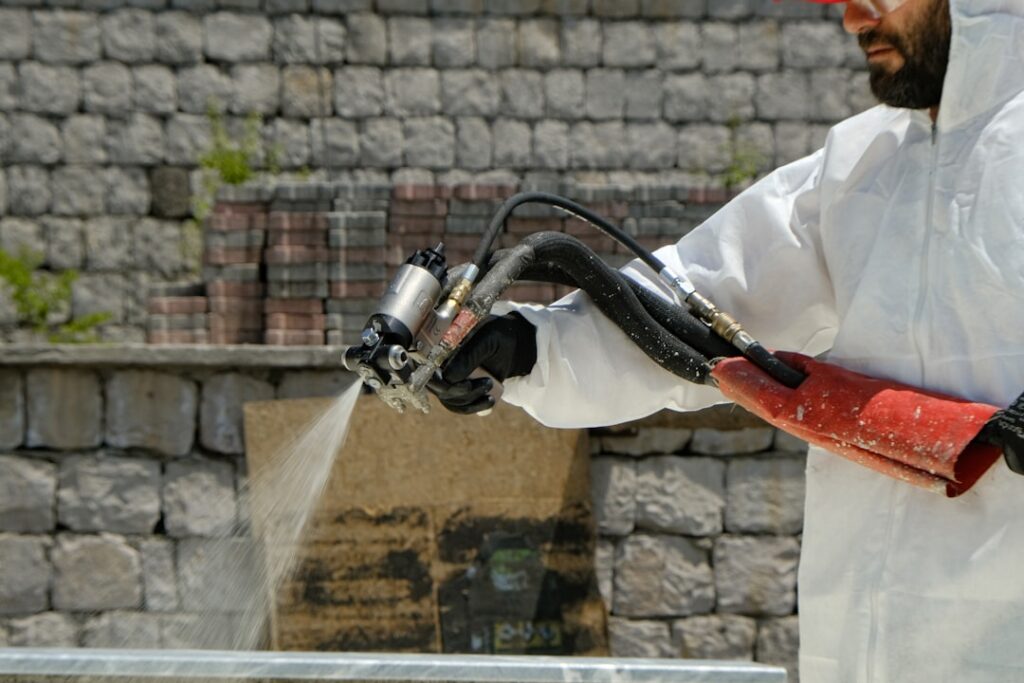
The abatement of asbestos is a regulated procedural sequence rather than a single event. From the moment a homeowner suspects asbestos in their home to the day they receive a clearance letter declaring the work area safe to reoccupy, between five and fifteen distinct steps unfold across two to four weeks. Understanding the full sequence matters because each step has regulatory weight and each one creates a record that may follow the property through future sales, renovations, or insurance claims. This guide walks through the procedural arc from inspection to clearance. The information here reflects EPA NESHAP, OSHA, and CDPHE program guidance current as of 2026 and is informational only — your specific project is governed by your licensed contractor and your state environmental agency.
Is this mold, asbestos, or water damage? Get a free instant screen
Upload a clear photo of the suspect area. You'll get an instant AI screening opinion and what to do next. This is screening guidance, not a professional determination.
Screening guidance only. AI can be wrong. Confirm asbestos, mold type, or lead with lab testing or a licensed professional before acting.
The Six Phases of an Asbestos Abatement Project
Most residential abatement projects follow the same six-phase arc:
Phase 1: Identification. The homeowner identifies suspect material — popcorn ceiling, pipe insulation, vinyl flooring, exterior siding — based on building age (pre-1981) and visual characteristics.
Phase 2: Sampling and laboratory analysis. A licensed asbestos building inspector collects bulk samples and submits them to a NVLAP-accredited laboratory for polarized light microscopy (PLM) analysis.
Phase 3: Method selection and contractor engagement. Based on the lab results and the inspector’s condition assessment, the owner selects an abatement method and engages a licensed contractor.
Phase 4: Regulatory notification. The contractor (or owner) files the EPA NESHAP and state agency notification at least 10 working days before work begins.
Phase 5: Containment, removal, and disposal. The crew sets up containment, performs the removal under wet methods and HEPA filtration, decontaminates surfaces, and manifests the waste to an approved landfill.
Phase 6: Third-party clearance. An independent inspector performs visual inspection and air-clearance sampling. On passing, the work area is released for reoccupation.
Each phase has paperwork, regulatory exposure, and specific failure modes. The asbestos abatement process and standards overview maps these phases against EPA and OSHA citation patterns.
Phase 1: Identifying Suspect Material
The first phase is essentially visual screening. Materials installed before 1981 are presumed to contain asbestos until tested otherwise. The common suspect categories in a typical Front Range home:
Popcorn ceiling texture, drywall taping compound, ceiling tiles in suspended grids, pipe and boiler insulation, sheet vinyl flooring with paper backing, 9×9 vinyl floor tiles, mastic adhesives, sprayed-on fireproofing, transite siding and roof shingles, HVAC duct insulation, and gaskets in older appliances.
For most homeowners, identification happens during a planned renovation, after observing visible deterioration, or during the inspection contingency of a home purchase. A common trigger is a buyer’s inspector noting “suspect asbestos-containing material — recommend testing” on the inspection report.
Phase 2: Sampling and Laboratory Analysis
A licensed asbestos building inspector collects bulk samples — small pieces (typically 1-2 grams) of each suspect material. The sampling itself requires fiber suppression: the material is wetted with amended water, sampled with a clean tool, and immediately double-bagged with a chain-of-custody label.
Samples go to a NVLAP-accredited laboratory for PLM analysis. Standard PLM with dispersion staining identifies fiber type (chrysotile, amosite, crocidolite, etc.) and percent composition. Turnaround is typically 3-5 business days for standard service or 24-48 hours for rush. For materials with very low or ambiguous PLM results, transmission electron microscopy (TEM) provides a confirmatory analysis.
Cost for a residential survey typically runs $300-$600 for the inspection plus $25-$50 per sample. A 1,500-square-foot home with multiple suspect materials might generate 8-15 samples for a total of $500-$1,500.
The lab report identifies which materials are positive, the asbestos type, and the percent composition. The inspector’s report adds the location, friability assessment, condition assessment, and quantity (linear feet, square feet, or cubic feet).
Phase 3: Method Selection and Contractor Engagement
Based on the inspector’s report, the owner selects an abatement method — removal, encapsulation, enclosure, or O&M. For most residential single-family work, removal is the dominant choice because the long-term O&M obligations of the other methods are impractical for individual homeowners.
The contractor is selected from the licensed list maintained by the state agency. In Colorado, CDPHE publishes a directory of General Abatement Contractors with current certification status. Most homeowners get 2-3 bids. The bids should include scope (specific materials and quantities), method, NESHAP notification responsibility, disposal cost, clearance testing, and an itemized cost breakdown. The certified asbestos removal contractor vetting guide covers how to read and compare these bids.
Phase 4: NESHAP and State Notification
EPA NESHAP requires written notification to the state agency at least 10 working days before any demolition or abatement involving regulated quantities of asbestos. The notification is a standardized form that identifies the property, the owner, the contractor, the abatement scope and method, the disposal site, and the project schedule.
Many states impose stricter notification rules than federal NESHAP. Colorado requires notification for any friable abatement above 50 linear feet or 32 square feet on residential single-family work — a much lower threshold than the federal 260/160 standard. The notification fee in Colorado ranges from $55 for small projects to $325 for larger ones, paid to CDPHE.
Once the notification is filed and the 10-day waiting period elapses, work can begin. The notification reference number is required at the landfill for disposal acceptance.
Phase 5: Removal and Disposal
The removal phase is the visible activity at the site:
Containment construction. Two layers of 6-mil poly over openings, three-stage decon shower, HEPA negative-air machines, smoke-pencil test for containment integrity.
Workers in full PPE. Tyvek suits, P100 respirators, disposable gloves, sealed with tape. Three-stage decon entry and exit at every break.
Wet removal. Amended water sprayed on the material, allowed to penetrate, then removed in controlled sections directly into 6-mil poly bags.
Bag labeling and staging. Each double-bag carries the OSHA danger label and generator identification label. Bags are staged outside the containment for transport.
Waste Shipment Record. The manifest accompanies the load from origin to the approved Class II or Class III landfill. Three signatures: generator, transporter, landfill operator. Each retains a copy.
Final cleaning. All surfaces inside the containment are HEPA-vacuumed and wet-wiped. The containment poly itself is wet-wiped before being removed and bagged.
Phase 6: Third-Party Clearance
An independent inspector — not the abatement contractor — performs the final clearance. This is the single most important regulatory safeguard in the process.
Visual inspection. The inspector walks through the containment and verifies that all asbestos-containing material has been removed and that no visible dust, residue, or debris remains. Even a thin film of dust on a windowsill or light fixture fails the visual.
Aggressive air sampling. For projects above the regulated threshold, the inspector takes air samples while a leaf blower is run through the containment to resuspend any residual fibers. This stresses the work area more than normal occupancy would. Samples are analyzed by phase-contrast microscopy (PCM) or TEM. The acceptable threshold varies by state; Colorado uses 0.01 fibers per cubic centimeter.
If the visual fails, additional cleaning is required and the inspection repeats. If the air result fails, additional decontamination is required and the air sampling repeats. Only after both pass does the inspector issue a written clearance letter releasing the work area for reoccupation.
Timeline and Cost Summary
For a typical residential popcorn ceiling abatement in the Front Range:
Phase 1 (Identification): 1 day. Free.
Phase 2 (Sampling and lab): 1 day site visit, 3-5 days lab. $400-$800.
Phase 3 (Bidding and engagement): 1-2 weeks. Free (bidder time).
Phase 4 (Notification): 10 working days minimum waiting period. $55-$325.
Phase 5 (Removal and disposal): 1-3 days. $3,000-$12,000.
Phase 6 (Clearance): 1 day visual, 1-2 days air results. $300-$600.
Total elapsed time from initial suspicion to clearance: typically 4-6 weeks. Total cost: typically $4,000-$15,000 for a single-room popcorn ceiling, scaling up with quantity and material type. For the broader context of where asbestos abatement fits in the pre-1978 housing hazard landscape, see the asbestos and lead guide for pre-1978 housing.
Common Project Variations on the Standard Six-Phase Arc
While the six-phase arc applies to most residential abatement projects, several common variations shift the timeline or scope:
Pre-purchase abatement. When a home inspection identifies asbestos during a purchase contingency period, the timeline compresses. The buyer’s lender may require abatement before closing, and the closing date constrains the schedule. Some projects require a closing extension to fit the 10-working-day notification requirement plus the abatement and clearance work. Sellers occasionally negotiate to credit the buyer at closing instead of performing abatement themselves.
Renovation-triggered abatement. When asbestos is discovered during demolition or renovation already in progress, all work must stop until the abatement is complete. This is the most expensive way to encounter asbestos because there is no pre-planning, the demolition crew is on standby, and the abatement must be sequenced into the project schedule with all other contractors waiting.
Multi-material abatement. Larger projects may involve several distinct asbestos-containing materials in different parts of the home — pipe insulation in the basement, popcorn ceiling in upstairs bedrooms, vinyl floor tile in the kitchen. Each material may require separate containment zones, separate work practices, and separate clearance tests. The total project length scales accordingly.
Spot repair instead of full removal. A small section of damaged asbestos pipe insulation can sometimes be repaired in place — the damaged section removed under glove-bag containment, a new section of non-asbestos insulation installed in its place. This is a regulated activity but the scope is smaller than full removal.
Emergency response. A water leak that wets asbestos-containing material, a fire that damages an asbestos-containing roof, or a construction accident that breaks asbestos cement siding all qualify as emergencies that may bypass some pre-work timelines. EPA NESHAP allows expedited notification for emergencies but documentation requirements remain.
What Goes Wrong Most Often
Several failure modes recur across residential abatement projects. Front Range homeowners can anticipate them:
Inspector reports that don’t distinguish friability. A report that simply says “asbestos detected” without identifying whether the material is friable or non-friable, intact or damaged, makes method selection harder. Reputable inspectors include condition assessment in the report.
Contractor bids that omit clearance testing. A bid that doesn’t include the third-party clearance is incomplete and not directly comparable to bids that include it. The clearance is mandatory; if it’s not in the contractor’s scope, the homeowner pays for it separately.
Missing NESHAP notification. If the contractor doesn’t file the notification 10 working days before work begins, the project is in violation and CDPHE may issue stop-work or penalties. The notification reference number should appear on the contract.
Aggressive air-clearance failure. Some homes fail the first aggressive air-clearance sample due to residual dust the crew missed. This triggers additional cleaning and a re-test, adding 1-3 days and possibly a re-test fee.
Disposal site rejection. A landfill can refuse a load if the WSR is incomplete, the bags are damaged, the labeling is wrong, or the notification reference is missing. Rejected loads must be reloaded and returned to the project site or to an alternate disposal facility.
Insurance refusal. Most homeowner insurance does not cover asbestos abatement or remediation. Some policies cover it as part of a larger covered loss (fire, water damage) but the asbestos portion is often subject to its own limit or exclusion. Homeowners should verify coverage before signing the abatement contract.
References
- EPA NESHAP asbestos abatement project requirements — U.S. Environmental Protection Agency
- OSHA asbestos standards and abatement worker protections — Occupational Safety and Health Administration
- CDPHE Colorado asbestos abatement program — Colorado Department of Public Health and Environment
Front Range homeowners ready to walk through the abatement sequence on their specific home can connect through our contact page for a referral to an independent inspector and a licensed Colorado abatement contractor.