Lead in Water Testing Services: Home Sampling and Lab Costs
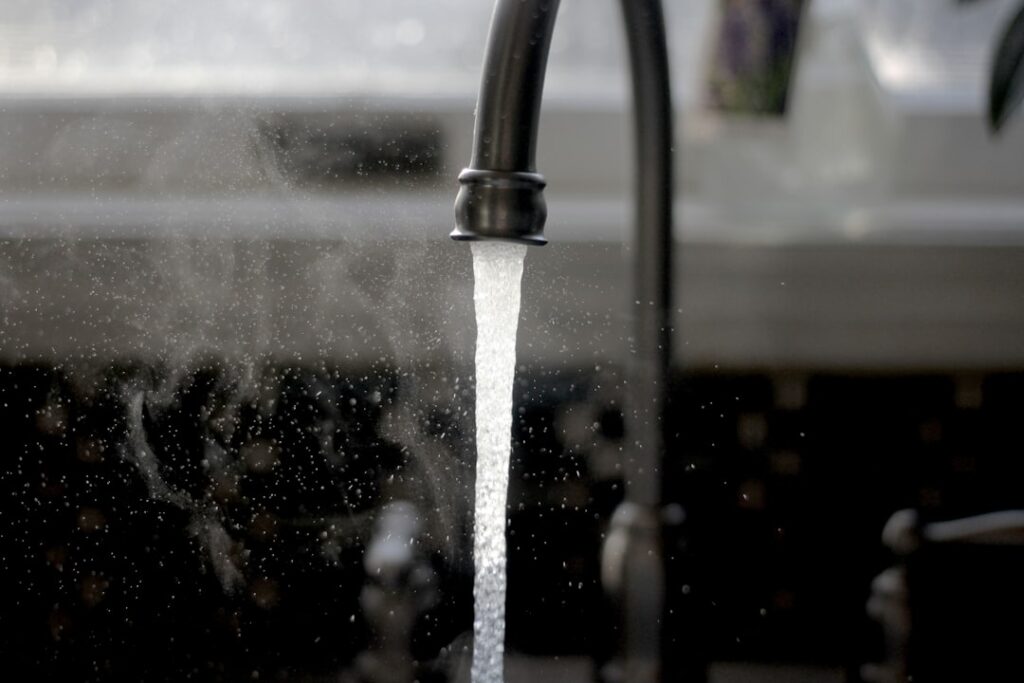
The market for lead in water testing services exists because the standard home inspection does not test water quality, and most municipal water reports do not measure lead at the individual tap. Lead that reaches a home’s drinking water typically comes from the service line connecting the home to the main, the home’s internal plumbing, or the fixtures themselves — sources that the municipality cannot test from upstream. Front Range homeowners served by Denver Water, Aurora Water, or other local utilities still need tap-side testing to confirm what is coming out of their fixtures. This guide explains how the services work, what they cost, and how to interpret the result against EPA standards. This guide summarizes EPA and CDC guidance current as of 2026 — consult a certified professional and your physician for action decisions specific to your household.
Asbestos or biohazard concern? Speak with a certified contractor.
📞 Call (877) 742-8496What are lead in water testing services?
Lead in water testing services are tap-side sampling and laboratory analysis offered by certified water-testing labs, environmental-consulting firms, and some plumbing contractors. The service typically delivers a kit to the homeowner, the homeowner collects samples following specific protocols, the samples ship back to the lab, and a report arrives within one to three weeks. Some firms offer in-person sampling by a technician for an additional fee — useful for buyers under contract on a home where the seller wants the testing performed independently.
The analysis is straightforward atomic absorption or inductively-coupled plasma (ICP) spectroscopy, both well-established lab methods accurate to parts per billion. The federal “action level” for lead in drinking water under the Lead and Copper Rule is 15 micrograms per liter (15 ppb). The American Academy of Pediatrics and several states have argued for a lower threshold of 5 ppb for households with children, but 15 ppb remains the federal compliance number.
Why test for lead in your water?
The case for testing strengthens dramatically for older housing. Homes built before 1986 may have lead solder in copper plumbing joints. Homes built before the early 1900s sometimes still have lead service lines connecting the home to the main. Homes with brass fixtures manufactured before 2014 may have higher lead content in the metal alloy than current “lead-free” fixtures. Any one of these sources can leach lead into water that sits in the pipes overnight.
Pregnant women and children under age six are the highest-risk populations. CDC guidance is that there is no safe blood lead level in children, and even short-term exposure to elevated drinking water lead can contribute to a child’s total lead burden. The Centers for Disease Control and Prevention maintains a Childhood Lead Poisoning Prevention Program with detailed risk-factor and screening guidance.
The EPA Lead and Copper Rule sets requirements for water utilities to monitor and control lead, but the rule monitors at sampling locations the utility chooses — typically a small number of homes per system. An individual homeowner’s tap may have higher or lower lead than the utility’s monitoring sites suggest. Tap-side testing is the only way to know.
How does the sampling actually work?
First-draw sample
The standard protocol begins with a “first-draw” sample: water that has been stagnant in the pipes for at least six hours (typically overnight) and is collected as the first water drawn in the morning. The homeowner does not run the tap before sampling. They fill the provided sample bottle from the kitchen cold-water tap to the indicated fill line, cap the bottle, label it, and document the time. The first-draw sample captures any lead that leached from the plumbing during stagnation.
Flush sample
Some testing services request a second “flush” sample collected after running the tap for 30 to 60 seconds. The flush sample captures water from the service line and the main rather than the home’s internal plumbing. Comparing first-draw and flush samples helps identify whether the lead source is internal plumbing (first-draw high, flush low) or the service line (both samples high).
Sample shipping
The homeowner packs the labeled samples into the kit’s return-shipping container with the chain-of-custody form and ships back to the lab. Most kits include a prepaid shipping label. Samples should reach the lab within 48 to 72 hours of collection for best accuracy. Some labs offer overnight return shipping for faster turnaround.
What does it cost in 2026?
Lab-only mail-in kits range from $30 to $100 per sample. Most homeowners send two to four samples to cover the kitchen tap, a bathroom tap, and possibly a separate dedicated drinking water source. A typical household budget for comprehensive testing is $60 to $300. Lab turnaround is one to three weeks standard, three to five business days expedited (typically a $25 to $50 surcharge).
In-person sampling by a certified technician adds $200 to $500 to the total cost. This service is appropriate for real-estate transactions where the buyer wants a verified independent sample collection, or for households where the resident is unable to follow the sampling protocol confidently. The technician collects the samples, photographs the sampling locations, and signs the chain-of-custody form — creating a transaction-grade document.
Pricing varies by lab certification level. The most rigorous certification is the Drinking Water Laboratory Certification through the EPA, available to labs that meet specific quality-control criteria. Labs without the certification can still produce accurate results but their reports may not be accepted for regulatory or transaction purposes. Verify lab certification before ordering, especially for transaction-related testing.
How do you read the report?
The report lists each sample, the measured lead concentration in micrograms per liter (parts per billion), and typically a comparison to the federal action level. A result below 15 ppb is below the federal action level. A result between 5 and 15 ppb is below action but above the threshold many pediatric organizations recommend for households with children. A result above 15 ppb requires action.
The interpretation step is where the “what next” decision lives. A first-draw result of 8 ppb in a 1965 ranch home with no recent fixture upgrades is consistent with mild lead contribution from internal plumbing — manageable with filtration. A first-draw result of 30 ppb in the same home suggests a more significant lead source — possibly a lead service line or aging brass fixtures — and warrants investigation. The CDC’s Lead Poisoning Prevention Program publishes interpretation guidance for households trying to evaluate their results.
What filtration options actually reduce lead?
The most reliable lead-reduction technology in the residential market is a point-of-use filter certified to NSF/ANSI Standard 53 for lead reduction. NSF/ANSI 53 is a third-party performance certification that requires the filter to remove at least 99% of influent lead at concentrations up to 150 ppb. Filters carrying the certification are widely available — most major brands have at least one NSF/ANSI 53 product in their lineup.
The filter form factor matters less than the certification. Pitcher filters, faucet-mount filters, under-sink filters, and refrigerator filters can all carry the NSF/ANSI 53 certification, though the under-sink and refrigerator forms typically deliver higher flow rates and longer cartridge life. Whole-house filters generally do not carry the NSF/ANSI 53 certification and should not be relied on for lead reduction at the drinking tap.
Replacement cartridge frequency drives the long-term cost. Most pitcher filters cost $30 to $50 plus $15 to $40 per replacement cartridge every two months. Under-sink systems cost $150 to $400 installed plus $40 to $100 per cartridge every six to twelve months. The lifetime cost of filtered drinking water in a lead-contaminated home is typically $100 to $300 per year — meaningfully cheaper than replacing the service line in most cases.
What about service line replacement?
If testing identifies a lead service line, full replacement is the long-term solution. Service line replacement in the Front Range market typically runs $4,000 to $12,000 depending on length, depth, and surface conditions. Many utilities have replacement-assistance programs — Denver Water has historically offered service-line replacement on a partial-cost basis for lead-confirmed lines, and other Front Range utilities have similar programs.
The EPA’s revised Lead and Copper Rule Improvements published in 2024 require utilities to develop service-line inventory and replacement plans, which has accelerated the pace of lead service-line identification and replacement nationwide. Homeowners concerned about a possible lead service line should contact their utility directly — most utilities have a public inventory lookup or will dispatch a crew to verify the line material at no cost. The leadinfo.com consumer resource consolidates current rule changes and state-by-state assistance programs.
How do you decide between mail-in kits and on-site sampling?
The mail-in kit is the right fit for most homeowners testing their own home. The cost is low, the homeowner can follow the protocol carefully, and the result is suitable for ongoing household monitoring. The kit limitations are operator error (forgetting to keep the tap stagnant for 6 hours, running the faucet briefly to check temperature, drawing from the wrong tap) and the lack of chain-of-custody documentation that some transactions require.
On-site sampling by a certified technician is the right fit for real-estate transactions where the buyer wants verified independent collection. The technician arrives, photographs the sampling locations, instructs the homeowner on the closed-tap interval, returns to collect the samples following the documented protocol, and signs the chain-of-custody form. The result is a transaction-grade document that satisfies lender or contract requirements. Cost is $200 to $500 above the lab-only kit price, but the documentation value typically justifies the premium for transactions.
A reasonable hybrid is “guided self-sampling” — the homeowner orders a mail-in kit but consults with a certified water-testing professional by phone or video before collecting samples. The consultation walks through the closed-tap interval, sample-bottle handling, and labeling. Cost is the kit price plus a small consultation fee ($50 to $150). This approach captures most of the chain-of-custody value without the full on-site service cost.
What about whole-house water quality testing?
Lead is one analyte among many that homeowners may want to test. Comprehensive water-quality panels typically include lead, copper, iron, manganese, nitrates, total dissolved solids, hardness, pH, alkalinity, fluoride, chlorine, coliform bacteria, and sometimes radon-in-water. Panel pricing runs $150 to $400 for a standard residential profile, more for specialty panels including organic contaminants or pesticides.
Front Range homes on municipal water supply typically have clean baseline water from the utility, with lead being the most consequential tap-side risk. Front Range homes on private well water (more common in Park County, Elbert County, and rural Larimer County) need a broader panel because the homeowner is responsible for verifying water quality. Well water testing is recommended annually for coliform and nitrates, every three to five years for the full panel.
Homeowners running comprehensive testing often save by ordering a single panel from a certified lab rather than separate single-analyte tests. The lab has the sample available anyway; running additional analytes is incremental cost rather than a full new test.
How does this fit with other pre-purchase testing?
Water testing pairs naturally with lead-paint testing for pre-1978 homes because both target the same toxic exposure pathway. A buyer under contract on a 1955 Denver bungalow with original plumbing and original paint typically tests both. The asbestos and lead hazard guide covers the broader pre-1978 environmental review.
Standard home inspection does not include water testing — that is an environmental hazard outside the typical SOP. Buyers wanting comprehensive pre-purchase environmental review typically stack water testing with lead-paint testing, radon testing, and asbestos testing where applicable. Most testing firms can bundle two or three of these services for a 10 to 20% discount versus separate visits. Homeowners considering broader testing decisions can also review what to do if a house has lead paint for adjacent action steps.
If you are in the Denver metro or broader Front Range and want a referral to a vetted water-testing or lead-inspection professional, reach out through our contact page.
How quickly do filter and service-line interventions show measurable improvement?
Filter installation produces immediate improvement at the filtered tap — typically within minutes of installation, lead concentrations drop by 99% or more if the filter is NSF/ANSI 53 certified for lead. The remaining unfiltered taps continue showing baseline lead concentrations until they are also filtered. Most households fit a primary kitchen filter first because the kitchen tap delivers most drinking and cooking water.
Service-line replacement produces a longer-time-scale improvement. The line replacement itself takes one to three days. After replacement, residual lead in the home’s internal plumbing continues to contribute to first-draw concentrations for weeks to months. Many utilities recommend extensive flushing immediately after service-line replacement (run cold water at full flow for 30+ minutes), followed by NSF/ANSI 53 filtration at point-of-use during the first six months while the internal plumbing flushes naturally.
Retesting confirms the improvement. EPA’s Lead and Copper Rule Improvements emphasize point-of-use verification through follow-up sampling. Most homeowners retest 3 to 6 months after a major intervention (filter installation or service-line replacement) to confirm the result and document the improvement.
References
- EPA Basic Information About Lead in Drinking Water — U.S. Environmental Protection Agency
- CDC Lead Poisoning Prevention — Centers for Disease Control and Prevention
- Lead Service Line Information Resource — Leadinfo
- HUD Office of Healthy Homes and Lead Hazard Control — U.S. Department of Housing and Urban Development
Front Range homeowners testing for lead in water can connect with a certified local environmental inspector who coordinates water, paint, and radon testing in a single visit.