Thermographe: French Term for Thermal Imaging Camera Explained
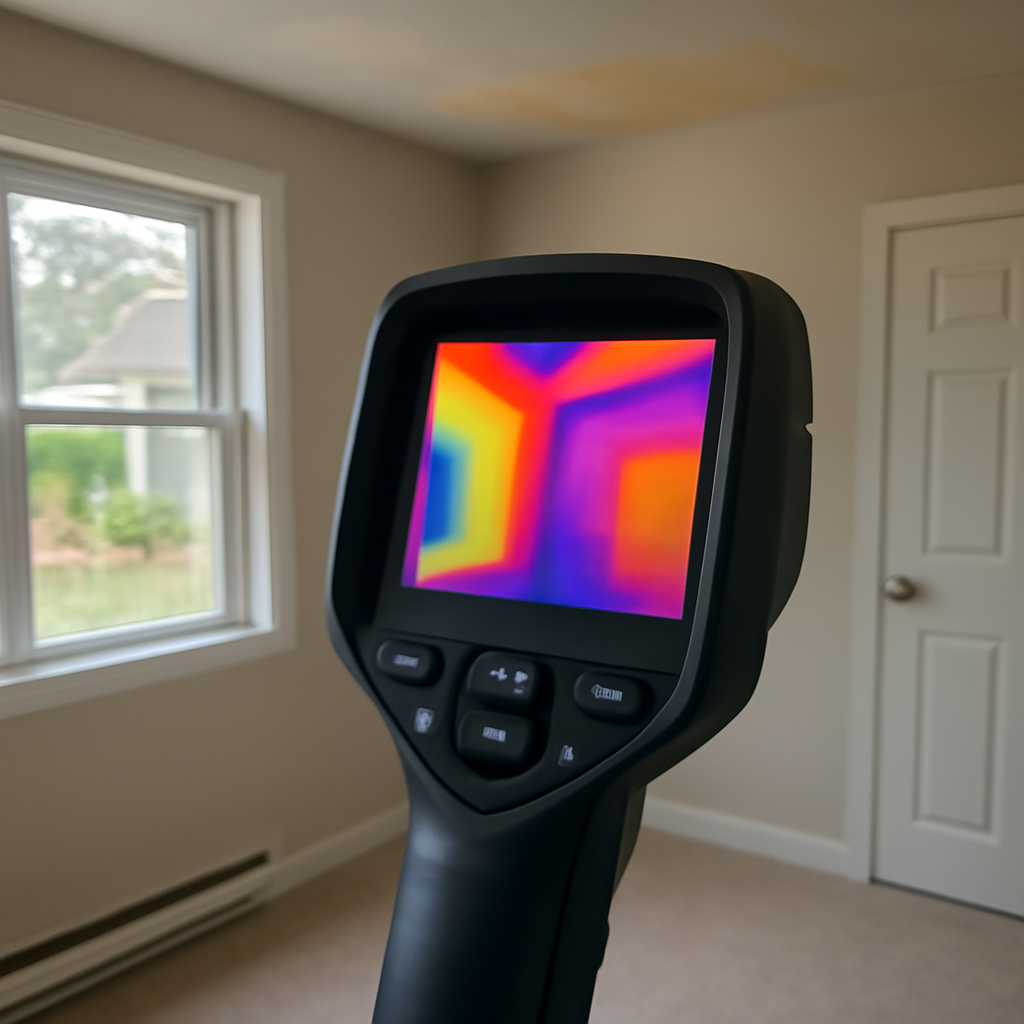
If you’ve searched “thermographe” and landed in English-language results, you’re encountering the French word for both a thermal imaging camera and the trained professional who operates one. In English-speaking practice, the equivalent terms are “thermal imager” (the device) and “thermographer” (the operator, sometimes “infrared thermographer”). This guide covers the device, the operator role, and what homeowners should understand about each — drawing on Department of Energy and InterNACHI guidance to frame realistic expectations.
What “thermographe” translates to
In French, the term covers two distinct meanings used interchangeably depending on context: the thermal imaging camera as a device, and the certified operator who uses it for building diagnostics, electrical inspection, mechanical predictive maintenance, or medical applications. English splits these into “thermal imager” and “thermographer” respectively.
The device side: what a thermal imager does
A thermal imaging camera detects long-wave infrared radiation (8 to 14 microns) emitted by surfaces at typical room temperatures. The detector — a microbolometer — converts the radiation into electrical signals processed into a visible heat-map image. Cooler areas appear in one color (often blue or purple), warmer areas in another (red or yellow), with gradients between.
The operator side: what a thermographer does
A thermographer captures, interprets, and reports on thermal images. The role requires technical training because raw thermal data is easily misinterpreted: emissivity differences, reflected temperatures, environmental conditions, and time-of-day effects all influence what the image shows. A trained thermographer accounts for these factors; an untrained operator may not.
Certification frameworks for thermographers
InterNACHI offers an Infrared Certified credential for home inspectors. ASNT publishes NDT Level I, II, and III certifications including infrared as a method. ITC (Infrared Training Center) certificates are widely recognized in the building diagnostics industry. Each framework covers specific competencies and applications.
Typical applications in building diagnostics
Locating missing insulation in walls, ceilings, and attics. Identifying air-leakage paths around windows, doors, and penetrations. Finding moisture intrusion behind drywall or above ceilings. Surveying electrical panels for warm breakers indicating loose connections. Tracing radiant floor heating loops and identifying zone failures.
How thermographers prepare for a survey
The Department of Energy recommends temperature differentials of approximately 18°F between interior and exterior for residential thermography, achieved either through HVAC conditioning or naturally during heating or cooling seasons. The thermographer typically conducts the survey during stable conditions, not in direct sunlight or immediately after rain.
Emissivity and why it matters
Different materials radiate thermal energy at different efficiencies (emissivity). Painted drywall, brick, and unfinished wood have high emissivity (close to 1.0); polished metals have very low emissivity. A thermographer adjusts the imager’s emissivity setting for accurate temperature readings on different surfaces. Untrained operators often miss this step, producing misleading data.
Reflected temperature and image interpretation
Surfaces reflect thermal energy from surrounding objects, including the thermographer’s own body heat. A trained operator positions the imager to minimize reflected temperature error and notes any reflections in the report. Without this awareness, image readings can suggest contamination or anomalies that aren’t actually present.
Resolution categories in professional use
Entry-level handheld imagers used by working thermographers typically start at 240×180 pixels and scale to 640×480 or higher for specialized applications. Smartphone thermal attachments occupy a different tier (80×60 to 320×240) suitable for consumer use but not for professional documentation. The handheld-versus-attachment tradeoff guide covers this difference in detail.
NETD: noise equivalent temperature difference
NETD measures the smallest temperature difference an imager can resolve. Professional imagers typically achieve 30 to 50 millikelvin NETD; consumer attachments are usually 50 to 150 mK. Lower NETD reveals finer temperature differences, making subtle anomalies visible.
Calibration and traceability
Professional thermographers use imagers with documented annual calibration traceable to national metrology standards. Calibration drift is gradual and unavoidable; without recalibration, absolute temperature readings become unreliable for documentation purposes. Consumer-grade attachments are typically not calibrated to traceable standards.
Industrial applications beyond buildings
Electrical predictive maintenance, mechanical bearing-wear detection, refractory inspection in industrial furnaces, and military reconnaissance all use thermal imaging. These applications use specialized imagers, often with cooled detectors achieving NETD below 25 mK and very high frame rates.
Where smartphone attachments fit
For personal home use, a smartphone thermal attachment lets homeowners locate gross air leaks, identify obvious insulation gaps, and check breaker panels for hot spots. For professional reporting or commercial documentation, a handheld imager operated by a credentialed thermographer is the appropriate tool. The home inspection tools hub spans both ends of this spectrum.
Department of Energy thermography guidance
The Department of Energy publishes guidance on infrared thermography for residential energy audits, noting the role of thermal imagers in identifying insulation gaps and air-leakage paths. The guidance emphasizes appropriate temperature differentials, qualified operators, and clear reporting as the foundation of useful thermography.
ASHRAE technical resources
ASHRAE publishes technical resources on thermography for HVAC and building envelope diagnostics. While the depth applies primarily to commercial work, the underlying methods apply equally to residential thermography performed by a qualified inspector.
What homeowners should expect from a thermographer survey
Pre-survey consultation to confirm objectives, on-site survey with environmental conditions noted, image capture with accompanying visual photographs, and a written report explaining each finding with supporting images. The report should distinguish thermal anomalies (what the imager saw) from interpretations (what the anomaly indicates).
Pricing context for professional thermography
Residential thermography surveys typically run $300 to $700 depending on home size and scope. Commercial surveys vary widely with building size and complexity. Some home inspectors include limited thermal imaging as part of a standard inspection rather than as a separate service.
How thermography integrates with other diagnostic tools
A thermographer rarely works with only the thermal imager. Moisture meters confirm whether cool spots indicate moisture or air leakage. Blower-door tests pair with thermography to identify pressurized air-leakage paths. Smoke pencils visualize air movement at suspected leak points. The combined diagnostic picture is more reliable than any single instrument.
Image documentation in professional reports
A professional report includes both thermal images and corresponding visible-light photographs, taken from the same angle. Each pair shows the anomaly and the physical context. Annotations describe what the anomaly indicates and what corrective action is recommended. Reports without paired imagery and annotation are harder to act on later.
Industries beyond residential where thermographers work
Electrical predictive maintenance: imaging energized switchgear and motor control centers to find loose connections. Mechanical inspection: bearing-wear detection in rotating equipment. Refractory inspection: identifying lining loss in industrial furnaces. Roofing surveys: locating moisture-saturated insulation under flat roofing membranes. Each application uses similar physics with specialized procedures.
How weather conditions affect outdoor thermography
Direct sunlight heats surfaces unevenly and persists in thermal mass for hours after sunset. Roof thermography is typically done at night during winter heating season or just before dawn during cooling season to minimize solar effects. Wind cools surfaces and may mask anomalies. Light cloud cover provides ideal conditions for outdoor surveys.
Why thermography is non-destructive
Thermal imaging detects surface temperature patterns without opening walls, removing finishes, or disturbing building components. This non-destructive nature makes it especially valuable in due-diligence inspections, occupied buildings where occupants must continue using space, and historic structures where removing finishes is undesirable.
Limits of non-destructive testing
Thermography sees surface effects of subsurface conditions. The depth of detection is limited; deep wall cavities don’t show clear thermal patterns unless conditions create strong heat-transfer gradients. Confirmatory destructive testing (small inspection holes) is sometimes needed to verify thermography findings.
The role of thermography in roofing inspections
Flat roofing membranes covering wet insulation show warm thermal patterns at night during cooling season as the retained moisture releases heat. Roofing thermographers capture these patterns to identify saturated insulation areas before destructive testing. The technique reduces unnecessary roof replacement scope when only sections are affected.
Thermography in industrial electrical surveys
NETA, NFPA 70B, and ASNT standards address infrared inspection of electrical equipment. Surveys identify loose connections, overloaded conductors, and failing components by detecting elevated temperatures during normal operation. Insurance carriers sometimes require periodic infrared surveys for industrial properties to maintain coverage.
How thermography supports HVAC commissioning
During HVAC commissioning, thermography identifies poorly insulated ductwork, incorrect register temperatures indicating airflow problems, and refrigerant-line frost patterns indicating system issues. ASHRAE guidance addresses these applications in detail. Commercial commissioning agents routinely use thermography as part of system acceptance.
Why training matters more than equipment
A trained thermographer with a basic imager produces better diagnostic outcomes than an untrained user with the most expensive imager available. Recognition of normal patterns, accounting for environmental factors, and proper report writing all come from training. Hardware is the supporting tool; training is the differentiator.
Training resources for self-learners
The Department of Energy’s website provides free guidance on residential infrared thermography. InterNACHI offers paid certification programs with extensive learning material. ITC (Infrared Training Center) runs paid courses at multiple levels. ASNT publishes recommended-practice documents for various thermography applications.
How to interpret a thermographer’s report
Reports should identify each anomaly with thermal and visible-light images, describe what the anomaly suggests (e.g., missing insulation, moisture, electrical issue), recommend corrective action with priority level, and note conditions and limitations affecting the data. Reports without these elements are records of capture rather than diagnostic deliverables.
How to verify a thermographer’s calibration documentation
Calibration certificates trace the imager’s accuracy to national metrology standards. Each certificate is valid for one year and includes the imager’s serial number, calibration date, and reference standards used. Reputable thermographers carry copies of current certificates and provide them on request. Expired certificates are a sign the imager’s accuracy is no longer documented.
How language translation affects search results for international users
Searches in French, German, Spanish, and other languages return different thermal-imaging vocabulary. “Thermographe” in French, “Thermografie” in German, “termografía” in Spanish each lead to local-language resources. English-speaking searchers landing on translated content may need to bridge the vocabulary to find the equivalent English resources.
How thermography fits into broader building science
Thermal imaging is one of several tools in modern building science. Blower-door testing measures envelope airtightness; duct-blaster testing measures duct leakage; combustion analysis measures appliance efficiency. Thermography integrates with these measurements, but a thermographer is not necessarily a complete building scientist. Multi-tool diagnostic services often produce more useful findings than thermography alone.
When to call a professional thermographer
Energy audits requiring documentation for utility rebates or tax credits, mold investigations requiring detailed moisture mapping, electrical infrared surveys for commercial code compliance, and any thermography intended for legal documentation should use a credentialed operator with a calibrated imager.
References
- Department of Energy: Using Infrared Thermography — U.S. Department of Energy
- InterNACHI Infrared Certified credential — International Association of Certified Home Inspectors
- ASHRAE technical resources on building thermography — American Society of Heating, Refrigerating and Air-Conditioning Engineers
- Department of Energy home energy audit guidance — U.S. Department of Energy
Front Range homeowners considering thermography for an energy audit or moisture investigation can get in touch here.