Perten Moisture Meter: What Homeowners Need to Know
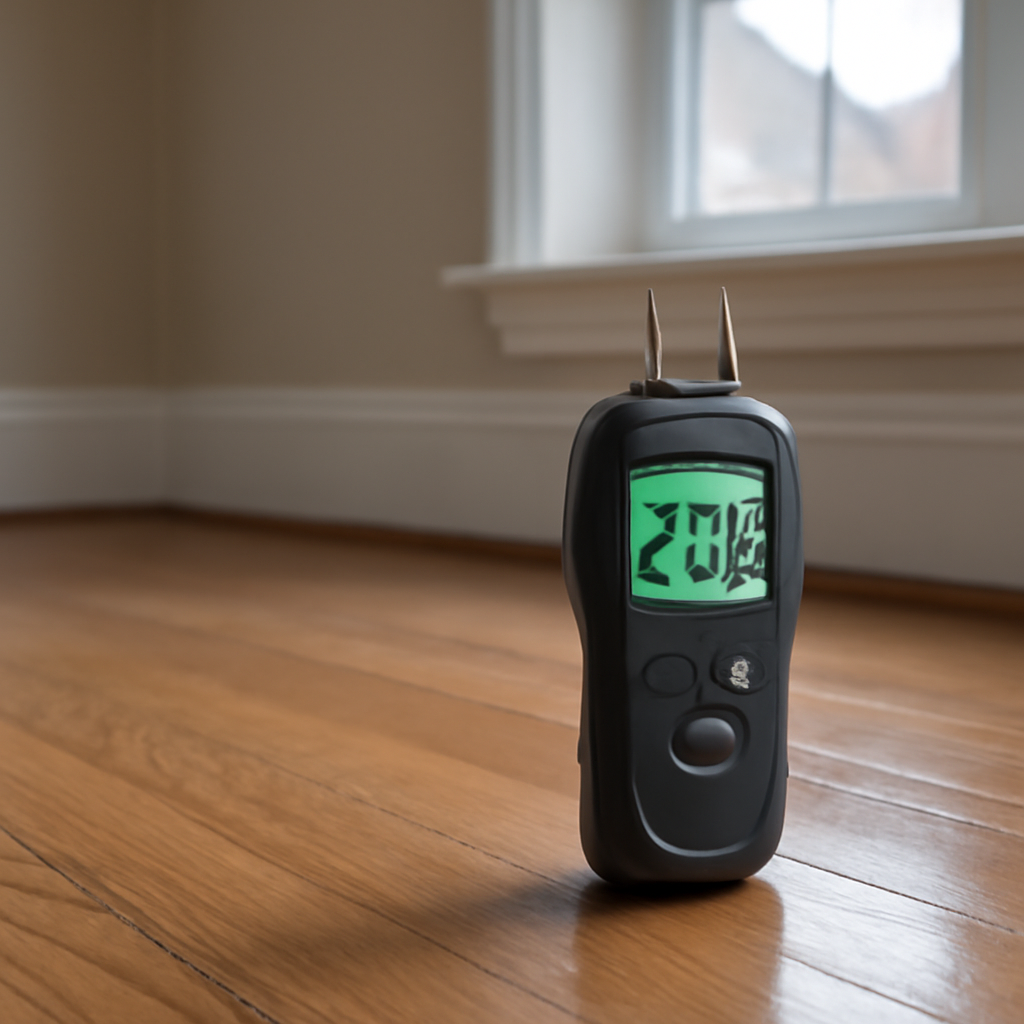
Search for a Perten moisture meter and you will quickly discover that these instruments are not the pocket-sized pin meters home inspectors carry. Perten, now part of PerkinElmer, builds laboratory and industrial moisture analyzers designed for grain, flour, and processed materials. Understanding what a perten moisture meter actually does, the specifications behind it, and why it is a different category from building-moisture tools helps homeowners and curious inspectors set the right expectations before they shop. This guide draws on instrument specifications and trade-body guidance rather than hands-on testing.
What is a Perten moisture meter?
Perten Instruments, a brand under PerkinElmer, makes moisture and quality analyzers aimed primarily at the agriculture, milling, and food-processing industries. Its best-known moisture products measure the water content of grain, seed, flour, and similar materials, often as part of a broader analysis that also reports protein, oil, or other constituents. These are precision instruments built for commodity grading and process control, not for checking a damp basement wall.
That distinction matters because the phrase moisture meter covers a wide range of tools. A homeowner worried about a leak needs a building-material meter, while a grain elevator operator buying a Perten unit needs repeatable, calibration-grade readings for trade and quality assurance. Confusing the two leads to buying far more instrument, at far higher cost, than a household task requires.
What does a Perten unit measure, and how?
Perten moisture and quality analyzers typically rely on near-infrared (NIR) spectroscopy or capacitance-based methods, depending on the model. NIR analyzers shine light at the sample and measure how specific wavelengths are absorbed, which correlates with water and other components. The instrument converts those readings into a moisture percentage using calibrations developed for particular crops or products.
This is fundamentally different from the resistance and capacitance methods used in handheld building meters. A pin-type building meter passes a small current between two probes and infers moisture from electrical resistance, while a pinless meter reads the dielectric properties of the material just below the surface. Perten’s laboratory approach prioritizes accuracy and consistency across thousands of samples, which is why these units carry industrial price tags and require periodic factory or accredited calibration.
Specifications that define these analyzers
While exact figures vary by model and Perten does not publish a single universal spec sheet, several characteristics define the category. Measurement range is tuned to the target material, often a few percent up to the mid-teens or higher for grain. Accuracy is typically expressed against a reference oven-drying method, the laboratory gold standard for moisture determination.
Throughput is another defining trait: industrial analyzers are built to process many samples quickly with minimal operator interpretation. Calibration is central, because these readings often feed into commercial transactions where a fraction of a percent affects price. Buyers in regulated trade settings care about traceable calibration and, where applicable, approval under relevant grain-grading or measurement standards.
Why a Perten meter is overkill for most homes
For the typical homeowner checking a wall, floor, or piece of firewood, a Perten analyzer is the wrong tool entirely. It is designed for granular and processed materials, calibrated for those products, and priced for commercial use. A homeowner does not need commodity-grade precision to decide whether drywall is wet enough to worry about.
Building-moisture decisions call for a handheld meter instead. To understand the two main handheld approaches and which suits a given job, our comparison of pinless versus pin moisture meters lays out the trade-offs. For wall-specific tasks, the best moisture meter for walls guide narrows the field to tools sized for the job.
Where Perten-style analyzers genuinely fit
These instruments shine in their intended settings. Grain elevators, flour mills, seed companies, breweries, and food manufacturers rely on fast, repeatable moisture readings to grade incoming commodities, control drying, and ensure product consistency. In those environments, a fraction of a percent of moisture carries real financial and quality consequences, and the cost of a precision analyzer is justified.
An agricultural operation might also use moisture data to decide when grain is dry enough for safe storage, since over-moist grain can spoil or support mold during storage. That use case is closer to the building world’s interest in moisture, but the materials and the precision requirements remain distinct. The shared thread across all moisture instruments is that water content drives decisions, whether the material is wheat or wallboard.
The Perten product family in brief
Perten Instruments built its reputation across several product lines serving the grain and food industries, and the brand now sits within PerkinElmer’s portfolio. Its analyzers historically include whole-grain near-infrared instruments that report moisture alongside protein and other constituents, bench and inline units for milling and processing, and dedicated moisture testers used at points of sale and intake in the grain trade.
What unites the family is a focus on fast, repeatable, calibrated results for specific commodities rather than general-purpose use. A flour mill, a brewery, or a seed company chooses among these instruments based on throughput, the materials it handles, and the constituents it needs to measure. None of them is designed to be carried up a ladder to check an attic, which is the central reason the brand rarely belongs in a discussion of home moisture detection except to clarify the distinction.
What homeowners should buy instead
For building-moisture tasks, the right purchase is a handheld meter sized for the job, and the choice comes down to pin versus pinless designs. Pin meters drive two probes into a material and read electrical resistance, giving a localized reading and sensing slightly below the surface, at the cost of leaving small holes. Pinless meters press a flat sensor against a surface and read dielectric properties to a shallow depth without marking it, which suits finished walls and floors.
Many homeowners and inspectors keep both, scanning broadly with a pinless meter and confirming a suspect spot with pins. These tools cost a tiny fraction of an industrial analyzer and deliver exactly the screening-grade information a building task requires. For help choosing, our comparison of pinless versus pin moisture meters and our guide to the best moisture meter for walls narrow the field to instruments built for homes rather than grain elevators.
How building meters differ in practice
Home and inspection meters are designed for speed, portability, and quick yes-or-no judgments about whether a material is wetter than it should be. Trade bodies that train home inspectors, such as InterNACHI and ASHI, emphasize moisture meters as screening tools that flag areas needing further investigation, not as laboratory instruments delivering an exact percentage for a contract.
A building meter often reports on a relative scale or in wood-moisture-equivalent percentages, with reference values that an inspector interprets in context. The U.S. Department of Energy’s guidance on moisture control in buildings underscores that managing dampness is about finding and fixing sources, where a quick handheld reading is far more practical than a benchtop analyzer. For a broader look at the instruments inspectors actually carry, the home inspection tools buyer’s guide covers the full kit.
Near-infrared versus oven-drying reference
To appreciate why industrial analyzers like Perten’s exist, it helps to know the reference method they are measured against. The laboratory gold standard for moisture is oven drying: a sample is weighed, heated until all water evaporates, and weighed again, with the weight loss representing moisture. This method is accurate but slow, destructive, and impractical for grading truckloads of grain in real time.
Near-infrared analyzers solve the speed problem by correlating light absorption with moisture, calibrated against oven-dried reference samples. The catch is that the calibration is specific to the material; a calibration developed for wheat does not transfer to corn or flour without adjustment. This is why Perten-style instruments carry product-specific calibrations and require periodic verification. A building meter, by contrast, never aims for this level of accuracy because a homeowner does not need to certify a grain shipment, only to know whether a wall is too wet.
Why calibration matters in commercial settings
In commodity trading, moisture is money. Grain bought and sold by weight includes water, and a buyer paying for dry grain does not want to pay for excess moisture, while a seller does not want readings that understate value. Because fractions of a percent affect price across large volumes, the instruments measuring that moisture must be accurate, repeatable, and traceable to a recognized reference.
That demand for traceability drives much of the cost and maintenance of industrial analyzers. They are calibrated, verified on a schedule, and sometimes subject to approval under grain-grading or measurement standards so that readings hold up in a transaction. None of this applies to a homeowner checking drywall, where a screening-grade relative reading is entirely sufficient. The contrast underlines the core point: the instrument’s precision should match the stakes of the decision it informs.
Moisture in storage and spoilage
One area where the grain world and the building world genuinely overlap is the link between moisture and biological spoilage. Grain stored too wet can heat, spoil, and support mold and insect activity, which is why operators measure moisture before binning a crop. The U.S. Department of Energy’s broader guidance on moisture control in buildings rests on the same principle: excess moisture invites decay and microbial growth.
For a homeowner, the lesson is conceptual rather than a reason to buy a Perten unit. Whether the material is wheat or framing lumber, keeping moisture below the threshold that supports mold is the goal, and a simple handheld meter is the practical instrument for the building version of that task. The shared science does not mean the same tool fits both jobs.
Why the confusion arises in the first place
Much of the muddle around the Perten name comes from search behavior. The phrase moisture meter is generic, so a homeowner researching a damp wall and a grain buyer researching a harvest can type nearly identical queries and land on completely different products. Perten’s industrial pedigree means its instruments appear authoritative, which can mislead a homeowner into thinking they need something far more capable than the task requires.
The cure is to anchor the decision to the material being measured. Grain, flour, and processed foods call for commodity-calibrated analyzers; wood, drywall, and masonry call for handheld building meters. Once the material is clear, the right tool category is obvious, and the Perten line simply falls outside the home context. Trade bodies that train inspectors, including InterNACHI and ASHI, reinforce this by treating moisture meters as practical screening instruments for buildings rather than laboratory analyzers, which keeps expectations grounded. A homeowner who internalizes the material-first rule will rarely waste money on the wrong category of tool, and will instead reach for an inexpensive handheld that answers the building question directly and reliably.
Choosing the right moisture tool
The decision comes down to the material and the purpose. If you are grading grain or running a food process, a Perten or comparable industrial analyzer is the appropriate, if expensive, choice, and calibration traceability should top your list. If you are a homeowner or inspector checking buildings, a handheld pin or pinless meter costing a tiny fraction of the price does the job.
Buyers sometimes encounter Perten units on the secondhand market and wonder whether they could repurpose one for home use. The honest answer is that it would be impractical: the calibrations target specific commodities, the form factor suits a lab bench, and the cost and maintenance outweigh any benefit for building moisture. Matching the instrument to the task remains the core principle, and for homes that means a purpose-built building meter.
References
- Moisture Meters and Their Use — International Association of Certified Home Inspectors (InterNACHI)
- Moisture Control Guidance — U.S. Department of Energy
- Home Inspection Standards and Resources — American Society of Home Inspectors (ASHI)
Moisture meters for home inspection
Pin meters read deep but leave marks; pinless meters scan surfaces non-destructively. Many inspectors carry both.
| Product | Why | Buy |
|---|---|---|
 Klein Tools ET140 Pinless Klein Tools ET140 Pinless | Non-destructive scanning; affordable. | Amazon — $49.97 |
 General Tools MMD4E General Tools MMD4E | Best-selling pin meter for drywall/wood. | Amazon — $39.98 |
 Lignomat Mini-Ligno Lignomat Mini-Ligno | Trusted by woodworkers; species-calibrated. | Amazon — $99.00 |