Mold Testing in Loveland, Colorado
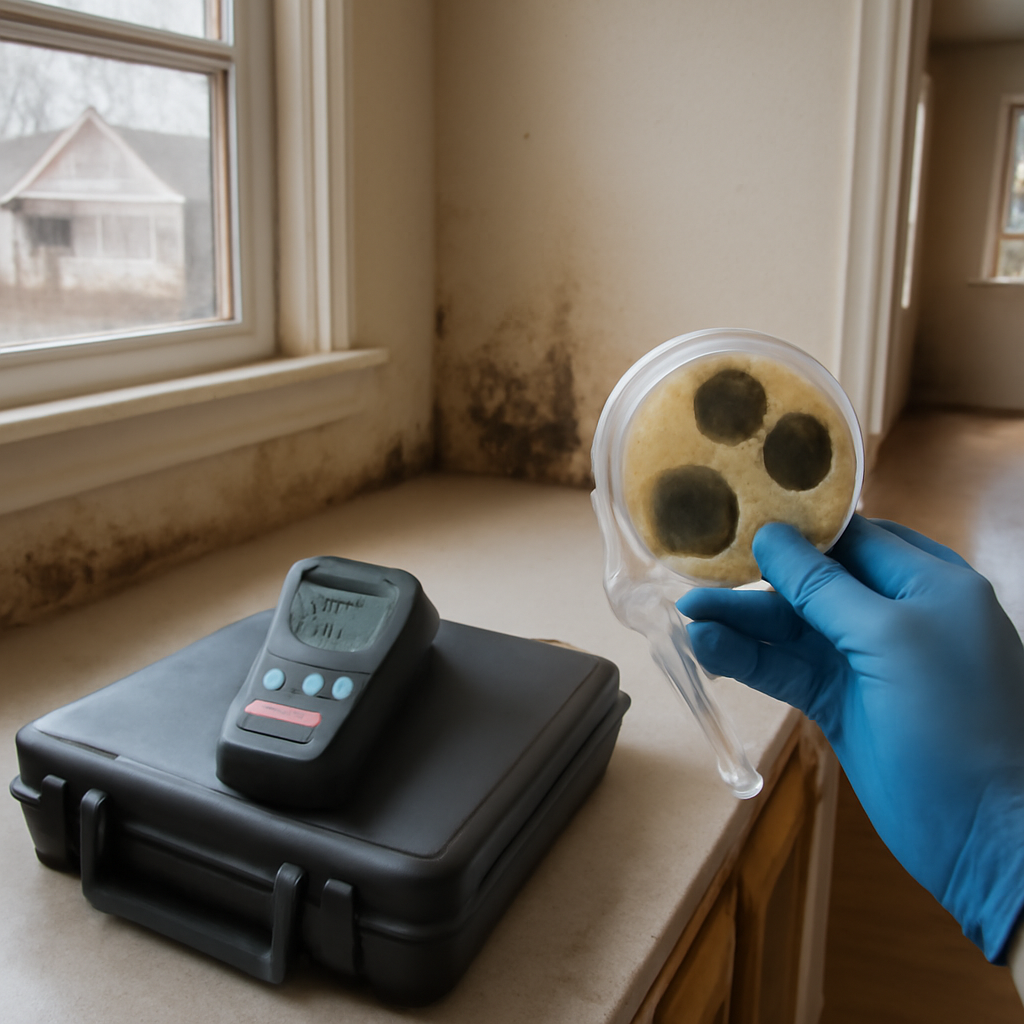
Mold testing in Loveland uses air and surface sampling to identify the types and concentrations of mold spores in a home, putting lab data behind what a visual inspection finds. Loveland sits on the Big Thompson River in Larimer County, where the 2013 Big Thompson flood left a lasting basement-moisture legacy in low-lying neighborhoods, a genuine local driver of hidden growth. Combined with cold sealed winters at roughly 5,000 feet and evaporative-cooler summer humidity, the moisture conditions here make testing a useful confirmation step. This page explains what mold testing loveland homeowners should expect, when it helps, what it costs, and how to choose a provider. This summary reflects EPA guidance current as of 2026; consult a physician for health symptoms and a certified professional for remediation decisions.
Is this mold, asbestos, or water damage? Get a free instant screen
Upload a clear photo of the suspect area. You'll get an instant AI screening opinion and what to do next. This is screening guidance, not a professional determination.
Screening guidance only. AI can be wrong. Confirm asbestos, mold type, or lead with lab testing or a licensed professional before acting.
Mold testing in Loveland: what to know
Mold testing collects samples, typically air, surface, or bulk material, and sends them to an accredited laboratory that identifies spore types and estimates concentrations. Air sampling compares indoor spore counts against an outdoor baseline taken the same day, because some mold outdoors is normal; the question is whether indoor levels are elevated and what species dominate. Surface and bulk samples confirm whether a specific patch is mold and what kind.
Testing answers a different question than inspection. An inspection finds growth and its water source; testing quantifies what is in the air and on surfaces. The EPA’s position is that if you can see or smell mold, you generally do not need to test before cleaning, you need to remediate and fix the moisture. For where testing genuinely adds value and where it does not, our mold inspection and testing hub lays out the decision, and our mold inspection in Loveland page covers the source-finding side.
Where testing earns its place is confirmation and documentation: verifying that a remediation actually cleared a problem, settling a buyer-seller dispute, or investigating an unexplained musty odor or health symptom when no visible growth is present. In Loveland, post-remediation clearance testing after a flood-legacy basement cleanup is one of the most common and justified uses.
Why Loveland conditions warrant testing
The Big Thompson River and the 2013 flood are the local backdrop. Flood water that entered basements and crawl spaces across low-lying Loveland created conditions for hidden growth that, even after remediation, owners sometimes want confirmed clear. Post-remediation clearance testing, an air sample showing indoor spore counts back in line with the outdoor baseline, is how a homeowner or buyer documents that a flood-legacy mold problem was genuinely resolved rather than painted over.
Climate sustains the moisture that feeds growth. At about 5,000 feet, Loveland’s winters are cold and homes stay sealed for months, concentrating indoor humidity from daily living and any small leak. Summer evaporative coolers add moisture, and the snowmelt-and-freeze-thaw cycle works water into roofs and foundations. When that moisture produces an odor without obvious visible growth, air testing can indicate whether elevated spore levels are present and worth chasing.
Housing patterns add reasons to test. Older Downtown and Old Town homes with original basements and crawl spaces can hide growth behind finished walls, where air sampling helps detect a problem the eye cannot see. Newer tight-construction homes around Centerra, The Lakes at Centerra, and Seven Lakes trap humidity efficiently, so a musty laundry or bathroom area with no visible mold is a candidate for an air sample to confirm whether spore counts are elevated before opening up walls.
What a Loveland mold test covers
A mold test is usually paired with or follows a visual assessment so the sampling targets the right locations.
Air sampling
The provider collects spore-trap air samples from affected interior areas and an outdoor control sample taken the same day. The lab compares indoor counts and species against the outdoor baseline; indoor levels and species notably different from outdoors suggest an indoor source. In flood-legacy basements, an air sample documents whether spore counts are elevated below grade.
Surface, bulk, and post-remediation clearance
Surface (tape-lift or swab) and bulk samples confirm whether a specific stain is mold and identify the species. After a remediation, clearance testing repeats air sampling to verify indoor counts have returned to normal, the documentation a buyer or lender may request before closing on a previously affected Loveland home.
Mold testing cost in Loveland
Mold testing in the Loveland market typically runs about $300 to $650 when combined with an inspection, with lab fees driven by the number of samples, often $100 to $300 for a few air samples plus the outdoor control. A single-room investigation costs less than a whole-home survey with multiple sample locations.
Standalone post-remediation clearance testing, an air-sample-only visit to confirm a cleanup worked, generally runs at the lower end since it involves fewer samples and no full inspection. Buyers sometimes order independent clearance testing rather than relying on the remediation company’s own samples, which is a reasonable safeguard.
Whether the spend is worthwhile depends on purpose. Paying for testing when visible mold is already obvious adds cost without changing the next step, you still have to remediate and fix the moisture. Paying for clearance testing after a flood-legacy basement remediation, or for air sampling to chase a hidden musty odor, buys real information. Spend on testing where it answers a genuine question, not to confirm what you can already see.
Sample count drives the lab portion of the bill more than anything else. A focused single-room investigation near a Big Thompson basement might use two interior samples plus the outdoor control, while a whole-home survey across multiple suspected areas can run six or more. A provider who plans the sampling around specific moisture findings, rather than blanketing the house with samples, keeps the cost proportionate to the question being asked. Ask for a sampling plan before the visit so you understand what each sample is meant to confirm and what the total lab fee will be.
Colorado regulations and disclosure
Colorado does not license mold testers or set a state mold exposure standard, so credibility rests on accredited-lab analysis and recognized certifications (IICRC, ACAC) rather than any state license. A homeowner should confirm that samples go to an accredited laboratory and that the provider interprets results against the outdoor baseline rather than quoting raw indoor numbers without context.
Test results can shape a Loveland transaction. Colorado’s Seller’s Property Disclosure asks about known mold and water damage, and given the 2013 flood, a buyer of a floodplain-adjacent home has good reason to request clearance documentation for any disclosed past remediation. Because the disclosure only reflects what the seller knows, independent testing during the inspection objection period gives the buyer their own lab-backed read.
Neighborhoods and areas served
Mold testing serves all of Loveland, with the heaviest demand in Big Thompson flood-legacy areas where clearance documentation is often wanted. Downtown and Old Town’s older homes can hide below-grade growth that air sampling helps detect, while newer developments at Centerra, The Lakes at Centerra, and Seven Lakes more often prompt testing for trapped-humidity odors. Mariana Butte and the river-adjacent west side sit closest to the floodplain influence.
Service typically extends to adjacent Fort Collins, Berthoud, Windsor, and Johnstown, all sharing Loveland’s elevation, cold sealed winters, and snowmelt moisture patterns. A homeowner documenting a flood-legacy cleanup in Loveland and one chasing a hidden odor in Windsor benefit from the same air-versus-outdoor-baseline approach.
How to choose a Loveland mold testing provider
Choose a provider who uses an accredited lab, always collects an outdoor control sample, and interprets indoor results in that context. Be wary of any company that performs testing and also sells remediation, since the incentive to find a problem is obvious; independent testing, or a clear separation between tester and remediator, keeps the result trustworthy, especially for clearance work.
For a Loveland home, ask whether the provider factors in flood history and below-grade conditions near the Big Thompson, and whether they offer post-remediation clearance sampling, the most common justified use here. If testing confirms a problem, pairing it with a source-focused mold inspection in Loveland ensures the underlying moisture gets fixed, not just the spores measured.
Expect a clear report stating sample locations, indoor counts versus the outdoor baseline, identified species, and a plain-language interpretation. A provider who explains what the numbers mean and recommends a proportionate next step, rather than alarming you over normal background spores, is the one worth hiring.
References
- Should I have the mold in my home tested? — U.S. Environmental Protection Agency
- Mold and your health — Centers for Disease Control and Prevention
- Mold cleanup and remediation guidance — U.S. Environmental Protection Agency
- Healthy homes and indoor moisture — Colorado Department of Public Health and Environment
Need lab confirmation after a basement cleanup or a hidden musty odor in your Loveland home? Reach out through our contact page to connect with a vetted local provider who tests with an accredited lab and explains the results plainly.