Mold Removal Company: Corporate Structure and Accountability
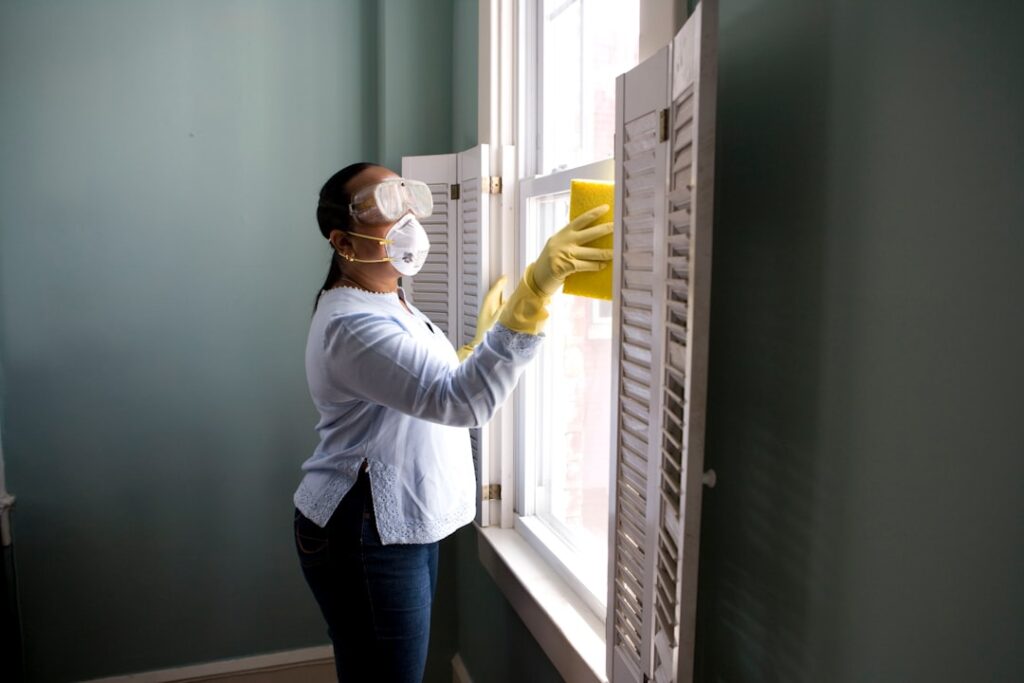
The phrase “mold removal company” sounds uniform, but the legal entity behind the truck in your driveway can take wildly different shapes. A sole proprietor working out of a pickup truck and a publicly traded restoration franchise both advertise the same service, yet they offer very different recourse if a job goes wrong. This guide walks Front Range homeowners through the four most common corporate structures a mold removal company can take, what each means for accountability, insurance backing, and dispute resolution. The information here summarizes EPA and CDC guidance current as of 2026 and does not substitute for a certified industrial hygienist’s site-specific opinion or attorney advice on contractor agreements.
Is this mold, asbestos, or water damage? Get a free instant screen
Upload a clear photo of the suspect area. You'll get an instant AI screening opinion and what to do next. This is screening guidance, not a professional determination.
Screening guidance only. AI can be wrong. Confirm asbestos, mold type, or lead with lab testing or a licensed professional before acting.
What is a mold removal company, in legal terms?
A mold removal company is any business entity that contracts to physically remove, contain, or treat fungal contamination inside a building. The federal government does not license remediators directly. EPA’s residential mold guidance focuses on procedure, not on who performs it. In practice, the corporate wrapper around that crew determines whether you are dealing with one person’s personal liability, an LLC’s capped exposure, a franchise system’s brand promise, or a national restoration company’s institutional backstop.
Four structures dominate the market. The sole proprietorship: one person, one tax ID, personal assets on the line. The limited liability company: most common, shields owners’ personal assets, can be a single-member LLC or multi-member. The franchise: an independently owned location operating under a national brand like ServPro or Servicemaster Restore, paying royalties and following corporate playbooks. The national chain: corporate-owned branches reporting to a single parent. Each shapes the customer experience.
Sole proprietor: one person, full personal liability
A sole-prop remediator is usually a one-truck operator, often a former carpenter or general contractor who took an IICRC course and started taking mold jobs. The advantage is that the person quoting the work is the same person doing it. There is no estimator-to-crew handoff and no upselling layer. Pricing tends to run 20 to 30 percent below franchise quotes because there is no royalty load and no corporate overhead.
The risk is concentration. If the sole prop makes a mistake, your only recourse is personal liability. If they lack a general liability policy with a mold endorsement (mold is excluded from standard CGL forms by default), a poor-quality job becomes a small-claims matter against an individual whose only asset may be the truck. Verify insurance certificates name your address as additional insured for the job duration, and verify the mold endorsement explicitly. Many sole props carry only the base CGL without the mold rider.
LLC: the middle ground most companies occupy
Most established mold companies organize as limited liability companies. The LLC shields the individual owners’ personal homes and savings from business liabilities, but the company itself remains responsible for its work. For a homeowner, this is generally the cleanest structure to deal with: a real business address, a separate bank account, employees on W-2 (not 1099 sub-contractors), and a continuity of records.
Ask whether the LLC carries pollution liability or contractor’s pollution liability. Standard general liability excludes pollutants, and most courts treat mold as a pollutant. Without contractor’s pollution liability, a botched containment that cross-contaminates the rest of the home is uncovered. Asking pointed insurance questions during the quote is the single highest-yield piece of due diligence a homeowner can do.
Single-member vs multi-member LLCs
A single-member LLC is treated as a disregarded entity for federal tax purposes, which often means the business and the owner share the same bookkeeping in practice. A multi-member LLC has formal operating agreements and partner buy-out provisions, which tends to indicate longer business horizon. Neither is inherently better at remediation, but multi-member LLCs often invest in more training and equipment because the partners share the capital cost.
Franchise: brand promise with local ownership
A franchise mold company looks like a national brand on the truck and the invoice, but the entity contracting with you is a locally owned franchisee. ServPro, PuroClean, Servicemaster Restore, and Rainbow International all use this model. Your check is written to a local LLC that pays royalties (typically 7 to 10 percent of revenue) plus marketing fees to the franchisor. The franchisor sets training requirements, provides equipment specifications, runs the call center, and audits the locations.
What homeowners get with a franchise is consistency of process across geography. A ServPro in Denver follows the same containment protocol as a ServPro in Tampa. The downside is pricing: royalties plus marketing fees plus corporate overhead means franchise quotes typically come in 30 to 50 percent above sole-prop quotes for the same scope. The upside is escalation: if the local franchisee bungles a job, the franchisor’s brand team can be drawn in to mediate, and franchise agreements include performance standards. Whether the franchisor actually enforces these standards varies by brand.
National chain: corporate-owned branches
True national chains are rarer. AdvantaClean and a handful of restoration-industry roll-ups operate corporate-owned branches in some markets and franchised in others. Belfor and BMS CAT operate mostly on commercial work but take residential jobs. For a homeowner, a corporate branch behaves like a franchise on the surface but has deeper insurance, larger reserves, and centralized quality assurance. Quotes run highest in this tier.
The strategic question is whether your job needs that level of institutional backstop. A simple bathroom mold remediation under 30 square feet rarely does. A multi-room contamination after a sewer backup or a CAT-3 water loss often does, because the chain can mobilize multiple crews, run negative-air containment across a floor, and coordinate with your insurer’s adjuster network.
What corporate structure means for your accountability claim
If a remediation job fails, your path to compensation depends on the entity you contracted with. Against a sole prop without pollution coverage, you sue an individual and may collect nothing. Against an LLC, you sue the company; recovery is limited to LLC assets and insurance policy limits. Against a franchise, you sue the local LLC franchisee primarily, and depending on the franchise agreement and the nature of the failure, you may have a separate claim against the franchisor for negligent supervision or trademark misrepresentation. Against a national chain, the corporate entity is on the hook directly with deeper pockets.
Document everything during the job. Photograph the containment before and after each phase. Save the written scope of work, the change orders, the air sampling pre- and post-clearance lab reports, and the daily site logs. If a dispute arises and the chain of custody for evidence is intact, recovery becomes practical regardless of which corporate structure is on the other side. A good framework for thinking about mold issues end-to-end starts with inspection and ends with verified clearance.
Tax treatment and payment processing
Corporate structure also affects how the firm processes payments and reports taxes, which has indirect implications for homeowners. A sole proprietor often accepts cash, personal checks, and small business app payments without much formality. An LLC typically requires payment to the business entity name rather than an individual, and provides a W-9 or 1099 trail if requested. Franchises and national chains accept credit cards, sometimes offer financing, and provide formal invoices that work cleanly with insurance reimbursement processes.
The payment-trail distinction matters most if you are filing an insurance claim or claiming the remediation as a tax deduction (for rental property, for example). An invoice from a registered LLC with a federal EIN is much more useful for these purposes than a handwritten receipt from a sole prop. Ask early in the conversation what kind of invoice the firm provides, especially if your project will involve any third-party reimbursement.
Credit card acceptance is also a quality filter. A firm that accepts credit cards has been vetted by a payment processor for legitimacy and business stability. The processor’s underwriting rejects fly-by-night operations. The chargeback protection on a credit card payment also gives the homeowner some leverage if the work is substandard, though chargebacks for completed services are harder to win than chargebacks for product disputes.
Geographic coverage and warranty service
The corporate structure shapes geographic coverage and the practicality of warranty service. A sole prop covers a tight radius, usually within a 30-minute drive of their base. Outside that, they decline jobs or charge significant travel fees. An LLC typically covers a county or two, with employees who can be dispatched throughout that area. A franchise location covers its territory as defined in the franchise agreement, often a multi-county region. A national chain covers most metro areas through its branch network.
Warranty service follows the same pattern. If you need a sole prop to come back for a warranty issue, they may not have the bandwidth to schedule the call promptly. An LLC with multiple employees can typically dispatch within days. A franchise can dispatch from any nearby location if the original is overbooked. A national chain has the deepest bench but the slowest escalation through corporate channels.
For Front Range homeowners, the practical implication is to weigh structure against the warranty-service availability you can expect. If the firm is across the metro and you live in an outer county, response time for warranty issues may stretch to weeks. A more local firm with a smaller structure may actually service warranty issues faster despite the formal differences in capability.
How to verify the structure before signing
Pull the entity from your state’s Secretary of State business registry. Colorado homeowners can search Colorado SOS for free in under a minute. Note the entity type listed: “LLC”, “INC”, “DBA”, or absence (sole prop). Note the registered agent and the principal office address. A company with no registered agent or with a registered agent at a virtual mailbox is a flag for a thin operation. The age of the registration matters too: an LLC formed three weeks before contacting you is not necessarily fraudulent, but it deserves additional scrutiny.
Pull at least three quotes from different structural tiers if your job is over $3,000. Compare a sole prop, an LLC, and a franchise on the same scope of work. The price spread is informative on its own. Read each quote line by line to see what is included: setup, containment, removal, HEPA cleaning, antimicrobial application, post-remediation verification, and re-build allowance. A quote missing post-remediation verification is missing the only objective measure of success.
When to call a professional vs DIY
EPA’s residential mold guide draws the DIY-versus-pro line at roughly 10 square feet of visible contamination. Below that, a homeowner with proper PPE and a containment plan can handle the work. Above 10 square feet, or any time there is HVAC contamination, sewage involvement, or chronic moisture from an unresolved leak, hire a professional. CDC and HUD echo this threshold. For Front Range homeowners with finished basements, the threshold is reached quickly because contamination often spans drywall, baseboard, and carpet padding.
References
- EPA Mold Cleanup in Your Home — U.S. Environmental Protection Agency
- CDC Mold Cleanup and Remediation — Centers for Disease Control and Prevention
- InterNACHI Mold Inspection Standards — International Association of Certified Home Inspectors
- American Lung Association on Mold — American Lung Association
Front Range homeowners weighing a quote from a mold company can connect with a vetted local inspector for a second opinion on scope before committing to remediation.
Mold removal & cleanup picks
For a small, contained patch (under ~10 sq ft) these EPA-friendly removers handle surface mold. Larger or recurring growth warrants a professional assessment first.
| Product | Why | Buy |
|---|---|---|
 RMR-86 Instant Mold Stain Remover RMR-86 Instant Mold Stain Remover | Fast-acting on stains; ventilate and wear PPE. | Amazon — $18.38 |
 Concrobium Mold Control Concrobium Mold Control | No-bleach formula that also helps prevent regrowth. | Amazon — $13.48 |
 Mold Armor Mold & Mildew Remover Mold Armor Mold & Mildew Remover | Widely stocked bathroom/surface remover. | Amazon — $22.98 |