Mold Removal Business: Industry Overview for Homeowners
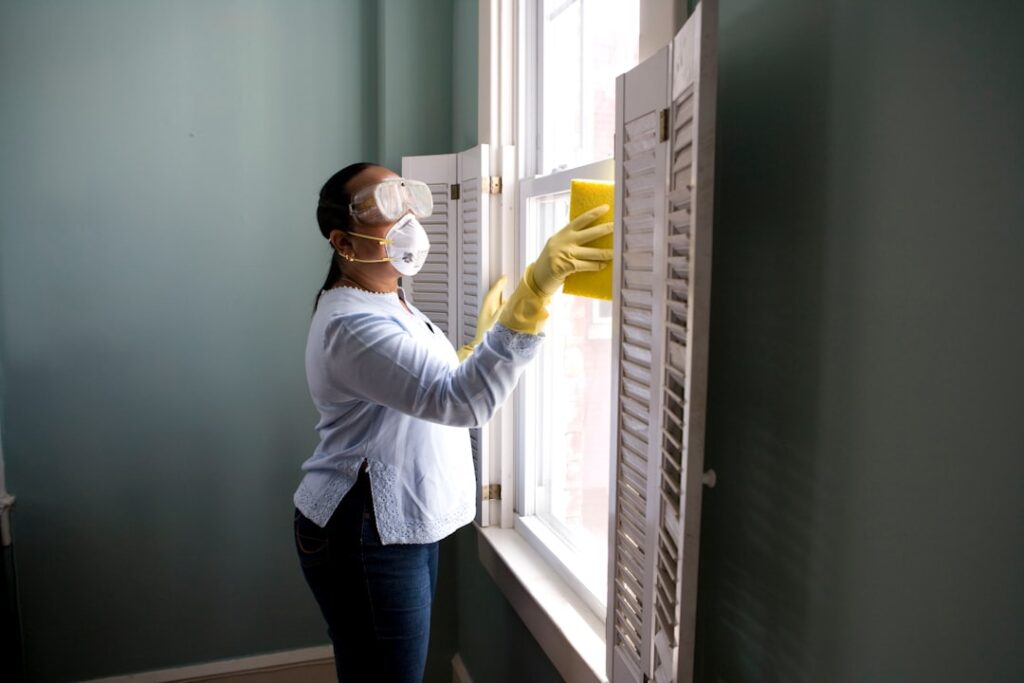
The mold removal business spans several distinct contractor types serving residential and commercial markets. Some are general cleaning crews adding mold work as a service line. Some are dedicated IICRC-certified remediation firms. Some are large restoration franchises bundling water, fire, and mold response. Understanding which category a contractor occupies helps homeowners match the right firm to the right project. This guide summarizes IICRC, InterNACHI, and ACAC guidance current as of 2026 and is written for Front Range homeowners trying to make sense of the industry landscape. Consult your physician about any respiratory complaints before scheduling work.
Is this mold, asbestos, or water damage? Get a free instant screen
Upload a clear photo of the suspect area. You'll get an instant AI screening opinion and what to do next. This is screening guidance, not a professional determination.
Screening guidance only. AI can be wrong. Confirm asbestos, mold type, or lead with lab testing or a licensed professional before acting.
What the mold removal business actually includes
The mold removal business is not a single industry; it is a cluster of overlapping services. Four primary business types serve the residential market. The first is dedicated mold remediation firms staffed by IICRC AMRT or ACAC CMR-certified technicians who follow published standards. The second is restoration franchises like the larger national brands that combine water mitigation, fire restoration, and mold remediation under one operational umbrella. The third is general cleaning services that add mold work as a service line without typically holding IICRC certifications. The fourth is independent owner-operator crews of one to three people serving local markets.
Each business type fits different project profiles. Dedicated remediation firms typically handle insurance-claim work and complex residential remediation. Restoration franchises handle large losses where 24-hour response and equipment depth matter. General cleaning services fit small surface cleaning projects under the EPA homeowner threshold. Independent owner-operators often serve cost-sensitive cash-pay projects in their local area. Mixing the business type and the project profile is the most common source of bid mismatches in this category.
The four primary business types
The first business type is the dedicated mold remediation firm. These companies focus on IICRC S520 work, employ technicians with documented AMRT and WRT credentials, and typically partner with independent industrial hygienists for clearance sampling. They are the right fit for projects above the EPA homeowner threshold and for any project requiring insurance documentation. Pricing tends to sit in the middle of the market because of credentialing and equipment overhead.
The second business type is the restoration franchise. Larger franchise brands deploy crews 24 hours a day for water emergencies and follow standardized national operating procedures. They handle large losses well, integrate easily with insurance carriers, and have equipment depth for whole-house projects. Their pricing tends to sit at the higher end of the market because of overhead, and they sometimes refer smaller standalone mold projects to independent firms.
General cleaning services and owner-operators
The third business type is the general cleaning service that adds mold work as a service line. These firms typically perform surface cleaning under the EPA homeowner threshold without holding IICRC certifications. They are appropriate for small visible-surface contamination on non-porous materials with corrected moisture sources. They are not appropriate for projects involving porous materials, hidden contamination, or insurance documentation.
The fourth business type is the independent owner-operator. These firms range from one-person operations to small crews of three to five. Quality varies widely; some are former technicians from larger firms who have launched their own operation with full credentials, while others are recent entrants without formal training. The credential verification step matters most for this category because the marketing claims are not standardized.
Credentials that distinguish credible firms
Two organizations issue the dominant credentials in this industry. The IICRC offers the Applied Microbial Remediation Technician (AMRT) credential for individuals performing remediation work and the Water Restoration Technician (WRT) credential for water-loss response. The ACAC offers the Certified Microbial Remediator (CMR) credential and, for inspectors and assessors, the Council-Certified Microbial Investigator (CMI) credential. Both organizations maintain public verification directories where homeowners can confirm specific credentials before signing a contract.
InterNACHI provides additional credentialing for home inspectors performing mold inspections. ASHI, the American Society of Home Inspectors, has its own standards of practice. ICC, the International Code Council, covers building-code adjacent credentials relevant to some structural-repair scopes. None of these are state licenses; Colorado does not require state-level mold contractor licensing, which makes the verification step more important than in licensed states.
How to verify credentials online
The IICRC certified-firm lookup at iicrc.org accepts company name or zip-code searches and returns IICRC certifications held by the firm. The ACAC directory accepts individual technician names and returns certificate numbers and expiration dates. Both lookups take under a minute. A contractor who claims credentials that do not appear in the public directory is providing a meaningful signal. A contractor who hesitates when asked to confirm their certification number is providing the same signal.
What insurance interaction looks like across business types
Insurance interaction is a defining feature of the larger mold removal business. Carriers typically require IICRC S500 or S520 protocol adherence, daily moisture-monitoring logs, photo documentation, and itemized invoices. Restoration franchises and dedicated remediation firms are built for this documentation standard. General cleaning services and some owner-operators are not, which is why insurance claims rarely go through those business types.
Cash-pay homeowners can still request IICRC-grade documentation from any contractor. Many reputable firms provide it on request because it produces a record the homeowner can attach to future real estate disclosures. The broader vetting framework in our mold remediation services near me guide walks through how to request that documentation and what to do with it after the project closes.
Pricing structure across the industry
Pricing in the mold removal business varies by business type, project scope, and regional cost of labor. Front Range pricing in 2026 generally tracks with the following ranges. Surface cleaning visits on small areas run 150 to 600 dollars, primarily through general cleaning services or specialized mildew crews. Targeted small-area remediation involving demolition runs 1,500 to 5,000 dollars, typically through dedicated remediation firms. Whole-room remediation with containment, demolition, and clearance runs 2,500 to 7,500. Whole-basement projects run 5,000 to 15,000. Attic sheathing remediation with ventilation correction runs 3,500 to 8,000.
These ranges reflect typical projects across Denver, Douglas, Arapahoe, Jefferson, and Boulder counties. Multi-story commercial work, large flood-driven projects, and remediation involving hazardous materials beyond mold sit outside these ranges. Homeowners receiving bids significantly below the low end should ask whether the scope is actually remediation or whether it is cleaning marketed under a remediation label. Bids significantly above the high end may include franchise overhead, premium materials, or expanded scope not visible in the summary.
Why three bids is the industry-standard approach
Three bids from different business types produces a useful triangulation. A bid from a dedicated remediation firm, a bid from a franchise, and a bid from a vetted independent owner-operator covers the price-and-process spectrum. The bids should describe similar scopes; if scopes differ materially, the homeowner has identified a diagnostic question rather than a price question. The broader mold inspection hub walks through how to compare scopes line by line.
How franchises and independents differ in practice
Franchises and independents differ in operational style as much as in price. Franchises usually have standardized intake forms, dispatch software, and equipment fleets. They send a project manager separately from the crew on larger projects. They produce highly standardized documentation. Independents usually have a single point of contact who handles intake, assessment, work, and follow-up. Documentation may be less polished but often more directly responsive to specific homeowner questions.
Neither model is universally better. Large losses with insurance involvement often fit franchises better because of equipment depth and documentation standardization. Smaller residential projects with cash-pay homeowners often fit independents better because of cost and personal responsiveness. The decision comes down to project scope, urgency, and the homeowner’s preference for standardization versus personal service.
How to evaluate a new contractor in this category
Several signals reliably distinguish credible firms from less rigorous operators. Verifiable IICRC or ACAC credentials. Willingness to provide a written scope of work before any payment. Willingness to coordinate with an independent third-party assessor. Insurance documentation samples available on request. Reference projects that can be contacted directly. A physical business address rather than a virtual office. Clear warranty terms with defined exclusions.
Conversely, several signals warrant caution. Fixed-price quotes given without a site visit. Pressure tactics around immediate scheduling. Refusal to coordinate with third-party clearance. Verbal-only quotes without written scope. Marketing language emphasizing fogging chemistry as a substitute for source removal. Aggressive upselling at the door, particularly from contractors who responded to a one-keyword search. The presence of any single signal is not disqualifying; the presence of multiple signals is.
When to bring in an independent assessor
An independent assessor is most useful before remediation and after remediation, regardless of which business type performs the work. Pre-remediation moisture mapping right-sizes the scope. Post-remediation clearance sampling verifies the project returned the space to Condition 1 under IICRC S520. The assessor should be a different firm from the remediation contractor; that separation preserves the independence of the result and matters for both insurance and real estate documentation.
Front Range buyers in real estate transactions benefit particularly from independent assessment because Colorado does not license mold contractors at the state level. A documented assessment from an InterNACHI or ACAC-credentialed inspector provides an objective record that protects both buyer and seller and produces a baseline that future disclosures can be measured against.
How the local market shapes business types
Local markets shape which business types thrive. Denver and the close-in suburbs support full IICRC-credentialed remediation firms because population density and home values justify the credentialing overhead. Outlying areas in Elbert, El Paso, and rural Adams counties more often rely on owner-operators and traveling crews because the population density does not support a fixed remediation office. Restoration franchises tend to concentrate in markets where insurance claim volume is high enough to support 24-hour staffing.
Seasonal patterns also shape the market. Spring snowmelt produces a basement-seepage surge that pushes water and mold contractors toward capacity in March and April. Summer monsoon storms produce roof and window-flashing problems that surface as mold complaints in late summer. Winter ice-dam events in foothill communities produce attic and ceiling problems that emerge as remediation work in early spring. Contractors who manage these cycles well tend to keep crews trained year-round; contractors who staff up reactively often struggle with consistency.
Homeowners scheduling non-emergency work during off-peak periods, typically late summer and early winter, often secure better pricing and more contractor attention than during the spring snowmelt rush. The trade-off is that diagnostic visibility can be lower in dry months, since some moisture-driven contamination is more visible during the wet season. Scheduling decisions should balance availability, pricing, and the diagnostic quality of the assessment.
References
- EPA Mold Cleanup in Your Home — U.S. Environmental Protection Agency
- CDC Mold Resources — Centers for Disease Control and Prevention
- InterNACHI Mold Inspection Standards — International Association of Certified Home Inspectors
- International Code Council — ICC
Front Range homeowners who want help identifying the right business type for their project can reach out through our contact page for a connection to a vetted local inspector.
Mold removal & cleanup picks
For a small, contained patch (under ~10 sq ft) these EPA-friendly removers handle surface mold. Larger or recurring growth warrants a professional assessment first.
| Product | Why | Buy |
|---|---|---|
 RMR-86 Instant Mold Stain Remover RMR-86 Instant Mold Stain Remover | Fast-acting on stains; ventilate and wear PPE. | Amazon — $18.38 |
 Concrobium Mold Control Concrobium Mold Control | No-bleach formula that also helps prevent regrowth. | Amazon — $13.47 |
 Mold Armor Mold & Mildew Remover Mold Armor Mold & Mildew Remover | Widely stocked bathroom/surface remover. | Amazon — $22.98 |