Lead Testing in Severance, Colorado | InspectandTest
Severance has grown almost entirely since 2010, with subdivisions like Hidden Valley, Tailholt, and Belmont Ridge built decades after the 1978 federal ban on lead-based residential paint. That timing makes lead-paint risk low across most of the town’s housing, but it does not make it zero: a small historic core, older farmhouses on the agricultural fringe, and private well systems each create scenarios where lead testing severance homeowners may still want answers. This page explains when testing makes sense, what gets tested, and what it costs. This summary reflects EPA, CDC, and HUD guidance current as of 2026; consult a physician for health concerns and a certified professional for testing decisions.
Asbestos or biohazard concern? Speak with a certified contractor.
📞 Call (877) 742-8496Lead testing in Severance: what to know
Lead testing covers two distinct exposure pathways: lead-based paint in older homes and lead in drinking water. The two are tested differently. Paint and dust are assessed by a certified lead inspector or risk assessor using an XRF analyzer or by collecting paint and dust-wipe samples for a lab; water lead is measured by collecting a water sample and sending it to a certified drinking-water laboratory.
Keeping the two pathways distinct matters because they call for different responses. A paint hazard is managed by stabilizing or removing deteriorating surfaces and controlling lead dust, work governed by federal lead-safe practices in pre-1978 homes. A water-lead problem is addressed by identifying and replacing the offending fixture, fitting, or solder, or by installing a certified point-of-use filter. A Severance homeowner who knows which pathway a result points to can act precisely rather than guessing, which is why a good provider clarifies up front whether the concern is paint, dust, or water before any sampling begins.
The dominant screening question for paint is the home’s age. Lead-based paint was banned for residential use in 1978, so homes built after that, which is nearly all of Severance, are very unlikely to contain it. The CDC emphasizes that no level of lead in a child’s blood is considered safe, which is why even low-probability exposures are worth ruling out in the specific situations where they apply. Our pre-1978 housing hazard guide explains how lead paint becomes a hazard through deteriorating surfaces and dust.
For Severance specifically, water deserves attention because of the town’s mix of municipal and private well supplies. Lead in water usually comes from plumbing materials, older solder, brass fixtures, or service lines, rather than the source water, so even a new home can occasionally show measurable water lead from fittings. Testing answers what assumptions cannot.
Why some Severance homes need lead testing
The realistic local picture is low paint risk and a more nuanced water picture. Severance’s housing boom is recent, so the standard pre-1978 paint concern that dominates older Front Range towns simply does not apply to most of its homes. A family in Overlook or Belmont Ridge living in a 2018 build is very unlikely to have lead paint anywhere in the house.
The exceptions cluster in a few places. The small historic core near the original townsite includes older structures that can predate the 1978 ban and may carry lead paint under newer coats, where it becomes a hazard if it chips, peels, or is disturbed during renovation. Older farmhouses and outbuildings on the agricultural plains are the most likely local candidates for lead-based paint, since they often predate the subdivisions by generations.
Water is the broader consideration. Many newer Severance homes on the rural fringe draw from private wells rather than municipal service, and well systems are not subject to the routine monitoring that public utilities perform. Lead can enter through brass fixtures, fittings, or solder regardless of the home’s age, and the only way to know a private well home’s water-lead level is to test it. The EPA’s guidance is that the most reliable way to find lead in water is laboratory analysis of a sample, not visual inspection.
It helps to know where water lead actually comes from, because the answer is usually the home’s own plumbing rather than the ground. Even fixtures sold as lead-free have historically been allowed to contain a small percentage of lead in their brass, and older or imported faucets and valves can leach more. Solder used on copper supply lines before modern standards is another source. This is why a brand-new Severance house is not automatically exempt: the soil and well water may be clean, yet a single brass fitting or a stretch of older solder can put measurable lead at the tap. A water test captures what is actually delivered to the glass, which is the number that matters for a family.
What Severance lead testing covers
Testing should match the exposure pathway in question. A provider tailors the approach to whether the concern is paint, dust, or water.
Paint and dust testing
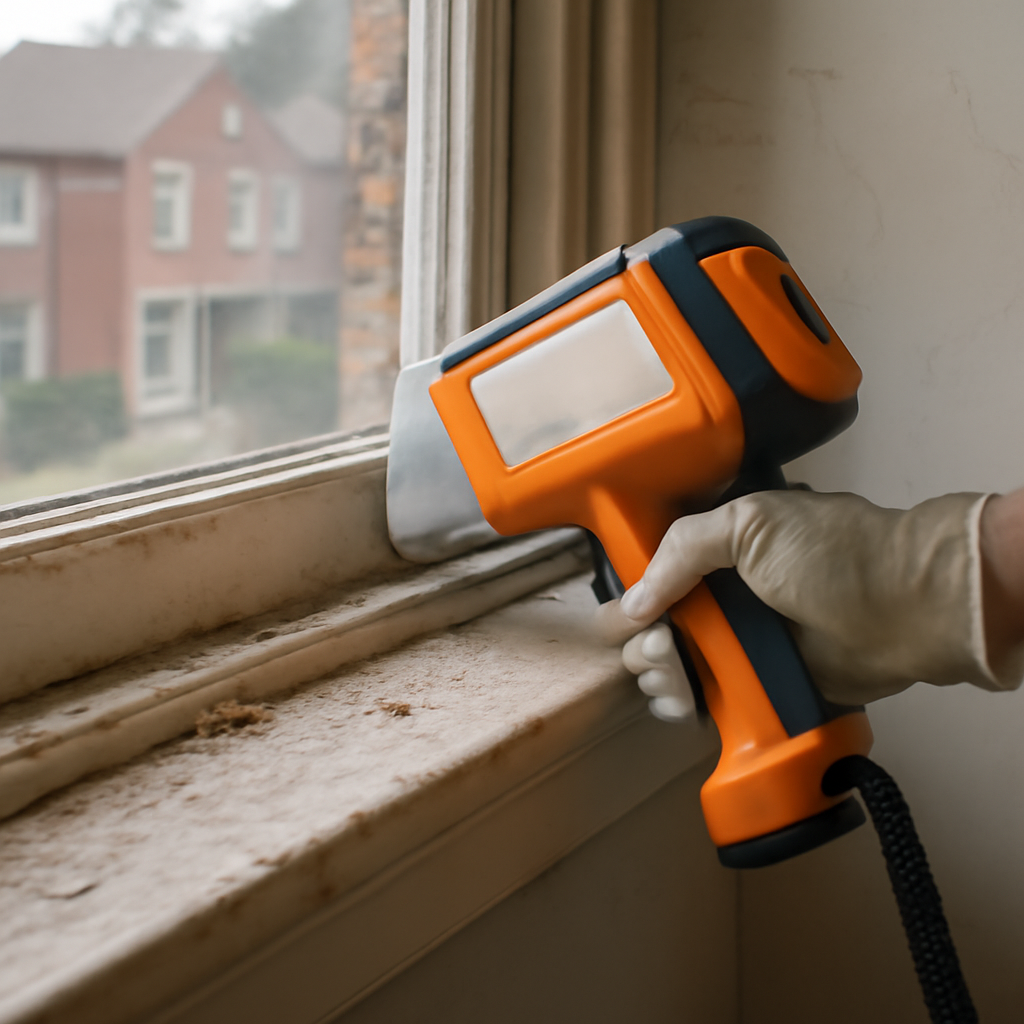
In an older core home or fringe farmhouse, a certified lead inspector uses an XRF analyzer to read lead content in painted surfaces without damaging them, or collects paint chips and dust-wipe samples from windowsills and floors for laboratory analysis. Dust-wipe sampling is especially relevant where a renovation has disturbed old paint, since lead-laden dust is a primary exposure route for young children.
Water testing
For drinking water, the provider collects first-draw and sometimes flushed samples following EPA protocol and submits them to a certified laboratory. This is the most relevant test for the many Severance homes on private wells. If the home is older and you are also weighing renovation hazards, pair this with our guide to asbestos testing in Severance, since older structures can carry both. The lab reports lead concentration against EPA action levels for drinking water.
Lead testing cost in Severance
A professional lead paint inspection in the Severance area generally runs about $300 to $500 for a typical home, with XRF-based whole-home inspections at the higher end and targeted paint-chip or dust-wipe sampling at the lower end. Water lead testing through a certified lab usually costs about $20 to $100 per sample depending on the panel.
Because most Severance homes are new, the more common and cost-effective test here is water rather than paint. A private well household can confirm its water-lead status for a modest lab fee, while paint inspections are mainly relevant for the older core and fringe properties.
Set the cost against the stakes, which are highest for children. The CDC notes there is no safe blood-lead level for kids, so a modest testing expense that rules out lead in a private well home’s water, or confirms whether an older core home’s paint is intact, is well worth it for a family with young children. For new builds, an honest provider will often confirm that paint testing is unnecessary.
Colorado regulations and disclosure
Federal law requires sellers and landlords of pre-1978 housing to disclose known lead-based paint and provide the EPA’s lead hazard pamphlet, and renovation firms working on pre-1978 homes must follow the EPA’s Renovation, Repair, and Painting (RRP) rule. For the vast majority of post-1978 Severance homes, the federal disclosure requirement does not apply, but the Colorado Seller’s Property Disclosure still asks about known lead and water-quality issues.
For drinking water, public systems are regulated under the federal Lead and Copper Rule, but private wells are the homeowner’s responsibility, which is why testing matters most for Severance’s well-served fringe. Hire a certified lead professional for any paint inspection of an older home, and use a state-certified drinking-water lab for water samples. Sellers of older core properties should retain any lead documentation, since disclosed-and-managed reads better than undisclosed.
Neighborhoods and areas served
Lead paint testing demand in Severance is limited to the older housing, the historic core and fringe farmhouses, while water testing is broadly relevant across the new subdivisions, Hidden Valley, Tailholt, Belmont Ridge, Overlook, particularly for homes on private wells. The combination means most Severance lead inquiries are about water, not paint.
Service typically extends to adjacent plains communities, including Windsor, Eaton, Greeley, and Timnath, which share Severance’s mix of new subdivisions and older farm housing. Homeowners can reference the county-level lead testing in Weld County hub for the broader picture, and those just west can read our companion guide to lead testing in Windsor. Across the area, age drives the paint question and plumbing drives the water question.
Protecting children in a Severance home
Lead testing matters most because of who is most vulnerable: young children, whose developing bodies absorb lead more readily than adults and for whom the CDC states there is no known safe blood-lead level. In a Severance home, the two realistic exposure routes are deteriorating old paint in the rare older structure and lead drawn into drinking water through plumbing fixtures, and both are addressable once identified.
For families on private wells, a few simple habits reduce water-lead exposure while a test is pending or if low levels are found. Running the tap for 30 seconds to two minutes first thing in the morning flushes water that sat overnight in fixtures, and using only cold water for drinking and cooking, since hot water dissolves more lead, lowers intake. Where a test confirms elevated lead, a certified point-of-use filter rated for lead removal is an effective interim measure while the source fixture or fitting is replaced. These steps are practical for any Severance household with children, particularly newer homes where a brass fixture or solder joint is the likely culprit rather than the source water.
If a child’s exposure is a concern, the right step is a blood-lead test through a pediatrician, which measures actual exposure rather than the home’s potential sources. Home testing and a blood test answer different questions, the house versus the child, and a cautious family with young kids in an older core home or a private-well property reasonably does both. Pairing a water or paint test with a conversation with the child’s doctor gives Severance parents the fullest picture and the clearest path to action.
How to choose a Severance lead testing provider
For paint, hire an EPA- or state-certified lead inspector or risk assessor, the credential that qualifies someone to use an XRF analyzer and collect dust-wipe samples properly. A good provider screens on home age first and will tell a new-build owner that paint testing is unnecessary, which is a sign of honest practice rather than upselling.
For water, use a certified drinking-water laboratory and follow proper first-draw sampling protocol, since technique affects the result. Ask whether the provider handles both pathways or only one, and whether they understand the difference between municipal and private-well responsibilities, important given Severance’s split supply. Pairing lead screening with a full home inspection in Severance can be efficient when buying an older property or a well-served home.
The best Severance provider matches the test to the real risk: water for the many well homes, paint for the few older structures, and clear guidance when no test is needed. That accuracy protects children’s health without wasting money on tests a recent build does not require.
References
- Lead in paint, dust, and water — U.S. Environmental Protection Agency
- Childhood lead exposure prevention — Centers for Disease Control and Prevention
- Lead-based paint disclosure and hazard rules — U.S. Department of Housing and Urban Development
If your Severance home is on a private well or sits in the older core, a quick lead test gives a family with young children real peace of mind. To connect with a vetted local lead professional, reach out through our contact page.