What Is Lead Paint? The Definition and the 1978 Ban
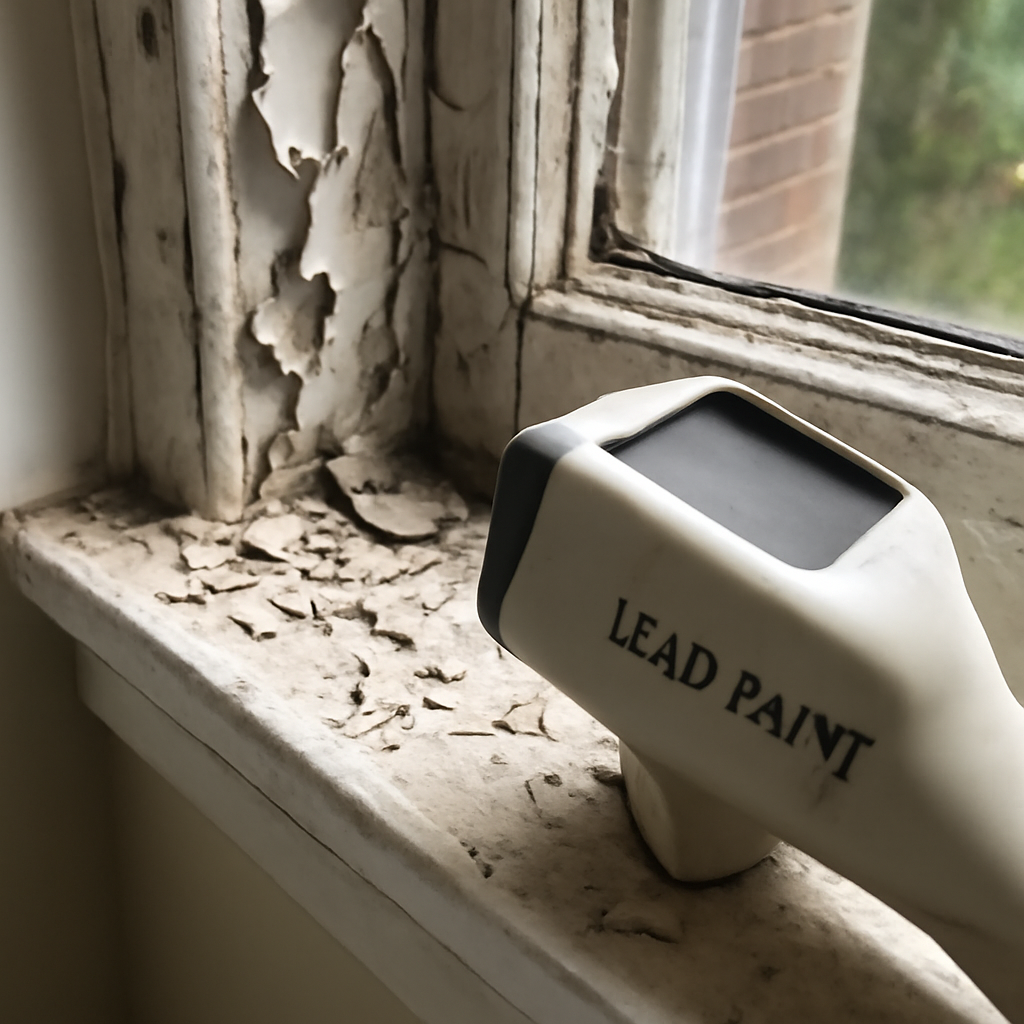
Lead paint is paint that was made with lead-based pigments and lead-containing additives, mixed into the paint film during manufacture to make it cover better, last longer, and hold brighter color. It was standard in American homes until the federal government banned it from residential sale on February 27, 1978. If your house was built before then, some of the paint in it may still meet the legal definition of “lead-based paint” today, which carries real consequences for testing, renovation, and disclosure.
Is this mold, asbestos, or water damage? Get a free instant screen
Upload a clear photo of the suspect area. You'll get an instant AI screening opinion and what to do next. This is screening guidance, not a professional determination.
Screening guidance only. AI can be wrong. Confirm asbestos, mold type, or lead with lab testing or a licensed professional before acting.
What “lead paint” actually means
Two answers overlap here: what lead paint is chemically, and what counts as lead-based paint under federal law.
Chemically, the lead came from a handful of ingredients. White lead (lead carbonate) was the workhorse pigment, prized for its opacity in white and tinted paints. Lead chromate produced yellows, oranges, and reds. Lead oxide went into red primers and rust-inhibiting coatings. Lead compounds also acted as drying agents that sped up curing. In pre-1978 residential paint, lead often made up 10 to 50 percent of the dry film by weight.
Legally, the number is much lower and much more precise. Under EPA regulation (40 CFR 745.103), a coating is “lead-based paint” if it contains lead at or above 1.0 milligram per square centimeter measured by X-ray fluorescence, or 0.5 percent by weight (5,000 parts per million) measured by lab analysis of a paint chip. Cross that line and federal disclosure rules and regulated work practices apply. Stay below it and the paint is not “lead-based” in the legal sense, even though it still contains some lead. That bright-line threshold is why a professional test, not a guess, decides how a surface gets handled.
Why paint makers used lead for so long
Lead was not an accident of chemistry; it solved real problems for painters and manufacturers.
- Coverage. White lead hid the surface underneath in one or two coats. Lead-free paints of the era often needed three or four, which meant more labor and more material.
- Weather durability. Exterior lead paint resisted chalking, cracking, and fading through years of sun and moisture. A good lead exterior could go 10 to 15 years between repaints where alternatives lasted half that.
- Color depth. Lead chromate yellows and lead oxide reds held saturated, fade-resistant color that pigment chemistry could not match until the 1970s.
Those advantages are also why the industry fought the shift away from lead for decades after the health risks were documented. The performance case stayed strong right up until the medical case became impossible to argue with.
The research that ended it
Through the 1960s and 1970s, studies tied elevated blood-lead levels in young children to lasting harm to the developing brain and nervous system. Children under six are the most vulnerable: their bodies absorb lead more readily than adults’, and normal hand-to-mouth behavior puts paint dust and chips directly into their mouths. Lead chips also taste faintly sweet, which is why children eat them.
The exposure pathway in old housing is not exotic. Lead paint on friction surfaces, such as windows and doors, grinds itself into fine dust every time the surface moves. That dust settles on sills, floors, and play areas, and small children swallow it. According to the CDC’s lead poisoning prevention program, no safe blood-lead level in children has been identified, which is why the strategy is to prevent exposure rather than treat it after the fact.
Regulation followed the science in steps: the Lead-Based Paint Poisoning Prevention Act in 1971, the phase-out of leaded gasoline beginning in 1973, and finally the Consumer Product Safety Commission’s residential ban under 16 CFR 1303, effective February 27, 1978. The full legislative timeline is covered in when lead-based paint was outlawed.
Where it hides in a pre-1978 home
Lead paint can be on any painted surface in an older house, but it concentrates in predictable spots:
- Windows. Sashes and sills are usually the single highest-risk surface, because opening and closing grinds paint into dust that falls into the room.
- Doors and frames. Jambs and the edges of doors wear the same way.
- Stairs, railings, and porches. Foot traffic and hand contact shed dust and chips.
- Exterior trim and siding. Exterior-grade paints leaned hardest on lead for durability, and as they weather they shed lead into the soil around the foundation, a common contamination route in older Front Range neighborhoods with mature yards.
Interior walls and ceilings are a coin flip depending on brand, color, and finish, which is exactly why you cannot tell lead paint by looking at it. Any deteriorated paint in a pre-1978 home should be treated as suspect until it is tested.
What to do if you have it
Intact, well-maintained lead paint is far less dangerous than paint that is peeling, chipping, or being disturbed. Three priorities matter most:
- Keep it intact. Fix the moisture problems that cause peeling, clean gently, and seal sound paint. Do not dry-sand, scrape, or heat-strip suspected lead paint, because those methods turn a manageable coating into airborne dust.
- Control dust from friction surfaces. Wet-mop floors near windows, wipe sills with disposable cloths, and consider replacement windows or sash liners on the worst openings.
- Test before you renovate. The EPA’s Renovation, Repair and Painting (RRP) Rule requires a certified firm for any job disturbing more than 6 square feet indoors or 20 square feet outdoors in pre-1978 housing where children under six or pregnant women are present. Even when the rule does not apply, test first.
Confirming whether a surface is actually over the threshold is a job for testing, not test kits: DIY swab kits miss lead often enough that a negative result is not reliable. Walk through the options in how to test for lead paint, and see the full response plan in what to do if you have lead paint.
The disclosure rules that protect buyers and renters
The Residential Lead-Based Paint Hazard Reduction Act of 1992 (Title X) requires sellers and landlords of pre-1978 housing to disclose any known lead paint and hazards, hand over a Lead Warning Statement and disclosure form, and provide the EPA pamphlet “Protect Your Family From Lead in Your Home.” Buyers also get a 10-day window to have the property tested before they are bound to the contract. That right can be waived only by explicit mutual agreement, never by silence. The HUD and EPA disclosure rule lays out exactly what a seller has to provide.
Frequently asked questions
For the wider picture of how lead fits alongside asbestos in older homes, see our asbestos and lead guide. If you are a Front Range homeowner or renter who wants to connect with a certified lead inspector or RRP contractor, reach out through our contact page. This summary reflects current EPA, HUD, and CDC guidance; consult a physician about symptoms and a certified professional about testing.
Lead paint test kits
Instant swab kits flag lead on painted surfaces in minutes — useful before a renovation in any pre-1978 home.
| Product | Why | Buy |
|---|---|---|
 3M LeadCheck Swabs 3M LeadCheck Swabs | EPA-recognized instant swabs. | Amazon — $208.00 |
 Lead Test Kit (lab-based) Lead Test Kit (lab-based) | Mail-in for a documented result. | Amazon — $35.00 |