Lead Paint’s Timeline: From 400 BCE to the 1978 Ban
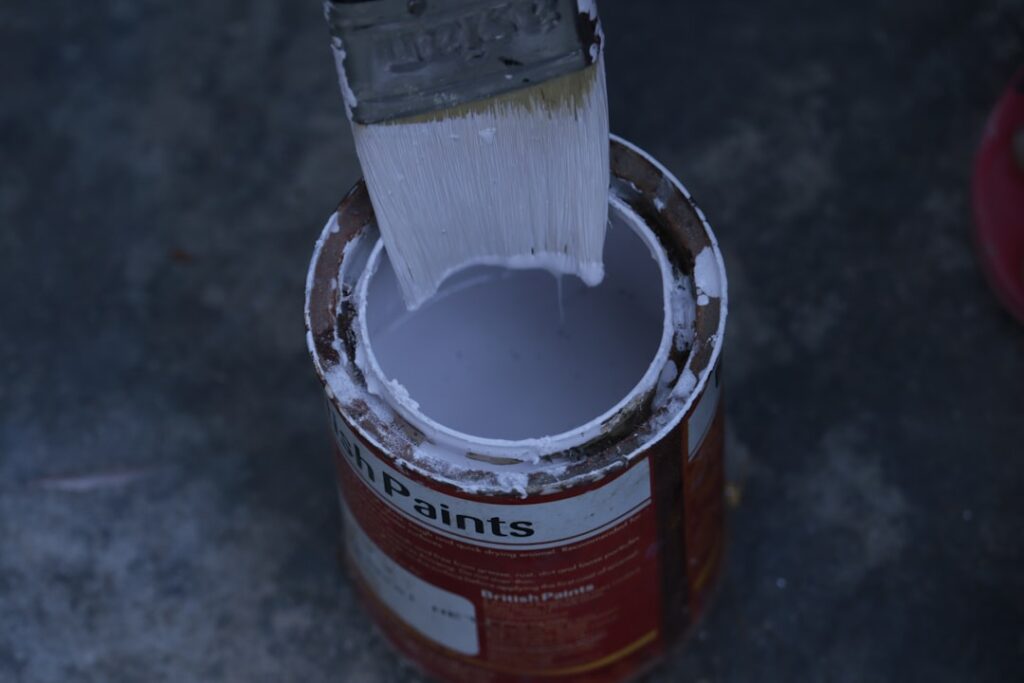
Lead paint has two starting dates, and which one you mean depends on why you are asking. As a pigment, white lead was first made in ancient Greece around 400 BCE. As a mass-produced house paint sold in cans, it arrived in American hardware stores in the 1880s. Both answers matter, but for anyone living in a pre-1978 home the second one is the one that shows up on a disclosure form.
Is this mold, asbestos, or water damage? Get a free instant screen
Upload a clear photo of the suspect area. You'll get an instant AI screening opinion and what to do next. This is screening guidance, not a professional determination.
Screening guidance only. AI can be wrong. Confirm asbestos, mold type, or lead with lab testing or a licensed professional before acting.
The short answer
White lead carbonate — the compound behind nearly all lead paint — was produced as a pigment in classical Greece by roughly the 4th century BCE. It stayed the dominant white pigment for more than two thousand years. In the United States, factory-mixed lead house paint went on sale in the 1880s, peaked in use between the 1920s and 1940s, declined as titanium dioxide replaced it after the 1950s, and was banned for residential use by the Consumer Product Safety Commission in 1978. That 1978 date is a legal cutoff, not a chemistry one: the same pigment had already been on walls for centuries.
How old is lead as a pigment?
The Greek philosopher Theophrastus, who succeeded Aristotle at the Lyceum, described white lead manufacture in his treatise On Stones around 300 BCE. His method — sealing strips of lead metal above vinegar in earthen pots until a white crust of basic lead carbonate formed — is essentially the same “stack process” that European makers still used in the 1800s. The pigment appears in Greek and Roman wall finishes, panel paintings, and cosmetics.
The hazard was documented almost as early as the pigment. Roman writers, including Vitruvius and Pliny the Elder, noted that pigment and mine workers developed a wasting sickness we now recognize as chronic lead poisoning. The point worth holding onto is that lead’s usefulness and its toxicity were known together, side by side, roughly two millennia before any government regulated it.
Why one pigment lasted two thousand years
White lead survived because nothing else did its job as well for so long. It had excellent hiding power, it formed a tough and flexible film, and it held its color outdoors where cheaper whites chalked or yellowed. It also doubled as a drier: lead speeds the oxidation of linseed oil, the standard paint binder, cutting recoat time from days to hours. A painter mixing white lead into linseed oil got a coating that covered well, weathered well, and dried on schedule — a combination no rival pigment matched until modern chemistry caught up.
When did lead paint reach American homes?
Colonial households imported Dutch white lead through Boston, New York, and Philadelphia as early as the late 1600s, but it was expensive enough that ordinary homes used whitewash or milk paint instead. Domestic production in the 1820s through 1840s brought the price down. The real turning point was the 1880s, when paint shifted from shop-mixed kegs to pre-mixed branded product sold by the can. Sherwin-Williams, founded in Cleveland in 1866, was selling ready-mixed paint by 1880; National Lead Company, maker of the Dutch Boy brand, formed in 1891 by consolidating regional white-lead makers. By 1900, lead house paint was stocked in hardware stores in every large American city.
When was lead paint used the most?
Consumption climbed steadily into the interwar years and stayed high for decades. Public-works painting during the Depression, then the postwar suburban building boom, kept demand up even as zinc oxide and later titanium dioxide took market share in the 1950s and 1960s. Lead-based exterior trim and enamels remained on retail shelves right up to the 1978 ban. The practical takeaway: a home from the 1920s is generally more likely to carry heavy lead paint than one from the 1960s, though both fall on the pre-1978 side of the disclosure line. The HUD lead paint resources use 1978 as that cutoff for exactly this reason.
| Era | What was happening |
|---|---|
| c. 400–300 BCE | White lead first made as a pigment in ancient Greece |
| 1600s–1700s | Dutch “stack process” scales up; colonial America imports it |
| 1820s–1840s | U.S. domestic production begins; price drops |
| 1880s–1900 | Pre-mixed branded lead house paint reaches national retail |
| 1920s–1940s | Peak U.S. residential lead-paint use |
| 1950s–1960s | Titanium dioxide and zinc gain share; lead declines |
| 1978 | CPSC bans lead paint for residential use |
What the history means for an older home
Three things follow from the timeline. First, the deeper a home’s paint history runs, the more likely lead sits somewhere in the layers — a 1925 house repainted in 1960 and again in 1985 can have lead buried under newer coats, exposed only when a renovation cuts to the original substrate. Second, homes from the peak decades carry the highest lead content because titanium had not yet displaced lead in standard formulas. Third, the risk is a physical hazard, not just a historical footnote: the CDC states there is no known safe blood lead level in children, and disturbing old paint is a common exposure route. The CDC’s lead prevention guidance and EPA’s lead overview both frame pre-1978 paint as the main residential source, and the NIEHS lead research page summarizes the health science behind that concern.
Age is only a screening filter, though. It tells you whether to test, not whether lead is present in a given surface. On the Colorado Front Range, that filter catches a lot of housing stock — Denver’s Capitol Hill, Boulder’s Mapleton Hill, and the old mining towns near Central City and Leadville are full of buildings from lead paint’s peak decades. Whether a specific wall is positive still comes down to a swab kit or, for anything tied to a sale or renovation, an XRF survey by a certified inspector.
Frequently asked questions
Was lead paint really used in ancient times?
Yes. White lead carbonate was produced as a pigment in Greece by around 400 BCE and used by Greek and Roman artists, builders, and cosmetic makers. Roman writers also recorded the poisoning that afflicted pigment workers.
When did lead paint become common in U.S. houses?
The 1880s, when paint shifted from shop-mixed kegs to pre-mixed branded cans. Sherwin-Williams and National Lead built national distribution between 1880 and 1900.
Is a 1920s home more likely to have lead paint than a 1960s one?
Generally yes. Use peaked from the 1920s through the 1940s, then declined as titanium dioxide took over. Both eras are pre-1978 and trigger federal disclosure.
How do I confirm whether my home has lead paint?
Age tells you to test, not what you have. An EPA-recognized swab kit gives a fast screen; a paint-chip lab test or XRF survey by a certified inspector confirms it for a sale or renovation. See how to test for lead paint for the steps, and when lead-based paint was outlawed for the regulatory side.
This guide summarizes EPA, CDC, HUD, and NIEHS material current as of 2026 for homeowners managing pre-1978 housing; consult a physician for exposure-related health questions.
Lead paint test kits
Instant swab kits flag lead on painted surfaces in minutes — useful before a renovation in any pre-1978 home.
| Product | Why | Buy |
|---|---|---|
 3M LeadCheck Swabs 3M LeadCheck Swabs | EPA-recognized instant swabs. | Amazon — $208.00 |
 Lead Test Kit (lab-based) Lead Test Kit (lab-based) | Mail-in for a documented result. | Amazon — $35.00 |