Mold Testing Cost: Per-Sample vs. Full-Service Pricing
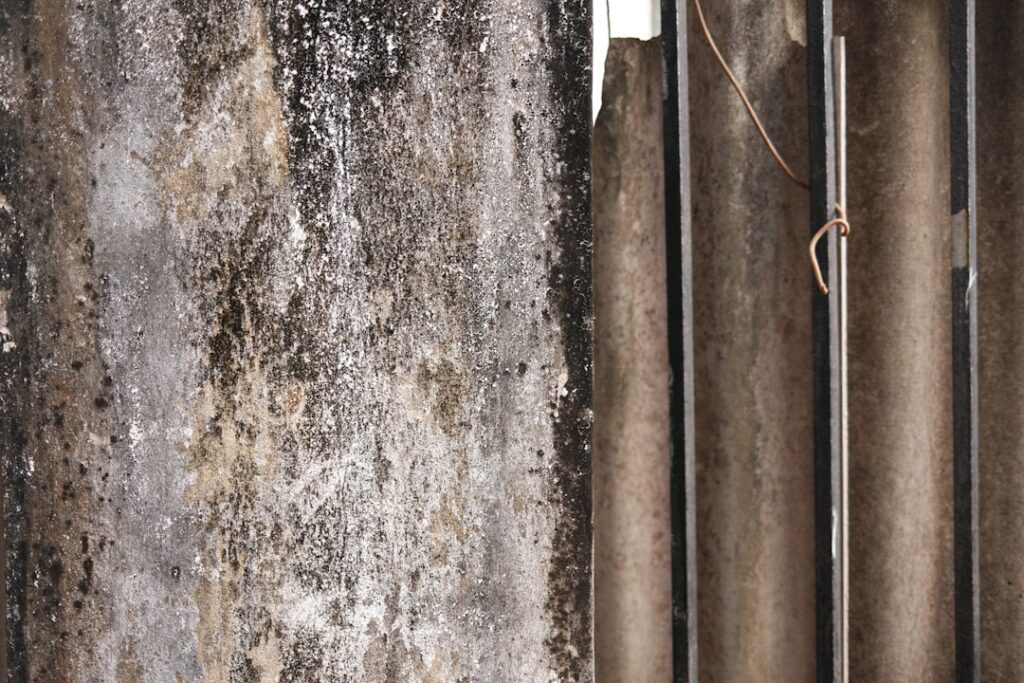
People searching “mold testing cost” are usually pricing one of two different things without realizing it. One is the cost of a single lab sample: what an inspector charges to pull and process one air or surface sample. The other is a full mold testing service that bundles the inspector’s time with the lab work. Those numbers live in different ranges, and mixing them up is why quotes seem to swing wildly. Here is what each one actually costs on the Front Range, and how to tell which one you need.
Is this mold, asbestos, or water damage? Get a free instant screen
Upload a clear photo of the suspect area. You'll get an instant AI screening opinion and what to do next. This is screening guidance, not a professional determination.
Screening guidance only. AI can be wrong. Confirm asbestos, mold type, or lead with lab testing or a licensed professional before acting.
The two things “mold testing cost” can mean
Per lab sample, retail pricing typically runs $60 to $150 for an air sample, $80 to $150 for a surface sample, and $100 to $200 for a cavity (in-wall) sample. A complete professional service that combines the site visit with sampling runs roughly $300 to $1,000 for a standard residential job, and $1,000 to $1,800 for a comprehensive assessment with multiple sample types and thermal imaging.
The gap between the wholesale lab fee and the retail per-sample price trips people up. An accredited mycology lab charges an inspector about $35 to $75 to analyze one spore-trap cassette. You pay more than that because the retail number also covers collection labor, a calibrated air pump, chain-of-custody paperwork, and someone who can actually interpret the result. You are paying for judgment, not just a petri dish. If you want the broader picture on what drives the visit fee itself, our breakdown of how much a mold inspection costs covers the labor side.
What each sample type costs and buys you
Air samples (spore traps)
The most common method. A calibrated pump draws a known volume of air through a cassette over five to fifteen minutes, and a lab technician counts and identifies the spores under a microscope. Retail: $60 to $150 per cassette. A standard job uses three: one in the suspect area, one in a clean control room, and one outdoor baseline. The outdoor sample is not optional. Spore counts only mean something relative to the ambient air at the same address on the same day, because mold spores are everywhere outdoors and a raw indoor number tells you nothing on its own.
Surface samples (tape-lift and swab)
Used to identify the species growing on a visible surface. The inspector presses a sticky tape or rubs a sterile swab against the material, and the lab reports the dominant species. Retail: $80 to $150. Surface samples confirm what is growing but never quantify airborne concentration, so they are paired with air samples rather than run alone. Species confirmation matters most when you are trying to distinguish Stachybotrys from ordinary household molds, which is where our guide to mold toxicity testing gets into the details.
Cavity samples (in-wall air)
Reserved for cases where hidden growth is strongly suspected behind a finished wall. The inspector drills a small hole, draws air from inside the cavity through a cassette, then seals the hole. Retail: $100 to $200, plus a minor charge if drywall touch-up is needed. This is worth it only when other evidence, like elevated moisture readings or a thermal anomaly, already points at in-wall growth that a visual check can’t confirm.
Culturable samples
Uncommon in residential work. An impactor deposits airborne particles onto a growth medium, and the lab incubates them to report living species. It costs more and takes 10 to 14 days instead of the usual 3 to 7, so it shows up mainly in legal or medical situations where confirming viable mold matters more than a total spore count.
Are DIY mail-in kits actually cheaper?
The kits sell for $15 to $50 at hardware stores, but that price almost never includes analysis. Mailing the sample to the lab is a separate $30 to $50 per sample, so the real DIY total lands around $45 to $100. That looks like a bargain next to a $500 inspection until you look at what you don’t get.
Most kits use a settle plate, an open dish left exposed for a fixed time, which captures spores without measuring air volume, so results can’t be expressed as spores per cubic meter. There’s no same-day outdoor baseline. You are the sampler, so collection contamination is common. And no one is on site reading the moisture and visible-growth context that makes lab numbers meaningful. A kit answers “is there mold in this sample,” which is nearly always yes, rather than “do I have a mold problem.” If you still want to try one first, our review of home mold test kits covers which situations they suit.
What a full inspection-plus-testing service costs
When most homeowners say “mold testing cost,” this bundle is what they mean. Typical Front Range pricing:
| Service | Typical price |
|---|---|
| Visual-only inspection, no lab work | $150 – $400 |
| Standard inspection with three air samples | $400 – $750 |
| Comprehensive assessment, multiple sample types + thermal imaging | $800 – $1,800 |
| Post-remediation clearance testing | $300 – $600 |
Adding samples to a visit already underway is cheaper than the average per-sample price suggests, because the inspection fee is already paid. Each extra cassette is just the marginal upcharge. That’s why an inspector suggesting one more sample on site is usually reasonable rather than a shakedown: covering an extra room now beats mobilizing a second truck later.
Why the same test costs more from one provider
Three levers drive most of the variation. First, the lab: premium labs with named mycologists and faster turnaround charge more per sample but produce more defensible reports, while budget labs sometimes use broader identification for Aspergillus and Penicillium. Second, region: coastal metros run 15 to 25 percent above Front Range pricing for identical lab work. Third, rush turnaround, which can double per-sample fees if you need 24-hour results instead of the standard five to seven days.
Denver homeowners benefit from several accredited labs competing locally, which keeps per-sample pricing tight and turnaround around three to five business days. Mountain communities west of the metro sometimes pay a travel surcharge on the inspector’s time, but the underlying lab cost doesn’t change. If you’re comparing providers, the mold inspection hub lays out how to weigh quality against price.
How many samples do you actually need?
For a typical home, three is the floor that produces an interpretable result: suspect area, indoor control, and outdoor baseline. Two (suspect plus outdoor) can work when the suspect area is small and the rest of the house shows nothing. A single sample is almost useless because there’s no reference to compare it against.
Bigger or messier situations need more. A two-story home with a finished basement and HVAC concerns might justify six or seven: outdoor, living space on each floor, basement, a suspect bathroom, and a supply register. A post-flood assessment might pull two samples per affected room plus surface samples on visibly damaged materials. The right count follows the structure and the question, not a fixed rule.
When paying for testing is worth it
Testing earns its cost when the result changes a real decision: whether to remediate, how large the scope should be, whether to close on a purchase, or whether to file an insurance claim. It’s not worth it when the answer is already obvious. The EPA’s guidance is blunt about this: if you can see the mold and identify the moisture source, you generally don’t need to sample before cleaning it up. The EPA also notes that sampling for mold is not usually recommended for the average homeowner, partly because the CDC confirms there are no federal standards or threshold limits for airborne mold, so a spore count has no pass/fail line to measure against. What it can do is document conditions before a transaction, a claim, or a remediation contract, which is a different job from diagnosing a health symptom. For choosing a qualified provider, InterNACHI publishes mold inspection standards of practice worth checking a company against.
This guide reflects EPA, CDC, and InterNACHI guidance current as of 2026; consult your physician about health symptoms and a certified professional about testing decisions for your specific home. Front Range homeowners can reach a vetted independent inspector through our contact page.