What Causes Black Mold? The Moisture Sources Behind It
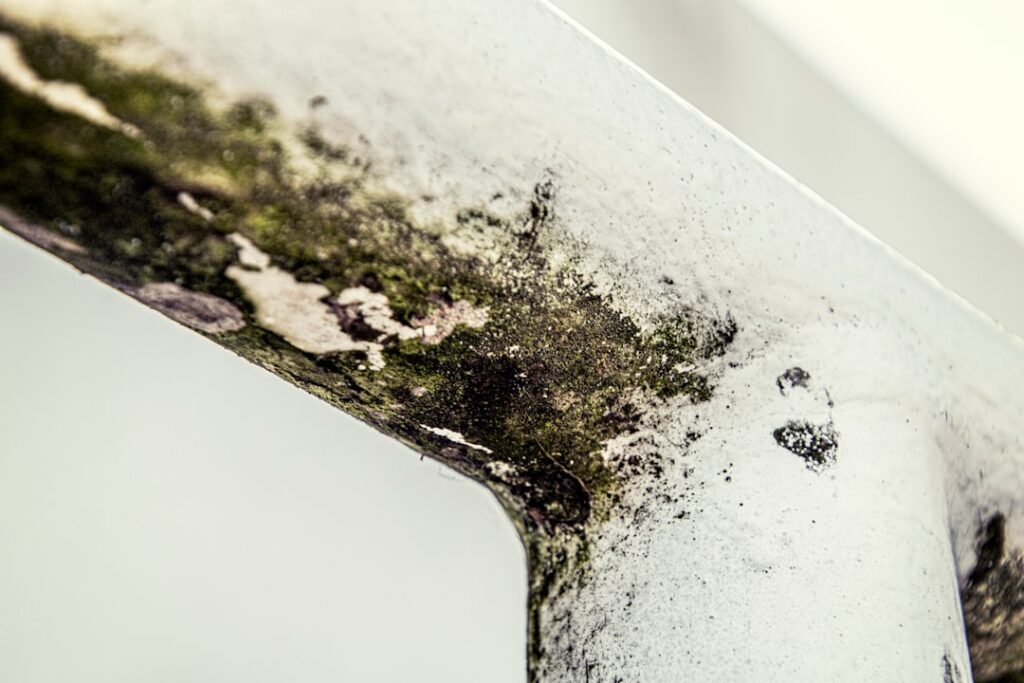
Black mold does not appear because of bad luck or dirty living. It appears because a cellulose-rich surface stayed wet long enough for spores that are already floating in every home to germinate and colonize. Find the water, and you have found the cause. This page walks through the specific moisture sources that produce black mold, ranked by how often they turn up in real houses, and what makes the greenish-black species people worry about different from ordinary bathroom mildew.
Is this mold, asbestos, or water damage? Get a free instant screen
Upload a clear photo of the suspect area. You'll get an instant AI screening opinion and what to do next. This is screening guidance, not a professional determination.
Screening guidance only. AI can be wrong. Confirm asbestos, mold type, or lead with lab testing or a licensed professional before acting.
Why “black mold” needs more water than other molds
The organism most people mean by “black mold” is Stachybotrys chartarum. It is a poor competitor and a slow starter. Common molds like Cladosporium and Penicillium can grow on a surface that is merely humid, but Stachybotrys generally needs materials that stay saturated — water activity close to 0.9 or higher — for a week or more before it establishes. That is why it shows up on chronically wet drywall paper, ceiling tile, and wood rather than on a window sill that fogs up overnight. When you see a dark, slimy or sooty patch, it is a signal that water has been sitting somewhere for a long time, not a passing humidity spike.
The color, by the way, does not tell you the species or the risk. The CDC states there is no way to identify a mold’s hazard by look and recommends removing any indoor mold and fixing the moisture behind it regardless of color. If you want the biology in plain terms, our overview of what black mold actually is covers how it differs from cosmetic mildew.
The moisture sources that cause it, most common first
Slow, hidden plumbing leaks
A drip you never see is the single most reliable way to grow black mold. Sink-trap seepage, pinhole leaks in copper supply lines, a failing toilet wax ring, a cracked dishwasher gasket, or a weeping ice-maker line delivers a small, steady water supply to a dark, still cavity — exactly the sustained wetness Stachybotrys requires. Because the volume is small, there is no flood to alarm you, just soft drywall behind the toilet or a stained cabinet floor months later. Look under every sink and behind appliances twice a year, and replace rubber washing-machine hoses every five years.
Roof, flashing, and wall-envelope leaks
These produce the highest-impact cases because the water lands where you cannot see it: attic sheathing, ceiling cavities, wall framing. Failed flashing at chimneys, skylights, and plumbing-vent penetrations, plus wind-driven rain through cracked stucco, keeps framing damp through repeated wet-dry cycles. The EPA’s rule is the one to remember: wet materials must be dried within 24 to 48 hours to prevent mold. A roof leak that goes weeks blows past that window, which is why attic and ceiling black mold is so often traced back to a small, ignored stain.
Basement seepage and slab moisture
Groundwater pressure and poor grading push moisture through porous concrete. When paper-faced drywall, carpet, or wood paneling sits against or on that concrete, mold grows on the hidden back face long before you see it in the room. Extend downspouts at least six feet from the wall, slope the first ten feet of soil away from the house, and finish basements with cement board and rigid foam instead of paper-faced drywall. See how inspectors find mold inside walls when the surface looks clean.
Condensation on cold surfaces
No leak required. Warm, humid indoor air meeting a cold surface — an uninsulated cold-air return in a crawl space, a single-pane window, a poorly ventilated closet on an exterior wall — deposits liquid water repeatedly. In tight modern homes the wet phases last long enough to sustain growth. Insulate cold ducts, add storm windows, and keep air moving in stagnant corners.
Sustained high indoor humidity
When relative humidity stays above 60 percent for long stretches, porous materials absorb enough moisture to support mold with no visible water at all. The EPA recommends keeping indoor humidity between 30 and 50 percent. A $15 hygrometer in a few rooms tells you whether you have a humidity problem; running bath and kitchen fans for 20 minutes after use and confirming the dryer vents to the outside handles most of it.
Water events dried too slowly
Burst pipes, water-heater ruptures, sewer backups, and appliance overflows are less frequent than slow leaks but far more likely per incident to end in mold, because the water load overwhelms passive drying. The 24-to-48-hour clock is everything here. Fast professional extraction and drying often prevents colonization entirely; a basement left wet for a week almost never escapes it. Our guide to mold after water damage covers the drying timeline in detail.
HVAC and construction defects
Air handlers both create and spread mold: cooling coils condense water continuously, and a clogged condensate drain or biofilm-coated coil turns the system into a cultivator that then distributes spores on every fan cycle. In newer homes, missing vapor barriers, backward kraft-faced insulation, and improperly flashed windows trap moisture inside tight, low-drying-capacity assemblies — often within the first few years and often under builder warranty. Keep condensate drains clear, service the coil annually, and document any new-home moisture in writing while the warranty stands.
Why one house often has more than one cause
Causes compound. A roof leak wets attic insulation, which raises whole-house humidity, which then triggers condensation mold on cool surfaces two floors down. A slow wall-cavity leak feeds moisture to the adjacent closet. This is why chasing only the most obvious stain frequently leaves growth that returns within months, and why a thorough mold inspection maps every moisture pathway rather than stopping at the first patch. Whatever the source, the rule holds: correct the water before you clean the mold, or the colony comes back.
A note on the Colorado Front Range
The dry Front Range climate suppresses casual mold, but a few local patterns recur. Older Denver and Lakewood ranch homes produce ice-dam attic mold and basement seepage where finished basements meet negatively graded soil. Newer urban-core townhomes show construction-defect mold around windows. Mountain-adjacent homes near Boulder and Evergreen develop attic moisture from snow load and steep temperature differentials. None are unique to Colorado, but local inspectors check for them by default.
Common questions
This page summarizes EPA and CDC guidance current as of 2026. Front Range homeowners who want a vetted local inspector can reach out through our contact page.