Home Asbestos Test Kits: When DIY Sampling Actually Works
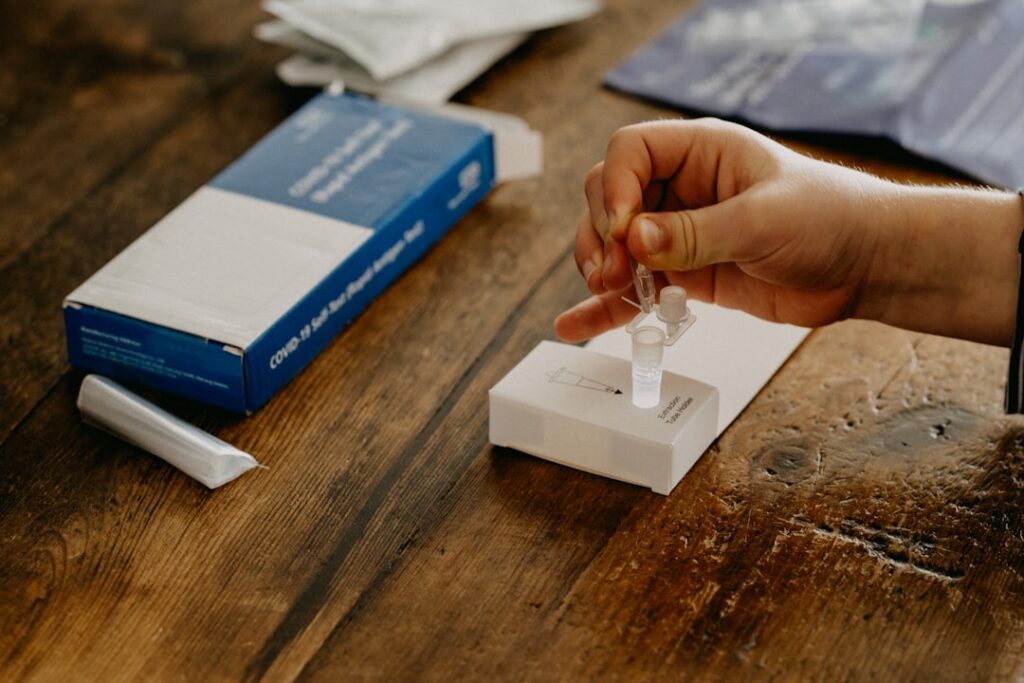
A “home asbestos test kit” is not a test at all. There is no reliable strip, swab, or color-change reaction that identifies asbestos in your kitchen. What you actually buy is a small bundle of protective gear plus prepaid analysis at an accredited laboratory: you collect a chip of suspect material yourself, seal it, mail it, and a microscope confirms whether asbestos fibers are present and at what percentage. Understanding that split — you handle collection, a lab handles identification — is the whole decision. It tells you when a $40 kit is genuinely enough and when the material in front of you calls for a certified inspector instead.
Is this mold, asbestos, or water damage? Get a free instant screen
Upload a clear photo of the suspect area. You'll get an instant AI screening opinion and what to do next. This is screening guidance, not a professional determination.
Screening guidance only. AI can be wrong. Confirm asbestos, mold type, or lead with lab testing or a licensed professional before acting.
What you get in the box, and what the lab does
A typical kit contains a NIOSH-approved N95 or P100 respirator, nitrile gloves, a spray bottle for wetting the material, a sealable sample bag or vial, a chain-of-custody form, a prepaid mailer, and analysis for one or two samples. The analysis is the part that answers your question. Reputable kits name a lab accredited under the National Voluntary Laboratory Accreditation Program (NVLAP). If the packaging does not identify the lab, that is the first reason to put it back.
The lab runs Polarized Light Microscopy (PLM) on bulk samples per EPA Method 600/R-93/116, and for tricky materials, Transmission Electron Microscopy (TEM), which resolves fibers PLM can miss. The result comes back as a percentage by mineral type: the six regulated asbestos forms are chrysotile, amosite, crocidolite, anthophyllite, tremolite, and actinolite. Anything above 1% asbestos by weight is legally “asbestos-containing material” under the EPA’s Asbestos NESHAP rule, which is the threshold that triggers regulated handling for renovation and demolition.
What a kit costs in 2026
Prices cluster in three tiers, and the difference is mostly how much lab analysis is bundled in:
- Supplies only ($20–$35): PPE and mailer, with lab analysis billed separately at roughly $35–$75 per PLM sample.
- Kit plus one or two PLM analyses ($40–$75): the sweet spot for testing a single material before a renovation.
- Multi-sample or TEM-included ($75–$150): useful if you have several materials or a borderline floor tile that warrants TEM confirmation.
TEM runs $150–$300 per sample and rush turnaround (24–48 hours) usually adds $25–$75. For most homeowners the honest comparison is against a full survey: a certified inspector doing a multi-material home assessment runs roughly $300–$600, and the cost of actual asbestos removal dwarfs both. A kit earns its keep only when one material, in good condition, is the entire question.
When a kit is the right call — and when it isn’t
DIY sampling is reasonable for hard, non-friable, intact materials you can chip with minimal disturbance: a 9×9 vinyl floor tile, an intact cement siding shingle, a sealed section of joint compound, or a discrete popcorn-ceiling patch you can wet down. These release few fibers when handled carefully, and a single yes/no answer is often all you need to plan. It still pays to know why the answer matters: as CDC/NIOSH documents, inhaled asbestos fibers are linked to asbestosis, lung cancer, and mesothelioma, and there is no exposure level considered risk-free.
Skip the kit — and call a professional — for anything friable or already deteriorating:
- Crumbling pipe wrap or damaged insulation, where fibers are already loose (see the asbestos pipe insulation guide).
- Vermiculite attic insulation — the Libby, Montana contamination history makes this a near-automatic pro call.
- HVAC duct insulation, where sampling without isolating the system can push fibers through the whole house.
- Whole-home or multi-material questions; one chip characterizes one spot, nothing more.
- Anything needed for insurance, legal, or real-estate documentation, where a certified inspector’s report carries the weight a mailed sample cannot.
The broader identification and abatement framework lives in the asbestos and lead pillar guide, which is worth reading before you disturb anything.
How to collect a sample without releasing fibers
The EPA and OSHA sampling logic reduces to seven steps. The wetting step is the one people skip and the one that matters most.
- Clear the room. Remove people and pets and shut off HVAC and close the vents so nothing recirculates.
- Put on the gear. Fit-check the respirator, wear gloves, and add disposable coveralls if you have them.
- Mist the spot. A fine spray of water keeps fibers from going airborne. Dry sampling of friable material produces visible dust and real exposure.
- Take a small piece. Pea-sized is plenty. Slice or chip — never grind, sand, or snap the material more than you must.
- Seal immediately. Drop the chip straight into the supplied bag or vial, label it, and double-bag if instructed.
- Decontaminate. Wipe the area with a damp paper towel, bag the towel and PPE, and wash your hands and face.
- Mail same day. Complete the chain-of-custody form and send the prepaid envelope out that day or the next.
Technique changes by material — hard tile, friable ceiling, and pipe wrap each call for a different approach — which the how-to-test-for-asbestos guide and the tile-specific walkthrough cover in detail. One rule holds across all of them: one material per bag. Mixing tile, ceiling, and pipe chips in a single bag produces a result you cannot apply to any of them.
Colorado homeowners: the trigger levels that change the answer
A kit answers a technical question, not a regulatory one. In Colorado, the Air Pollution Control Division’s Regulation No. 8, Part B sets “trigger levels” above which a project stops being a DIY matter: 50 linear feet of asbestos material on pipes, 32 square feet on other surfaces, or the volume of a 55-gallon drum. Cross those thresholds and abatement must be done by a state-certified General Abatement Contractor, with sampling and inspection by a Colorado-certified Asbestos Building Inspector — a mailed home kit does not satisfy that requirement.
Homeowners doing genuinely small work on their own single-family residence generally fall below the trigger levels and outside the certification mandate, which is exactly the window a test kit is built for. The moment a contractor is involved or the quantity grows, the certified path applies regardless of what a kit reports.
What the kit will never tell you
A bulk sample identifies the one chip you sent. It says nothing about other materials in the house, nothing about whether fibers are already in your air, and nothing about how to remove a positive material safely. Air testing after a disturbance or during abatement needs cassette equipment, calibrated airflow, and PCM or TEM analysis by a licensed industrial hygienist — permanently outside any consumer kit’s scope, per OSHA’s asbestos standards. Treat a positive result as the start of a plan, not the plan itself.
Frequently asked questions
Weighing a DIY kit against a certified inspection for an older Front Range home? Reach out through our contact page and we can point you to a vetted local professional. This guide reflects EPA, OSHA, and CDPHE guidance current as of 2026; consult a licensed asbestos professional before disturbing any suspect material.
Asbestos test kits
Asbestos can only be confirmed by a lab. A mail-in kit gets you a sealed sample container and accredited analysis — never sand or disturb suspect material first.
| Product | Why | Buy |
|---|---|---|
 Asbestos Test Kit (mail-in lab) Asbestos Test Kit (mail-in lab) | Includes PPE + sealed mailer. | Amazon — $34.99 |
| Pro-Lab Asbestos Test Kit | Widely available; lab fee separate. | Amazon — $34.99 |