Where Is Radon Found: A Plain-Language Guide
Radon is everywhere in small amounts, which can make it hard to picture where the dangerous concentrations actually come from. The short version: radon is a radioactive gas produced naturally as uranium in soil and rock breaks down, and it becomes a problem when it seeps into enclosed buildings and accumulates. Understanding where radon is found, both geographically and inside your home, helps you decide where and when to test. This guide summarizes EPA and CDPHE guidance current as of 2026 for Front Range homeowners. It is educational only; consult a certified radon professional for testing and a physician about health concerns.
Where Is Radon Found?
Radon is found in the soil and rock beneath buildings, where it forms as naturally occurring uranium decays. From the ground it moves into the air we breathe. Outdoors it dilutes to harmless levels, averaging about 0.4 pCi/L, because there is unlimited air to disperse into. Indoors it can build up to concentrations many times higher because buildings trap it and recirculate it.
So the gas originates underground but causes its harm inside enclosed spaces, especially the lower levels of homes. Any home in any state can have elevated radon, regardless of age, construction quality, or price, because the source is the ground, not the building. But regions with uranium-rich geology, including much of the Colorado Front Range, produce more of it. That geology is why our pillar on radon testing in Colorado treats the region as high priority for testing.
The Geology Behind Radon
Radon traces back to uranium, a common element scattered through rock and soil across the planet. As uranium decays over geologic time, it produces radium, which in turn decays into radon gas. Because radon is a gas rather than a solid, it migrates upward through pore spaces and fractures in the ground until it reaches the surface or finds a building to enter.
Areas with granite, shale, phosphate deposits, and other uranium-bearing formations tend to generate more radon than areas with low-uranium soils. The Front Range and Colorado’s mountain geology contain such formations, placing most regional counties in EPA Zone 1, the highest-potential category. The amount of radon a given lot produces depends on both how much uranium is in the underlying rock and how easily the gas can travel through the soil to reach the surface. The broader pattern of where radon concentrates nationally is mapped in our guide to the radon gas map.
How Radon Enters a Home
A heated home acts like a gentle vacuum. Warm air rises and escapes through the upper levels, creating slightly lower pressure at the foundation that draws soil gas, including radon, indoors. This is sometimes called the stack effect, and it is strongest in winter when the temperature difference between inside and outside is greatest. Common entry points include:
- Cracks in concrete slabs and foundation walls
- Gaps around service pipes and utility penetrations
- Sump pits and interior drainage systems
- Crawl space floors and unsealed dirt
- Construction joints and floor-wall seams
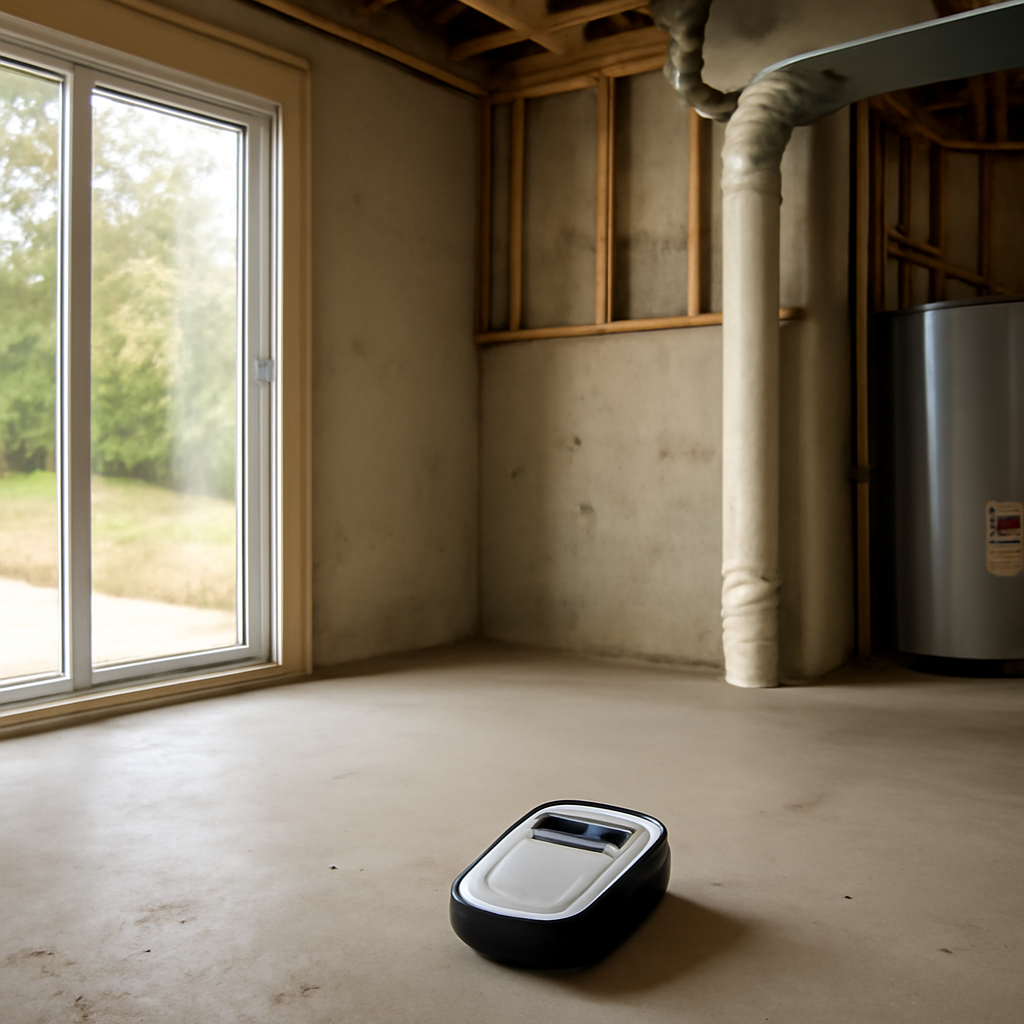
Because the lowest level is closest to the soil and often the least ventilated, basements typically show the highest readings. Even a tightly built modern home draws in soil gas through these pathways, so newer construction is not automatically safe. Homeowners who find elevated basement levels often turn to our guide on reducing radon levels in the basement.
Where Inside the Home Is Radon Worst?
Radon concentrates where the gas enters and lingers. In most homes that means:
- Basements — closest to the soil and frequently the highest readings
- Slab-on-grade ground floors — direct contact with soil through the slab
- Crawl spaces — especially with exposed dirt floors that offer no barrier
- Lower living areas — finished basements used as bedrooms or playrooms raise exposure
Upper floors usually read lower because the gas dilutes as it rises and mixes with air from windows and doors. This is why testing protocols call for placing the test in the lowest lived-in area, where exposure is greatest. A finished basement bedroom deserves extra attention, since occupants may spend eight hours a night breathing that air. Understanding the mechanism is easier with our explainer on how radon gets into homes.
Can Radon Be Found in Water?
Yes. Radon can dissolve into groundwater and enter a home through a private well, releasing into the air during showering, dishwashing, and laundry whenever the water is agitated. This is more common with private wells than with municipal water supplies, which are often stored and aerated in ways that let much of the radon escape before delivery. Waterborne radon is generally a smaller contributor to indoor air than soil gas, but it can matter for well owners, particularly in high-uranium areas. Our guide to sources of radon covers water and other pathways in more detail.
Why Where It Is Found Means You Should Test
Because radon originates in the unpredictable soil under each individual lot, you cannot reliably guess your level from your neighbor’s reading, your county average, or your home’s age. Two adjacent houses can read very differently. The only way to know where radon has accumulated in your home is to test the lowest livable level, using a short-term test for a quick estimate or a long-term test for a year-round average. The EPA recommends testing every home regardless of location, and retesting after major renovations or every few years, since the soil conditions and the home’s airflow can change.
Does House Age or Type Affect Where Radon Is Found?
A persistent myth holds that radon is an old-house problem or a basement-only problem. Neither is true. Because the source is the soil rather than the building materials, a brand-new, tightly built home can have just as much radon as a century-old one, and sometimes more, since modern airtight construction can hold the gas in once it enters. The home’s age tells you little about its radon level.
Foundation type shifts where radon concentrates but does not determine whether it is present. Consider the common types:
- Full basement — typically the highest readings, closest to the soil
- Slab-on-grade — the ground floor sits directly on soil, so it can read high
- Crawl space — exposed dirt offers an easy path for soil gas
- Mixed foundations — additions and split-levels can create multiple entry zones
Every one of these can have elevated radon, which is why the EPA recommends testing all home types. The foundation shapes the entry pattern and where the gas pools, but the underlying soil decides how much there is to begin with.
Radon in Colorado’s Geology
Colorado is a textbook example of why geology drives radon. The Front Range sits along the boundary where the plains meet the mountains, and the underlying rock and soil carry enough uranium to place most regional counties in the highest EPA radon zone. The combination of uranium-bearing formations and permeable soils means radon is both generated in quantity and able to migrate readily toward the surface and into homes.
This is why testing is treated as essential rather than optional across Denver, Boulder, Jefferson, Douglas, El Paso, and neighboring counties. The geology is not something a homeowner can change, but it is something a mitigation system can manage by intercepting the gas before it enters living space. For Front Range residents, the regional geology is the single strongest reason to test, and a high reading reflects where you live more than anything unusual about your particular house.
When to Call a Professional
Call a certified radon professional if a test reads at or above 4.0 pCi/L, if you have a private well and want water tested, or if you are buying or selling a home. A qualified measurement provider places tests correctly and interprets results, and a certified mitigation contractor can install a system that intercepts radon before it enters living space. For Front Range homes sitting in Zone 1 geology, testing is the practical first move, and the geology itself is the strongest argument for not skipping it. Because radon is found in the ground beneath every home in the region, the question is never whether your home has access to a radon source but how much of it is getting inside, and only a test answers that.
Why Radon Is Found in Such Different Amounts
Radon is present almost everywhere there is soil, but the amount that ends up in any given home varies enormously, and two factors explain most of that range. The first is how much uranium sits in the underlying rock and soil, since more uranium means more radon generated over time. The second is how easily that gas can travel, because permeable soils and fractured rock let radon migrate readily toward the surface while dense, clay-heavy ground slows it down. A lot with high uranium and loose, gravelly soil can produce far more radon at the surface than a lot with modest uranium and tight clay, even a short distance away. Layered on top of those geologic factors is the home itself, its foundation, cracks, and how it is heated and sealed, which determine how much of the available gas actually gets inside. This combination of geology and construction is why radon levels resist simple prediction and why testing the individual home remains the only reliable answer.
Outdoor Versus Indoor Radon
One reason radon is so often misunderstood is that the same gas is harmless outdoors and hazardous indoors. Outside, radon escaping from soil immediately mixes with a vast volume of air and dilutes to around 0.4 pCi/L, a level that poses negligible risk. The gas is present nearly everywhere outdoors, but it never gets a chance to build up.
Indoors, the picture changes because the building traps and concentrates the gas. As radon seeps in through the foundation, it accumulates in enclosed rooms instead of dispersing, and a heated home actively draws more in through the stack effect. The result is that indoor concentrations can reach many times the outdoor level, which is why testing focuses on indoor air rather than the yard. This contrast also explains why ventilation can lower indoor radon, since bringing in outdoor air dilutes the trapped gas, though ventilation alone is rarely a complete fix for an elevated home.
Finding Radon’s Entry Points in Your Home
Once you understand that radon enters through the foundation, you can often identify the likely pathways in your own home. While only a test measures the actual level, knowing where the gas gets in helps you and a mitigation contractor target the problem. Common entry points to look for include:
- Visible cracks in a basement slab or foundation walls
- The gap where the floor slab meets the foundation wall
- Openings around pipes, conduits, and other penetrations
- An open sump pit or perimeter drain
- Exposed soil in a crawl space
Sealing these openings helps but rarely solves an elevated level on its own, because soil gas finds even tiny remaining gaps under the home’s slight vacuum. That is why the standard fix is an active system that draws radon away from beneath the foundation rather than relying on sealing alone. Spotting the entry points is still valuable, since it informs where a contractor places suction and which gaps to seal as part of a complete system.
References
- What Is Radon Gas and Where It Comes From — U.S. Environmental Protection Agency
- Radon in Colorado — Colorado Department of Public Health and Environment
- Health Risk of Radon — U.S. Environmental Protection Agency
- Radon and Lung Health — American Lung Association
If you want to know where radon may be entering your Front Range home and how to stop it, reach out through our contact page for a vetted local radon professional.