Soil Moisture Meters: What the $10 Probe Won’t Tell You
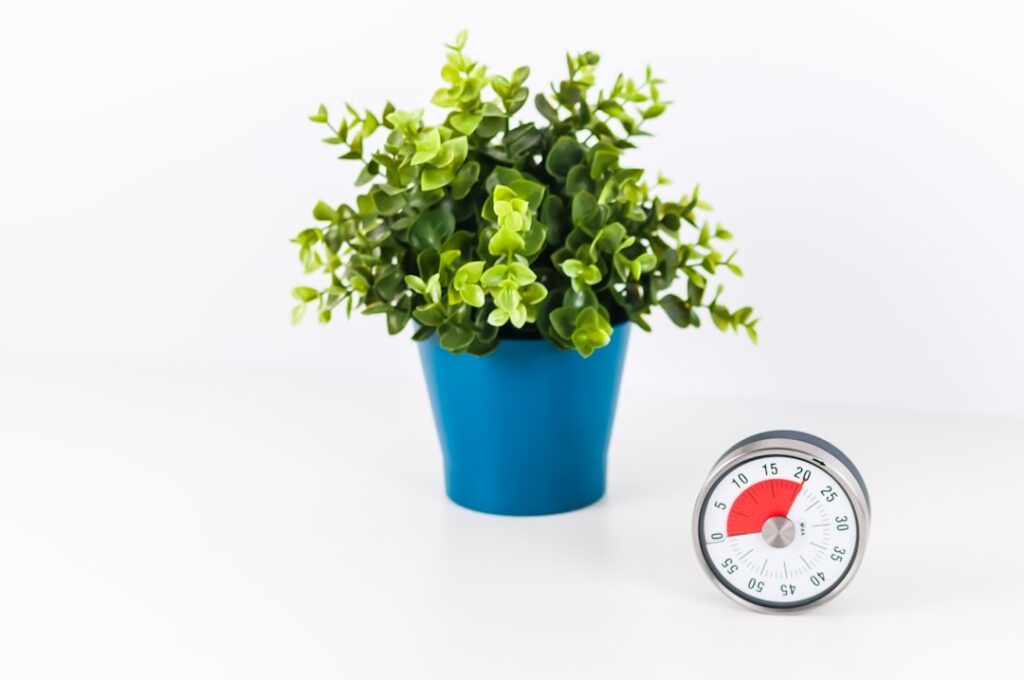
A soil moisture meter answers one question: is the root zone wet, damp, or dry right now? For that job, a $12 analog probe from the garden center does almost everything a $200 hydroponic unit does. The gap between tiers is not accuracy in the way most buyers assume, it is what the meter measures and how badly outside factors distort the number. Understanding that distinction is the difference between trusting a reading and being fooled by one.
Two very different technologies wear the same shape
Nearly every inexpensive plant meter uses a galvanic (conductivity) probe. Two dissimilar metal prongs sitting in damp soil act like a weak battery, and the meter scales the resulting current onto a 1-to-10 dial or a 0-to-100 readout. The catch is that current also rises with dissolved salts, so fertilizer, hard tap water, and soil pH all push the needle toward “wet” even when the soil is drying. That is why the same plant reads differently the day after you feed it. These probes also corrode, because passing current through dissimilar metals in moist soil is exactly how galvanic corrosion works.
Capacitive and FDR/TDR sensors measure something more honest: the soil’s dielectric permittivity, which tracks actual volumetric water content and is far less sensitive to salts. Capacitive probes have no exposed dissimilar metals, so they resist the corrosion that kills cheap meters. Agronomy-grade FDR and TDR instruments from firms like METER Group (formerly Decagon) and Spectrum Technologies live in this tier, running from a few hundred to a few thousand dollars. They are genuine precision instruments and complete overkill for a windowsill fern. If you want the underlying principle across meter types, our explainer on what a moisture meter actually does covers it in more depth.
Which specs actually change the reading
Most spec sheets bury the two features that matter under a pile that does not:
- Sensor type first. If a listing says “no batteries required,” it is almost certainly galvanic. Capacitive units need a battery to drive the sensor. For plants you fertilize regularly, capacitive is worth the small premium purely because salt drift is the number-one reason galvanic readings mislead.
- Probe length matched to root depth. Six inches suits houseplants, 9 to 12 inches reaches deep pots and outdoor planters, and 18-inch probes exist for raised beds and turf. Longer is not better; a probe that overshoots the root zone reads the drainage layer at the pot bottom, which gravity keeps artificially wet.
- Probe material. Stainless or chromed steel survives; plain steel rusts within a season of regular use.
- Combo sensors are convenience, not accuracy. The 3-in-1 (moisture, light, pH) and 4-in-1 (adds temperature) meters spread their cost across more parts, so the moisture sensor inside a $25 combo is usually cheaper than the one in a $25 moisture-only unit. If light and pH genuinely help you, fine; for pure moisture checking, single-purpose wins per dollar.
Bluetooth logging sensors (Govee, Ecowitt, Xiaomi) are useful if you track many plants over time, but the wireless radio adds no accuracy to the galvanic probe underneath it.
What you actually pay in 2026
| Tier | Typical price | Who it’s for |
|---|---|---|
| Basic analog, moisture only | $8–$20 | Casual houseplant care |
| Digital LCD, moisture only | $20–$40 | Finer readout, same principle |
| 3-in-1 / 4-in-1 combo | $20–$70 | Light and pH alongside moisture |
| Capacitive / smart logging | $30–$120 | Salt-resistant, multi-plant tracking |
| Prosumer hydroponic | $80–$250 | Indoor grows, tight tolerances |
| Agronomy FDR/TDR | $300–$3,000+ | Research and turf, not homes |
For virtually every homeowner, a $15 to $40 unit from an established brand (XLUX, Sonkir, Atree on the budget end; Bluelab or Hanna Instruments if you want capacitive) is the correct buy. Spending $200 on an agronomy probe to water a pothos is a mismatch.
How to take a reading you can trust
Technique changes the number more than price does:
- Insert the probe slowly to about two-thirds of the root depth, not the pot bottom. The bottom inch is drainage zone and reads falsely wet.
- Hold steady 30 to 60 seconds and read once the needle settles.
- Sample two or three spots per pot; roots are rarely spread evenly.
- Wait at least 30 minutes after watering. Surface saturation pegs the reading regardless of what the root zone is doing.
- Wipe the probe dry between readings, especially after feeding, and pull it out afterward. Leaving a galvanic probe buried is the fastest way to corrode it.
Read the 1-to-10 scale as three fuzzy zones, dry, damp, wet, not as a precise figure, and never compare readings across different potting mixes. Cactus mix, peat, and orchid bark all conduct differently at the same true moisture. A meter tells you how a single plant is trending in its own soil; that is genuinely useful, and it is all it does.
When the finger test beats the meter
For one plant in a small pot tended by an experienced hand, sticking a finger in to the second knuckle is faster, free, and accurate enough. A meter earns its place when pots are too deep to reach, soil is packed hard, you are standardizing care across many plants, or the species has a narrow tolerance (orchids, succulents, bonsai). It also helps new growers calibrate what “moist” should feel like.
The limit worth taking seriously
A plant meter is calibrated for loose potting soil and nothing else. Pressed against a wood subfloor, drywall, or a drip tray, its reading is meaningless. That matters more than it sounds, because overwatered plants and leaking pots quietly cause real water damage. Along Colorado’s Front Range, forced-air winter heating can drop indoor humidity into the teens and dry potting mix in half the usual time, so people compensate by overwatering, and the excess ends up in the baseboard behind the shelf.
Standing water and chronic dampness are what let mold establish; the EPA notes that indoor mold needs only sustained moisture to grow, which is why it recommends drying wet materials within 24 to 48 hours (EPA, Mold Cleanup in Your Home). When you see baseboard staining, a cupped hardwood plank, or a musty smell near a planter, the plant probe cannot help. The right tool is a building moisture meter calibrated for wood and drywall, often paired with a thermal camera. Home inspectors use exactly this pairing to find hidden dampness (InterNACHI, Moisture Meters; ASHI resources). A pinless moisture meter scans finished surfaces without leaving holes, and the broader home inspection tools hub lays out the rest of the kit.
This guide reflects general EPA moisture guidance and standard home-inspection practice. If a houseplant leak may have reached your flooring or walls and you want a Front Range inspector to verify with building-grade tools, tell us what you observed.
Moisture meters for home inspection
Pin meters read deep but leave marks; pinless meters scan surfaces non-destructively. Many inspectors carry both.
| Product | Why | Buy |
|---|---|---|
 Klein Tools ET140 Pinless Klein Tools ET140 Pinless | Non-destructive scanning; affordable. | Amazon — $49.97 |
 General Tools MMD4E General Tools MMD4E | Best-selling pin meter for drywall/wood. | Amazon — $39.98 |
 Lignomat Mini-Ligno Lignomat Mini-Ligno | Trusted by woodworkers; species-calibrated. | Amazon — $99.00 |