Skip to content
Independent home-inspection guidance. We are not affiliated with the prior occupant of this domain.
Find an inspector

Seek Thermal: Category Guide for Homeowners and Pros

By InspectandTest Editorial Team Published May 19, 2026

We may earn commission from links on this page. Lead-form submissions are forwarded to local inspector partners. How we research and review.

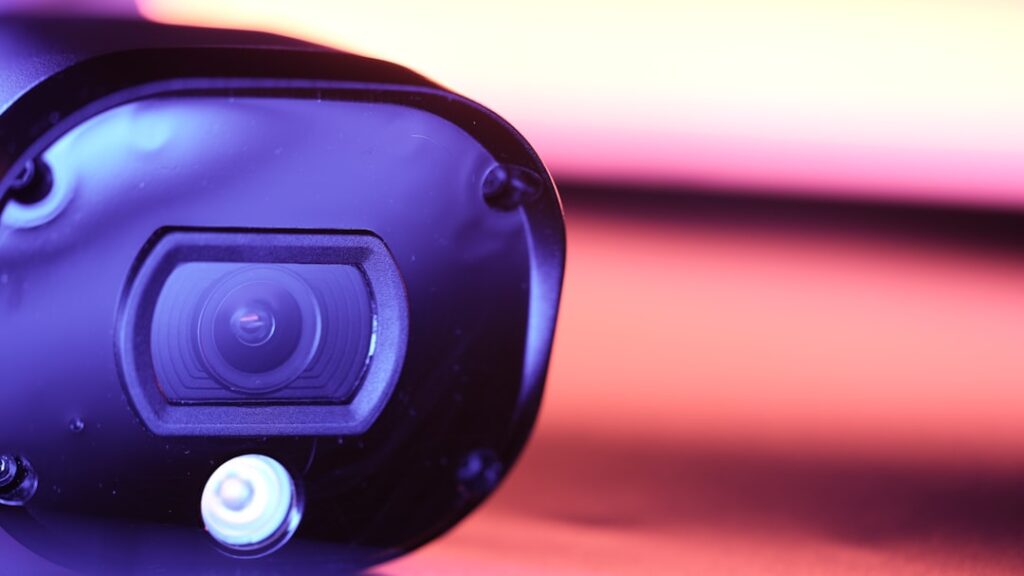
Photo via Unsplash by Alvis Wolff

“Seek thermal” is the search query buyers use when they have seen the brand in hardware stores, rental shelves, or YouTube reviews and want to understand where it fits. This guide treats Seek as one slice of the broader handheld infrared market and compares the category rather than promoting any single product. The other names in the category are FLIR (Teledyne), Fluke, and Hikmicro. The decision drivers across all four are nearly identical: detector resolution, thermal sensitivity, form factor (phone attachment versus standalone), and whether the software workflow fits the buyer’s job. We avoid manufacturer marketing pages and reference the U.S. Department of Energy, ASHRAE, and InterNACHI instead.

Where does Seek fit in the handheld infrared category?

Seek’s product line occupies the price-sensitive end of the handheld category. The CompactPRO smartphone attachment and the ShotPRO standalone are positioned beneath comparable Fluke and FLIR pro-handhelds. The trade-off is detector resolution: Seek’s consumer units typically land between 206×156 and 320×240, while pro-tier Fluke and FLIR models routinely offer 640×480. For homeowners chasing a missing-insulation question, the lower-resolution tier is usually enough. For working inspectors filing paid reports, the resolution ceiling matters more.

The U.S. Department of Energy notes that infrared thermography improves the accuracy of energy audits regardless of which detector class is used, provided the operator understands the limitations. A 206×156 image still reveals insulation gaps; it just produces a grainier picture. For the toolkit context, see our home inspection tools guide.

How does the category break down?

Smartphone attachments

These plug into a phone’s Lightning or USB-C port and use the phone’s processor for display and storage. Seek CompactPRO, FLIR ONE Pro, and Hikmicro Mini2 all live in this tier. Cost ranges from $250 to $700. The form factor is light and pocketable; the workflow depends on a phone that stays charged.

Standalone handhelds

These are battery-powered cameras with built-in displays and dedicated storage. The category includes the Seek ShotPRO at the entry point and steps up through Fluke TiS-series, FLIR Cx-series, and Hikmicro Pocket. Pricing starts around $700 for entry models and climbs above $5,000 for pro-tier 320×240 units.

Pro handhelds

Above the consumer tier, the pro handhelds (Fluke Ti-series, FLIR T-series, Hikmicro M-series) jump to 320×240 or 640×480 resolution, better optics, and inspection-focused software. Seek does not have a strong presence in this tier in 2026. Pricing ranges from $3,000 to $15,000.

What can a homeowner do with a Seek-class unit?

The honest answer is “diagnose, not document.” A 206×156 thermal camera will reveal an obvious heat-loss pattern around a window, a missing insulation batt in an exterior wall, or a hot spot in an electrical panel. Those are useful diagnoses. What the lower-resolution tier struggles with is producing reports that hold up in commercial or legal contexts. InterNACHI’s infrared certification standards note that thermal imaging requires interpretation training as much as resolution.

Front Range homeowners who suspect a draft or insulation gap can usually solve the problem with a $250 to $400 smartphone attachment plus a few hours of YouTube tutorials. Buyers facing a real estate decision should hire an infrared-certified inspector — the documentation is what matters at that point.

What about FLIR, Fluke, and Hikmicro at the same price point?

At the consumer tier — under $700 — Seek competes directly with FLIR ONE Pro and Hikmicro Mini2. Detector specs are close enough that the choice tends to hinge on phone compatibility (Lightning vs USB-C), the look of the smartphone app, and personal brand preference. None of the three is a clearly inferior product. Buyers who already own other thermal accessories may stick with one brand for app continuity.

At the standalone-handheld tier — $700 to $2,500 — the field opens up. Fluke, FLIR, and Hikmicro all offer multiple models with 240×180 to 320×240 detectors. Seek’s ShotPRO is competitive on price but spec’d slightly below the equivalents. For working inspectors, the Fluke/FLIR/Hikmicro options carry more weight in client-facing reports.

How does the price-to-resolution trade-off work?

Resolution scales roughly with the square of the cost. Doubling resolution from 206×156 to 320×240 typically doubles or triples the price; jumping again to 640×480 roughly triples it from there. The reason is the detector manufacturing yield — larger arrays produce more defects, and inspection-grade detectors get rejected at higher rates. Buyers should match resolution to job requirements, not to ambition.

ASHRAE’s commissioning literature treats thermal imaging as one of several diagnostic inputs. The ASHRAE Handbook contextualizes how thermal anomalies should be evaluated alongside other measurements — moisture readings, air pressure differentials, and visual inspection.

Should you buy or rent?

Rental is almost always the right answer for one-off use. Tool rental houses across the Front Range stock thermal cameras at $50 to $125 per day or $200 to $400 per week. For a single insulation survey, rental wins. For recurring use — say a homeowner who plans to do a yearly winter audit and another in summer — the math starts favoring purchase around the third or fourth rental.

For working inspectors and energy auditors, ownership is essentially required. The question is which tier. A 320×240 standalone covers most residential and light commercial work; the 640×480 jump is justified for commercial inspectors and forensic energy work.

When does brand loyalty matter?

Brand matters when the buyer is locking into a software ecosystem. Fluke users build templates in SmartView; FLIR users invest in Thermal Studio; Hikmicro users learn HIKMICRO Analyzer; Seek users use the Seek app. Switching costs are real but not catastrophic — the underlying file formats (radiometric JPEG, FLIR R-JPG) are increasingly cross-compatible. Calibration cycles matter more than software ecosystems for accuracy-sensitive work; most pro-tier cameras require recalibration every two to three years.

How to make a category-level decision

Define the highest-value job first. If it is “find drafts in my own house once,” a Seek-class smartphone attachment is the right tool. If it is “deliver thermal-included home inspection reports for a fee,” step up to a 320×240 standalone from any of the major brands. If it is “audit commercial buildings for an energy services company,” budget for 640×480 and dedicated reporting software. The brand is the last decision, not the first.

What practical use cases fit the Seek consumer tier?

Several practical homeowner workflows fit comfortably inside the Seek-class consumer tier. Pre-winter envelope sweeps — walking the interior perimeter of a house in late autumn looking for cold patches around windows, doors, and electrical penetrations — work well with a 206×156 or 256×192 detector. Insulation gap surveys after a roof or wall renovation, where the goal is to confirm that the new insulation was installed without voids, also fit the tier comfortably.

Electrical panel scans are another good fit. The thermal patterns of overheating breakers and loose connections are large and distinct; a consumer-tier detector resolves them easily. HVAC distribution diagnostics — comparing supply temperatures at different registers, finding kinked flex ducts in the attic — also produce clear thermal patterns at consumer resolution.

The use cases that do NOT fit the consumer tier are forensic-quality documentation, distant target measurement (anything beyond 15 to 20 feet for small features), and any work that will be presented to insurance, legal, or commercial clients. Those use cases need pro-handhelds with 320×240 or higher.

How does workflow differ between phone attachment and standalone?

The smartphone-attachment workflow is convenient until it is not. Setup is fast — plug in the attachment, open the app, start capturing. The phone provides processing power, storage, and screen. The downsides emerge during long inspections: the phone battery drains, the screen is hard to read outdoors, and the attachment can pull on the phone port at awkward angles.

The standalone workflow trades convenience for ergonomics. The pistol-grip body fits the hand naturally, the dedicated screen is sized for inspection work, the battery is hot-swappable, and the device is designed for one purpose. The trade-off is bulk — a standalone is heavier and less pocketable than an attachment-plus-phone combination.

For homeowners running a one-hour sweep of their own house, the attachment is right. For inspectors running 5 to 10 thermal-included inspections per week, the standalone is right. Many inspectors keep an attachment as a backup or quick-look tool alongside their primary standalone camera. The Department of Energy notes that spot ventilation and air-sealing decisions benefit from any tier of thermal imaging when properly interpreted.

What is the role of palettes and color tables?

Thermal cameras render temperature data using false-color palettes. Common options include Iron (white-hot at the high end, fading through yellow, red, purple, and black), Rainbow (familiar spectrum), Grayscale, and Lava. The Iron palette is the default for most inspection work because it produces clear contrast for heat patterns and is widely recognized in inspection reports.

Switching palettes during analysis can reveal patterns the default palette hides. A subtle moisture pattern that is barely visible in Iron might be obvious in Rainbow because the color discontinuities highlight the temperature gradient differently. Most reporting software allows post-capture palette switching on radiometric images, which is one reason inspectors should always capture in radiometric (rather than display-only) mode.

Where do Seek cameras fit in education and training?

Seek-class consumer attachments are common in homeowner education contexts — community college continuing-ed classes on home maintenance, weatherization workshops, energy-audit awareness sessions. The lower price point makes them accessible for classroom kits. For deeper learning context, see the how infrared cameras work primer.

InterNACHI’s IR-certification courses use higher-tier equipment for teaching but acknowledge that students may transition to their own consumer-tier devices for personal use. The certification’s focus is on interpretation skills, which transfer cleanly between hardware tiers; a student trained on a 320×240 camera can still apply the same interpretation framework to a 206×156 device.

What does the future look like for the consumer tier?

Detector technology has trended slowly downward in price-per-pixel since the mid-2010s. Consumer-tier resolutions have shifted from 80×60 (2014) to 206×156 (2020) to 256×192 (2024) at roughly the same retail price points. Expect 320×240 to become the consumer baseline by 2028 as the manufacturing yield improvements continue. NETD will likely improve from current 70 to 100 mK consumer specs toward 50 mK over the same period.

The implication for homeowners considering a purchase: the value calculation is fair today, but waiting one upgrade cycle (typically two to three years) may bring noticeably better hardware at the same price. For one-off needs, rent now; for recurring needs, buy now and plan to upgrade in a few years.

What environmental conditions affect Seek-class image quality?

Three environmental factors dominate. First, the temperature differential between indoor and outdoor — the larger the gap (ideally 20 to 40 degrees Fahrenheit), the clearer the thermal patterns. Front Range homeowners get the best results between November and March (heating season) and during summer heat waves. Second, solar loading — exterior walls in direct sun show thermal patterns unrelated to envelope performance. Schedule exterior scans before sunrise or after sunset. Third, surface moisture — wet surfaces cool through evaporation and can produce false-positive patterns, so a moisture meter is the essential confirmation tool.

Wind affects readings less dramatically but still matters. Strong winds cool exterior surfaces unevenly through convection, breaking up the steady-state thermal patterns the camera relies on. Calm, dry conditions produce the cleanest imagery.

How does emissivity affect Seek-class measurements?

Emissivity describes how efficiently a material emits infrared radiation compared to a perfect blackbody. Most building materials — wood, painted drywall, concrete, fabric — have emissivity values around 0.85 to 0.98. Polished metal surfaces have emissivity as low as 0.05 to 0.10 and reflect ambient infrared rather than emit their own. A camera pointed at a shiny appliance reads the reflection of the ceiling above rather than the appliance temperature. Emissivity tape (a known-emissivity material applied to the surface) gives the camera a corrected reading.

Most homeowners do not need to adjust emissivity settings — the default value of 0.95 in most cameras works for typical building materials. The setting matters mainly when measuring metal surfaces or quoting absolute temperatures rather than relative anomalies.

References

Thermal imaging cameras

Infrared cameras reveal hidden moisture, missing insulation, and air leaks. Phone-attachment models are the budget entry point; standalone units have higher resolution.

ProductWhyBuy
FLIR ONE Pro (phone)Plugs into iPhone/Android; inspector favorite.Amazon — $329.00
Topdon TC001High-res phone module at a low price.Amazon — $199.99
FLIR C5 CompactStandalone pocket camera with Wi-Fi.Amazon — $610.06

Prices and availability are accurate as of July 30, 2026 and are subject to change. Product data via the Amazon Product Advertising API.

We may earn commission from links on this page. Lead-form submissions are forwarded to local inspector partners. How we research and review.