Mold Testing in Windsor, Colorado | InspectandTest
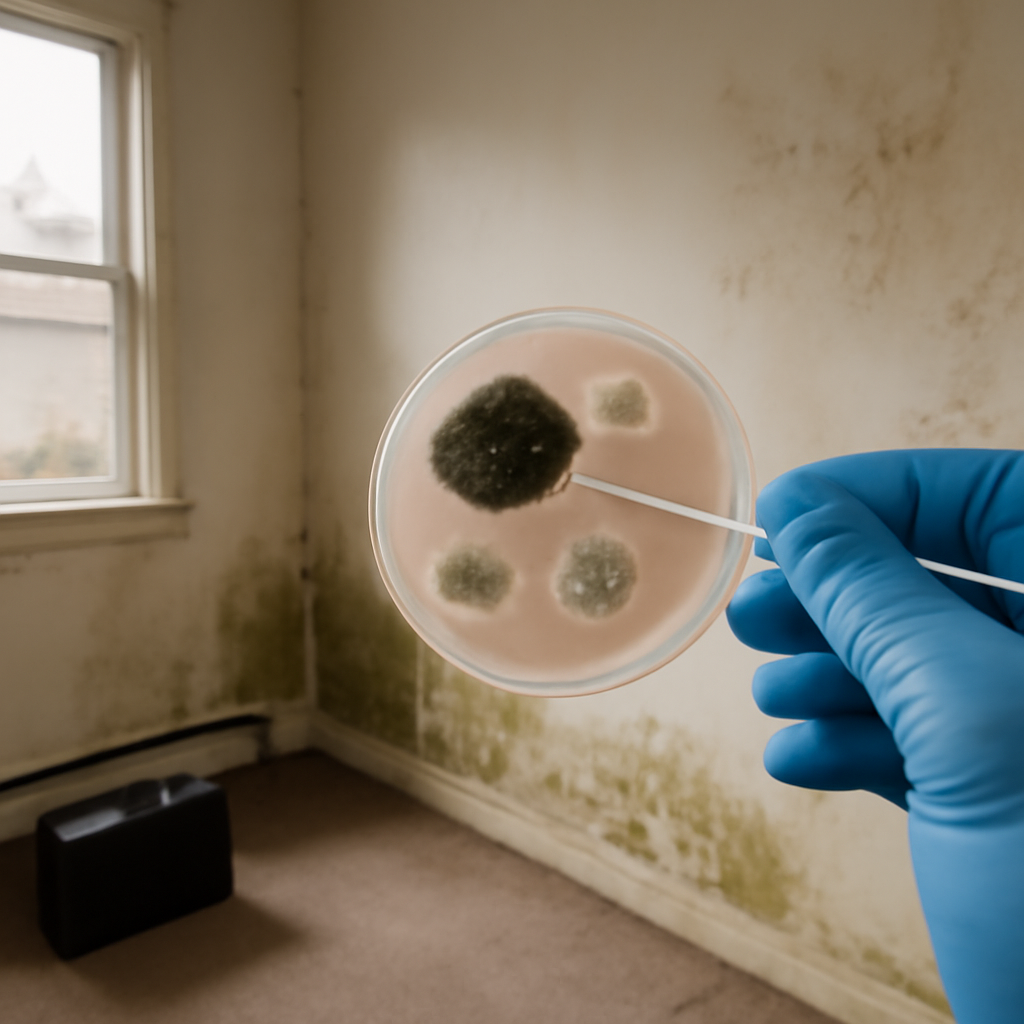
Mold testing puts numbers behind a suspicion. In Windsor, a fast-growing town straddling Weld and Larimer counties between Fort Collins, Loveland, and Greeley, the dry climate convinces many homeowners that mold cannot be an issue. Yet the finished basements of Water Valley and RainDance, the reservoir-side lots near Windsor Lake and the Cache la Poudre River, and the pre-1978 homes of Old Town all trap the moisture mold needs. This page explains how mold testing windsor households should approach sampling, what the lab results mean, and what testing costs. This summary reflects EPA and CDC guidance current as of 2026; consult your physician for health symptoms and a certified professional for testing and remediation decisions.
Is this mold, asbestos, or water damage? Get a free instant screen
Upload a clear photo of the suspect area. You'll get an instant AI screening opinion and what to do next. This is screening guidance, not a professional determination.
Screening guidance only. AI can be wrong. Confirm asbestos, mold type, or lead with lab testing or a licensed professional before acting.
Mold testing in Windsor: what to know
Mold testing collects samples, from the air, a surface, or a suspect material, and sends them to an accredited lab that identifies the mold species and measures concentrations. The results show whether indoor spore levels exceed the outdoor baseline and what types are present, which helps gauge whether a moisture problem has produced abnormal growth. Testing is the quantifying step; the inspection that locates the moisture comes first.
That sequence matters in Windsor. A test tells you what and how much, but only an inspection tells you where the water is coming from. Many local homeowners inspect first, then test the specific areas where growth or a musty odor turns up. For the bigger picture, our homeowner hub on mold inspection and testing explains how the two steps work together, and our mold testing guide for Weld County covers the regional context.
Testing is most useful when it answers a specific question. Confirming whether a musty Water Valley basement has abnormal spore levels, identifying the species behind a stain in an Old Town home, or verifying that a remediation job actually worked, these are jobs sampling does well. Testing a home with no symptoms and no visible moisture, by contrast, often produces numbers that are hard to interpret and easy to misread, since some mold spores are present in every indoor environment.
Health concerns frequently drive the decision to test. Occupants reporting congestion, irritation, or asthma flare-ups that ease away from home may want lab confirmation that a mold problem exists. Only a physician can tie symptoms to a cause, but for households with infants, elderly members, or immune-compromised individuals, CDC guidance notes heightened sensitivity to mold, and documented test results help direct the response.
Why Windsor homes need mold testing
The town’s growth pattern is the driver. Windsor’s 2000s-through-2020s subdivisions, Water Valley, RainDance, Highpointe, and Belmont Ridge, were built largely over finished basements where seepage and condensation collect behind drywall, and many sit near the Cache la Poudre River and reservoirs like Windsor Lake where a higher water table feeds basement moisture. Old Town Windsor’s pre-1978 homes carry original plumbing and aging roofs that can produce slow, hidden growth.
Climate hides the problem. The semi-arid Front Range air is dry, so homeowners assume mold cannot grow, while snowmelt off the mountains and storm runoff across former farmland push moisture into basements and crawl spaces. Evaporative coolers, common in the region, add indoor humidity that can feed growth in tight homes. These conditions create a testing rationale: confirming whether the air in an occupied finished basement carries abnormal spore loads is exactly the question families want answered.
Finished basements concentrate the concern. A below-grade family room or bedroom holds porous materials against cool foundation walls, exactly where seepage lingers and growth hides behind finished surfaces. In reservoir-adjacent neighborhoods, a high water table makes that seepage more likely, so testing confirms whether a child’s bedroom or a home office in the lower level of a Windsor subdivision home carries elevated spore levels rather than leaving the question to guesswork.
What a Windsor mold test covers
A professional test typically combines an air sample taken indoors with an outdoor control sample for comparison, plus surface or tape-lift samples from any visible growth. The lab analyzes them and reports species and concentrations, and the inspector interprets the numbers against the outdoor baseline and the home’s conditions.
Air, surface, and bulk sampling
Air sampling captures airborne spores and is the standard for assessing what occupants breathe. Surface or tape-lift sampling identifies what a visible stain actually is. Bulk sampling tests a piece of material itself. For a Windsor home, the inspector chooses the method that fits the question, often an air sample paired with an outdoor control to show whether indoor levels are elevated. Our explainer on basement mold types helps homeowners understand what the species names in a report mean.
Reading the lab results
Results are most meaningful in comparison. Indoor spore counts well above the outdoor control, or species associated with water damage appearing indoors but not outside, point to an active problem. A reputable lab report lists species and counts; a good inspector translates that into plain language about whether a moisture issue exists and what to do, rather than handing over raw numbers and leaving you to guess.
Mold testing cost in Windsor
Individual lab-analyzed samples typically run about $40 to $100 each, and most testing visits collect several. A professional mold test in the Windsor market, combining a few samples with the visit and interpretation, usually totals $300 to $600. Bundled with a visual mold inspection, the combined inspection-plus-sampling package commonly lands in the $450 to $700 range.
Be wary of testing offered free by firms that also sell remediation, since the incentive to report a problem is built in. Independent testing keeps the result honest before you commit to cleanup spending.
Weigh the cost against what it buys. A few hundred dollars of testing confirms whether a musty Windsor basement actually has abnormal spore levels or whether the smell traces to something else, and it documents the result for a negotiation or claim. Spending on remediation without that confirmation risks paying to clean up a problem that sampling might have shown was minor, while skipping testing where growth is visible leaves a potential health concern unmeasured.
Cost scales with the number of samples and the home’s size. Confirming one suspect basement room takes fewer samples than mapping a whole house after a broad moisture event near the reservoir. A good provider samples only what the question requires rather than running up the count, so describe your concern up front, a specific stain, a musty room, a post-remediation check, to keep the testing proportionate.
When testing is and is not worth it
Testing earns its cost when it answers a concrete question. Verifying a remediation job in a Water Valley basement, confirming abnormal spore levels behind a musty smell, or documenting a result for a real-estate or insurance dispute are all good reasons to sample. In those cases the lab numbers add real information beyond what the eye sees.
Testing is less useful as a fishing expedition. Sampling a home with no symptoms, no odor, and no visible moisture often returns counts that are hard to interpret, because background spores exist everywhere. EPA guidance generally favors fixing visible moisture and mold over routine testing of clean-looking homes. For most Windsor households, the smart sequence is to inspect for moisture first and test only where the inspection finds something worth quantifying.
Post-remediation clearance testing is the exception where sampling is almost always worth the cost. After a remediation contractor cleans up a moisture and mold problem in a Water Valley or RainDance basement, an independent air sample confirms that indoor spore levels have returned to or below the outdoor baseline. Without that clearance test, a homeowner is taking the contractor’s word that the job worked, which is exactly the situation where an independent measurement protects the investment. For any Windsor remediation of meaningful size, budgeting for a clearance test by a tester separate from the remediation firm is the prudent final step.
Colorado regulations and disclosure
Colorado does not license mold testers or set numeric indoor mold limits, so lab accreditation and inspector certification are the quality signals that matter. The state’s Seller’s Property Disclosure asks sellers to report known water damage and mold, which makes a documented test result part of any Windsor transaction. CDPHE publishes indoor air quality and mold guidance that Weld and Larimer county residents can use for safe-handling basics.
Because there is no state-mandated “pass” threshold, interpretation is everything. A test result only means something next to an outdoor control and the home’s moisture conditions, which is why an accredited lab and a competent interpreter matter more than any single number. For renters, a dated independent test report supports a habitability claim far better than a phone photo when a landlord’s failure to fix a leak has produced mold.
Neighborhoods and areas served
Mold testing demand spans Windsor: the pre-1978 homes of Old Town Windsor, finished-basement subdivisions like Water Valley, RainDance, Highpointe, and Belmont Ridge, and reservoir-adjacent lots near Windsor Lake and the Cache la Poudre River. Service typically extends to adjacent Fort Collins, Loveland, Severance, and Greeley, where similar housing and basement-moisture patterns apply.
Different areas call for different sampling logic. In Old Town homes, surface sampling of a visible stain on older materials is common. In the newer subdivisions, an air sample paired with an outdoor control gauges whether a finished basement carries elevated spore levels, especially where a high water table near the reservoirs raises seepage risk. A local tester matches the method to the home’s era and the concern rather than running a generic panel.
How to choose a Windsor mold testing provider
Confirm the analyzing lab is independently accredited and the inspector holds recognized professional certification, since Colorado does not license the field. A trustworthy provider keeps testing separate from remediation, always pairs an indoor air sample with an outdoor control, and explains the results in plain language. If you are buying, coordinating the test with a mold inspection in Windsor gives you both the moisture diagnosis and the lab confirmation in one coordinated effort.
Ask how they sample and how they interpret. A provider who collects an outdoor control, documents sample locations, and walks you through what the species and counts mean is doing the job properly. One who hands over a raw lab sheet with no interpretation, or who skips the outdoor control, leaves you unable to judge whether indoor levels are actually elevated.
Independence is worth prioritizing. A firm that both tests and remediates has a reason to report a problem, so where you can, separate the two roles. Request the full lab report with sample locations, confirm the lab’s accreditation, and ask whether the provider will re-test after any remediation to verify the work. That clearance test is often the most valuable sample of all, since it tells you whether the money you spent on cleanup actually solved the problem.
References
- Mold testing and cleanup guidance — U.S. Environmental Protection Agency
- Mold and your health — Centers for Disease Control and Prevention
- Indoor air quality and mold — Colorado Department of Public Health and Environment
From Old Town homes to reservoir-side subdivisions, Windsor’s properties can hide moisture a dry climate masks. To get lab-confirmed answers across Weld or Larimer county, reach out through our contact page and connect with a vetted local mold testing professional.