Mold Inspections Near Me: How to Find and Hire One
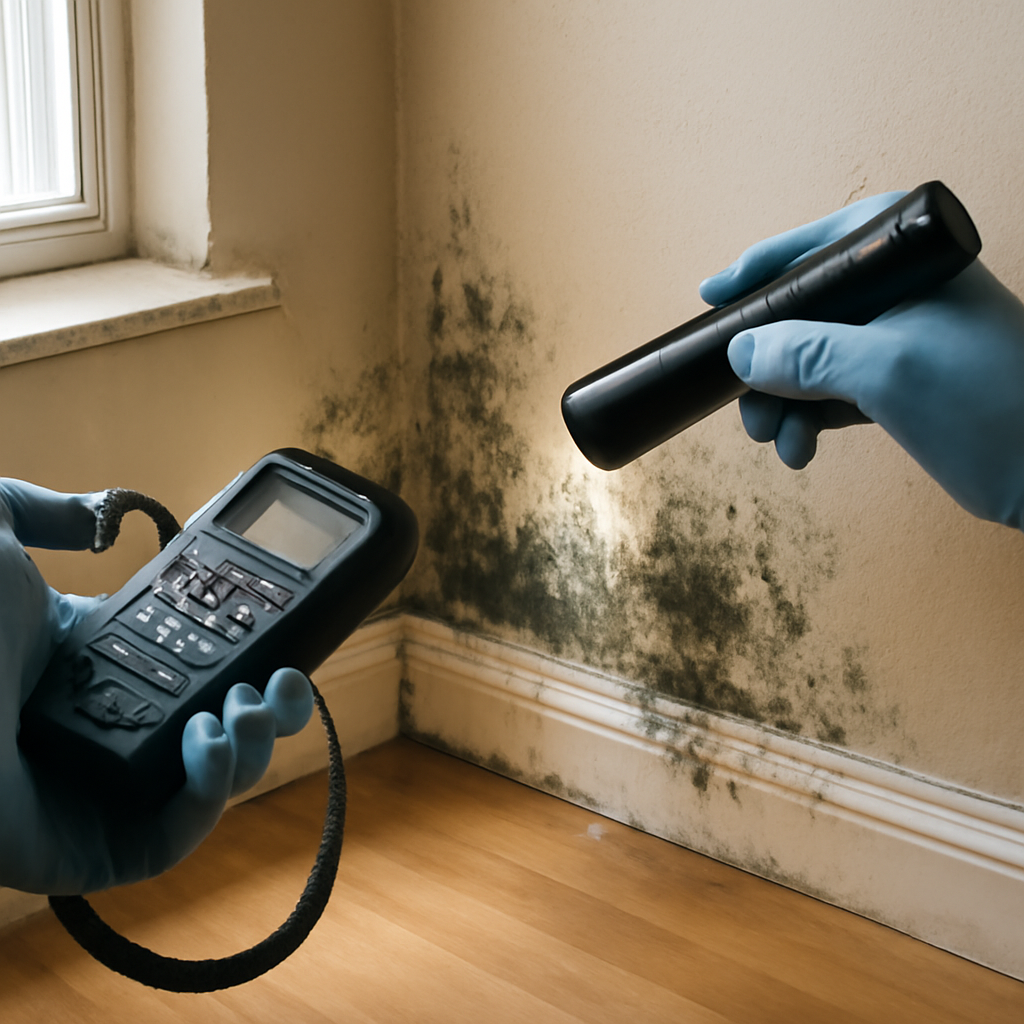
Typing “mold inspections near me” usually follows a worrying moment — a musty smell, a dark patch, a water leak, or a pending home purchase. The search returns a mix of independent inspectors, testing labs, and remediation companies offering “free” inspections, and telling them apart matters more than most homeowners realize. A good mold inspection diagnoses the problem objectively; the wrong choice can mean paying for cleanup you do not need. This guide summarizes EPA and CDC guidance current as of 2026; consult a physician for symptoms and a certified professional for testing and remediation decisions.
Is this mold, asbestos, or water damage? Get a free instant screen
Upload a clear photo of the suspect area. You'll get an instant AI screening opinion and what to do next. This is screening guidance, not a professional determination.
Screening guidance only. AI can be wrong. Confirm asbestos, mold type, or lead with lab testing or a licensed professional before acting.
What does a local mold inspection include?
A mold inspection is a structured investigation that locates visible and hidden growth, traces the moisture feeding it, and documents findings so you can act. A thorough local inspection typically covers a visual examination of moisture-prone areas, moisture-meter readings on walls and floors, thermal imaging to reveal hidden dampness, and — when warranted — air or surface sampling analyzed by an accredited lab. The EPA frames the central goal as finding the moisture problem, since mold cannot grow without it.
The deliverable is a report: where moisture and growth were found, the likely source, photographs and readings, and recommended next steps. That report, not the visit itself, is what you are paying for. A vague “yes, you have mold” is not an inspection; a documented diagnosis with a moisture source and an action plan is.
Inspection, testing, and remediation are different services
The search results blur three distinct services, and hiring the wrong one wastes money.
- Inspection is the visual and instrument-based investigation that locates growth and moisture.
- Testing is the lab analysis of air or surface samples that confirms presence and identifies species.
- Remediation is the physical cleanup — containment, removal, cleaning, and drying.
An inspection may include testing, but not always — and the EPA notes that when mold is already visible, testing is often unnecessary because the response is the same regardless of type. Understanding which service you need before you call saves both time and money. For the testing side specifically, our guide to mold tests and what they reveal explains when sampling adds value.
The conflict-of-interest trap
Many “free mold inspection” offers come from companies that also perform remediation. The arithmetic is straightforward: the firm that diagnoses the problem profits from the cleanup, which creates a structural incentive to find — and bill for — work. This does not make every such company dishonest, but it shifts the burden of judgment onto you.
The cleaner arrangement separates diagnosis from treatment, the way medicine and law do. An independent inspector with no stake in the remediation gives an objective read on whether cleanup is even needed and, if so, at what scope. That objectivity routinely saves more than the inspection fee. When you search “mold inspections near me,” prioritize independence over the word “free.”
What a local mold inspection costs
Pricing varies with home size, scope, and whether lab sampling is included. Industry estimates commonly place a basic visual mold inspection in the low-to-mid hundreds of dollars. Air or surface sampling adds a per-sample fee plus lab charges, so a multi-sample inspection of a larger home costs more. Crawlspace access, multiple stories, and additional sampling points all push the figure up.
Treat an unusually cheap or free inspection with the conflict-of-interest lens above. A fair, independent inspection has a real cost because it involves skilled labor, calibrated instruments, and time to write a usable report. Paying for objectivity up front is generally cheaper than acting on a biased diagnosis.
What the inspection process looks like
Knowing the sequence helps you judge whether an inspector is being thorough. A typical visit moves through several stages:
- Interview and history. The inspector asks about smells, visible growth, leaks, flooding, and any health concerns, then reviews where problems have appeared.
- Visual examination. A systematic look through moisture-prone areas — basements, bathrooms, under sinks, around windows, attics, and HVAC equipment.
- Moisture mapping. Pin and pinless meters read moisture content in walls and floors, flagging hidden dampness the eye cannot see.
- Thermal imaging. An infrared camera reveals temperature differences that often indicate moisture behind finished surfaces.
- Sampling, if warranted. Air or surface samples sent to an accredited lab, with a simultaneous outdoor baseline.
- Reporting. A documented report with findings, photos, the likely moisture source, and recommended next steps.
An inspector who only glances around and pronounces a verdict is skipping the instrument-based work that distinguishes a real inspection from a guess.
How to vet an inspector you found nearby
Proximity in a search result says nothing about quality. Vet candidates on substance:
- Certifications: Recognized industry credentials and any state or local licensing.
- Independence: Prefer an inspector who does not also sell remediation.
- Methodology: Moisture mapping and thermal imaging should be standard, not an upsell.
- Sample report: Ask to see a redacted report — clear documentation with photos and readings is the deliverable.
- Lab accreditation: If sampling is offered, the lab should be independent and accredited.
- Reviews and references: Recent, verifiable feedback from comparable jobs.
An inspector who dodges credential questions, resists showing a sample report, or pressures you toward immediate remediation is telling you how they operate. Our broader overview of choosing a mold testing company expands on these vetting principles.
When you actually need an inspection
An inspection is worth scheduling when:
- A persistent musty smell has no visible source.
- Visible growth extends beyond a small, easily cleaned patch.
- You are buying or selling a home and want documentation.
- The property has experienced water damage or flooding.
- Occupants have respiratory symptoms a physician links to the home.
- You need clearance verification after a remediation.
If you have a small visible patch on a hard surface and intend to clean it, you may not need an inspection at all — the EPA notes the response is the same regardless of type, and careful DIY cleanup plus a moisture fix can suffice.
Questions to ask before booking
A short phone screen separates a thorough inspector from a sales call. Worthwhile questions include: Do you also perform remediation, or are you independent? What instruments do you use beyond a visual walkthrough? Is sampling included, and which accredited lab analyzes it? Will I receive a written report with photos and moisture readings? What are your certifications and how long have you worked in this area? How is pricing structured — flat fee, per sample, or by home size? An inspector who answers these directly and sends a sample report is demonstrating the transparency you want. Vague answers, pressure to schedule immediate remediation, or reluctance to share credentials are all signals to keep looking.
Reading the report you pay for
The report is the deliverable, and a good one is specific and actionable. It should identify exactly where moisture and growth were found, document readings and observations with dated photographs, trace the likely moisture source rather than just noting “mold present,” and lay out recommended next steps — whether DIY cleanup of a small area, professional remediation, or a repair to stop the water. If sampling was performed, the report compares indoor results to the outdoor baseline and explains what the comparison means. A report that simply says “elevated mold detected, remediation recommended” without locating the source or quantifying the problem has not given you enough to act on. Use the report to drive decisions and, if remediation is needed, to compare contractor bids objectively.
Front Range considerations
Colorado’s dry climate is deceptive. Low outdoor humidity masks indoor moisture problems, so growth often hides in basements, around swamp-cooler condensation, and behind finished walls before anyone notices a smell. A local inspector familiar with Front Range construction knows where to look — foundation seepage, ice-dam leaks during snowmelt, and bathrooms with weak exhaust fans are the usual culprits across Denver, Boulder, Douglas, and El Paso counties. Local knowledge of these patterns makes an inspection more efficient and accurate. The mold inspection and testing hub explains how regional moisture behavior shapes the investigation.
What happens after the inspection
The findings drive the response. Small surface growth on hard materials may be DIY-cleanable with proper protection. Larger contamination, growth in ductwork, or saturated materials call for professional remediation with containment and HEPA filtration. In every case, the moisture source identified in the inspection must be repaired, or the growth returns. If remediation is needed, an independent inspection also gives you an objective scope to compare contractor bids against — protecting you from inflated quotes.
Common reasons people search for a local inspection
The trigger for the search usually falls into one of a few patterns, and each shapes what the inspection should focus on. A musty smell with no visible source calls for moisture mapping and air sampling to find hidden growth. A pending home purchase calls for documentation and a baseline the buyer can rely on. Recent water damage or flooding calls for confirming whether mold has established in the affected materials. Visible growth beyond a small patch calls for scoping the extent and source before remediation. And health symptoms a physician links to the home call for objective data on whether the home is a likely exposure source. Telling the inspector which pattern brought you to the search helps them target the visit and avoid charging for work that does not address your actual concern.
Inspection before buying or selling
Real-estate transactions are among the most common reasons for a mold inspection, and the stakes differ from a routine homeowner concern. A buyer wants an objective record of conditions before committing, and a documented elevated result can support a price adjustment or a seller-funded repair. A seller may commission a pre-listing inspection to surface and resolve issues before they derail a deal. In both cases, independence matters even more, because the result carries financial weight. An inspector with no stake in subsequent remediation gives the transaction a credible, neutral data point that both sides can trust.
When to escalate to a professional remediation
Move from inspection to professional remediation when growth exceeds about 10 square feet, when mold is inside HVAC ducts, when it follows flooding or sewage, when materials are saturated, or when occupants have respiratory conditions. The inspection is the diagnosis; remediation is the treatment, and keeping those roles independent gives you the most honest path through both.
Inspection versus a “free” remediation estimate
Many homeowners conflate a paid inspection with the free estimate a remediation company offers, but they serve different purposes. A remediation estimate exists to scope and price a cleanup the company hopes to perform; it assumes a problem and quantifies the fix. An independent inspection exists to determine whether a problem exists at all, how large it is, and what is causing it — with no financial stake in the answer. The free estimate is useful once you have decided to remediate and want competitive bids. The paid inspection is what you want first, when the question is still open. Reversing that order — letting the party that profits from cleanup decide whether cleanup is needed — is how homeowners end up paying for remediation that an objective inspection might have shown to be unnecessary or far smaller than claimed.
Getting your money’s worth
To make the inspection fee worthwhile, prepare for the visit. Note where smells are strongest and when they appear, list any history of leaks or flooding, point out visible staining or warping, and mention occupant health concerns. Clear access to suspect areas — move stored items away from basement and closet walls, ensure the attic and crawlspace are reachable — so the inspector can do thorough work rather than spending billable time clearing obstacles. The more context and access you provide, the more targeted and useful the resulting report, and the less likely the inspector has to recommend a costly follow-up visit to reach areas that were blocked the first time.
How proximity actually factors in
Searching “near me” prioritizes distance, but proximity matters less than it seems and in one way more. It matters less because a competent inspector an extra fifteen minutes away will serve you better than a poorly qualified one next door; credentials and independence outweigh a few miles. It matters more in a specific sense: a genuinely local inspector knows the regional construction and climate patterns that concentrate mold risk. On the Front Range, that means familiarity with expansive-clay basement seepage, swamp-cooler humidity, and ice-dam leaks — knowledge that targets the inspection and shortens the visit. So treat “near me” as a starting filter, then rank candidates on qualifications, methodology, independence, and local knowledge rather than on which pin sits closest on the map. A short drive is a small price for an inspector who reads your home’s moisture patterns correctly and hands you a report you can actually act on.
Reading reviews critically
Online reviews help, but read them for patterns rather than individual extremes. Look for repeated mentions of clear reporting, thorough methodology, and honest recommendations — and for repeated complaints about upselling, vague findings, or pressure toward the reviewer’s own remediation arm. A single glowing or scathing review tells you little; a consistent theme across many tells you a lot. Weigh recent reviews more heavily, since a firm’s quality can change over time, and treat reviews alongside, not instead of, direct vetting on credentials and independence.
References
- Should I Have My Home Tested for Mold? — U.S. Environmental Protection Agency
- A Brief Guide to Mold, Moisture and Your Home — U.S. Environmental Protection Agency
- About Mold and Your Health — Centers for Disease Control and Prevention
- Mold and Dampness — American Lung Association
If you are searching for a trustworthy mold inspection in the Denver metro or wider Front Range, a vetted independent inspector can give you an objective diagnosis — get in touch through our contact page.