Lead Paint Outlawed: What the Law Actually Made Illegal
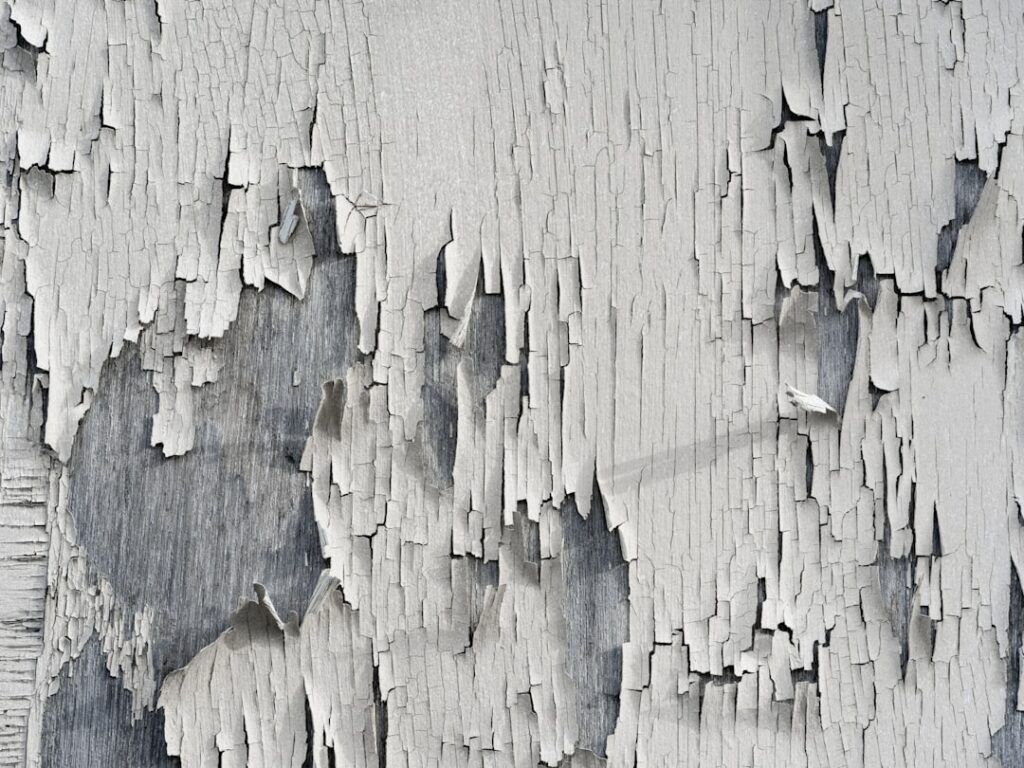
Lead paint outlawed in the United States is a phrase that sounds absolute but covers a more specific legal action than buyers typically realize. The Consumer Product Safety Commission’s final rule under 16 CFR 1303, effective February 27, 1978, made the manufacture, sale, and distribution of lead-containing paint for residential use illegal at the federal level. Industrial coatings, military and aerospace applications, and narrow artist-pigment uses remained legal at much-reduced lead content. This guide summarizes EPA and CDC guidance current as of 2026, walks through what the law actually outlawed and what it did not, and explains what the 1978 cutoff means for the millions of homes built before that date. Consult a certified lead-paint professional for testing decisions and your physician for any exposure concerns.
Is this mold, asbestos, or water damage? Get a free instant screen
Upload a clear photo of the suspect area. You'll get an instant AI screening opinion and what to do next. This is screening guidance, not a professional determination.
Screening guidance only. AI can be wrong. Confirm asbestos, mold type, or lead with lab testing or a licensed professional before acting.
What does lead paint outlawed actually mean under federal law?
The Consumer Product Safety Commission (CPSC) issued the final rule codified at 16 CFR 1303 in late 1977. The rule took effect on February 27, 1978, and made it illegal to manufacture, sell, or distribute residential paint containing more than 0.06 percent lead by dry weight. That threshold was later tightened to 0.009 percent (90 parts per million) in 2008 under the Consumer Product Safety Improvement Act. The 1978 rule is the legal action most often referenced when buyers ask whether lead paint was outlawed.
The phrase “outlawed” is more legally precise than “banned” in the regulatory context. Outlawed means the law made specific uses illegal and created enforcement mechanisms. The rule did not require homeowners to remove existing lead paint from their walls. It only prohibited new production and sale for residential use after the effective date. Pre-existing lead paint in older homes remained legally present and remains so today, with separate regulations governing disturbance and disclosure.
The full context of pre-1978 housing risk is covered in the asbestos and lead hazard guide for pre-1978 homes, which walks through how the 1978 cutoff affects modern transactions.
What specifically became illegal in 1978
The 16 CFR 1303 rule made three specific activities illegal for paint exceeding the 0.06 percent lead threshold:
- Manufacture of lead-containing paint for residential use within the United States
- Sale or distribution of lead-containing paint for residential use, including imports
- Use of lead-containing paint on any consumer product (toys, furniture, household items)
The rule covered both interior and exterior residential applications. Paint used on the inside of homes, on exterior siding and trim, on outbuildings, and on garages and sheds all fell under the residential-use prohibition. The rule also covered paint applied to consumer products that consumers would handle, which captured children’s toys, household furniture, and decorative items.
Why CPSC and not EPA issued the original rule
The CPSC has jurisdiction over consumer products under the Consumer Product Safety Act. Paint sold to consumers for residential use is a consumer product, which placed the regulation under CPSC authority rather than EPA authority. EPA later took on enforcement of related lead-paint hazards in housing through the Renovation, Repair, and Painting (RRP) Rule and the Lead-Based Paint Hazard Reduction Act of 1992 (Title X). The two agencies divide responsibility roughly along the lines of product regulation (CPSC) and housing hazard management (EPA).
What remained legal after 1978
The 16 CFR 1303 rule did not eliminate all lead-containing paint from the US economy. Several categories of use remained legal at varying lead-content levels:
- Industrial coatings — Lead-containing paints for industrial equipment, structural steel, bridges, and infrastructure remained legal under separate OSHA workplace exposure standards.
- Military and aerospace applications — Specialty coatings for military equipment and aerospace components were exempted because of their unique durability and corrosion-resistance requirements.
- Artist’s pigments — Certain lead-based artist pigments (lead white, Naples yellow, lead-tin yellow) remained available in professional artist supplies under different labeling and use restrictions.
- Marine coatings (limited) — Some marine antifouling paints retained lead content under separate maritime regulations for a period after 1978, though most have been phased out.
- Antique restoration (narrow) — Restoration of historic structures sometimes uses lead-based paint under narrow exemptions and with strict containment requirements.
Buyers and homeowners encountering lead-based paint outside the residential context (on industrial buildings, military surplus equipment, antique furniture, or imported items from countries with weaker regulations) should not assume the federal residential ban applies. Different rules govern those categories.
Pre-1978 housing and what the law means today
Roughly 35 million US homes were built before 1978 and may contain lead-based paint somewhere in the structure. The 1978 rule outlawed new lead-paint production but did not require removal from existing homes. That choice was deliberate: removal at scale would have been logistically impossible and would have created more dust exposure than careful management.
Federal law instead created two layers of protection for pre-1978 housing. Title X of the Housing and Community Development Act of 1992 created the Lead Disclosure Rule (24 CFR Part 35), which requires sellers and landlords of pre-1978 housing to disclose known lead-paint hazards and provide a federal pamphlet to buyers and renters. The EPA Renovation, Repair, and Painting (RRP) Rule, in effect since 2010, requires that any renovation work disturbing more than 6 square feet of interior or 20 square feet of exterior painted surface in a pre-1978 home be performed by an EPA-certified renovator using lead-safe work practices.
Looking at the EPA RRP abatement protocols covers the practical steps that apply when lead paint is disturbed in a pre-1978 home.
How buyers verify whether a home has lead paint
The federal disclosure rule requires sellers to disclose known lead-paint hazards but does not require sellers to test for them. Most pre-1978 sellers truthfully disclose “unknown” because they have never tested. Buyers who want certainty have two options: a lead-paint inspection (which identifies the presence of lead-based paint on specific surfaces) or a lead-paint risk assessment (which identifies actual hazards from deteriorating paint, dust, or soil).
Lead-paint inspections are performed by EPA-certified lead-paint inspectors using XRF (X-ray fluorescence) analyzers that read lead content through intact paint layers. The inspection typically costs $300 to $600 for a single-family home and produces a written report identifying every painted surface tested and its lead content. A risk assessment costs more (typically $400 to $800) and includes dust wipe sampling and soil sampling to identify actual exposure pathways.
When to order an inspection versus a risk assessment
An inspection answers the question “is lead-based paint present in this home?” A risk assessment answers the question “is the lead-based paint in this home currently a hazard?” Buyers planning renovation work that will disturb paint typically want an inspection so they can identify which surfaces require EPA RRP-certified work practices. Buyers concerned about young children or pregnant occupants typically want a risk assessment because the question is current exposure rather than presence.
Common exposure pathways in pre-1978 homes
Lead-based paint in good condition (intact, not chipping or peeling) generally does not create an active exposure hazard. Hazards develop when paint deteriorates, when paint is disturbed during renovation, or when paint chips and dust accumulate in soil or on surfaces. The most common exposure pathways in pre-1978 homes include:
- Friction surfaces where painted components rub against each other (window sashes, door frames, drawer slides)
- Impact surfaces where paint chips off due to repeated contact (door edges, stair treads)
- Deteriorating exterior siding and trim that sheds chips into surrounding soil
- Renovation work that disturbs paint without lead-safe work practices
- Hand-to-mouth contact in young children playing on contaminated surfaces or soil
The CDC identifies blood lead level testing in children as the most reliable measure of actual exposure. Pediatricians routinely test children at ages 12 months and 24 months in higher-risk areas, and parents in pre-1978 homes can request testing at any time. The pathway-by-pathway lead paint danger guide walks through specific exposure mechanisms in more depth.
Enforcement, penalties, and current status
Enforcement of 16 CFR 1303 falls to the Consumer Product Safety Commission, which can issue civil penalties, product recalls, and import refusals against violators. Penalty amounts have escalated over time, with current civil penalties reaching seven figures for willful violations. The CPSC actively monitors imports for compliance because lead-containing paint and lead-painted consumer products continue to surface from countries with weaker regulations. Toy recalls involving imported items with unsafe lead-paint content have been a recurring CPSC enforcement focus since the late 2000s.
Buyers acquiring imported antiques, decorative items, or building materials should be aware that the 1978 US rule does not govern items manufactured outside the United States before they reach US soil. The CPSC controls importation of consumer products into the US, but a lead-painted item brought back from a foreign trip or purchased online from a non-US seller may not have been screened. EPA and CDC both publish guidance on consumer-level testing of suspect items using inexpensive consumer lead-test kits, with the caveat that a positive result requires laboratory confirmation before any disturbance work.
The voluntary phase-out before the federal mandate
Some major US paint manufacturers had already begun voluntarily reducing lead content in residential paint in the early 1970s, several years before the CPSC final rule took effect. Sherwin-Williams, Benjamin Moore, and several other large manufacturers had been working with CPSC technical staff during the rulemaking process and adjusted production lines ahead of the February 1978 deadline. That voluntary phase-out is one reason some residential paint sold between 1971 and 1978 contains lower lead levels than paint sold in the 1960s, but it does not change the legal status of any paint from that era. Pre-1978 paint is presumed to potentially contain lead until tested otherwise, regardless of when in the pre-1978 period it was manufactured.
How the 1978 rule fits with later lead-paint regulations
The 1978 CPSC rule was the first major federal action on residential lead paint, but it was not the last. The legal framework expanded substantially over the following four decades:
- 1978 — 16 CFR 1303 outlaws residential lead paint manufacture and sale (CPSC)
- 1986 — Lead Contamination Control Act addresses lead in drinking water and school plumbing
- 1992 — Title X requires disclosure of known lead-paint hazards in pre-1978 housing sales and rentals
- 1996 — Lead Disclosure Rule (24 CFR Part 35) implements the Title X disclosure requirement
- 2008 — Consumer Product Safety Improvement Act lowers the lead-paint threshold from 0.06 percent to 0.009 percent
- 2010 — EPA Renovation, Repair, and Painting (RRP) Rule requires lead-safe work practices for renovation
Each layer addressed a different aspect of the lead-paint problem. The 1978 rule prevented new lead-paint exposure. The 1992 and 1996 rules ensured buyers and renters were informed about pre-1978 housing. The 2010 RRP rule reduced exposure during renovation work in existing pre-1978 homes.
References
- EPA lead exposure sources and prevention guidance — US Environmental Protection Agency
- CDC guidance on lead paint sources and risk — Centers for Disease Control and Prevention
- HUD Lead Disclosure Rule for pre-1978 housing — US Department of Housing and Urban Development
Front Range homeowners concerned about lead paint in a pre-1978 home can connect with a vetted local lead-paint inspector through our contact page for inspection scoping and EPA RRP-certified contractor referrals.
Lead paint test kits
Instant swab kits flag lead on painted surfaces in minutes — useful before a renovation in any pre-1978 home.
| Product | Why | Buy |
|---|---|---|
 3M LeadCheck Swabs 3M LeadCheck Swabs | EPA-recognized instant swabs. | Amazon — $208.00 |
 Lead Test Kit (lab-based) Lead Test Kit (lab-based) | Mail-in for a documented result. | Amazon — $35.00 |