Home Inspection Wichita KS: A Local Buyer’s Guide
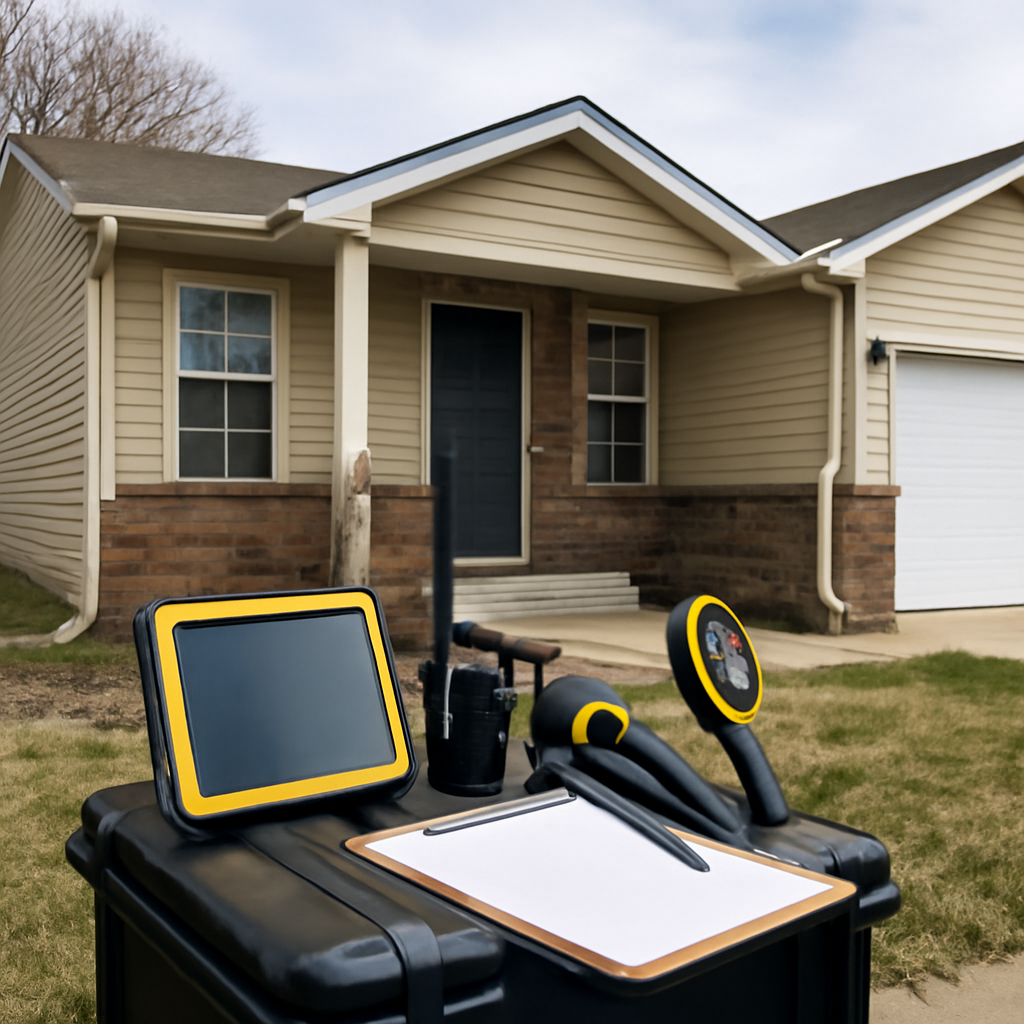
Home inspection Wichita KS searches typically come from buyers under contract on a property in Sedgwick County or one of the surrounding metros. Wichita has its own market quirks that buyers from out of state should understand before they read an inspection quote. Kansas is a credential-only state with no state-issued home-inspector license, which keeps the local inspector pool larger than in licensed states and pricing slightly below the national average. Tornado risk shapes which roof and structural concerns get the most attention. Older neighborhoods carry basement flood risk that newer subdivisions do not. This guide covers the Wichita-specific context first and then walks through the standard inspection process that applies to any residential transaction.
What buyers should know about home inspection in Wichita KS
Wichita metro home inspections in 2026 typically cost $400 to $550 for a standard 2,000-to-2,500-square-foot single-family home. That pricing sits slightly below the Front Range and well below New York or San Francisco metros. The lower pricing reflects Wichita’s cost of living and the fact that Kansas does not require a state home-inspector license, which keeps the supply of qualified inspectors relatively high.
Most reputable Wichita inspectors hold credentials through one of the national trade associations rather than a state license. InterNACHI Certified Professional Inspector status and ASHI membership are the two most common credentials. Buyers should verify membership directly on the trade-association website before booking. The broader hiring-process guide for home inspectors covers credential verification in detail and applies fully to Kansas transactions.
Kansas credential framework and what it means for buyers
Kansas is one of roughly a dozen states that do not require a state-issued license for residential home inspectors. The framework relies on trade-association credentialing rather than state regulation. That arrangement has two implications for buyers in the Wichita metro.
The first implication is that the credential burden falls on the buyer. In licensed states like Texas or New York, the state board pre-screens every working inspector and publishes a verified roster. In Kansas, the buyer needs to confirm credentials by checking the InterNACHI or ASHI roster directly. A handful of Wichita inspectors advertise credentials they no longer hold or that lapsed years ago. A two-minute verification on the trade association’s website rules that risk out before booking.
The second implication is that the local inspector pool is wider than the pool in licensed states. That wider supply tends to keep pricing competitive. It also means there is more variation in report quality across local inspectors than buyers might expect. A buyer choosing among three Wichita inspectors at $425, $475, and $525 is often comparing meaningfully different levels of experience, credential depth, and report thoroughness.
Verifying a Wichita inspector’s credentials
InterNACHI maintains a public roster at nachi.org where buyers can search for an inspector by name or by zip code. ASHI publishes a similar searchable directory. Both directories show the inspector’s certification status, continuing-education compliance, and years of membership. A Wichita inspector with 5 or more years of continuous trade-association membership and current continuing-education compliance is meaningfully more established than an inspector who just joined.
Wichita metro pricing and what drives it
Wichita pricing for a standard inspection lands in the $400 to $550 band for a typical 2,500-square-foot single-family home. Several factors push individual quotes higher or lower within that band. Larger homes (3,500+ square feet) typically add $50 to $100. Homes with full basements add 30 to 45 minutes of inspection time and $25 to $75 in fees. Detached garages or workshops add $25 to $50 if inspected. Older homes (pre-1960) often command higher fees because the systems are more complex and report writing takes longer.
Ancillary services in Wichita commonly include radon testing (Kansas sits in EPA radon zone 2 for most counties, with elevated risk in some areas), sewer-scope inspection for homes in older neighborhoods with clay laterals, and termite or wood-destroying organism inspection (Kansas has a moderate termite presence). Radon testing typically adds $150 to $200, sewer scope $200 to $300, and termite inspection $75 to $150.
Tornado-prone roof inspection emphasis
Wichita sits in the heart of Tornado Alley, and that geographic reality shapes the inspection scope. Roofs in the Wichita metro are routinely damaged by high winds, hail, and severe storms. Experienced local inspectors give the roof more attention than a typical national-average inspection because the roof is the single most common source of large-ticket repair in Kansas residential transactions.
Specific roof concerns that local inspectors examine carefully include shingle uplift patterns (high-wind events can lift shingles without removing them, leaving the underlayment exposed), hail damage to shingles and metal flashing, the condition of any tornado-shelter or storm-cellar access from the home, and the integrity of any roof-mounted equipment (vents, chimneys, satellite dishes) that could become projectiles in a high-wind event. The roof inspection in Wichita is typically more thorough than the same inspection in a milder-weather metro.
Hail damage history and insurance implications
Wichita and the surrounding metro experience hail events several times per year. Many residential roofs have been replaced or repaired multiple times within a 20-year span because of hail damage claims. Buyers should ask the seller for the roof’s full replacement and repair history and verify that any insurance claims were properly closed out. An inspection that documents fresh hail damage shortly after closing can complicate the new owner’s insurance claim if the damage was already present on the inspection report.
Basement and foundation concerns in older Wichita neighborhoods
Older Wichita neighborhoods (College Hill, Riverside, Delano, the historic core) sit on soils and lot grading that carry higher basement flood and foundation movement risk than newer subdivisions. Many homes in these neighborhoods are 70 to 100 years old and have basements built before modern waterproofing was standard practice. Local inspectors pay particular attention to basement walls (typically stone or unreinforced concrete in the oldest homes), drainage patterns around the foundation, and any historical water-staining indicators on basement walls or floors.
Newer Wichita subdivisions (post-1980) generally have full poured-concrete basements with modern waterproofing and perimeter drain systems. Those basements still benefit from a careful inspection, but the failure patterns are different. Sump pump operation, perimeter drain function, and any water-staining at the slab-to-wall joint get the inspector’s attention in newer homes.
Flood-risk research before closing
Buyers in older Wichita neighborhoods should pull the FEMA flood map for the property before closing. Some Riverside-area homes sit within or just outside the Arkansas River 100-year flood plain. Properties inside the flood plain require flood insurance, which is a meaningful annual carrying cost. A home inspection does not include flood-plain research, so buyers need to handle that step separately through their lender or insurance agent.
The standard inspection process applies in Wichita too
Beyond the metro-specific context, a Wichita home inspection follows the same Standards of Practice as any other US residential inspection. ASHI and InterNACHI publish detailed scope documents that cover the major categories: roof, exterior, foundation and structure, electrical, plumbing, HVAC, insulation and ventilation, interior rooms, attic and crawlspace, and garage. The full scope-categories breakdown for residential inspections applies fully to Kansas transactions.
The on-site inspection takes 2 to 3 hours for a typical home. The inspector follows a phased sequence: arrival walkthrough, exterior loop, interior room-by-room pass, attic and basement investigation, and final summary conversation with the buyer. The written report is delivered within 24 to 48 hours and runs 40 to 80 pages with photos. Most reputable Wichita inspectors deliver the report via a secure online portal that the buyer can share with their real-estate agent.
Wichita Realtors and the inspector referral network
The local real-estate community in Wichita maintains preferred-vendor lists for inspectors, similar to most metros. Buyers using a Wichita-based agent typically receive two or three referrals from the agent’s list. Those referrals are usually competent but worth verifying through the trade-association roster directly. Agent referrals optimize for predictability and on-time delivery, not necessarily for the most thorough report.
Buyers concerned that an agent’s referral might lean toward a “deal-friendly” inspector can ask the agent for two referrals and independently look up a third inspector through InterNACHI’s zip-code search. Comparing three quotes and three credential records produces a more confident hire decision than accepting a single referral. The Wichita Area Association of REALTORS website lists member agents but does not certify inspectors directly.
Common findings in Wichita home inspections
Across thousands of Wichita inspections, several findings appear with notable frequency. Older homes in the historic core often show settled foundations, original galvanized supply plumbing nearing the end of useful life, and electrical panels that predate modern grounding standards. Mid-century ranch homes commonly have original cast-iron drain lines that develop bellies and partial blockages over time, which sewer-scope inspections reveal. Newer subdivisions occasionally show installation defects from rapid build cycles, including improperly secured plumbing vents and missing kickout flashings at roof-to-wall intersections.
None of those findings is unique to Wichita, but the frequency pattern is local. An experienced Wichita inspector can usually predict which findings a given decade and neighborhood will produce before the inspection even begins. That experience-driven anticipation is one of the strongest arguments for hiring an inspector with deep Wichita-specific transaction history rather than a generalist who just relocated to the metro.
Surrounding Sedgwick County and metro-area context
Wichita is the anchor of a metropolitan area that includes Derby, Andover, Bel Aire, Park City, Goddard, Maize, Haysville, Valley Center, and a number of smaller communities in Sedgwick, Butler, and Sumner counties. Inspection pricing across the metro is fairly uniform, though inspectors who serve the outer communities sometimes charge a small travel premium of $25 to $50 to account for the additional drive time. Buyers purchasing in Andover or Derby should expect roughly the same inspection scope, the same trade-association credentials, and the same written report format as a buyer in central Wichita.
Newer subdivisions in Andover, Maize, and northwest Wichita have grown rapidly in the past 15 years, which means many homes are recent enough to still be inside the original builder’s structural warranty period. Buyers under contract on a newer home should request a copy of the original builder warranty documents and check whether any active warranty claims have been filed. The inspection report is still essential because builder warranties typically exclude defects that are visible to a reasonable inspector, and an inspection report creates the documentation a buyer needs if a warranty dispute arises later.
Seasonal considerations for Wichita home inspections
Wichita weather creates two seasonal patterns inspectors and buyers should plan around. Severe-storm season (April through July) often produces fresh roof and exterior damage that may not have been repaired between the storm date and the inspection date. Buyers under contract during storm season should ask whether any storm events occurred between the listing date and the inspection date, and whether the seller filed any insurance claims. Winter inspections (December through February) can limit some testing: outdoor air-conditioning systems should not be operated below about 60 degrees Fahrenheit, which means a January inspection of an AC condenser is visual only, with the operational test deferred until weather permits.
Both seasonal patterns argue for working with an experienced local inspector who can flag what was deferred, what was tested under non-ideal conditions, and what the buyer should re-check or re-test after closing. A buyer who closes in February on a home with an AC unit that was never tested under load has a legitimate basis to ask the seller for a written warranty on the AC system, or to budget for a separate HVAC technician visit in the spring.
References
- ASHI inspector search and credential roster — American Society of Home Inspectors
- InterNACHI Certified Professional Inspector roster — InterNACHI
- HUD home-buying inspection guidance — US Department of Housing and Urban Development
- ICC residential inspection professional development — International Code Council