Handheld Radon Detector: Portable Pro-Grade Spot Checks
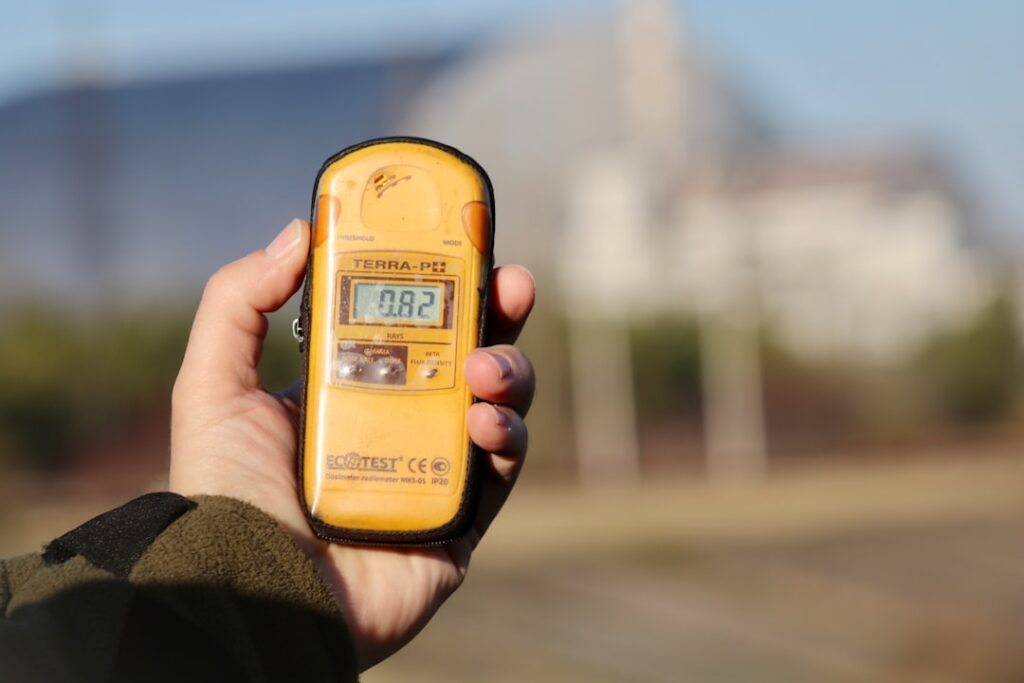
A handheld radon detector occupies a distinct niche between fixed-mount continuous monitors (which sit in one place for days or weeks) and disposable passive samplers (which ship to a lab for analysis). The category is built around portability and spot-checking: a certified inspector arrives at a property, places the handheld unit in the basement living area, takes a 24-or-48-hour reading, and then optionally walks the unit between rooms for comparison readings. This guide summarizes EPA, CDC, and state radon program guidance current as of 2026 — consult an NRPP-certified Measurement Specialist for transaction-related measurement decisions. For the parent topic see the Front Range radon testing guide.
What is a handheld radon detector?
A handheld radon detector is a portable active continuous radon monitor designed for short-duration spot measurements rather than long-term fixed-position deployment. The device shares core technology with fixed-mount continuous radon monitors (CRMs): an alpha-detection sensor, internal data logger, and on-device display showing rolling-average concentration in pCi/L or Bq/m³. The form factor adds portability features: smaller battery-powered package, carrying case, integrated handle or strap, and software for rapid data download to a laptop or smartphone.
Most handheld units in commercial use are NRPP-certified pro-grade devices owned by radon professionals, home inspectors holding radon-measurement endorsements, and state radon program field staff. The category is less common in consumer hands than fixed-mount AirThings or RadonEye devices because the portability premium drives prices above $1,000 in most cases.
How does a handheld radon detector differ from a fixed-mount monitor?
Three functional differences separate the categories.
Form factor and portability
Handheld units run on internal rechargeable batteries with 24-to-72-hour operating life. They are compact (often shoebox-sized or smaller) and survive transport between job sites. Fixed-mount monitors typically require AC power and are not designed for repeated transport.
Measurement period
Handheld units optimize for short-term measurements (24 to 96 hours) with rapid data refresh (1-hour or 4-hour rolling averages). Fixed-mount continuous monitors optimize for long-term deployment (weeks to months) with longer averaging windows (24-hour or daily averages).
Tamper detection
NRPP-certified handheld units include motion sensors, light sensors, or both to detect if the device is moved or covered during a real-estate measurement. The tamper-detection log is part of the report deliverable. Consumer-grade fixed-mount monitors generally do not include tamper detection because they are not used for transaction measurement.
The EPA radon information hub publishes the underlying measurement-protocol framework.
Common handheld radon detectors used by professionals
Several pro-grade devices dominate the certified-measurement market.
Sun Nuclear 1027 / 1028
Long-standing standard for NRPP-certified short-term measurement. Built-in tamper detection (motion sensor), 1-hour and 24-hour rolling-average display, internal data logging up to 90 days. Typical purchase price $1,400 to $1,800 plus annual calibration $150 to $250.
Radalink Aircat
Compact handheld with Bluetooth data transfer and integrated tamper detection. Used by many regional radon professionals for residential real-estate testing. Typical purchase price $1,200 to $1,500.
Femto-Tech CRM-510
Pro-grade portable monitor with detailed environmental logging (temperature, humidity, barometric pressure) alongside radon concentration. Heavier than the Sun Nuclear or Radalink units but produces more diagnostic data. Typical purchase price $2,000 to $3,000.
SARAD RTM 1688-2
European pro-grade portable with thoron discrimination (separates radon-222 from radon-220, useful in specialized measurement scenarios). Higher cost ($3,500+) and used primarily in research and complex commercial measurements.
Consumer-tier handheld options exist but are limited in the U.S. market because the price floor for pro-grade tamper-detection capability sits above the typical consumer budget.
When does a handheld detector make sense?
Three scenarios drive professional use.
Real-estate short-term measurement
The dominant use case. An NRPP-certified Measurement Specialist deploys the handheld unit in the lowest occupied floor of the property during a 48-to-96-hour measurement window under closed-house conditions. The tamper-detection log confirms the device was not moved or covered during the test. The report deliverable supports the buyer’s contingency negotiation.
Post-mitigation verification
After a radon mitigation contractor installs a sub-slab depressurization system, a follow-up measurement verifies the system reduced concentrations below the action level. Handheld units complete this measurement in 48 hours, allowing the homeowner to confirm system performance shortly after installation rather than waiting weeks for passive sampler results.
Diagnostic multi-room comparison
When initial measurement shows elevated levels, a handheld unit can be redeployed across multiple rooms or floors to identify the spatial pattern. A basement-only elevated reading suggests slab penetrations; uniform elevation across all floors suggests bulk soil-gas entry through multiple pathways. The diagnostic information guides mitigation system design.
Why most homeowners don’t own handheld detectors
The price-to-use ratio works against consumer ownership. A handheld unit costs $1,200 to $3,000 and requires annual factory calibration. A typical homeowner needs measurement once before purchase and again after any mitigation work, with optional ongoing visibility via a $200 consumer continuous monitor. The total lifetime measurement cost for the homeowner runs $400 to $600 ($150 to $200 for pre-purchase NRPP testing, plus a $200 consumer continuous monitor for ongoing visibility), compared to $1,500-plus for handheld ownership.
The math reverses for radon professionals performing 50 to 200 measurements per year. The handheld unit pays for itself across the first 10 to 15 client engagements and produces the certification-quality report consumer-grade devices cannot generate.
Calibration and quality assurance
NRPP and NRSB certification standards require annual calibration of all measurement devices at certified calibration laboratories. The calibration process exposes the device to known radon concentrations across the measurement range and adjusts the device’s calibration factor to maintain accuracy. The annual calibration certificate is part of the device’s documentation and accompanies any report deliverable.
QA/QC duplicate measurements are also part of the certification standard. A typical real-estate measurement deploys two devices (a “primary” and “duplicate” unit) in the same room separated by 12 to 36 inches. The two readings should agree within ±25 percent; larger divergence triggers investigation. The InterNACHI radon testing resource details the certified measurement framework.
What does a professional measurement cost?
Front Range professional radon measurement using a handheld NRPP-certified unit typically runs $150 to $250 for a residential property. The fee includes the device deployment, the 48-to-96-hour measurement period, retrieval, data download, and the written report deliverable. Some inspectors bundle radon testing into a full home-inspection package, with the radon line running $125 to $175 when included with a $475-to-$550 full inspection. See the related professional radon test kit guide for context on pro-grade pricing.
Front Range placement considerations for handheld detectors
EPA’s “Protocols for Radon Measurement in Homes” specifies the placement requirements. The handheld unit sits on the lowest occupied floor of the property, at least 20 inches above the floor, at least 3 feet from exterior walls and windows, and at least 3 feet from HVAC supply registers. Closed-house conditions must be maintained for at least 12 hours before exposure starts and throughout the 48-to-96-hour measurement.
Front Range homes commonly have walk-out basements with one or more exterior walls. The 3-foot setback from exterior walls is enforced; the unit should sit closer to the interior of the basement rather than near the rim joist. Sealed-attached garages are not appropriate measurement locations even if used as workshop space. The CDPHE radon program publishes Colorado-specific resources and certified-professional directories.
Handheld detector vs continuous alarm: which for the homeowner?
The consumer continuous alarm (AirThings Wave Plus, RadonEye RD200) is the appropriate choice for ongoing visibility at the $150-to-$350 price point. The handheld detector is the appropriate choice for the radon professional performing measurements for clients. Most homeowners benefit from a one-time certified handheld measurement before mitigation decisions, plus ongoing consumer-grade monitoring afterward. See the related radon alarm guide for the consumer-grade side.
What the handheld report deliverable looks like
A certified handheld measurement engagement produces a report deliverable with defined components.
Device identification and calibration
The report lists the device serial number, model, and most recent factory calibration date. The calibration certificate may be attached or available on request.
Exposure period and conditions
Start date and time, end date and time, ambient conditions during the measurement (temperature, humidity, barometric pressure if logged), and confirmation that closed-house conditions were maintained throughout.
Hourly readings
The report includes the hourly concentration log throughout the exposure period. A chart visualizes the data and highlights any anomalies (sudden spikes that might indicate window-opening events, atmospheric pressure changes, or HVAC cycling).
Average concentration and conclusion
The summary section lists the measurement average concentration in pCi/L and the certified Measurement Specialist’s interpretation: below action level, at action level (within measurement uncertainty), or above action level with recommendation for further measurement or mitigation.
Tamper-detection log
The pro-grade device’s motion sensor records any movement during the exposure. The log is part of the deliverable and confirms the device sat undisturbed.
How handheld measurement supports mitigation system design
When initial measurement confirms elevated levels, the radon professional often redeploys the handheld unit for diagnostic purposes before sub-slab depressurization system design.
Spatial pattern across the home
A handheld unit moved between basement, first floor, and second floor over a single 7-day measurement window characterizes the vertical concentration gradient. Strong basement-only elevation suggests slab-penetration source. Uniform elevation across floors suggests bulk soil-gas entry through multiple pathways requiring a more aggressive mitigation design.
Pre-mitigation baseline
The baseline reading establishes the starting concentration for post-mitigation comparison. The contractor designing the mitigation system uses the baseline plus diagnostic measurements (suction-point testing under the slab) to size the fan and termination location.
Post-mitigation verification
After system installation, the handheld unit confirms the reduction. A successful mitigation typically reduces concentrations to 1.0 to 2.0 pCi/L from pre-mitigation readings of 8 to 20 pCi/L or higher. The post-mitigation report supports lender documentation and any warranty obligations of the mitigation contractor.
Front Range professional pricing for handheld measurement
Standalone certified handheld radon measurement on the Front Range typically runs 150 to 250 dollars. The fee covers device deployment, the 48-to-96-hour measurement period, retrieval, data download, and report deliverable. Bundle pricing with a full home inspection runs 125 to 175 dollars for the radon line when included with a 475-to-550 dollar inspection. Post-mitigation verification runs 125 to 175 dollars as a standalone follow-up engagement. Diagnostic multi-day measurement for mitigation design typically runs 250 to 400 dollars depending on the scope. The pricing assumes Front Range metro service area; rural and mountain communities may carry travel surcharge.
Buyer expectations when scheduling handheld measurement
Three operational expectations matter for buyers ordering a certified measurement.
Scheduling window
In a typical Front Range market, an NRPP-certified Measurement Specialist can deploy within 2 to 5 business days. In hot markets the scheduling window may extend to 7 to 10 days. Buyers should book the radon test concurrent with the general home inspection to avoid extending the contingency-clause timeline.
Occupant cooperation
The measurement requires closed-house conditions for the full 48-to-96-hour window. Sellers occupying the property must cooperate by keeping windows closed and avoiding unusual ventilation. The selling agent should communicate the conditions in advance.
Report timing
The deliverable arrives within 24 to 48 hours of device retrieval. A 96-hour measurement starting Monday produces a report on Friday or Saturday morning. Buyers should plan the measurement window with closing-date math in mind.
Quality assurance the homeowner should expect
Certified measurement engagements include quality-assurance practices the homeowner should look for in the report.
Duplicate device deployment
Many specialists deploy two devices simultaneously for QA/QC. The two readings should agree within plus or minus 25 percent at concentrations above 4.0 pCi/L. Larger divergence triggers investigation or repeat measurement.
Blind quality control
Some programs include occasional blind duplicates where one device is sent to the lab as if a separate property to verify the lab’s internal QA. The practice is more common in commercial measurement than residential.
Calibration documentation
The device used for the measurement must have a current annual calibration certificate. The certificate accompanies the report or is available on request.
References
- EPA radon information hub — U.S. Environmental Protection Agency
- CDC radon topic page — Centers for Disease Control and Prevention
- Colorado Department of Public Health and Environment radon program — CDPHE
- InterNACHI radon testing resource — International Association of Certified Home Inspectors
Front Range homeowners wanting professional handheld radon measurement before purchase can reach out through our contact page for a referral to an NRPP-certified Measurement Specialist.
Continuous radon detectors
A digital monitor gives you an always-on reading and a long-term average — better than a one-shot kit if you want to track levels over time.
| Product | Why | Buy |
|---|---|---|
 Airthings Corentium Home Airthings Corentium Home | Battery, portable; trusted long-term average. | Amazon — $147.50 |
 Ecosense RadonEye RD200 Ecosense RadonEye RD200 | Fast first reading (~1 hr); app logging. | Amazon — $169.00 |
 Airthings View Plus Airthings View Plus | Radon + CO2 + PM + VOC in one unit. | Amazon — $329.99 |