Eating Lead Paint Chips: Immediate Steps and 2026 Guidance
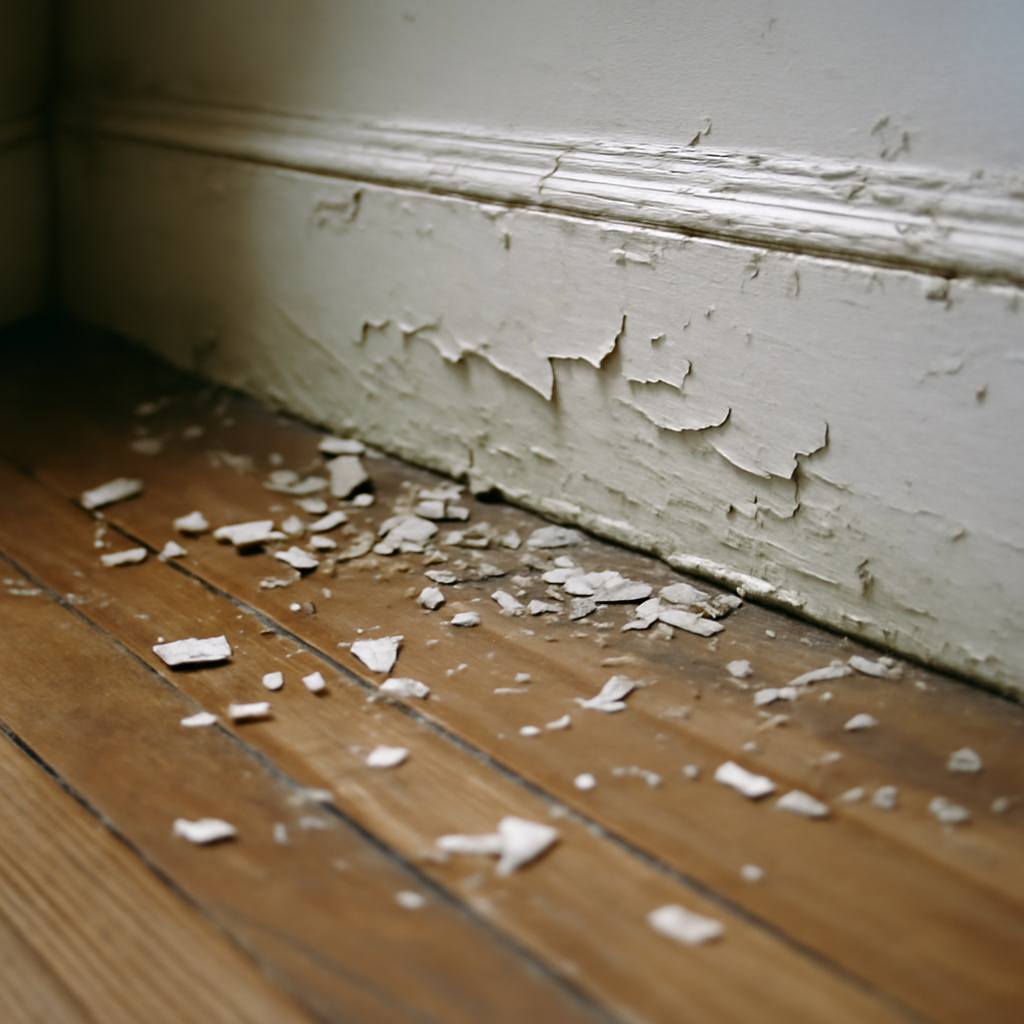
If a child has eaten paint chips that may contain lead, call Poison Control immediately at 1-800-222-1222 and your pediatrician. These contacts are available 24 hours a day. Acute ingestion of lead-containing paint chips by a young child is a medical situation that calls for prompt clinical assessment, not a wait-and-see approach. This guide summarizes CDC childhood lead poisoning prevention guidance and EPA Renovation, Repair and Painting (RRP) rule expectations current as of 2026 to help families respond — but it is not a substitute for medical advice. After the immediate calls, environmental remediation matters too: the source must be identified and addressed so re-exposure does not happen. Lead abatement in pre-1978 housing is licensed-professional work.
Is this mold, asbestos, or water damage? Get a free instant screen
Upload a clear photo of the suspect area. You'll get an instant AI screening opinion and what to do next. This is screening guidance, not a professional determination.
Screening guidance only. AI can be wrong. Confirm asbestos, mold type, or lead with lab testing or a licensed professional before acting.
What to do in the first hour
The order matters. A rough sequence for the first hour after a suspected ingestion:
- Call Poison Control at 1-800-222-1222 — describe the child’s age, weight, the suspected source, and the approximate quantity
- Call the pediatrician or take the child to the nearest emergency department if Poison Control directs you to
- Remove the child from the area where the paint chips were found
- Photograph the source area and the chips if any remain — useful for medical and environmental follow-up
- Save a sample paint chip in a sealed plastic bag for potential laboratory analysis
- Do not attempt to induce vomiting unless specifically directed by Poison Control
- Do not feed activated charcoal — it does not bind heavy metals effectively
Lead is absorbed through the gastrointestinal tract over hours to days rather than minutes, which is why the immediate response is clinical assessment and source removal rather than home interventions. Pair this with our asbestos and lead in pre-1978 housing pillar for the broader hazard context.
How clinicians evaluate suspected lead ingestion
The pediatrician or emergency department will typically:
- Take a history of the exposure — quantity, frequency, source, child’s age and weight
- Order a venous blood lead level test — capillary “finger stick” results may need confirmation
- Order an abdominal x-ray if recent ingestion of a visible quantity is suspected — lead is radio-opaque
- Assess for symptoms — irritability, abdominal pain, vomiting, fatigue, developmental concerns
- Determine whether the level warrants chelation therapy or watchful environmental remediation
The CDC blood lead reference value for children as of 2026 is 3.5 micrograms per deciliter. Levels above background warrant environmental investigation and clinical follow-up. Levels above 45 micrograms per deciliter generally warrant chelation therapy in addition to environmental action. Levels above 70 micrograms per deciliter are a medical emergency.
Why blood lead level testing matters even at “low” levels
CDC and AAP guidance recognize that there is no safe blood lead level for children. The current reference value is a public-health benchmark, not a threshold below which lead is harmless. Children with blood lead levels even slightly above background warrant ongoing pediatric monitoring and environmental source identification.
Why young children eat paint chips
Eating paint chips is a recognized behavior pattern called pica — the tendency of young children to put non-food items in their mouth. It is normal exploratory behavior, not a sign of family neglect. Several factors raise the risk:
- Age — peak risk is roughly six months to three years
- Iron or calcium deficiency — increases pica behavior
- Sweet taste of lead carbonate paint chips — historically formulated to be sweet
- Easy access to peeling paint at child height — window sills, door jambs, baseboards
- Living in pre-1978 housing without recent lead-safe maintenance
This is not parental failure. Family members who witnessed the ingestion should focus on prompt medical and environmental response rather than self-blame.
Environmental remediation after a suspected ingestion
Once the child has been clinically evaluated, the family needs to address the source. Otherwise re-exposure is likely. A reasonable sequence:
- Identify the source area — window, door, wall, exterior surface
- Test the paint with a lead-safe certified inspector or risk assessor
- Contain the immediate area to prevent further dust spread — close off the room if possible
- Use lead-safe work practices for any cleanup — wet methods, HEPA vacuum, frequent hand washing
- Engage an EPA Lead-Safe Certified Firm for renovation or abatement work above the RRP threshold
- Plan for cleanup verification by a third party after the work is completed
- Retest the child’s blood lead level after environmental remediation per pediatrician recommendation
Our lead paint inspector hiring guide walks through commissioning a post-incident environmental assessment, and our lead test guide compares the testing options available.
Lead-safe interim steps families can take immediately
While arranging professional remediation, families can take several lead-safe interim steps:
- Keep peeling paint areas covered with masking tape or contact paper
- Wet-clean floors, window sills, and other horizontal surfaces with disposable wipes
- HEPA-vacuum carpets and upholstery if a HEPA vacuum is available
- Wash hands and faces frequently, especially before meals
- Damp-mop hard floors rather than sweeping
- Provide a diet adequate in iron, calcium, and vitamin C — these reduce lead absorption
- Keep the child away from the source area until remediation is verified
These steps are interim measures, not replacements for professional remediation. They reduce ongoing exposure during the days or weeks before the work is scheduled and completed.
What renters and landlords need to know
In rental housing, the chain of responsibility often involves the landlord. Federal Title X requires lead-based paint disclosure for pre-1978 rentals. State and local statutes add tenant protections in many jurisdictions. Renters whose child has had a suspected lead exposure should:
- Notify the landlord in writing with date and source description
- Request the property’s lead disclosure form and any available inspection reports
- Contact the local health department’s lead program — most departments accept reports from any source
- Retain medical records and any environmental test results
- Consider tenant legal services in the jurisdiction for housing-code enforcement
Many jurisdictions have specific rental property lead inspection ordinances that trigger after a reportable case. The local health department typically initiates that process.
Long-term medical follow-up
A single elevated blood lead level is not a one-time event. CDC guidance recommends repeated testing on a schedule depending on the initial result. Typical follow-up patterns include:
- Blood lead 3.5 to 9 micrograms per deciliter — retest in three to six months, environmental investigation, family education
- Blood lead 10 to 19 — retest in one to three months, environmental investigation, family education, nutritional counseling
- Blood lead 20 to 44 — refer to lead specialist, retest monthly
- Blood lead 45 to 69 — chelation therapy considered, urgent environmental remediation
- Blood lead above 70 — medical emergency, inpatient chelation
The specific protocols come from the CDC and the American Academy of Pediatrics and are followed by the treating pediatrician. Parents do not need to memorize them but should ensure follow-up appointments are kept.
Diet and nutrition during follow-up
CDC pediatric guidance recognizes that nutritional status affects lead absorption and retention in children. Dietary recommendations during follow-up include:
- Calcium-rich foods — milk, yogurt, cheese, fortified plant milks; reduces lead absorption from the GI tract
- Iron-rich foods — lean meat, beans, fortified cereals; iron deficiency increases lead absorption
- Vitamin C foods — citrus, peppers, broccoli; supports iron absorption
- Frequent small meals rather than long fasting periods — empty stomach increases lead absorption
- Avoiding lead-contaminated water for drinking and food preparation
The pediatrician may refer the family to a registered dietitian for guidance, particularly when the child shows iron-deficiency anemia in addition to elevated blood lead.
What the environmental investigation looks like
After a confirmed elevated blood lead level in a child, many states require an environmental investigation of the home. The investigation typically includes:
- Visual assessment of all painted surfaces with attention to deteriorating areas
- XRF or paint chip sampling of surfaces accessible to the child
- Dust wipe sampling on floors, window sills, and window wells
- Soil sampling near the home’s exterior drip line
- Water sampling if older plumbing or lead service line is suspected
- Review of consumer products, hobbies, or imported items in the home
- Written investigation report with recommended remediation actions
The investigation is typically performed by a certified lead risk assessor. In many jurisdictions, the local or state health department conducts the investigation at no cost to the family when a child has a confirmed elevated blood lead level. The report informs both the remediation plan and any landlord obligations in a rental setting.
What chelation therapy actually involves
Chelation therapy is used in children with very elevated blood lead levels (typically above 45 micrograms per deciliter) and is administered under pediatric specialist supervision. Chelation uses medications that bind lead and increase its elimination through the kidneys. The therapy:
- Requires inpatient or closely monitored outpatient management
- Reduces blood lead level but does not undo developmental effects
- Must be paired with environmental remediation — chelating a child who returns to the lead source produces a rebound
- Has side effects including effects on essential mineral balance
- Is reserved for clinically indicated cases rather than precautionary use
Most children with mildly elevated blood lead levels do not receive chelation. Environmental remediation, nutritional support, and pediatric follow-up are the standard interventions for lower levels.
Preventing recurrence
Several measures reduce the risk of future ingestion in pre-1978 housing:
- Test painted surfaces accessible to small children at chewable height — window sills, door jambs, low baseboards
- Repair peeling paint using lead-safe work practices or a certified renovator
- Cover or replace deteriorated surfaces near the child’s play area
- Maintain regular wet-cleaning of floors and horizontal surfaces
- Use HEPA-filtered vacuum cleaning for carpets and upholstery
- Wash toys that may have contacted painted surfaces
- Address peeling exterior paint where children play in the yard
- Test soil near older home exteriors — exterior lead-painted siding sheds lead to surrounding soil
References
- CDC childhood lead poisoning prevention — Centers for Disease Control and Prevention
- EPA Protect Your Family from Sources of Lead — U.S. Environmental Protection Agency
- HUD lead-based paint regulations and disclosure — U.S. Department of Housing and Urban Development
- FTC consumer guide on lead poisoning prevention — Federal Trade Commission
Front Range families dealing with a lead exposure incident who want a connection to a certified lead risk assessor can reach out through our contact page. Call Poison Control first if the exposure is recent.
Lead paint test kits
Instant swab kits flag lead on painted surfaces in minutes — useful before a renovation in any pre-1978 home.
| Product | Why | Buy |
|---|---|---|
 3M LeadCheck Swabs 3M LeadCheck Swabs | EPA-recognized instant swabs. | Amazon — $205.00 |
 Lead Test Kit (lab-based) Lead Test Kit (lab-based) | Mail-in for a documented result. | Amazon — $19.99 |