Delmhorst Moisture Meter: A Homeowner’s Guide
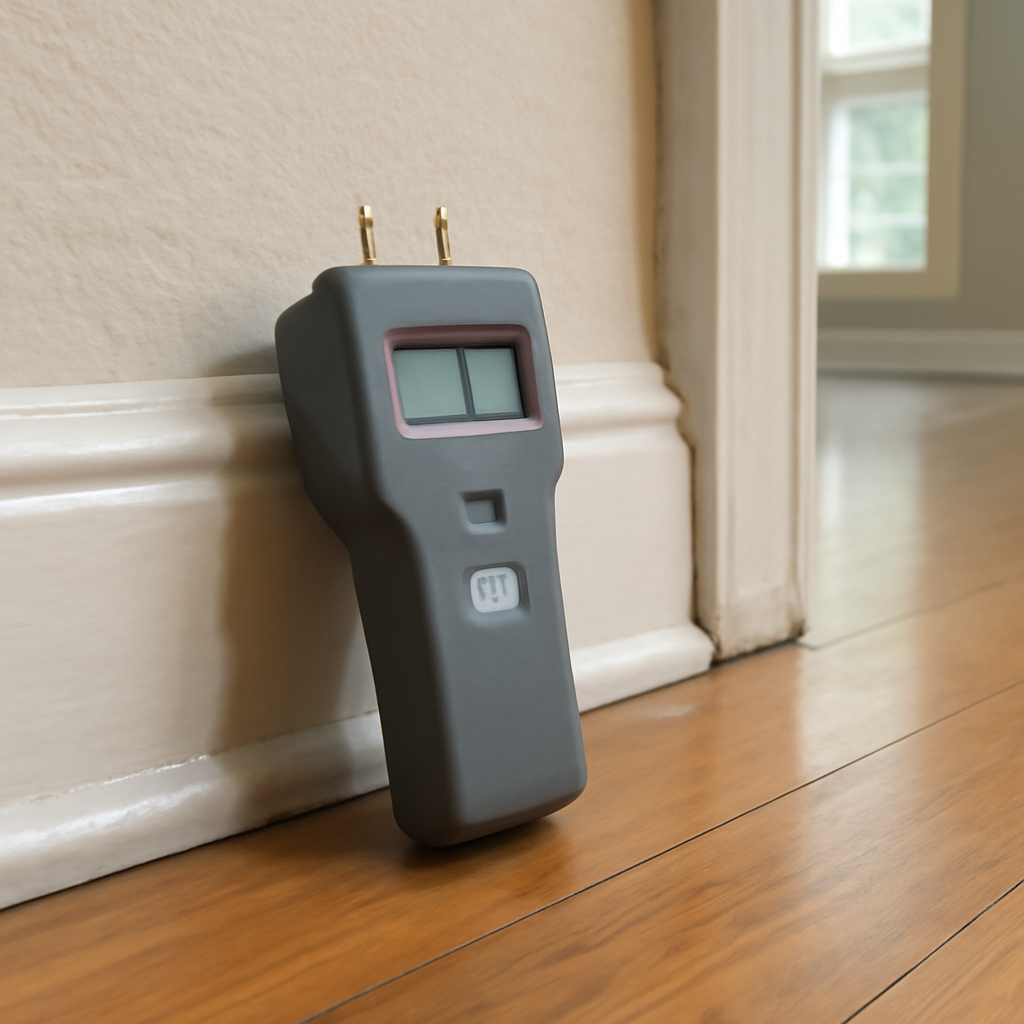
The Delmhorst name is closely tied to pin-type moisture meters, the kind that press two probes into a material and read its moisture by electrical resistance. These instruments are workhorses in restoration, woodworking, and home inspection because they give a direct, localized reading of how wet a material is at a specific point. This guide describes the technology generically, without endorsing any product, so homeowners understand what a pin-type moisture meter measures, how to read it, and where it fits in diagnosing dampness.
What a Delmhorst Moisture Meter Measures
A pin-type moisture meter measures the moisture content of a material by sending a small electrical current between two metal pins driven into the surface. Water conducts electricity, so the wetter the material, the lower its resistance and the higher the reading the meter reports. The result is a moisture content percentage or a relative scale value at the precise location of the pins.
The key word is localized. Unlike a non-invasive scanner that surveys an area, a pin meter reports on the exact spot where the probes sit, and only as deep as the pins reach. That precision is its strength: it confirms whether one particular point is genuinely wet. The tradeoff is the two small holes it leaves, which is why inspectors use it as a confirming tool after a broader scan rather than for surveying whole walls. Our pinless moisture meter guide covers the complementary non-invasive approach.
How Resistance Measurement Works
The physics is straightforward but worth understanding, because it explains both the accuracy and the quirks of pin meters.
The Resistance Principle
Dry material resists electrical current strongly; adding water lowers that resistance dramatically. The meter measures the resistance between its pins and converts it to a moisture value using a built-in calibration. Because the relationship between resistance and moisture is well established for wood, resistance meters are considered reliable for wood moisture content across a useful range.
Species and Material Correction
Different woods conduct slightly differently, so quality meters include species correction settings so the reading reflects the actual material. Temperature also affects resistance, and some meters offer correction for that too. Drywall, plaster, and masonry have their own scales, and a reading meaningful for one material can mislead on another, which is why matching the meter setting to the material matters.
Electrode Depth
Standard pins read moisture at the surface and just below it. Insulated or hammer-probe electrodes can reach deeper into a material, letting an inspector find moisture concentrated at a particular depth, useful for distinguishing surface condensation from deeper saturation.
Reading the Results in Context
A number from a pin meter only means something in context. For wood, moisture content below roughly the mid-teens percent is generally considered dry and stable, while readings climbing toward the high teens and twenties signal dampness that can support decay and mold over time. These are general reference points, not strict thresholds, and they vary with wood species and conditions.
As with any moisture meter, the comparative method is the most dependable. An inspector reads a known-dry reference area and compares suspect spots against it, so even if the absolute calibration is imperfect, a clear difference between wet and dry zones stands out. A single elevated reading should prompt further investigation, not an immediate conclusion. The pattern of readings across an area tells a richer story than any one point.
Where Pin Meters Fit in an Inspection
Pin meters shine as confirmation tools. The common workflow starts with a thermal camera sweeping a room and flagging a cool anomaly that might be moisture. A non-invasive meter then maps the rough extent of the damp area. Finally, the pin meter confirms the wettest points with a direct measurement, settling whether the surface is truly wet or merely cool.
This layered approach matters because each tool has a blind spot. A thermal camera cannot measure moisture. A non-invasive scanner can be fooled by dense materials or embedded metal. A pin meter cuts through that ambiguity at a specific point with a direct resistance reading. The home inspection tools hub shows how these instruments combine into a kit where no single device has to do everything. For wood and framing especially, the pin meter is often the deciding measurement.
Pin Meters Versus Pinless Meters
The pin-type resistance meter is one of two main moisture-meter families, and understanding the contrast clarifies when each shines. Pinless meters use a flat sensor pad that senses moisture below the surface without penetrating, scanning an area quickly and leaving no marks. They excel at surveying large surfaces and at checking finished walls where holes would be unwelcome.
Pin meters, by contrast, give a precise reading at one point and can target a specific depth with longer electrodes. Their localized accuracy is exactly what pinless meters lack, since a pinless scan reports an average over an area and can be thrown off by dense material or embedded metal. The two are complementary rather than competing: a pinless meter maps where moisture is, and a pin meter confirms how wet a particular spot truly is.
Many professionals carry both, or a dual-mode instrument that combines them. For a homeowner choosing one, the decision rests on the task. Surveying a wall for the rough extent of dampness favors pinless; confirming whether a board or a stud is actually wet favors pins. Our pinless moisture meter guide covers the non-invasive option in depth, and the trade-offs explain why serious moisture work rarely relies on a single meter type.
Reading Moisture in Different Materials
A pin meter’s number means different things depending on what it is measuring, which is why material context is essential. Wood is where resistance meters are most accurate, because the relationship between resistance and wood moisture content is well established and meters are calibrated for it. Readings translate fairly directly into a moisture-content percentage with species correction applied.
Drywall, plaster, and masonry behave differently. These materials do not follow the same resistance curve as wood, so meters either use separate scales for them or report a relative reference value rather than a true percentage. A number that signals saturation in drywall would mean something else entirely in framing lumber, which is why selecting the correct material mode matters so much. Treating every reading as if it were a wood-moisture percentage leads to misinterpretation.
Concrete and masonry are especially tricky because their density and mineral content affect conductivity in ways a simple meter struggles with, and specialized methods are often needed for reliable concrete moisture assessment. For everyday home use, the practical guidance is to match the meter setting to the material, lean on comparative readings against a dry reference, and treat absolute numbers with appropriate caution. This material-awareness is what separates a meaningful measurement from a misleading one, and it applies across every moisture meter type a homeowner might use.
Common Home Applications
Pin meters answer practical questions homeowners run into. Is the framing under a leaking window actually wet, or did it dry after the leak was fixed? Has a flood-damaged subfloor dried enough to lay new flooring? Is the wood near a chronically humid bathroom holding moisture that could lead to rot?
Restoration professionals rely on pin readings to verify that drying is complete before closing up a wall, because trapped moisture invites mold and decay. Woodworkers use them to confirm lumber has acclimated before building. In a home inspection, a pin meter confirms whether a stained or suspicious area represents an active problem or a resolved one, since old dried damage and current leaks can look identical to the eye. Our broader moisture meter overview covers more of these scenarios across different meter types.
Electrode Types and Accessories
Part of what makes pin-type meters versatile is the range of electrodes that attach to them, each suited to a different task. The standard short pins built into a meter read surface and near-surface moisture, fine for a quick check of a board or a wall surface. For deeper readings, insulated pins coated except at the tips let an inspector measure moisture at a specific depth, ignoring the wetter or drier material in between, which is valuable for finding where moisture concentrates within a thick member.
Hammer-probe electrodes drive longer pins into framing and deep into wood, useful for assessing structural members and for restoration work where the moisture deep in a joist matters more than the surface. Slide-hammer attachments make driving these into dense or thick material practical. Extension cables let the meter read in spots the body cannot reach, such as inside a wall through a small opening.
These accessories turn a basic meter into a flexible diagnostic tool. For a homeowner, the standard pins handle most everyday questions, but understanding that deeper and specialized electrodes exist explains how professionals reach moisture that a surface reading would miss. Matching the electrode to the depth and material of interest is part of getting an accurate picture, and it is one reason professional moisture assessment can be more thorough than a quick consumer-meter check.
Avoiding Common Reading Errors
Several recurring errors undermine pin-meter readings, and knowing them improves reliability. The most frequent is using the wrong material setting, reading drywall on a wood scale, for instance, which produces a number that looks alarming or reassuring but means little. Always match the meter’s mode to what you are measuring.
Contact with metal is another trap. Nails, screws, wire mesh, and foil-backed materials conduct readily and can drive a reading sky-high regardless of actual moisture, so a wildly high number near a fastener is a clue to reposition the pins. Salts and certain wood treatments alter conductivity too, sometimes inflating readings on otherwise dry material. Temperature extremes shift the resistance relationship, so a very cold or hot surface reads differently than the same material at room temperature.
Skipping the dry-reference comparison is perhaps the most consequential error. A single reading, however carefully taken, means far more when set against a baseline from a known-dry area of the same material. Without that comparison, a homeowner has no way to judge whether a number is normal or elevated. Building these habits, correct settings, awareness of interference, and comparative reading, is what separates a trustworthy measurement from a misleading one, the same discipline our pinless moisture meter guide stresses for non-invasive scanning.
Limits and When to Call a Professional
A pin meter is precise at one point but narrow in scope. It cannot survey an area quickly, cannot find the source of water, and cannot detect mold; it reveals only the moisture that mold needs to grow. Readings can mislead if the material setting is wrong, if salts or treatments in the wood alter conductivity, or if metal near the pins skews the current. As with all moisture tools, interpretation depends on knowing the material and using a dry reference.
Affordable consumer pin meters handle straightforward questions like whether a board feels wet because it is wet. For complex moisture problems, water that returns after repair, dampness with no visible source, or readings that conflict with what you observe, a professional combining a calibrated pin meter, a non-invasive scanner, and a thermal camera can map the problem and trace it to its origin. A meter reading marks the spot; the diagnosis is the work that follows it. Treating a pin reading as one piece of evidence, weighed against the material, the conditions, and a dry reference, rather than as a final answer, is what turns the instrument into a genuinely useful diagnostic tool rather than a source of misleading numbers. Used with that understanding, a pin meter becomes one of the more dependable tools a homeowner or inspector can carry for moisture questions.
References
- A Brief Guide to Mold, Moisture and Your Home — U.S. Environmental Protection Agency
- Moisture Intrusion in Buildings — International Association of Certified Home Inspectors
- Moisture and Energy Diagnostics — U.S. Department of Energy
- Drying and Mold Cleanup Guidance — U.S. Environmental Protection Agency
Moisture meters for home inspection
Pin meters read deep but leave marks; pinless meters scan surfaces non-destructively. Many inspectors carry both.
| Product | Why | Buy |
|---|---|---|
 Klein Tools ET140 Pinless Klein Tools ET140 Pinless | Non-destructive scanning; affordable. | Amazon — $49.97 |
 General Tools MMD4E General Tools MMD4E | Best-selling pin meter for drywall/wood. | Amazon — $37.70 |
 Lignomat Mini-Ligno Lignomat Mini-Ligno | Trusted by woodworkers; species-calibrated. | Amazon — $199.00 |