Black Mold Professional Removal Near Me: Pro-Only Guide
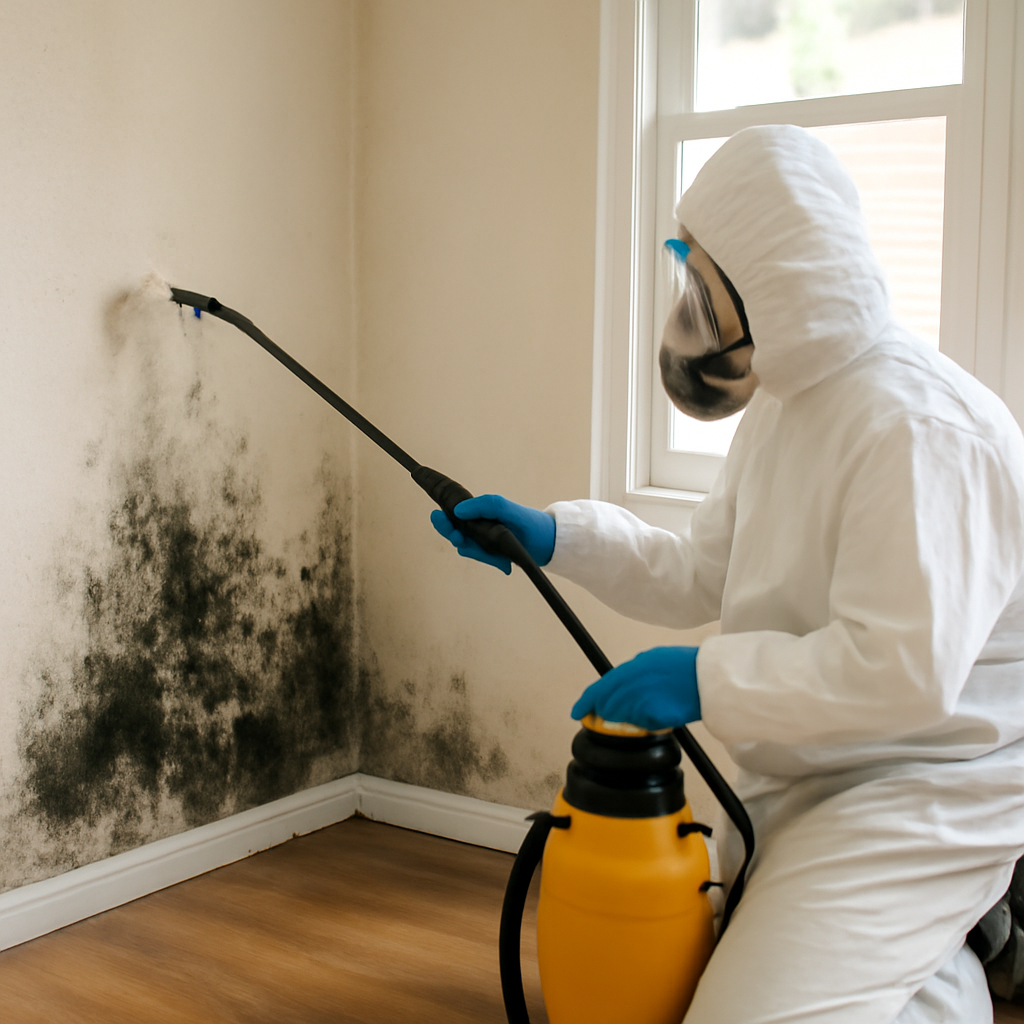
When a homeowner searches for black mold professional removal near me, the underlying concern is almost always the same: visible dark staining, a musty smell that will not leave, and a worry that the household is breathing something dangerous. This guide separates what black mold actually is from popular shorthand, explains why this is one of the few mold situations that should never be handled with a bottle of bleach and a weekend, and walks through how to vet a local certified contractor. The methodology summarizes EPA, CDC, and InterNACHI guidance current as of 2026 — consult your physician for symptoms and a certified professional for testing and remediation decisions.
Is this mold, asbestos, or water damage? Get a free instant screen
Upload a clear photo of the suspect area. You'll get an instant AI screening opinion and what to do next. This is screening guidance, not a professional determination.
Screening guidance only. AI can be wrong. Confirm asbestos, mold type, or lead with lab testing or a licensed professional before acting.
Why black mold professional removal near me is the right search to be running
Most household mold growth is light surface mildew on grout, paint, or window frames. That kind of growth is something a homeowner can usually wipe down with detergent and address by fixing whatever moisture problem caused it. Black mold is a different conversation. The species behind the popular fear, Stachybotrys chartarum, is a slow-growing, water-loving mold that only appears after a building material — usually cellulose-rich drywall, ceiling tile, or wallboard — has been wet for at least a week. By the time it is visible, the source has been leaking long enough that the affected material is no longer salvageable.
The EPA position is consistent and important: dark mold can release spores and mycotoxins when disturbed, and disturbing a Stachybotrys colony with a sponge or scrub brush is the worst possible response. Professional remediation contractors set up containment, use HEPA filtration, and remove rather than clean the contaminated substrate. That is the gap a “near me” search is trying to fill — finding someone local who works to those standards rather than someone advertising the service without the training behind it.
Stachybotrys versus the catch-all phrase “black mold”
Industrial hygienists use the phrase “toxigenic mold” or specify the genus. Homeowners use “black mold” to mean any dark patch on a wall. The phrasing matters because not every dark stain is Stachybotrys, and not every Stachybotrys colony is black to the eye.
Species commonly confused with the popular term
- Cladosporium. Olive-green to dark brown, common on bathroom caulking and window frames. Less moisture-demanding.
- Aspergillus niger. The “black” Aspergillus, often on damp food, leather, and HVAC condensate pans. Different exposure profile.
- Alternaria. Dark gray-black, common around plumbing leaks and damp insulation.
- Stachybotrys chartarum. The species the popular term actually refers to. Slimy black or dark greenish-black colony on chronically wet cellulose. Less common than the others but the one of greatest concern.
A professional remediator does not need to confirm species before scoping work. The presence of any visible mold growth larger than about ten square feet, combined with a sustained moisture source, triggers the same containment-and-removal protocol regardless. Lab identification matters more for post-remediation clearance and for medical follow-up than for the work itself.
Why this is not a DIY situation
The EPA generally accepts homeowner cleanup of mold patches smaller than about ten square feet on non-porous surfaces. Above that threshold, or on porous building materials, the agency recommends a qualified contractor. Black mold in particular pushes past the DIY line for three reasons.
First, the substrate. Stachybotrys grows on the paper backing of drywall and on cellulose ceiling tile. You cannot disinfect drywall paper from the surface — the colony has rooted into the material. The fix is removal and replacement, which means cutting out wall sections, bagging them, and rebuilding. A sponge and bleach approach leaves the colony in place and disperses spores into the rest of the home.
Second, the moisture source. Visible black mold means hidden water has been arriving on that material for a week or longer. Common sources include a slab leak, a slow supply-line drip behind a vanity, a roof leak that has tracked along a rafter, or condensation against an under-insulated wall. Removing the mold without correcting the source guarantees regrowth.
Third, the exposure. Disturbing a colony aerosolizes spores. Anyone with asthma, immunocompromise, or chronic respiratory conditions should not be in the work zone, and even healthy adults should be in respirator-grade protection. Most homeowners do not own a properly fitted N95 or P100 respirator, do not have a HEPA-filtered negative-air machine, and have nowhere safe to dispose of contaminated drywall.
What a professional remediation actually includes
A scope written by a certified remediation contractor and aligned with InterNACHI and IICRC S520 guidance generally includes the following phases.
Assessment and moisture source identification
Before any cutting begins, the contractor maps the moisture source with a pin-type or capacitance moisture meter, often supplemented by thermal imaging. The assessment defines the work area, identifies materials to be removed, and produces a written scope the homeowner can compare against estimates from other companies.
Containment
The work zone is sealed with polyethylene sheeting and a zipper-door entry. A HEPA-filtered negative-air machine pulls air out of the containment so any released spores travel outdoors rather than into adjacent rooms. For larger jobs the HVAC system serving that zone is sealed.
Removal
Contaminated drywall, insulation, baseboard, and any other porous materials are cut out in manageable sections, bagged in heavy contractor-grade plastic, and removed. Framing, subfloor, and other structural elements are HEPA-vacuumed and treated.
Drying and source repair
The cavity is dried to wood-equivalent moisture content below about 16 percent. The underlying leak, condensation issue, or ventilation problem is corrected before reconstruction begins. Front Range homeowners dealing with rim-joist condensation in unfinished basements often need an air-sealing and insulation upgrade as part of this step.
Post-remediation verification
An independent industrial hygienist or third-party tester (not the remediation contractor) performs air sampling and visual inspection to verify that spore counts in the work area are comparable to outdoor or unaffected indoor reference samples. This is the step that should never be performed by the same firm that did the removal.
How to vet a local certified contractor
The “near me” search returns dozens of restoration franchises and independent remediators, often paid placements. Filtering them down comes from a few non-negotiables.
Credentials to verify
- IICRC certification — most commonly the Applied Microbial Remediation Technician (AMRT) and Water Damage Restoration Technician (WRT).
- Active business license in the state and county where work will be performed.
- Liability and workers’ compensation insurance, with a certificate the homeowner can request.
- Written scope referencing the IICRC S520 standard for mold remediation.
- No conflict of interest between testing and remediation — the company doing the post-clearance testing should not be the company doing the removal.
Front Range homeowners can cross-reference vendors against state contractor look-up databases and against the local Better Business Bureau record. The InspectandTest mold inspection hub covers the inspection-side of the workflow that precedes a remediation call, including when an independent inspector report is worth ordering before signing a contract.
Red flags to walk away from
- Pricing quoted before any on-site assessment. Black mold work cannot be scoped from a phone description.
- Refusal to provide a written scope of work.
- Encouragement to skip containment or post-remediation testing to save money.
- The same company offering testing, remediation, and clearance. That is the central conflict-of-interest pattern flagged by the FTC and the EPA.
- Aggressive door-to-door or post-storm solicitation, especially in neighborhoods affected by recent flooding.
Comparing two or three written estimates side by side, and asking each contractor to explain how their scope differs from the others, often reveals which company is operating to standard and which is not. Homeowners who want a deeper view of contractor selection can review the contractor types guide for the broader category, or the vetting framework for evaluating remediation companies.
Insurance, cost ranges, and what homeowners typically pay
Homeowner insurance coverage for mold is narrower than most policyholders expect. The general rule across major US carriers is that mold damage is covered only when it follows a sudden and accidental covered peril, such as a burst supply line. Long-term seepage, deferred maintenance, and ground-water intrusion are typically excluded.
Cost ranges for professional black mold work on the Front Range tend to fall into bands. A localized job in a single bathroom or laundry-room wall often falls between roughly $1,500 and $3,500. A whole-basement scope with significant drywall removal and reconstruction can run from $5,000 into the low five figures. Any contractor providing a fixed quote before assessment is guessing, and any quote that omits post-clearance testing is incomplete.
When to call a professional rather than continue researching
The decision threshold is straightforward. Visible mold growth larger than roughly ten square feet, growth on porous materials, growth following an undiagnosed leak, or growth associated with anyone in the household showing respiratory symptoms — all of those move the situation past the DIY threshold and into professional territory. Continuing to research while a Stachybotrys colony grows behind a wall costs more in the end than picking up the phone.
What to expect during the work itself
Homeowners who have never lived through professional remediation often have questions about the day-to-day experience. The work zone is sealed off and access to it stops for the duration of the active phase, which is usually several days. Negative-air machines run continuously, producing a low constant noise that some households find tiring after the first day. Exterior doors near the work zone may be propped open to vent contained air, which affects heating or cooling of the home depending on season. Contractors typically work standard business hours unless the homeowner has negotiated otherwise.
Pets and children should be kept out of the work area entirely. Households with anyone immunocompromised, with severe asthma, or with chemical sensitivities may prefer to stay elsewhere for the duration of active demolition. For most healthy households, remaining in unaffected rooms is acceptable if the containment is properly maintained, though air quality in the rest of the house improves once the containment is removed.
Daily progress should be visible. A reputable contractor walks the homeowner through what was accomplished each day, what remains, and any unexpected findings — additional moisture, hidden growth in an adjacent cavity, surprises behind a piece of trim. Surprises are common in mold work because the visible footprint is rarely the full footprint. A contractor who finds and documents additional growth is doing the job correctly; the homeowner should expect some scope adjustment during the work.
What happens after clearance passes
Clearance is the end of the remediation phase, not the end of the project. The work area is now structurally open — framing exposed, insulation removed, finishes gone. Reconstruction begins next, often through a separate restoration contractor or general contractor. The handoff between remediation and restoration is the right moment to verify cavity moisture one final time and to address any underlying envelope issues that contributed to the original failure. Front Range homeowners with chronic rim-joist condensation in basements often find this is the appropriate window to add insulation and air sealing while the cavity is accessible.
Homeowners should keep the full project file — the original scope of work, daily progress notes, photographs of open framing, the clearance report, and copies of all invoices — for the life of ownership. Future buyers, insurance carriers, and lenders may request this documentation if a mold question comes up in a real estate transaction or claim.
References
- Mold Remediation in Schools and Commercial Buildings Guide — EPA
- Basic Facts About Mold and Dampness — CDC
- Mold Inspection Standards of Practice — InterNACHI
- Mold Cleanup in Your Home — EPA
- Mold and Dampness Indoor Air Quality — American Lung Association
Front Range homeowners weighing a remediation decision and wanting to talk with a vetted local inspector before signing a contract can reach out through the InspectandTest contact page.