What Does Radon Exposure Cause: Mechanism and Risk
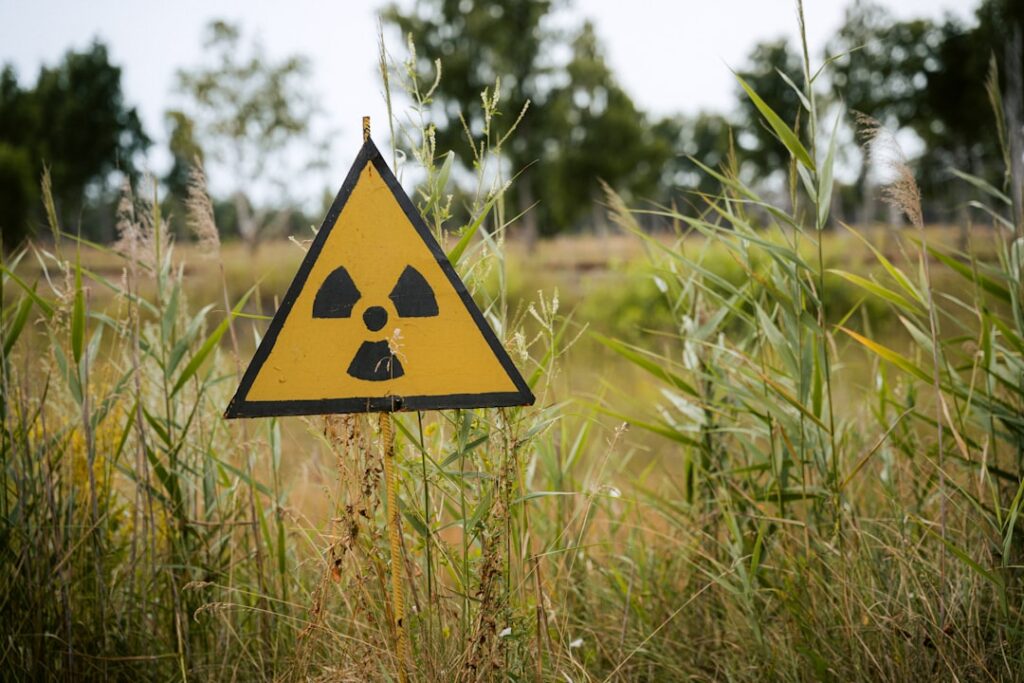
Radon does not produce immediate symptoms in most people. Persistent cough, shortness of breath, chest pain, or unexplained weight loss can be late-stage indicators of radon-caused lung cancer — but these appear only after years of exposure, not as a warning sign.
What does radon exposure cause is the question searchers ask when they want the precise mechanism: not just “radon causes lung cancer” as a headline, but how the radioactive decay chain produces DNA damage in lung tissue, how that damage accumulates into cancer risk over years, and how big the population-level effect actually is. This guide explains the mechanism from first principles, reports the EPA-validated risk estimates, and covers the smoker-radon synergy that multiplies risk for current and former smokers. This guide summarizes EPA and CDC guidance current as of 2026 — consult a certified radon professional for testing and your physician for symptom evaluation.
The Bottom-Line Cause: Lung Cancer Over Time
Radon exposure causes lung cancer through cumulative DNA damage to cells in the bronchial epithelium (the lining of the airways) and to a lesser extent in alveolar tissue (the gas-exchange regions of the lung). The damage comes from alpha-particle radiation emitted by radon’s short-lived radioactive decay products, not from radon itself. Cumulative damage over years of exposure exceeds the lung’s DNA-repair capacity and increases the probability that a damaged cell will progress to malignancy.
The EPA estimates approximately 21,000 radon-related lung cancer deaths per year in the United States, making radon the second leading cause of lung cancer after smoking. The EPA Citizen’s Guide to Radon publishes the underlying risk estimates. The CDC radon program covers the public-health framework, and the American Lung Association radon page publishes consumer-facing risk information.
The Decay Chain That Drives Cellular Damage
Radon-222 itself is a noble gas and is chemically inert. It does not bind to lung tissue. When inhaled, most radon atoms are exhaled within a few seconds without depositing energy in the body. The cellular damage comes from radon’s decay products.
As radon-222 atoms decay (with a half-life of 3.8 days), they produce a sequence of short-lived radioactive daughter products:
- Polonium-218 (half-life 3.1 minutes) — emits an alpha particle
- Lead-214 (half-life 26.8 minutes) — emits a beta particle
- Bismuth-214 (half-life 19.9 minutes) — emits a beta particle
- Polonium-214 (half-life 164 microseconds) — emits an alpha particle
- Lead-210 (half-life 22.3 years) — long-lived daughter
These daughter products are solid metallic atoms, not gases. They attach to dust particles, water droplets, and aerosols in indoor air. When breathed in, they lodge in the bronchial epithelium where they continue to decay. Polonium-218 and polonium-214 are the most consequential decay products because they emit alpha particles in or very near lung tissue.
Why Alpha Radiation Is Particularly Damaging
Alpha particles are helium nuclei (two protons and two neutrons) emitted at high energies from radioactive decay. They are large and slow compared to beta particles or gamma rays. They have a short range in tissue (typically less than 100 micrometers) and cannot penetrate skin from outside the body. But when emitted from inside lung tissue by polonium-218 or polonium-214 already lodged in the bronchial epithelium, alpha particles deposit their energy in a very small volume of cells immediately adjacent to the decay site.
This density of energy deposition (called linear energy transfer, or LET) makes alpha radiation roughly 20 times more biologically effective per unit dose than X-rays or gamma rays. Each alpha particle striking a cell produces dense ionization that creates multiple DNA double-strand breaks in close proximity. Double-strand breaks are particularly difficult for cells to repair correctly; misrepair can produce mutations that drive cancer development.
How the Damage Accumulates Into Cancer
A single alpha-particle interaction with a cell is not enough to cause cancer. The development of cancer is a multi-step process involving multiple genetic and epigenetic changes accumulating over time. Cumulative alpha-particle damage from chronic radon exposure raises the probability that the necessary multi-step changes will occur in a single cell lineage.
Key factors in this accumulation:
Cumulative Dose
More years of exposure, at higher concentrations, produces more cumulative DNA damage. There is no threshold below which exposure is known to be completely safe.
Cellular Repair Capacity
Cells have robust DNA-repair machinery, but repair is not perfect. Misrepair can produce mutations. The probability of misrepair rises with the total damage burden.
Latency Period
Cancer typically develops 10 to 40 years after the exposure that initiated the process. A radon exposure in a person’s twenties may produce a lung cancer diagnosis in their fifties or sixties.
Individual Susceptibility
Genetic variation in DNA-repair genes and other factors influences how individuals respond to a given exposure. Two people with identical exposures may have different cancer outcomes.
The Smoker-Radon Synergy
Smoking and radon exposure produce a multiplicative rather than additive effect on lung cancer risk. Smokers exposed to radon have lung cancer risk roughly 10 to 25 times higher than never-smokers at the same radon concentration. The mechanism is thought to involve smoke-induced tissue damage that increases vulnerability to radon decay-product deposition and additional DNA damage.
The EPA’s lifetime risk estimates reflect this synergy directly. At sustained 4 pCi/L exposure, the estimated lifetime risk of lung cancer is approximately 7 per 1,000 never-smokers and 62 per 1,000 smokers. The ratio between these numbers reflects the smoker-radon synergy multiplier.
For former smokers, the risk profile improves with time after quitting but does not return immediately to never-smoker levels. Radon mitigation produces larger absolute risk reductions for current and former smokers than for never-smokers because their baseline radon-attributable risk is much higher.
What Radon Exposure Does Not Cause
Several conditions are sometimes mistakenly attributed to radon exposure but are not supported by evidence:
Acute Symptoms
Radon does not cause headache, dizziness, nausea, fatigue, allergies, or asthma. Homeowners experiencing acute symptoms should look at carbon monoxide, mold, ventilation, dust mites, or other indoor air quality issues.
Cancers Other Than Lung Cancer
The dominant evidence supports lung cancer as the primary radon-attributable health effect. Some studies have suggested possible associations with other cancers, but the lung-cancer link is by far the strongest and most consistently replicated finding.
Skin Damage
Radon’s alpha radiation cannot penetrate skin from outside the body. Radon exposure does not cause skin damage, hair loss, or external radiation burns.
Visible Material Damage
Radon does not damage furniture, walls, paint, fabrics, electronics, or any physical object in the home.
How Risk Estimates Are Built
EPA lifetime risk estimates for residential radon exposure draw on three main evidence streams:
Underground Miner Studies
Studies of uranium, hematite, fluorspar, and other underground miners exposed to high radon concentrations over occupational careers provided the original epidemiological evidence linking radon to lung cancer. These cohorts produced robust dose-response data at high concentrations.
Pooled Residential Studies
More recent pooled analyses of residential case-control studies in North America, Europe, and Asia have confirmed the lung-cancer link at residential exposure levels far below those of miners. Pooled European and North American studies have replicated the dose-response relationship at residential concentrations.
Animal Studies
Controlled animal studies in dogs, rats, and other species have replicated the alpha-particle DNA damage and lung cancer outcomes under exposure conditions that mimic residential exposure.
The convergence of evidence across these three streams makes the radon-lung cancer link one of the more thoroughly established environmental cancer associations.
What Front Range Homeowners Should Know
Colorado sits in EPA Zone 1, the highest-risk radon designation in the country. Most of the Front Range corridor — Denver, Douglas, Elbert, Arapahoe, Jefferson, El Paso, Adams, Boulder, and Broomfield counties — is Zone 1. The CDPHE radon program publishes Colorado-specific testing and mitigation guidance.
Front Range homeowners cannot rely on visual or sensory cues to determine whether their home has elevated radon. Testing is necessary. Mitigation is effective when elevated levels are found. The link between residential radon exposure and lung cancer is firmly established; the practical question is not whether to act on it but when.
Deeper coverage of the related symptoms picture appears in the symptoms of radon exposure article, and the Front Range radon testing guide covers testing options and mitigation.
References
- EPA Citizen’s Guide to Radon and lifetime risk estimates — US Environmental Protection Agency
- CDC Radon health information — Centers for Disease Control and Prevention
- American Lung Association radon resources — American Lung Association
Front Range homeowners who want to test radon levels in their home or install mitigation to reduce future exposure can connect with a vetted local certified radon professional through our contact page.