Thermal Imaging Inspection Near Me: Cost and Hiring
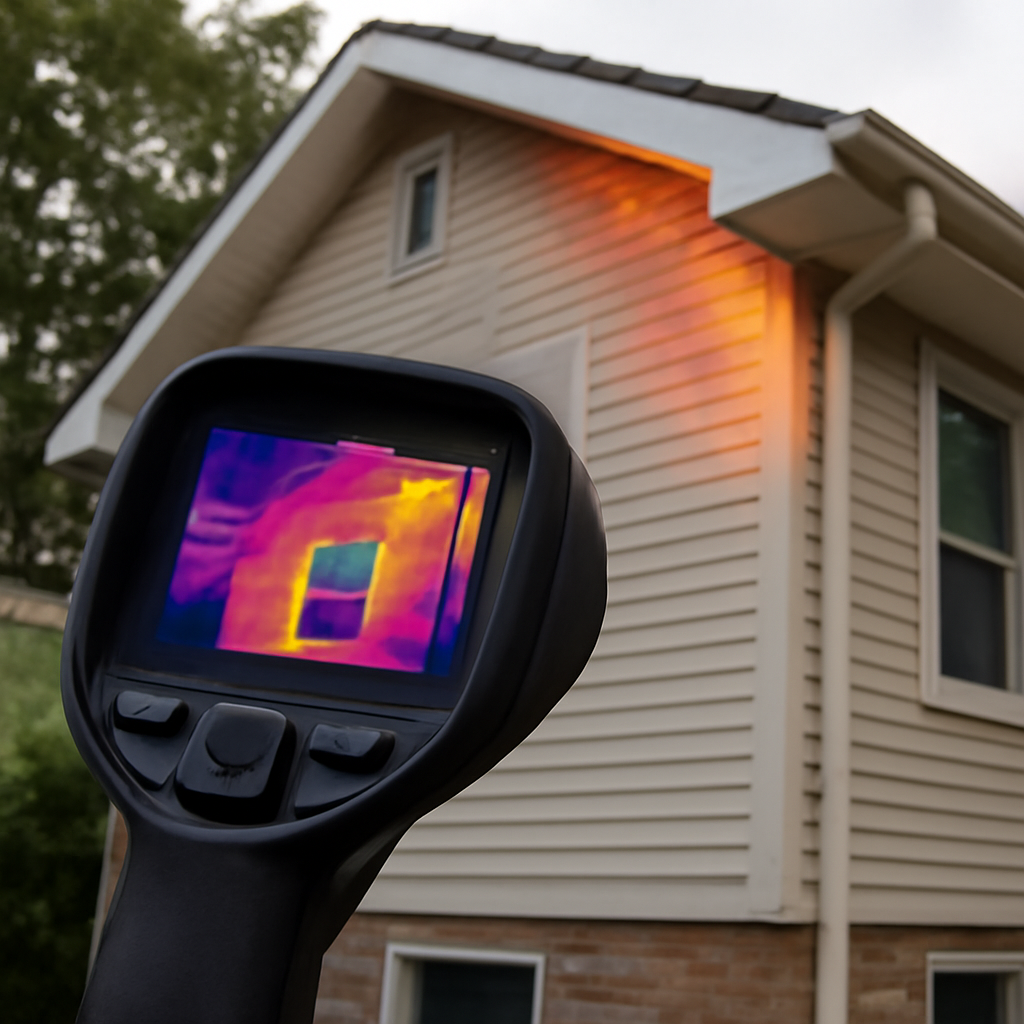
Searching for a thermal imaging inspection near me usually means a homeowner suspects something hidden: a leak with no visible source, cold rooms despite a running furnace, or an electrical smell with no obvious cause. Infrared thermography turns invisible temperature differences into a viewable image, letting a trained technician find problems behind walls and ceilings without cutting anything open. This guide explains what a thermal inspection actually finds, what it costs, how to hire a qualified provider locally, and the technology’s real limits, so you can decide whether the service is worth booking. It cites trade and standards bodies rather than manufacturer marketing, and reflects guidance current as of 2026.
What a Thermal Imaging Inspection Finds
A thermal camera detects long-wave infrared radiation, the heat surfaces emit, and renders it as an image where temperature differences appear as color or brightness variations. Those differences reveal conditions invisible to the eye. A qualified thermographer interprets the patterns, because the camera shows temperature, not the cause; reading it correctly is a skill, not an automatic readout.
Common findings include:
- Moisture intrusion. Wet building materials change temperature differently than dry ones, so leaks behind walls, under floors, and in ceilings often appear as anomalous cool or warm zones. This is one of the most valuable uses, because hidden moisture leads to rot and mold.
- Missing or wet insulation. Gaps, settling, and water-damaged insulation show as temperature differences across walls and ceilings, explaining drafty or uneven rooms.
- Air leaks. The Department of Energy notes that infrared scanning, often combined with a blower-door test, reveals where conditioned air escapes around windows, doors, and penetrations.
- Electrical hot spots. Overloaded circuits, loose connections, and failing breakers run hot before they fail, appearing as bright spots in a panel scan.
- Radiant heating and plumbing issues. Blocked lines, leaks in radiant systems, and pipe routing become visible through temperature contrast.
- Pest and structural clues. Some infestations and thermal bridging show as distinctive patterns a trained eye recognizes.
Thermal imaging is a non-invasive screening tool. It points to where a problem likely is, and the technician then confirms with a moisture meter, visual access, or further testing. Our guide on thermal imaging leak detection details how this confirmation workflow operates.
What a Thermal Imaging Inspection Costs
Pricing varies with what is being scanned and whether thermography is a standalone service or an add-on to a broader inspection.
As an Add-On to a Home Inspection
Many home inspectors include limited thermal scanning in a standard inspection or offer it as an add-on for roughly $100 to $250 on top of the base inspection fee. This covers a walkthrough scan of accessible surfaces during the regular inspection, useful for flagging obvious anomalies but not a deep dedicated survey.
As a Standalone Thermal Survey
A dedicated thermal imaging inspection, where a thermographer methodically scans the home and produces a detailed report, commonly runs from roughly $200 to $600 or more, depending on home size, the scope of the survey, and whether a blower-door test is included for air-leak detection. Larger homes, commercial buildings, and specialized electrical surveys cost more.
Specialized Surveys
Electrical thermography for a commercial panel survey, moisture mapping after a flood, or an energy audit combining infrared with a blower door can range higher, often several hundred dollars, because they require more time, more interpretation, and a formal report. When comparing quotes, confirm exactly what the scan covers and whether a written report with annotated images is included; a cheap “scan” with no documentation is worth far less than a thorough report.
What Drives the Price
Several factors move the cost up or down:
- Home or building size. More square footage means more scanning time.
- Scope. A targeted leak hunt costs less than a whole-house energy survey.
- Equipment grade. Higher-resolution, low-NETD cameras and a blower door add capability and cost.
- Reporting depth. An annotated report with recommendations takes more time than a verbal summary.
- Technician certification. Certified thermographers command higher rates, and their interpretation is more reliable.
Free thermal scans advertised by some restoration or insulation companies can carry a built-in incentive to find billable work, so weigh independent fee-based inspections against sales-driven free ones.
How to Hire a Qualified Thermographer Near You
The technology is only as good as the person operating it, because a thermal image is easy to misread. Vet providers carefully.
Check Certification and Training
Look for inspectors with recognized thermography credentials. InterNACHI offers an infrared-certified designation for home inspectors, and dedicated thermographers may hold Level I, II, or III certification under recognized infrared training standards. Certification indicates the operator understands emissivity, reflected temperature, and how to avoid the false readings that trip up untrained users.
Confirm Relevant Experience
A thermographer experienced in building moisture is not automatically the right choice for an electrical panel survey, and vice versa. Match the provider’s specialty to your problem. Ask how many similar inspections they perform and request a sample report.
Review the Report and Deliverables
A quality thermal inspection produces a written report with annotated thermal and visible-light images, descriptions of each anomaly, and clear recommendations. Ask whether moisture findings are confirmed with a moisture meter, since thermal imaging suggests moisture but a meter confirms it. Our overview of the thermal imaging and moisture meter combo workflow explains why the two tools belong together.
Verify Independence and Insurance
An independent inspector who does not also sell remediation or insulation has no incentive to overstate findings. Confirm professional liability insurance as well. The parent home inspection tools guide explains how thermography fits among the instruments a thorough inspection relies on.
When a Thermal Imaging Inspection Is Worth It
Thermography earns its fee in specific situations:
- You suspect a hidden leak but cannot find the source.
- Rooms are uncomfortable despite a working HVAC system, suggesting insulation or air-sealing problems.
- Energy bills are high and you want to locate the worst air leaks and insulation gaps.
- You are buying a home and want a non-invasive screen for moisture and insulation issues before closing.
- After water damage, to map the extent of moisture before drying and repair.
- Electrical concerns, to scan a panel for hot spots before they fail.
For routine situations with no symptoms, a full thermal survey may be more than necessary; an add-on scan during a standard inspection often suffices. Front Range homeowners face a relevant seasonal note: thermal imaging works best when there is a meaningful temperature difference between inside and outside, so Colorado’s cold winters create excellent conditions for revealing insulation gaps and air leaks, while a mild day with little indoor-outdoor contrast yields weaker results.
What Happens During a Thermal Imaging Inspection
Knowing the workflow helps you judge whether a provider is thorough. A competent thermal inspection generally proceeds through several stages.
Preparation. The technician confirms there is a usable temperature difference between inside and outside, since the technology depends on thermal contrast. For energy and insulation work, an indoor-outdoor difference of at least a number of degrees is ideal. Some surveys pair the scan with a blower-door test that depressurizes the house to exaggerate air leaks.
Systematic scanning. Rather than waving the camera randomly, the technician scans walls, ceilings, floors, and around windows and doors methodically, comparing each surface against its surroundings to spot anomalies. Both thermal and visible-light images are captured for each finding.
Confirmation. A suspected moisture anomaly is verified with a moisture meter, and a suspected air leak is confirmed by feel or with the blower door running. This step separates a real defect from a harmless thermal pattern such as a stud or a duct behind the surface.
Reporting. The technician produces a written report with annotated images, descriptions of each finding, and recommendations. This documentation is what you are actually paying for, and it is what makes the findings actionable.
Questions a Thermal Inspection Cannot Answer
Setting expectations protects you from disappointment and from overselling. A thermal inspection cannot tell you the exact moisture content of a wall, only that a temperature pattern is consistent with moisture, which a meter then quantifies. It cannot confirm a mold problem, since it detects temperature, not biological growth, though it can point to the damp conditions mold needs. It cannot see inside a wall in the literal sense, only infer conditions from surface behavior. And it cannot diagnose the cause of a finding on its own; a cool patch could be moisture, a draft, missing insulation, or a thermal bridge, and only the technician’s judgment and follow-up testing distinguish them. A provider who promises certainty on any of these from the camera alone is overstating what the technology does.
The Real Limits of Thermal Imaging
Honest expectations prevent disappointment. A thermal camera cannot see through walls; it reads surface temperatures only, and infers what is behind a surface from how that surface’s temperature behaves. Glass reflects infrared, so it cannot scan through windows. The technology shows temperature differences, not their cause, so a cool spot might be moisture, a draft, or simply a thermal bridge; interpretation is essential. Results depend on conditions: without a temperature difference to drive contrast, anomalies fade into the background. And the camera does not measure moisture content, it only flags temperature patterns consistent with moisture, which is why confirmation with a meter matters. Our piece on whether thermal imaging can see through walls addresses this common misconception directly.
Thermal Inspection Versus a Standard Home Inspection
A standard home inspection is a broad visual evaluation of a home’s systems and components against a standard of practice. A thermal imaging inspection is a specialized, non-invasive technique that extends what an inspector can see by revealing hidden temperature anomalies. They complement rather than replace each other. A thermal scan added to a standard inspection can catch moisture and insulation issues a visual-only inspection would miss, while the standard inspection covers the structural, mechanical, and safety items thermography does not address. For most buyers, the best value is a qualified home inspector who also offers competent thermal imaging, delivering both in one visit.
Questions to Ask Before Booking
Before scheduling a thermal imaging inspection near you, ask:
- What thermography certification do you hold, and how long have you done infrared work?
- Is this a dedicated survey or a scan added to a standard inspection?
- Does the fee include a written report with annotated images?
- Will moisture findings be confirmed with a moisture meter?
- Do you also sell remediation or insulation, or are you independent?
- What camera resolution and sensitivity do you use?
Clear answers separate a thorough professional from someone waving a low-resolution camera for show.
Thermal Imaging and Moisture: Why a Meter Confirms
The most common reason homeowners book a thermal inspection is suspected hidden moisture, so it is worth understanding why infrared and a moisture meter work as a pair rather than either alone. A thermal camera does not detect water; it detects temperature. Wet building materials change temperature differently than dry ones because evaporation cools them and water stores heat, so a damp area often shows as a cooler or differently shaped zone on the image. But that same anomaly could be a draft, a missing patch of insulation, or a structural element behind the surface.
This is where the moisture meter earns its place. Once thermography flags a suspicious zone, the technician presses a pin or pinless meter to the spot and reads the actual moisture content of the material, confirming whether the thermal pattern truly indicates water. Skipping this step risks both false alarms, chasing a cool spot that is merely a draft, and false confidence in a finding that was never verified. A provider who scans without confirming is delivering half a service. Our guide on the thermal imaging and moisture meter combo workflow details how the two instruments complement each other on a real inspection.
Commercial and Specialized Thermal Inspections
Beyond single-family homes, thermal imaging serves commercial and specialized needs that command higher fees and specific expertise. Commercial electrical surveys scan switchgear, panels, and distribution equipment on a scheduled basis, catching overheating connections before they cause downtime or fire; these are often required by insurers and follow recognized inspection intervals. Flat-roof moisture surveys use infrared to map where water has infiltrated roofing insulation, guiding targeted repair rather than full replacement. Building-envelope surveys on larger structures locate air leakage and thermal bridging for energy performance. Each of these requires a thermographer with relevant certification and experience, and the deliverable is a formal report. A homeowner rarely needs this tier, but understanding it explains why thermal inspection pricing ranges so widely and why matching the provider’s specialty to the task is essential.
Making the Decision
A thermal imaging inspection is a worthwhile investment when you have a specific concern, hidden moisture, comfort problems, high energy bills, electrical worries, or a home purchase, and when you hire a certified, independent operator who confirms findings and documents them. It is less essential as a routine purchase with no symptoms. The technology is powerful for revealing the invisible, but it rewards a skilled interpreter and realistic expectations. Match the scope and the provider to your actual problem, and the inspection will earn its cost by catching issues before they become expensive repairs.
Best Conditions and Timing for a Scan
Because thermal imaging depends entirely on temperature contrast, timing affects how much a scan reveals. For finding insulation gaps and air leaks, the ideal window is when there is a substantial difference between indoor and outdoor temperatures, which on the Front Range means cold winter days or, less commonly, hot summer afternoons when the air conditioning runs hard. A mild spring or fall day with little indoor-outdoor difference flattens the contrast and can hide defects that would stand out in harsher weather. For moisture detection, recent or ongoing wetting improves results, since freshly damp materials show the clearest thermal difference; a leak that has fully dried may leave no signature even though it caused damage.
Scanning early in the morning or after the sun has loaded one side of the house with heat can also create useful contrast on exterior surfaces. A skilled thermographer chooses or advises on timing rather than scanning whenever convenient, because the same camera in the same house yields very different results depending on the conditions. Asking a prospective provider how they handle timing and contrast is a quick way to gauge whether they understand the technology or simply own the equipment.
References
- Detecting Air Leaks — U.S. Department of Energy
- Infrared Thermography Certification — International Association of Certified Home Inspectors
- Standard of Practice — American Society of Home Inspectors
Thermal imaging cameras
Infrared cameras reveal hidden moisture, missing insulation, and air leaks. Phone-attachment models are the budget entry point; standalone units have higher resolution.
| Product | Why | Buy |
|---|---|---|
 FLIR ONE Pro (phone) FLIR ONE Pro (phone) | Plugs into iPhone/Android; inspector favorite. | Amazon — $349.00 |
 Topdon TC001 Topdon TC001 | High-res phone module at a low price. | Amazon — $199.99 |
 FLIR C5 Compact FLIR C5 Compact | Standalone pocket camera with Wi-Fi. | Amazon — $449.00 |