Seek Pro Thermal Camera: What Homeowners Need to Know
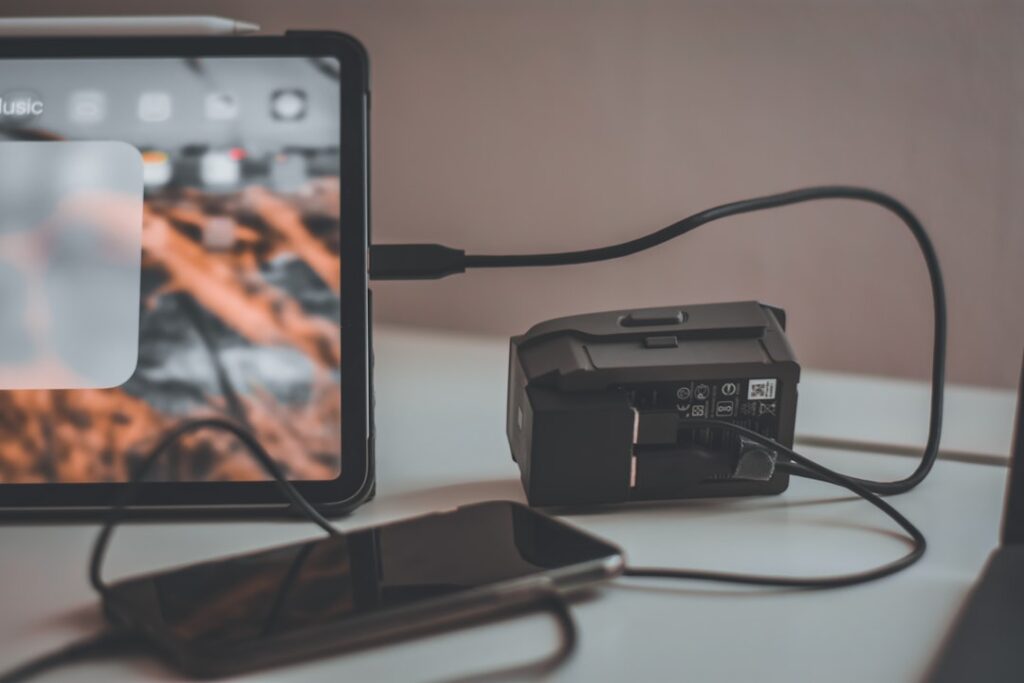
Seek Thermal’s “Pro” line sits in the broader category of professional handheld infrared imagers — the segment where FLIR, Hikmicro, Teledyne (formerly FLIR’s consumer line), and Fluke all compete. The Seek Pro models offer higher pixel resolution and lower noise than the company’s lower-tier ShotPro and CompactPro consumer products. For homeowners and working home inspectors trying to figure out where Seek Pro fits in the pro-handheld imager market, this guide compares the category, the typical use cases, and how to evaluate Seek Pro against alternatives without product-by-product marketing claims.
Where Seek Pro sits in the handheld imager category
Professional handheld thermal cameras in 2026 cluster into three tiers by resolution and sensitivity. Entry-pro tier runs 160×120 to 240×180 pixel resolution with thermal sensitivity (NETD) around 50 to 70 mK. Mid-pro tier runs 320×240 to 384×288 pixel resolution with NETD of 40 to 50 mK. Upper-pro tier runs 640×480 pixel resolution with NETD below 40 mK and richer feature sets (touchscreens, GPS, voice annotation). Seek Pro models span the mid-pro tier; FLIR’s Cx-series and Ex-series span entry-pro to mid-pro; Hikmicro’s B-series and Pocket-series cover similar territory; Fluke’s TiS and Ti-series span mid-pro to upper-pro.
For residential building diagnostics — finding insulation gaps, air leakage, moisture intrusion, and electrical hotspots — mid-pro tier (320×240 to 384×288) is generally adequate. Higher resolution helps when fine-detail anomalies need to be resolved at greater distances (commercial roof scans, large industrial energy audits). The InspectandTest tools pillar covers the broader category, and the handheld imager category guide compares the major brands.
How Seek differs from FLIR, Hikmicro, and Fluke
The category leaders position themselves differently. FLIR has the longest market history and the deepest catalog of accessories (specialty lenses, software integrations). Fluke emphasizes electrical and industrial use cases with deep integration into its broader test-and-measurement product line. Hikmicro entered the market more recently with aggressive pricing and competitive specifications. Seek Thermal’s positioning targets a balance of feature set and price, with products that include some upper-pro features (laser distance measurement, picture-in-picture visual blending) at mid-pro pricing.
None of these distinctions is decisive on its own. A 320×240 imager from any of these manufacturers will produce broadly similar results on a residential wall scan, and inspector skill matters more than the brand badge on the tool. Where brand choice does matter is in the software ecosystem (report generation, image archiving, customer-deliverable PDF templates) and in long-term parts support.
What “Pro” actually adds versus consumer thermal cameras
Five features distinguish pro-tier handheld imagers from consumer-tier devices (FLIR One, Seek Compact, smartphone attachments). Higher native pixel resolution — 320×240 minimum for pro, versus 80×60 to 160×120 for most smartphone attachments. Better thermal sensitivity (NETD under 50 mK versus 100 mK or higher on consumer attachments). Built-in display rather than smartphone dependence. Adjustable emissivity settings for non-standard surfaces (polished metal, glossy paint). And documentation features including onboard image storage, USB or Wi-Fi image transfer, and report-generation software.
For home inspectors performing surveys as part of paid inspections, those features are functional requirements. For homeowners doing occasional DIY scans, the consumer-tier attachments often suffice.
Common use cases for pro-handheld imagers
Residential building diagnostics is the most common pro-handheld use case. Common findings include insulation defects (cold spots on interior surfaces of exterior walls during winter scans), air leakage at top plates and rim joists, missing insulation at attic kneewalls and behind kitchen soffits, moisture intrusion behind drywall after a leak event, and electrical hotspots at breakers or outlet connections. Whole-house residential scans by a credentialed inspector typically run $200 to $600 in 2026 Front Range pricing.
Electrical inspections
Electrical thermography looks for resistance heating at connections — loose terminals, corroded lugs, overloaded breakers — that produce localized hotspots before the connection fails. The work follows NFPA 70B (Recommended Practice for Electrical Equipment Maintenance) and uses pro-tier imagers because electrical anomalies often present as small, hot, easily-missed pixels that lower-resolution cameras can blur.
HVAC and mechanical
HVAC thermography identifies refrigerant line restrictions, duct insulation defects, and supply-versus-return air mixing problems. The work integrates with general building diagnostics but uses different image interpretation skills — what looks like a wall insulation gap in a residential scan might be normal duct routing in an HVAC-focused scan.
Conditions that make a thermal image useful
The image only contains information when there is a temperature differential to image. For residential envelope work, a minimum 18 F to 20 F difference between indoor and outdoor air is required (ASTM C1060 standard). In Colorado that means winter is the productive season for envelope diagnostics — January and February scans after several days of below-freezing temperatures produce sharp contrast on poorly insulated walls. Summer scans often produce ambiguous results. Some surveys benefit from combining the scan with blower-door depressurization to exaggerate air-leakage signatures.
Image resolution and what it costs in practice
Resolution determines what the camera can resolve at a given working distance. At an 8-foot working distance, a 160×120 camera resolves about 1.5 inches per pixel — adequate for finding large insulation gaps and missing insulation between studs, marginal for finding subtle electrical hotspots or smaller anomalies. A 320×240 camera resolves about 0.75 inches per pixel — adequate for most residential work. A 640×480 camera resolves about 0.4 inches per pixel — adequate for fine detail and commercial work at longer distances. Seek Pro’s mid-pro tier sits at 320×240 to 384×288 native resolution, which is the practical baseline for residential inspection work.
What pro-handheld imagers cost in 2026
Entry-pro tier handheld imagers run $400 to $1,200. Mid-pro tier (where Seek Pro models compete) runs $2,000 to $5,000. Upper-pro tier runs $7,000 to $30,000 for high-end FLIR, Fluke Ti, and Teledyne products with 640×480 or higher resolution and full feature sets. For working home inspectors, the mid-pro tier represents the most common purchase. For occasional homeowner use, smartphone attachments at $200 to $500 (FLIR One, Seek Compact) cover light-duty needs and rental of mid-pro tools is available at $40 to $100 per day through equipment rental houses.
What to evaluate when choosing a pro-handheld imager
Six dimensions matter beyond the headline pixel count. Native (non-interpolated) resolution — some products advertise upscaled resolution that does not actually improve image detail. Thermal sensitivity (NETD), measured in millikelvin, where lower is better. Field of view (FOV) — a wider lens scans more area per frame but resolves less detail per pixel. Refresh rate — 9 Hz versus 25 Hz to 60 Hz changes how fluid the live image looks during scanning. Software ecosystem — report generation, image archiving, and tablet integration. And manufacturer warranty plus parts support — pro-tier tools should have multi-year warranties.
Training and standards
Owning a pro-handheld imager does not by itself produce useful inspections. Pro-tier work follows InterNACHI’s residential thermography standards of practice, or ITC (Infrared Training Center) Level I/II certification, or ASNT thermal/infrared Level I/II. Training covers emissivity correction, condition requirements for valid imaging, image interpretation, and report standards. Homeowners hiring an inspector with a Seek Pro (or any brand) should ask about training credentials in addition to camera specifications.
Software ecosystems compared
The software around the imager often matters more than the imager hardware itself for working inspectors. Seek’s app and desktop software focus on image annotation and basic report generation. FLIR’s Thermal Studio and Tools+ software provide deeper analysis features (multiple measurement spots, advanced image processing, customizable report templates) at additional license cost. Fluke integrates thermal images with the broader Fluke Connect ecosystem for combined electrical and thermal documentation. Hikmicro provides app-based workflows with cloud sync. None of these is decisively better than the others — the right choice depends on the inspector’s existing tool ecosystem and report-template needs.
Image annotation features
Useful annotation features include multiple spot temperature measurements per image, area-average and area-max measurements within a drawn region, isotherm overlays that highlight all pixels above or below a chosen temperature, picture-in-picture blending of thermal and visible light images, and voice or text notes attached to each image. Mid-pro tier imagers include most of these; entry-pro tier may omit some. For homeowner buyers the feature set matters less; for working inspectors generating client reports the differences become significant.
What the next-tier purchase decision looks like
Inspectors growing their practice often face the upgrade question: when does the move from a mid-pro 320×240 camera to an upper-pro 640×480 camera pay off? Three signals point toward the upgrade. Commercial energy audit work where building owners expect higher-resolution documentation. Routine electrical inspections under load where small hotspots need to be resolved at safe working distances. And inspection work at greater working distances (multi-story building exteriors, large commercial roofs) where pixel-per-foot resolution becomes the limiting factor. Without one of these triggers, mid-pro tier resolution is usually sufficient and the upgrade cost is hard to justify against expected income.
Used and refurbished pro-tier imagers
The used market for pro-handheld imagers is reasonably active. Used mid-pro tier cameras (FLIR E5, Seek RevealPro, Fluke TiS20+) typically sell for 40-60% of new pricing through industrial resellers, eBay, and direct-from-inspector sales when practices close. Refurbished cameras from manufacturers (FLIR, Fluke) come with limited warranties and verified calibration. For new entrants to inspection work who want pro-tier equipment without the full new price, used or refurbished mid-pro tier units are reasonable. Verify calibration is current — thermal cameras drift slightly over years and should be recalibrated against a blackbody reference periodically.
Picture-in-picture and image blending
Modern pro-handheld imagers offer picture-in-picture (PIP) modes that overlay the thermal image onto a visible-light image from the camera’s secondary visible-spectrum sensor. The result is a thermogram with surrounding context — the homeowner viewing the report can see both what is hot or cold and what surface it is. Some cameras allow blend ratios from 0% (pure thermal) to 100% (pure visible) with intermediate settings (20%, 50%, 80%) that highlight specific anomalies in context. This feature is standard on mid-pro tier and above; entry-pro tier may include it; consumer-tier smartphone attachments often do not. For inspectors generating client deliverables, blended images communicate findings more clearly than pure thermograms.
MSX and similar enhanced visual blending
FLIR’s MSX (Multi-Spectral Dynamic Imaging) is one branded version of an enhancement technique that overlays edge detail from the visible-light image onto the thermal image. The result preserves thermal information while adding visual definition that helps the viewer understand what they are looking at. Hikmicro, Seek, and Fluke each offer similar features under different brand names. These features work best on scenes with strong visual contrast and matter most for client-facing reports where the homeowner is reading the thermogram without the inspector present to interpret it.
Spectral range and what it means
Most residential and commercial pro-handheld imagers operate in the long-wave infrared (LWIR) band, roughly 8 to 14 micrometers wavelength. This band is well-suited to capturing radiation emitted by surfaces at typical building temperatures (60 to 100 F). Some specialty cameras operate in mid-wave infrared (MWIR, 3-5 micrometers), which is more suited to higher-temperature industrial applications and atmospheric remote sensing. For residential building diagnostics, LWIR is the correct band. Cameras that advertise dual-band operation or specific MWIR capability are typically priced well above residential needs and offer little practical benefit for home inspection work.
References
- Infrared Thermal Imaging Standards — InterNACHI
- Home Energy Assessments and Thermography — U.S. Department of Energy
- Thermal Imaging Resources for HVAC — ASHRAE
- Visual Inspection Tools — InterNACHI
Thermal imaging cameras
Infrared cameras reveal hidden moisture, missing insulation, and air leaks. Phone-attachment models are the budget entry point; standalone units have higher resolution.
| Product | Why | Buy |
|---|---|---|
 FLIR ONE Pro (phone) FLIR ONE Pro (phone) | Plugs into iPhone/Android; inspector favorite. | Amazon — $329.00 |
 Topdon TC001 Topdon TC001 | High-res phone module at a low price. | Amazon — $199.99 |
 FLIR C5 Compact FLIR C5 Compact | Standalone pocket camera with Wi-Fi. | Amazon — $610.06 |