Radon Test Meter: Measurement Instrument Buyer Guide
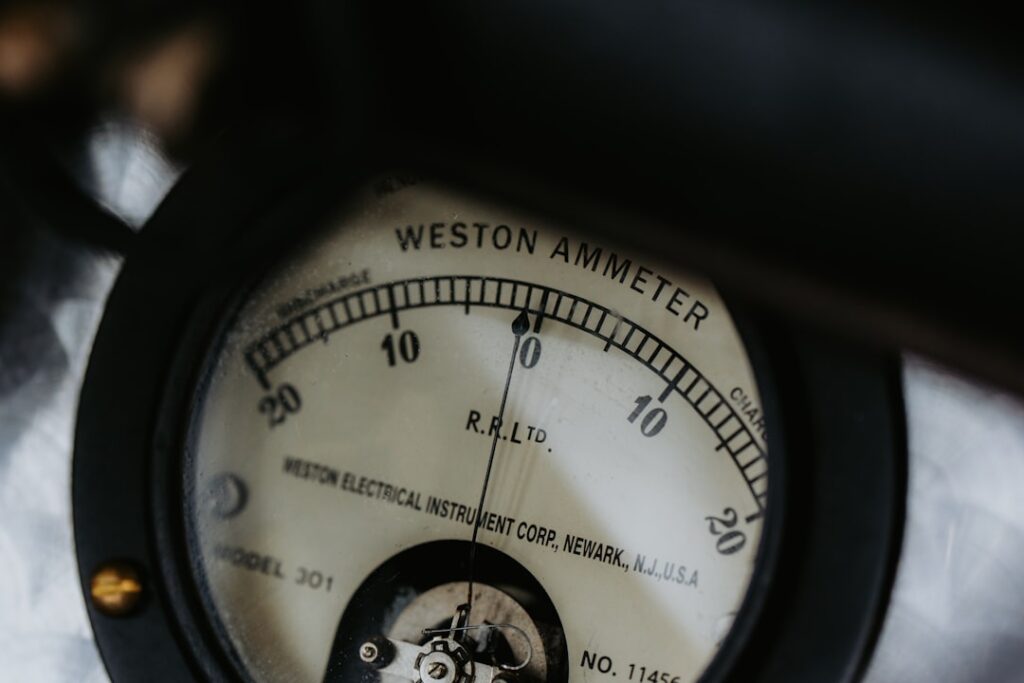
The word “meter” carries a specific meaning in radon work. A radon test meter is a measurement instrument that quantifies airborne radon concentration in picocuries per liter (pCi/L), reported as a numeric value rather than as an alarm trigger. The distinction matters because most homeowner radon decisions rest on the number itself — comparing a measured average against EPA action thresholds — not on a binary safe/unsafe alert. This guide explains how meters work, what reading accuracy actually means, why calibration matters, and how EPA-recognized devices differ from unrecognized ones. This guide summarizes EPA and CDC guidance current as of 2026 — consult a certified radon professional for testing and your physician for symptom evaluation.
What “meter” means in the radon context
A meter measures and reports. A radon test meter delivers a quantitative reading — for example, 3.2 pCi/L as a 7-day average — rather than a yes/no signal. Compare this to a smoke alarm, which triggers at a threshold without telling the homeowner the underlying particulate concentration. The meter framing aligns with how radon risk is assessed: lung-cancer risk scales with the average concentration over time, so the numeric value drives the decision. The EPA radon guidance recommends action at long-term averages of 4 pCi/L and suggests considering mitigation between 2 and 4 pCi/L — both decisions require the meter’s actual number.
In practice the consumer market uses “meter,” “monitor,” and “detector” somewhat interchangeably. The professional and scientific literature is more careful: meter implies a calibrated measurement instrument; monitor implies continuous data collection; detector implies any device that can sense the analyte. For homeowner shopping, the practical reality is that the same physical device — a consumer continuous radon monitor — does all three jobs. The framing matters mostly when reading specifications, where “calibration” and “accuracy” are meter-language concepts.
How a radon test meter actually measures
Consumer and professional meters use one of three sensing approaches. Pulse ionization chambers detect alpha particles emitted by radon decay within a small enclosed chamber, counting the pulses to derive concentration. Silicon photodiodes use a solid-state sensor to capture alpha hits, with electronic signal processing converting counts to pCi/L. Alpha spectrometry — used in higher-end professional devices — distinguishes between radon’s alpha-decay signature and other alpha-emitting isotopes, improving accuracy in environments with unusual background radiation.
All three approaches share a fundamental limit: they count rare events. At typical residential concentrations of 1 to 10 pCi/L, the number of detectable decay events per hour is small. That is why most meters need at least 24 to 48 hours to deliver a stable reading and why long-term averages — built up over days and weeks — are more credible than single hourly snapshots. The CDC radon overview reinforces this: long-term averages drive risk estimates, not short-window readings.
What reading accuracy actually means
Meter manufacturers typically state accuracy as a percentage tolerance — for example, plus or minus 10 percent at 4 pCi/L over a 7-day average, or plus or minus 25 percent at 2 pCi/L. Two patterns hold across the market. First, accuracy improves at higher concentrations because more decay events accumulate during the test window. Second, accuracy improves with longer averaging periods because random fluctuation averages out.
A 7-day average from a consumer meter with plus or minus 15 percent accuracy at 4 pCi/L means a true reading of 4.0 might display as anywhere from 3.4 to 4.6. That tolerance is fine for most decisions — a reading of 5.2 still clearly exceeds the action threshold, and a reading of 1.5 still clearly sits in the watchdog zone. The boundary cases between 3 and 5 pCi/L benefit from longer averaging or a professional confirmation test. The guide to radon units and what numbers mean covers the conversion math and how to interpret borderline readings.
Why calibration matters
Calibration is the process of comparing a meter’s reading against a known reference concentration in a controlled chamber. Professional measurement contractors send their devices to accredited calibration labs annually or semi-annually, depending on AARST and NRPP requirements. The lab exposes the device to a known radon concentration, records the reading, and adjusts firmware constants to correct any drift. The output is a calibration certificate documenting the device’s accuracy at the time of testing.
Consumer meters typically arrive pre-calibrated from the manufacturer and are not field-recalibrated. Manufacturers state sensor lifespans of 5 to 10 years, after which drift may exceed stated tolerance. Some consumer brands offer factory recalibration services for a fee; others recommend replacement at the end of sensor life. For a household using a meter as ongoing surveillance, this calibration cycle is part of the long-term cost of ownership. The Colorado Department of Public Health and Environment notes that EPA-recognized measurement devices follow defined calibration protocols documented in the National Radon Proficiency Program standards.
What an uncalibrated meter actually does
A meter operating outside its calibration window still produces readings; they just drift away from true values. The drift is usually gradual and predictable. A 7-year-old consumer meter might read 15 to 20 percent below true at 4 pCi/L, which could let an actually-mitigation-required home appear marginally below the threshold. This is one reason any reading near the action level — whether high or low — benefits from a second confirmation, ideally with a different device or a professional test.
EPA-recognized vs unrecognized devices
EPA does not directly certify radon measurement devices. It recognizes devices that have passed performance evaluations through the National Radon Proficiency Program (NRPP) or the National Radon Safety Board (NRSB). These programs run periodic third-party tests where candidate devices are exposed to known radon concentrations and graded on accuracy, precision, and stability. Devices passing the program are listed in publicly searchable databases.
Most reputable consumer-meter brands publish their NRPP performance evaluation results on their websites and product pages. Devices without such testing exist — typically lower-priced imports or rebadged units from non-specialist manufacturers — but produce less reliable readings. For households making mitigation-or-not decisions on a meter’s output, EPA-recognized status is a meaningful filter. The InterNACHI radon measurement resources list which device families typically appear in professional inventories.
Reading the meter output correctly
Most consumer meters surface three numbers: the most recent hourly reading, a 24-hour average, and a long-term average. The long-term average is the figure that drives action decisions. Hourly readings fluctuate substantially — a 6.5 pCi/L hourly reading does not necessarily mean the home is above the action level, just as a 1.8 pCi/L hourly reading does not necessarily mean it is below.
Look for trends rather than spikes. A long-term average that drifts upward over weeks suggests rising baseline concentrations — perhaps from seasonal frost line changes, sump-cover deterioration, or mitigation-fan degradation. A long-term average that holds steady around 2.5 pCi/L over months tells a different story than one that swings between 1 and 8 across the same period.
When meter readings call for a professional test
Three situations push a homeowner from meter readings toward professional measurement. First, any real-estate transaction. Buyers, sellers, and lenders typically require a chain-of-custody report from a credentialed measurement contractor, not a consumer-meter screenshot. Second, post-mitigation verification. Mitigation contracts almost always require a professional re-test to document system performance. Third, conflict between repeated readings or readings that hover at the action threshold — a professional measurement breaks the tie. The Colorado radon testing pillar guide details how household meters and professional tests work together.
Costs over the meter’s lifetime
Front-end pricing of $150 to $400 captures the device only. A 7-year operating life means an effective annual cost of roughly $25 to $60 — plus any factory recalibration fees (typically $50 to $100 per recalibration), batteries if the unit runs on AAs, and possible smartphone-app subscription costs for cloud history (rare in this category but emerging). Compare against $25 per short-term kit if running an annual test, or $125 to $250 per professional measurement.
For most Front Range households, a consumer meter pays for itself within 3 to 4 years of replacing what would otherwise be annual short-term kits, while delivering continuous data that short-term kits cannot provide.
Meter behavior in difficult test conditions
Meters perform best in stable indoor environments — moderate humidity, no extreme temperature swings, no direct sunlight, and no nearby sources of electromagnetic interference. Several common household conditions degrade reading reliability. High humidity above 70 percent can affect ionization-chamber sensors, biasing readings. Rapid temperature changes — placing a meter near a furnace vent or close to an exterior wall — produce thermal effects that show up as noise in hourly data. Direct sunlight on the device can affect both the sensor electronics and any internal humidity references.
The methodology guidance from public-health agencies addresses these conditions by specifying placement criteria. Position the meter at breathing height, at least 4 inches from any wall, away from windows and exterior doors, and in a room with relatively stable conditions during the test window. Avoid laundry rooms, bathrooms with active showers, kitchens during heavy cooking, and any room with humidity swings or strong airflow.
Comparing meter readings to short-term test kits
When a homeowner runs both a continuous meter and a short-term mail-in kit simultaneously in the same room, results often differ by 10 to 30 percent. That difference is usually within the combined tolerance of the two methods. Charcoal-canister kits average across a 2-to-7-day window with their own measurement uncertainty; meters report a 24-hour or 7-day average from a different sensing technology with its own uncertainty.
For purposes of comparison, look at multi-day averages from both rather than single time points. A short-term kit reporting 3.1 pCi/L across its 4-day deployment and a continuous meter reporting a 4-day average of 2.7 pCi/L across the same window are effectively agreeing. The decision in either case is the same: the home sits in the 2-to-4 pCi/L zone where EPA suggests considering mitigation.
Meter use in mitigation verification
After a mitigation system is installed, the consumer meter often takes over the role of long-term verification. A well-tuned sub-slab depressurization system typically holds readings below 2 pCi/L, often below 1. The meter watches that baseline across months and years. Any sustained drift upward signals the system needs attention — a fan losing performance, a sump-lid seal that has dried out, or an addition to the home that created a new entry path for soil gas.
Combined with a u-tube manometer on the mitigation pipe (which shows whether the fan is generating the expected pressure differential), the meter provides a two-dimensional verification: pressure differential indicates whether the system is operating mechanically; pCi/L reading indicates whether the operation is actually reducing radon entry. Both numbers staying steady over years is the signal that mitigation continues to work.
References
- A Citizen’s Guide to Radon — U.S. Environmental Protection Agency
- Radon health information — Centers for Disease Control and Prevention
- Colorado radon program — Colorado Department of Public Health and Environment
- Radon measurement professional resources — InterNACHI
Front Range homeowners whose meter readings sit close to the EPA action threshold can connect with a vetted local radon professional through our contact page for a credentialed confirmation measurement.