Radon Ranges: Typical Levels and What They Mean
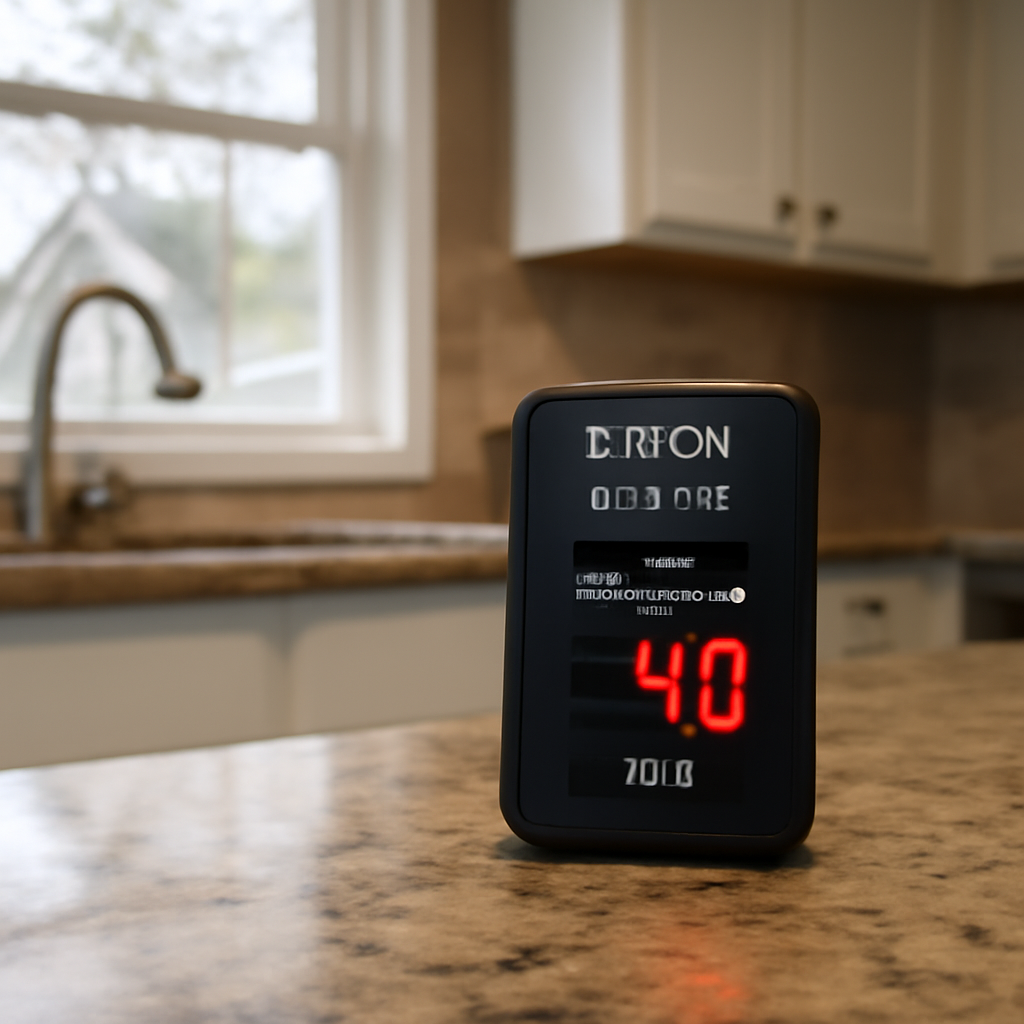
Radon readings span a wide spectrum, and a number means little without knowing where it sits on that spectrum. Understanding radon ranges, from the low outdoor baseline to indoor averages and elevated readings, lets you interpret your result and decide how urgently to act. This guide summarizes EPA and Colorado Department of Public Health and Environment guidance current as of 2026 and is informational only; rely on a certified professional for testing and mitigation decisions, and consult your physician about health concerns. Below are the typical ranges in picocuries per liter and what each one signals for a home.
What Are the Typical Radon Ranges?
Radon is measured in picocuries per liter of air (pCi/L), and the common reference points form a useful map. Outdoor air averages roughly 0.4 pCi/L. The average indoor radon level in homes nationally is around 1.3 pCi/L. The EPA’s action level, where it recommends reducing radon, is 4 pCi/L. Elevated homes can read 10 to 20 pCi/L or higher, and some problem homes register well above that.
Placed in order, the ranges run from the outdoor baseline near 0.4, up through the indoor average near 1.3, into the consider-action band of 2 to 4, across the 4 pCi/L action level, and on into high readings of 10 to 20 or more. Knowing where your number lands tells you whether your home is typical, elevated, or sharply high.
The Low Range: Outdoor and Indoor Averages
The bottom of the spectrum represents the radon that is naturally present almost everywhere.
Outdoor Baseline (~0.4 pCi/L)
Outdoor air contains a small, diluted amount of radon, averaging about 0.4 pCi/L. Because the gas disperses freely outside, concentrations stay low. This baseline is the practical floor; indoor levels cannot realistically go below the surrounding outdoor air, so a reading near 0.4 is essentially as low as a home can be.
Indoor Average (~1.3 pCi/L)
Inside homes, radon accumulates because the gas enters from the soil and is trapped within the structure. The national indoor average is around 1.3 pCi/L. A reading in this range is typical and generally treated as a good outcome, comfortably below the EPA action level. Our explainer on normal radon levels in a house covers this typical indoor band in more detail.
The Middle Range: Consider-Action and Action
The middle of the spectrum is where decisions get more active.
2 to 4 pCi/L: Consider Action
Readings between 2 and 4 pCi/L sit below the action level but above the indoor average. The EPA suggests considering steps to reduce radon in this range, since risk rises with concentration and no level is risk-free. Homeowners here often confirm the reading with a long-term test and weigh mitigation, especially with children in the home.
4 pCi/L: The Action Level
At 4 pCi/L, the EPA recommends taking action to reduce radon. This is the threshold that triggers mitigation for most homeowners. A confirmed reading at or above this level is a clear signal to install a mitigation system. Our radon testing hub for Front Range homeowners expands on what crossing this threshold means.
The High Range: 10 to 20 pCi/L and Above
The upper end of the spectrum represents homes with significant radon entry. Readings of 10 to 20 pCi/L are several times the action level and warrant prompt mitigation. Some homes, particularly in high-potential geology, register above 20 pCi/L. These high readings are not rare in areas with elevated radon potential, and they carry the strongest case for timely professional mitigation.
The higher the reading, the greater the long-term exposure and the more urgent the response. A home reading 15 pCi/L is exposing occupants to far more radon than the indoor average, and mitigation can typically bring even high-reading homes down dramatically, often well below 2 pCi/L. The wide gap between a high reading and an achievable post-mitigation level is exactly why these homes benefit most from action.
Why Readings Vary So Widely
Radon ranges are broad because the gas depends on local geology, soil conditions, home construction, and how the building is operated. Uranium in soil and rock decays into radon, which seeps into homes through foundation cracks, slab penetrations, and sump openings. Two neighboring homes can read very differently based on construction details and ground conditions.
Readings also fluctuate over time. Season, weather, and whether windows are open all affect indoor concentrations. That variability is why a single short-term test is a snapshot, and why the EPA recommends confirming elevated short-term results with a long-term test spanning more than 90 days. Colorado sits largely in EPA Radon Zone 1, the highest-potential category, so Front Range homes are more likely to land in the elevated ranges than homes in lower-potential regions.
Where Does Your Reading Fall?
Mapping your result onto these ranges gives an immediate sense of context. A reading near 1 pCi/L is excellent, close to the indoor floor. A reading around 1.3 is typical and generally fine. Between 2 and 4, consider action and confirm with a longer test. At 4 or above, follow the EPA recommendation to act, starting with confirmation if the test was short-term. In the 10 to 20-plus range, treat mitigation as a priority.
Because Colorado’s geology pushes many homes toward the higher ranges, Front Range homeowners should not assume a typical result without testing. The only way to know which range your home falls into is to measure it.
How Ranges Translate to Health Risk
The ranges are not arbitrary; they map onto increasing long-term risk. Radon is a leading cause of lung cancer, and the EPA and CDC describe the risk as rising with both concentration and the years of exposure. A home at the indoor average of 1.3 pCi/L carries less long-term risk than one at 4 pCi/L, which in turn carries less than one at 15 pCi/L. The relationship is continuous, which is why no range is declared free of risk.
This continuous relationship is why the upper ranges warrant prompt action while the lower ranges are generally accepted. Moving a home from a high range down toward the indoor average meaningfully reduces the cumulative dose its occupants receive over the years they live there. The longer a household stays in a home, the more the range matters, since exposure accumulates over time.
For smokers, the combination of radon exposure and smoking compounds lung cancer risk, which agencies note is substantially higher than either factor alone. This interaction is one reason the EPA emphasizes reducing radon across all elevated ranges. Understanding that the ranges reflect a risk gradient, rather than a simple safe-or-unsafe switch, helps homeowners weigh how urgently to respond to their own reading.
Seasonal and Construction Influences on Range
Where a home falls on the range spectrum is not fixed; it shifts with season and depends on construction. Radon readings often run higher in winter, when homes are sealed against the cold and heating systems create pressure patterns that draw more soil gas inside. A home that reads in the 2 to 4 range in summer might read higher in winter, which is why season-spanning long-term tests give the truest picture.
Construction shapes the range too. Foundation type, the number and size of cracks and openings, the presence of a sump or crawlspace, and how tightly the home is sealed all affect how much radon enters and accumulates. A tightly sealed, energy-efficient home can hold radon more readily than a leaky one, so two homes over identical soil can land in different ranges.
The location of measurement within the home also influences the recorded range. Basements and lowest occupied levels typically read higher than upper floors because they are closest to the soil source. Placing a test where people actually spend time gives the most relevant range. These influences explain why a single reading is a snapshot and why confirming with a long-term test matters before concluding which range a home truly occupies.
How Units and Measurement Define the Ranges
The ranges all rest on a single unit, the picocurie per liter, so understanding it makes the ranges meaningful. A picocurie per liter measures the concentration of radon’s radioactivity in a liter of air. A higher pCi/L means more radon atoms decaying in the air you breathe, and therefore greater exposure. The unit lets every reading, from the outdoor baseline to a high indoor result, sit on one comparable scale.
Some readings, particularly from international sources, appear in becquerels per cubic meter rather than pCi/L. The two units measure the same thing on different scales, and roughly speaking 1 pCi/L corresponds to about 37 becquerels per cubic meter. When comparing readings, it helps to confirm the unit, since a number that looks alarming in one unit may be modest in the other.
Measurement method also shapes how a range reading should be read. A short-term test reports the average over its brief window, while a long-term test reports an average over months, and a continuous monitor can show both an average and the fluctuations within it. Two homes with the same average can have very different daily patterns, which is why the average pCi/L places a home in a range while the measurement context explains how reliable that placement is.
Using Ranges During a Home Purchase
Ranges become practical decision tools during real estate transactions. When a radon test is part of a purchase, the resulting number places the home in a range that informs negotiation. A reading in the typical indoor range near 1.3 pCi/L generally raises no concern, while a reading in the 2 to 4 band may prompt discussion, and a result at or above 4 commonly leads buyers to request mitigation before closing.
High-range readings of 10 to 20 pCi/L or above carry the strongest negotiating weight, since they clearly exceed the action level and warrant prompt mitigation. Buyers in such situations often ask sellers to install a system, supported by a post-mitigation test confirming the level dropped into a low range. The range framework gives both parties a shared reference for what the number means and what response is reasonable.
Because Colorado sits largely in EPA Radon Zone 1, the highest-potential category, Front Range transactions frequently involve radon testing, and elevated ranges appear more often than in lower-potential regions. Buyers and sellers who understand the ranges can interpret a test result quickly and negotiate from a shared understanding rather than reacting to an unfamiliar number. Knowing the ranges turns a transaction reading into an actionable data point.
Acting on Your Range
For elevated readings, mitigation usually means sub-slab depressurization, where a fan and vent pipe draw radon from beneath the foundation and discharge it outdoors. A certified contractor designs the system to the home, and a post-mitigation test confirms the new, lower level. The goal across all ranges is the same: get as low as practical, since lower is always better. Knowing the ranges turns an abstract number into a clear decision about whether your home is fine as-is, worth monitoring, or due for mitigation.
References
- EPA on radon test results and typical levels — U.S. Environmental Protection Agency
- Colorado radon levels and Zone 1 designation — Colorado Department of Public Health and Environment
- CDC overview of radon and exposure — Centers for Disease Control and Prevention
Front Range homeowners who want to find out which radon range their home falls into can contact us here to connect with a vetted local radon professional.