Radon Posioning: What Homeowners Need to Know
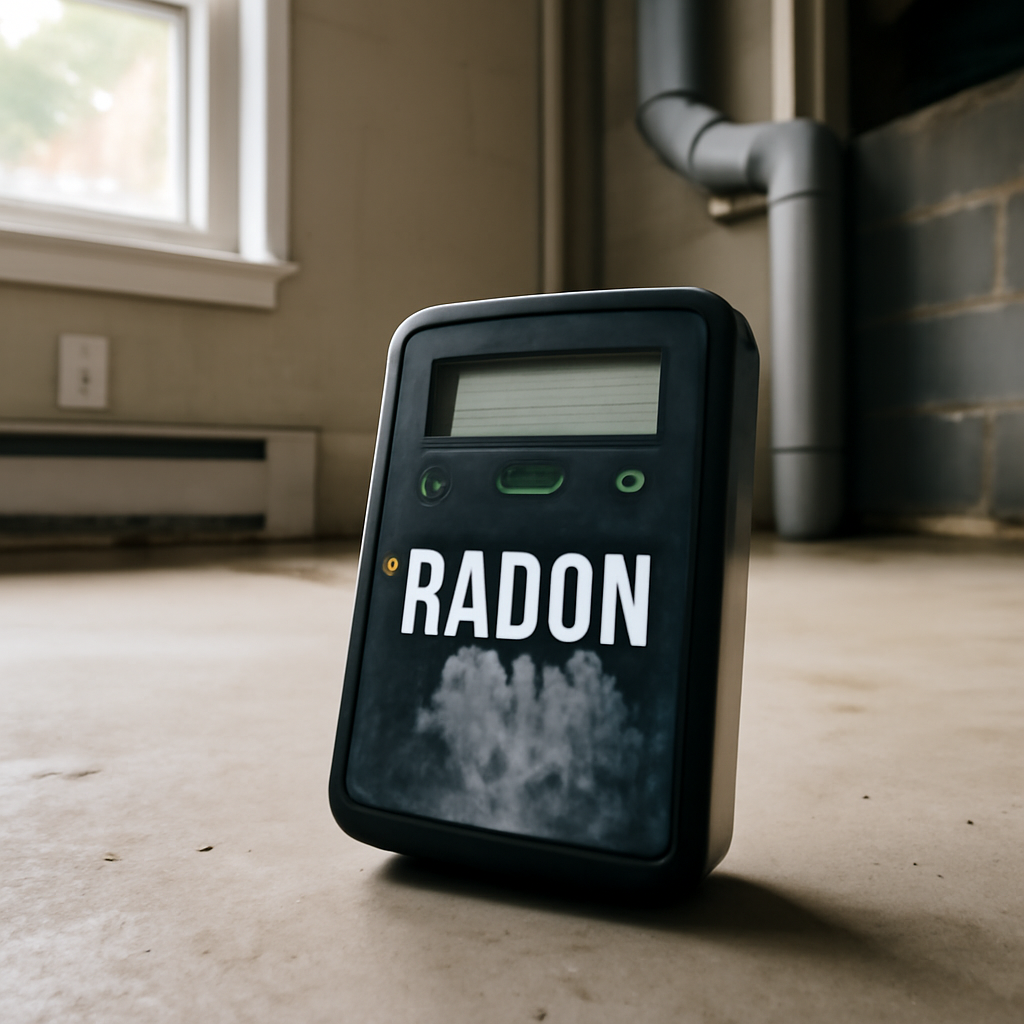
Radon does not produce immediate symptoms in most people. Persistent cough, shortness of breath, chest pain, or unexplained weight loss can be late-stage indicators of radon-caused lung cancer — but these appear only after years of exposure, not as a warning sign. This guide summarizes EPA, CDC, and Colorado Department of Public Health and Environment guidance current as of 2026. The search query “radon posioning” — and the more conventionally spelled “radon poisoning” — both point to the same underlying homeowner question. This guide treats all spelling variations as pointing to the same concern and answers it directly: radon is a real residential health hazard, but it does not behave like a chemical poison and produces no acute symptoms during ongoing exposure.
Radon Posioning, Radon Poisoning: Same Homeowner Question
Search-engine queries for “radon posioning” produce significant traffic alongside the standard-spelling “radon poisoning” queries. The variation is just a typographical alternation — both point to the same homeowner concern about radon’s health effects and how to detect or prevent them. This guide treats all spelling variations equivalently. Homeowners arriving with either spelling deserve the same plain-language answer about how radon actually affects health, what the EPA recommends, and what the only reliable indicator of indoor radon is.
Why the “Poisoning” Framing Misleads
Whether spelled correctly or not, the word “poisoning” suggests a model that does not match how radon actually causes harm. Chemical poisoning involves a substance interacting with biological systems — binding to receptors, interfering with enzymes, displacing oxygen, or otherwise producing acute physiological effects within minutes, hours, or days. Carbon monoxide poisoning is a clear example: CO binds to hemoglobin within minutes of exposure, displaces oxygen, and produces symptoms that progress measurably with continued exposure.
Radon does not do any of that. Radon is a chemically inert noble gas (atomic number 86, Group 18 of the periodic table) that does not bind to body tissues, does not interfere with metabolic systems, and does not produce acute chemical effects. The harm from radon comes from radiation emitted by its solid radioactive decay products — polonium-218, lead-214, bismuth-214, and polonium-214 — that lodge in lung tissue after inhalation. The alpha particles from polonium-218 and polonium-214 specifically damage cellular DNA in lung tissue. Damage accumulates cell by cell over years of exposure. Some damaged cells repair; some die; some replicate with mutations that, after additional accumulated damage over decades, become lung cancer.
Calling this “poisoning” — whether spelled “poisoning” or “posioning” — obscures the cumulative-dose biology and leads homeowners to look for acute symptoms that do not exist. The more precise framing is “radon-induced lung cancer risk from cumulative alpha-particle exposure,” but that mouthful does not appear in casual search queries.
What There Are No Signs Of
Because radon’s harm is cumulative DNA damage rather than acute chemical interaction, no signs exist during ongoing exposure. Specifically:
No acute symptoms. Headache, nausea, fatigue, dizziness, confusion — these are not features of radon exposure at residential concentrations. Acute symptoms in a home most often trace to carbon monoxide (test with a CO detector), volatile organic compounds (test through indoor-air-quality assessment), or poor ventilation (correctable with HVAC adjustments). None of these are radon symptoms.
No physical signs in the home. Radon does not stain walls, corrode materials, damage finishes, or produce visible deposit. Musty basements indicate moisture and mold, not radon. Yellow wall staining is efflorescence (mineral salts from water passing through concrete), not radon. Foundation cracks indicate foundation movement; they may also create radon entry pathways but they are not signs of radon presence.
No detectable odor or taste. Radon is odorless, colorless, and tasteless. A homeowner cannot smell or sense high-radon air sensorially. A 50 pCi/L basement and a 0.5 pCi/L basement present identical air to occupants. EPA emphasizes the absence of sensorially detectable signs in its consumer materials.
The Only Reliable Indicator: A Measured Test Result
Because radon produces no signs, the only honest indicator that a home has radon at concentrations warranting attention is a measured test result in picocuries per liter (pCi/L). The EPA action level is 4 pCi/L. Every Front Range Colorado county is classified EPA Zone 1 — the highest of three radon-potential zones — and roughly half of all tested Colorado homes register at or above 4 pCi/L.
Short-term tests run 2 to 7 days using activated charcoal canisters, electret ion chambers, or continuous radon monitors. Kits cost $15 to $30 plus lab analysis where applicable. Short-term tests are appropriate for initial screening, real-estate-transaction testing inside contingency windows, and post-mitigation confirmation. Long-term tests run 90 days to 1 year using alpha-track detectors. Kits cost $25 to $50 plus analysis. Long-term tests produce more representative annual averages by accounting for seasonal variation.
The test result is a single quantitative number. Below 2 pCi/L typically requires no action. 2 to 4 pCi/L is a consideration band where current or former smokers may want to consider mitigation. Above 4 pCi/L warrants mitigation per EPA recommendation. Our broader Colorado radon testing guide walks through the test-and-mitigate workflow in detail.
Colorado Zone 1 and Why the Question Matters Here
The EPA’s Map of Radon Zones classifies U.S. counties into three potential zones based on geology, soil characteristics, and indoor measurement data. Zone 1 is the highest risk classification — predicted indoor average exceeds 4 pCi/L. Zone 2 is moderate; Zone 3 is low.
Every Front Range county — Denver, Douglas, Elbert, Arapahoe, Jefferson, El Paso, Adams, Boulder, Broomfield — is Zone 1. The Colorado geology contributes: uranium-rich Pikes Peak granite underlying parts of El Paso and Douglas counties, Cretaceous shales rich in uranium-bearing organic layers under eastern Denver and Aurora, and post-glacial soil patterns that concentrate radon emissions in the residential foundation zone. CDPHE publishes the Colorado-specific Zone 1 information and recommends testing for every Colorado home.
A Front Range homeowner who has not tested for radon has no information about their actual exposure. The home could be at 0.5 pCi/L or 30 pCi/L; the same homeowner could be experiencing the same indoor environment with very different cumulative-dose implications. Testing converts that uncertainty into actionable data.
EPA Lifetime-Risk Estimates
The EPA publishes estimates of lifetime lung-cancer risk per 1,000 people exposed at defined indoor radon concentrations over the 70-year lifetime benchmark. The estimates separate never-smokers from current and former smokers because the two populations face different risk levels.
At 4 pCi/L over 70 years: approximately 7 lung-cancer deaths per 1,000 never-smokers and approximately 62 per 1,000 current/former smokers. At 10 pCi/L: 18 per 1,000 never-smokers and 150 per 1,000 smokers. At 20 pCi/L: 36 per 1,000 never-smokers and 260 per 1,000 smokers. The interaction between radon and tobacco is multiplicative because tobacco-damaged lung cells respond to additional radiation with more mutations than undamaged cells. American Lung Association publishes consumer guidance aligned with these EPA estimates.
Mitigation: The Action That Reduces Future Risk
A test result at or above 4 pCi/L triggers the EPA recommendation to install a radon mitigation system. The dominant residential mitigation approach is active sub-slab depressurization (SSD). A licensed mitigation contractor installs a PVC pipe penetrating the basement slab or crawlspace, attaches a continuously running fan in the attic or exterior, and vents soil gas above the roofline before it can accumulate inside the home.
Typical Front Range mitigation cost runs $1,200 to $2,500 for a single-family home with a standard basement-and-slab foundation. Crawlspace systems and homes with multiple foundation sections can cost $2,500 to $4,500. Most systems reduce indoor radon by 80 to 99 percent and bring even very high pre-mitigation results below the EPA action level.
Mitigation requires minimal ongoing maintenance — the fan typically runs continuously for 8 to 15 years before requiring replacement. Annual visual inspection of the system manometer (a U-tube pressure gauge installed on the pipe) confirms the fan is producing the expected negative pressure under the slab. Re-testing every 2 to 5 years confirms continued system performance. Our causes-of-high-radon guide covers why some homes need mitigation more urgently than others.
Past Exposure Versus Future Exposure
The cumulative-dose framework means past exposure cannot be undone but future exposure can be reduced. A homeowner who has lived in a 12 pCi/L home for 15 years has already accumulated dose that mitigation cannot reverse. The decision facing the homeowner is not whether to reverse past exposure (impossible) but whether to allow further dose accumulation to continue (without mitigation) or to stop the future accumulation (with mitigation).
Consider two scenarios for the same homeowner. Scenario A: continue living in the home at 12 pCi/L for another 25 years. Future cumulative dose: 300 pCi/L-yr (12 multiplied by 25). Scenario B: mitigate immediately, achieving a post-mitigation level of 1.5 pCi/L for the same 25 years. Future cumulative dose: 37.5 pCi/L-yr. The mitigation reduces future cumulative dose by approximately 87 percent. The reduction translates directly into proportionally reduced projected lifetime lung-cancer risk.
This asymmetry between past and future is the practical reason EPA, CDPHE, and the American Lung Association all recommend mitigation as soon as a high test result is discovered rather than waiting. Every year of delay is another year of avoidable future cumulative dose.
Children, Pregnancy, and Vulnerable Households
Children breathing higher volumes of air per unit body weight than adults receive proportionally higher dose at any given indoor radon concentration. Developing tissues during the first decade of life also respond differently to radiation than mature adult tissue. The combined effect means a child living in a high-radon home accumulates dose at higher per-year impact than the same exposure later in life would produce.
Pregnancy adds further considerations. CDPHE guidance recommends mitigation during pregnancy where the home tests above the action level — both for maternal protection and for the future child who will spend years in the home post-birth. Older adults entering high-radon homes face shorter remaining-life windows but still benefit from mitigation; the dose-accounting framework does not discriminate against any age group.
Common Questions Beneath the Search Query
Homeowners typing “radon posioning” or “radon poisoning” into search engines are typically asking one of several underlying questions.
“Am I being poisoned right now?” The honest answer: probably not in any sense that produces immediate health effects, because radon does not work that way. The longer-term answer requires testing — without a measured concentration, the cumulative-dose accumulation cannot be evaluated.
“What are the symptoms I should look for?” The honest answer: none during ongoing exposure. Late-stage radon-caused lung cancer produces symptoms identical to other lung cancers (persistent cough, shortness of breath, chest pain, weight loss) but these appear 10 to 40 years after cumulative exposure began, not as warning signs during ongoing exposure.
“How do I test for it?” Short-term kits ($15 to $30) at hardware stores, online retailers, and Colorado public-health departments. Place in the lowest livable level of the home, away from drafts and exterior walls, with the home in closed-house conditions for the test duration.
“What do I do if the test is high?” Mitigate. Hire a contractor listed under the National Radon Proficiency Program (NRPP) or the National Radon Safety Board (NRSB). Verify post-mitigation with an independent re-test.
When to Call a Professional
Homeowner testing is the accessible first step. Mitigation system design and installation requires professional engagement with an NRPP- or NRSB-listed contractor. Post-mitigation verification testing should be performed by an independent third party — typically a credentialed home inspector or separate radon measurement professional, not the contractor who installed the system. The independence preserves the verification function.
References
- EPA radon home and Citizen’s Guide — U.S. Environmental Protection Agency
- CDC radon health and prevention resources — Centers for Disease Control and Prevention
- Colorado radon program and Zone 1 information — Colorado Department of Public Health and Environment
- American Lung Association radon overview — American Lung Association
Front Range homeowners ready to test or to act on a high reading can reach out through our contact page for a referral to a credentialed local radon professional or NRPP-listed mitigation contractor.